
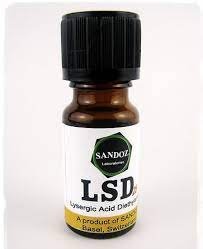
Buy Liquid LSD – Premium LSD Vial (100ml, 100µg/ml)
Price range: $240.00 through $2,600.00
High-purity liquid LSD in a sterile glass vial, dosed at 100µg per ml. Ideal for precise microdosing, guided therapy, and research use. Tested & legally sourced.
Liquid LSD: Chemistry, Stability, Testing, and Harm Reduction Facts
Liquid LSD is a preparation represented as containing lysergic acid diethylamide (LSD-25) dissolved in a liquid carrier. It is not a chemically distinct version of LSD, and its physical form does not determine potency, purity, or safety.
A single drop is not a standardized dose because both solution concentration and drop volume can vary. Packaging, appearance, and seller claims cannot verify what a vial contains. Reagent tests provide presumptive chemical information, while validated laboratory techniques offer substantially stronger identification.
Liquid LSD: Key Facts at a Glance
- Liquid LSD is a solution format, not a distinct chemical compound. LSD-25 is the same molecule regardless of whether it appears on blotter, in gel form, or in solution.
- There is no universal microgram amount per drop. Concentration and dropper geometry both affect the quantity delivered.
- LSD can degrade under certain environmental conditions. Light and elevated temperature are documented contributing factors, though precise degradation rates depend on the solvent matrix and specific conditions.
- Solvent evaporation can change solution concentration if carrier liquid is lost while dissolved material remains.
- Amber glass reduces light transmission and is standard packaging for photosensitive compounds, but it cannot authenticate a vial’s contents or establish purity.
- Ehrlich and Hofmann reagents provide presumptive rather than definitive identification. A positive Ehrlich result cannot rule out additional substances present alongside an indole compound. Validated chromatographic analysis provides substantially stronger evidence of chemical identity and concentration.
What Is Liquid LSD?
Liquid LSD refers to lysergic acid diethylamide dissolved in a liquid carrier, most commonly ethanol, distilled water, or a mixture of both. The compound itself is identical to LSD-25 in any other format. The designation “liquid” describes the delivery medium rather than any chemical property of the drug.
LSD-25 is a lysergamide belonging to the ergoline family of compounds. Its principal psychedelic effects involve agonist activity at serotonin 5-HT2A receptors, though its pharmacology extends across multiple receptor systems.
Albert Hofmann first synthesized the compound in 1938 at Sandoz Laboratories in Basel, Switzerland, and identified its psychedelic properties in 1943.
In illicit distribution, liquid LSD commonly appears in small dropper bottles, often made from amber glass, and is sometimes applied to blotter paper or sugar cubes before use. The liquid format introduces variables affecting dosing accuracy, stability, and chemical integrity that differ from those associated with blotter tabs.
Is liquid LSD a different drug than LSD on blotter? No. LSD-25 is the same molecule in any physical format. Liquid, blotter, and gel tabs are delivery formats, not distinct chemical entities.
Liquid LSD Chemistry: Solvents, Concentration, and Solution Stability
When LSD is dissolved in a carrier solvent, the resulting solution has a concentration expressed as micrograms of LSD per unit volume, typically per milliliter. That concentration, combined with the volume dispensed in each drop, determines how much LSD a single drop theoretically contains.
Solvent Selection: Distilled Water vs. Alcohol LSD Solutions
The two most common carrier solvents are ethanol and distilled or deionized water. Ethanol is often preferred because it improves LSD solubility and can inhibit microbial growth.
Tap water is generally considered unsuitable because municipal supplies often contain chlorine or chloramine. These oxidizing agents can degrade sensitive organic compounds. Distilled or deionized water removes these contaminants and is the preferred aqueous carrier when water is used.
Ethanol solutions may slow some degradation pathways but introduce other considerations. Because ethanol has a lower surface tension than water, it can produce smaller drops than water-based solutions under identical conditions with the same dropper. That difference in drop volume has direct implications for dosing consistency.
A mixture of ethanol and distilled water is also common, with the ratio influencing both chemical stability and dispensing behavior.
Micrograms Per Drop of Liquid LSD: Why There Is No Standard Dose
There is no standard number of micrograms per drop of liquid LSD. Two variables determine the quantity delivered.
The first is solution concentration, measured in micrograms per milliliter. This is established during preparation and is not visible or detectable without laboratory analysis.
The second is drop volume, which depends on the physical properties of the liquid, the geometry of the dropper tip, the angle of dispensing, and the surface onto which the drop falls.
Multiplying concentration by drop volume gives the theoretical quantity per drop. Because neither variable is standardized in illicit preparations, street claims about microgram content cannot be confirmed without quantitative analysis.
A seller’s assertion that each drop contains 100 micrograms cannot be verified from the appearance of the vial or the subjective effects of the solution.
This variability is the central dosing risk with liquid LSD. It distinguishes illicit preparations from pharmaceutical products, where concentration and volume are validated, measured against a reference standard, and labeled accordingly.
Liquid LSD Storage and Stability: Light, Temperature, and Degradation
LSD is a chemically fragile molecule relative to many pharmaceutical compounds. Several environmental factors can contribute to its degradation in solution, converting active LSD-25 into inactive or less active byproducts.
LSD Light Sensitivity and Photolysis
Experimental evidence indicates that LSD is sensitive to light, particularly ultraviolet and visible wavelengths, through a process called photolysis. Exposure to light can produce degradation products including lumi-LSD, an inactive compound.
The rate and extent of light-induced degradation depend on the intensity and wavelength of the light source, the duration of exposure, and the composition of the solution matrix.
Work examining lysergamide photostability under controlled conditions has documented measurable degradation under illuminated versus dark storage, though specific rates vary with experimental parameters.
Quantitative photodegradation data should be sought from primary analytical chemistry and forensic toxicology literature, with attention to the matrix, light source, and exposure conditions reported in each study. Results from one controlled experiment should not be generalized to an illicit preparation stored under different conditions.
Amber glass dropper bottles reduce transmission of portions of the light spectrum compared to clear glass, which is why amber glass is standard packaging for photosensitive pharmaceuticals and laboratory reagents. Amber glass attenuates rather than eliminates light exposure. It cannot authenticate the contents of a vial or establish that a preparation contains pure LSD.
LSD Temperature Stability
Temperature is a documented factor in LSD stability. Lower storage temperatures can slow chemical reaction rates generally, which may reduce degradation under otherwise comparable conditions.
Stating that specific degradation products form through a single universal pathway at a particular temperature is not well supported without reference to a specific study using a defined matrix and analytical method.
Iso-LSD is an epimeric isomer of LSD-25, differing at the C-8 position. It can form under certain conditions and is relevant to forensic analysis because its presence may indicate partial epimerization of a sample.
LSD N-oxide is a separate oxidation product with a distinct formation pathway. These two compounds should not be grouped as though they arise from the same process under identical conditions.
Freeze-thaw cycles and moisture exposure introduce additional concerns for solution stability, particularly for aqueous preparations. Cold storage may slow some degradation pathways while introducing other handling considerations.
LSD Solution Evaporation and Concentration Changes
Solvent evaporation is an underappreciated variable in liquid LSD handling. If a dropper bottle is left open or inadequately sealed, the carrier solvent can evaporate while dissolved LSD remains in solution.
Because concentration is the ratio of dissolved material to solvent volume, losing solvent while retaining LSD increases the effective concentration of the remaining solution.
The magnitude of any change depends on how much solvent is lost, the vapor pressure of the carrier solvent, ambient temperature and humidity, and the duration of exposure.
Ethanol evaporates more readily than water under most ambient conditions. Ethanol-based preparations in poorly sealed containers may therefore be more susceptible to concentration drift over time.
A practical consequence follows: a dropper bottle stored with an inadequate seal may deliver a different dose per drop than it did when first prepared, even if the preparation is otherwise unchanged.
Liquid LSD Vials and Amber Glass: What Packaging Can Tell You
Liquid LSD is frequently distributed in amber glass dropper bottles. Amber glass genuinely limits transmission of portions of the light spectrum and is an established choice for protecting photosensitive compounds.
Glass is also chemically inert and does not react with most organic solvents, making it preferable to many plastic containers. Some plastics can interact with ethanol and potentially leach compounds into solution.
Borosilicate glass is the preferred material for laboratory-grade containers because of its thermal stability and chemical inertness. Standard amber dropper bottles available through commercial suppliers may not be borosilicate glass, which is relevant for anyone concerned about long-term storage quality.
What amber glass cannot do is establish anything about a vial’s chemical contents. The same packaging is commercially available for any purpose. A professional appearance, a sealed cap, and an amber color cannot confirm the presence of LSD, the absence of adulterants, or the accuracy of any stated concentration.
Why are some liquid LSD vials made from amber glass? Amber glass limits transmission of portions of the light spectrum and is standard packaging for photosensitive compounds. It can reduce light-induced degradation but does not verify a vial’s contents, purity, or concentration.
Liquid LSD vs. Blotter Tabs: Format Differences and Shared Limitations
Liquid LSD and blotter tabs are different distribution formats for the same compound. Each has distinct handling and storage characteristics, but neither format implies higher purity or more accurate dosing without chemical verification.
| Characteristic | Liquid LSD | Blotter Tabs |
|---|---|---|
| Physical format | Solution in dropper bottle | LSD applied to absorbent paper |
| Dosing mechanism | Drop volume and solution concentration | Absorbed quantity per paper square |
| Light sensitivity | High; container type matters | High; paper packaging matters |
| Temperature sensitivity | Relevant to solution stability | Relevant to LSD on paper |
| Evaporation risk | Relevant if container is unsealed | Less directly applicable |
| Adulterant risk | Same as any illicit preparation | Same as any illicit preparation |
| Verification method | Reagent testing or laboratory analysis | Reagent testing or laboratory analysis |
The shared limitation is the most consequential: neither format can be verified by appearance, packaging, taste, or seller representation. The chemical content of any illicit preparation is established by testing, not by format.
Gel tabs, consisting of LSD in a gelatin matrix, represent a third format to which the same verification limitations apply.
Testing Liquid LSD: Ehrlich Reagent, Hofmann Reagent, and Laboratory Analysis
Chemical analysis provides the strongest evidence for evaluating what a liquid LSD preparation contains. Two broad categories of testing are available: field reagent screening and validated laboratory analysis.
Ehrlich Test for Liquid LSD: What the Result Means
The Ehrlich reagent contains p-dimethylaminobenzaldehyde and reacts with compounds containing an indole ring. LSD-25 contains an indole structure, so a compatible color change, typically purple or violet, is consistent with the presence of an indole-containing compound. No color change indicates the absence of a detectable indole compound.
For liquid samples, a small amount of the preparation is typically applied to a testing surface rather than the entire solution.
The Ehrlich reagent is a presumptive screening tool, not a confirmatory test. Other indole-containing compounds, including tryptamines such as psilocybin and DMT, also produce compatible reactions.
A positive result indicates that an indole-containing substance may be present. It cannot establish that LSD-25 is the only compound in the sample or rule out additional substances in a mixture. Laboratory analysis is required to characterize mixtures reliably.
Hofmann Reagent Test for Liquid LSD
The Hofmann reagent provides complementary presumptive information and is commonly paired with Ehrlich testing in drug-checking practice. It can help differentiate LSD from some other indole-containing compounds, though it does not approach the specificity of laboratory instrumentation.
For both reagents, results should be interpreted using current reference charts from reputable harm-reduction organizations such as DanceSafe rather than informal or undated sources. Reagent age, storage conditions, sample matrix, and interfering substances all affect results.
Direct answer: Can an Ehrlich reagent confirm liquid LSD? A compatible Ehrlich reaction indicates that an indole-containing compound may be present. It cannot conclusively identify LSD-25, establish concentration, confirm purity, or rule out additional substances in the sample.
What Laboratory Analysis Can Establish: HPLC and LC-MS
Validated laboratory techniques including high-performance liquid chromatography (HPLC) and liquid chromatography-mass spectrometry (LC-MS) provide substantially stronger chemical identification than field reagents.
HPLC separates sample components and, when calibrated against a reference standard with an established calibration curve, can support quantitative measurement down to a defined limit of quantification.
LC-MS adds mass-spectrometric information useful for distinguishing compounds that might co-elute or behave similarly on a chromatographic column.
Analytical capability varies between drug-checking laboratories. Quantitative results are only as reliable as the calibration and measurement uncertainty associated with a given method. Concentration figures should not be compared across laboratories unless analytical methods and validation parameters are comparable.
Energy Control International operates a drug-checking service that uses laboratory instrumentation to analyze submitted samples and publishes findings demonstrating variability between illicit preparations and seller-represented contents. Where laboratory drug checking is legally and locally available, it provides a meaningfully stronger basis for evaluating any preparation than field reagents alone.
What Drug-Checking Data Shows About Products Sold as LSD
Published drug-checking data provides the most direct evidence of what illicit preparations represented as LSD actually contain. Because submissions to drug-checking services are voluntary, results describe the tested sample set rather than all LSD sold in a given market. Findings should not be generalized across different countries, years, or supply chains.
Energy Control International has published results from its international sample submission service. In analyses conducted using chromatographic methods, submitted samples represented as LSD have shown variability in confirmed LSD-25 content. Some samples contained no detectable LSD, while others contained measurable quantities below commonly claimed street doses.
The European Monitoring Centre for Drugs and Drug Addiction publishes annual drug market reports drawing on member-state forensic and monitoring data. Its reporting has documented the presence of NBOMe compounds and other non-LSD substances in products sold as LSD across European markets, particularly during the 2010s.
Prevalence varied substantially by country, year, and market segment. Readers should consult specific annual reports for the geography and time period relevant to their research.
DanceSafe has documented through event-based drug-checking in the United States that substances sold as LSD have included non-lysergamide compounds in a portion of tested samples, with results varying by region and year. DanceSafe uses Ehrlich reagent as a field-screening tool and recommends laboratory confirmation for definitive identification.
The consistent finding across these programs is that appearance, design, packaging, and seller representation are unreliable proxies for chemical identity or dose.
25I-NBOMe and Other Adulterants in Liquid Preparations
The adulterant risks that apply to blotter LSD also apply to liquid preparations. 25I-NBOMe and 25B-NBOMe, NBOMe-series phenethylamines, have been documented in peer-reviewed toxicological literature in association with severe adverse outcomes including seizures, cardiovascular complications, hyperthermia, and deaths. DOx compounds including DOB and DOM have also been found in blotter and potentially liquid preparations.
A compatible Ehrlich reaction may indicate an indole-containing substance is present, but it cannot establish that LSD is the only compound in the sample or rule out additional adulterants. Laboratory analysis is required to characterize a sample’s full composition reliably.
Taste and subjective effects should not be used to identify chemical contents. Although some non-LSD compounds have been reported as intensely bitter or numbing, organoleptic observation is not a reliable identification method.
For any suspected poisoning or severe adverse reaction involving seizures, loss of consciousness, extreme overheating, difficulty breathing, or other acute medical symptoms, emergency medical attention is necessary. In the United States, Poison Control is available at 1-800-222-1222.
Liquid LSD Myths vs. Evidence
Several claims about liquid LSD circulate in drug subcultures and online discussions. Comparing these claims with what can actually be established is useful for harm reduction and accurate research.
| Common Claim | What the Evidence Shows |
|---|---|
| A drop contains a specific number of micrograms | Unverifiable without knowing concentration and measuring drop volume; neither is standardized in illicit preparations |
| Amber glass means the LSD is high quality or authentic | Amber glass reduces light transmission; it cannot verify contents, purity, or concentration |
| Liquid is inherently stronger or purer than blotter | Format does not determine potency or purity; only quantitative analysis can establish either |
| A positive Ehrlich test confirms real LSD | A positive result indicates an indole-containing compound may be present; it cannot rule out additional substances or confirm LSD-25 specifically |
| Concentration can be inferred from subjective effects | Individual responses to psychedelics vary substantially; effects are not a reliable proxy for dose or chemical identity |
| Cold or dark storage guarantees long shelf life | These conditions can slow some degradation but cannot halt it entirely, and the starting preparation remains unverified |
High-Purity Liquid LSD: What Purity Claims Mean and Cannot Mean
Illicit preparations are sometimes represented as high-purity or pure liquid LSD. In pharmaceutical and analytical chemistry contexts, purity has a specific meaning: the proportion of the stated compound relative to total mass, typically expressed as a percentage and established through validated analytical methods against a certified reference standard.
In an illicit context, purity claims are unverifiable without independent laboratory analysis. A seller’s representation that a vial contains pure LSD cannot be confirmed from the appearance of the liquid, the color of the glass, the stated concentration, or reported subjective effects.
High-purity claims should be understood as unverified representations rather than established chemical facts. The most defensible approach treats any unverified preparation as unverified and seeks independent chemical confirmation where testing is legally and practically available.
Harm Reduction for Liquid LSD: Practical Considerations
Several practical considerations follow from the chemistry and limitations described in this article.
Consistent dosing from a liquid preparation requires knowing the actual concentration and delivering consistent drop volumes. Without laboratory confirmation of concentration and controlled dispensing technique, dosing consistency is difficult to establish.
Storing a preparation in a sealed amber glass container away from light and heat is a reasonable precaution. Storage conditions cannot authenticate contents or prevent degradation of an already compromised preparation.
Testing with Ehrlich and Hofmann reagents before use provides useful presumptive information. A negative Ehrlich result is informative. A positive result indicates that an indole-containing substance may be present but cannot confirm LSD-25 specifically, establish the dose, or rule out additional compounds.
Where drug-checking services are legally available, submitting a sample for laboratory analysis provides substantially stronger evidence than field testing alone. DanceSafe publishes harm-reduction guidance for psychedelic substances and offers drug-checking in some contexts.
Visual inspection, packaging, and representation are not substitutes for chemical evidence. No testing method eliminates risk entirely.
Frequently Asked Questions About Liquid LSD
What is liquid LSD?
Liquid LSD is a preparation represented as containing lysergic acid diethylamide (LSD-25) dissolved in a carrier solvent such as ethanol, distilled water, or a mixture of both. The term describes the physical format rather than a chemically distinct version of LSD. An unknown vial’s identity, purity, and concentration cannot be established from its appearance, packaging, or reported effects.
How many micrograms are in one drop of liquid LSD?
There is no universal answer. The amount depends on both the solution concentration and the volume delivered by the dropper. Because neither variable is inherently standardized in an illicit preparation, per-drop potency claims require quantitative measurement to verify.
Is liquid LSD stronger than blotter tabs?
Not inherently. Liquid, blotter, and gel are physical formats rather than potency categories. Potency is determined by how much LSD is present in a given dose, which can only be established by quantitative chemical analysis.
What affects the stability of LSD in solution?
Experimental evidence indicates that light and elevated temperature contribute to LSD degradation. Documented degradation products include lumi-LSD from photolysis and iso-LSD from epimerization under certain conditions. Precise rates depend on the solvent matrix, container type, temperature, light exposure, and duration. Findings from one experimental setup should not automatically be applied to a different preparation.
Can evaporation change liquid LSD concentration?
Yes. If a container is inadequately sealed, solvent can evaporate while dissolved LSD remains in solution, increasing the effective concentration. Ethanol evaporates more readily than water under most ambient conditions, making ethanol-based preparations in poorly sealed containers particularly susceptible to concentration drift.
Why are some liquid LSD vials made from amber glass?
Amber glass reduces transmission of portions of the light spectrum and is standard packaging for photosensitive compounds. It can help limit light-induced degradation but does not prevent every degradation pathway and cannot establish whether a vial contains LSD, what concentration it carries, or how pure it is.
Can an Ehrlich reagent confirm liquid LSD?
No. A compatible Ehrlich reaction indicates that an indole-containing compound may be present, but it cannot identify the compound as LSD-25 specifically, measure its concentration, or rule out additional substances present alongside it in the sample.
What is the most reliable method for testing liquid LSD?
Validated laboratory methods including HPLC and LC-MS provide substantially stronger chemical identification than field reagents, appearance, packaging, or subjective effects. HPLC can support quantitative measurement when calibrated against a reference standard, while LC-MS provides mass-spectrometric information useful for compound identification. Analytical capabilities vary between drug-checking laboratories.
Conclusion: Liquid LSD Requires Chemical Evidence, Not Assumptions
Liquid LSD is a solution format, not a distinct or inherently more potent form of LSD-25. There is no universal microgram amount per drop, and packaging, amber glass, seller claims, or subjective effects cannot establish a vial’s contents or concentration.
Light, temperature, and solvent loss can all affect solution stability. Exact degradation rates depend on the solvent matrix, container, environmental conditions, and the specific degradation pathway involved.
Ehrlich and Hofmann reagents provide presumptive evidence. Validated laboratory analysis provides substantially stronger identification and, with appropriate calibration, quantitative measurement.
Drug-checking program data consistently shows that illicit preparations represented as LSD vary in composition and dose regardless of their packaging or claimed source. Chemical evidence is the only reliable basis for conclusions about what a liquid LSD preparation actually contains.
Sources and Editorial Standards
This article draws on established sources across analytical chemistry, pharmacology, toxicology, and harm reduction. Historical and biographical claims reference primary and high-authority reference sources. Pharmacological and toxicological statements reflect published research and established scientific understanding of LSD-25 and related compounds.
Drug-checking findings reference named organizations with documented analytical programs. No dataset is generalized beyond its stated scope, geography, sample size, and analytical method.
Claims about LSD stability and degradation are based on experimental literature. Where quantitative precision is not supported by available evidence, language reflects that uncertainty. No statistics, quotes, or sources have been invented.
Readers are encouraged to verify that harm-reduction guidance is current, as drug-checking findings and applicable laws change over time. For acute health emergencies, contact emergency services or Poison Control at 1-800-222-1222 immediately.
| QUANTITY | 1 VIAL, 5 VIAL, 10 VIAL |
|---|
42 reviews for Buy Liquid LSD – Premium LSD Vial (100ml, 100µg/ml)
Add a review
Related products


Marisol Kinney (verified owner) –
This is my new go-to for soul exploration.
Garrison Joyce (verified owner) –
It showed me beauty in simplicity.
Maisie Krueger (verified owner) –
I saw my fears and smiled at them.
Clayton Valentine (verified owner) –
My thoughts were sharper, clearer, and beautifully layered.
Wren Barrett (verified owner) –
If you want to see your mind stretch and shine—this is it.
Ryland Wilcox (verified owner) –
A profound sense of unity and awe.
Shaun Spence (verified owner) –
The laughter was healing.
Alfred Marsh (verified owner) –
The emotional insight I gained felt like weeks of therapy condensed into a few hours.
Genevieve Neal (verified owner) –
Was nervous about the delivery, but it was so discreet and quick I couldn’t believe it. Product was fresh and powerful.
Megan Jackson (verified owner) –
My session brought clarity and calm, and the ordering process gave me the trust I needed to begin.
Boone Wylie (verified owner) –
I understood people better after this experience.
Hallie Greer (verified owner) –
I felt connected to everything, everywhere.
Travis Brooks (verified owner) –
Not only did the delivery arrive early, but the entire package felt like it was handled with love.
Colter Burnett (verified owner) –
I felt connected to everything, everywhere.
Wren Barrett (verified owner) –
A thousand insights in a single breath.
Amelie Daugherty (verified owner) –
No body load, no weird crash. Just a clean, crisp ride.
Gemma Ramsey (verified owner) –
Wasn’t sure what to expect from an online order, but everything arrived quickly, safely, and without a single issue. The quality was beyond anything I’ve tried before.
Luke Bennett (verified owner) –
It gave me permission to let go, and what came up was truly eye-opening.
Oscar Stone (verified owner) –
There was laughter, there were tears, and in the end, there was release.
Elise Callahan (verified owner) –
This brought me out of a creative rut.
Kevin Hill (verified owner) –
Soft, subtle, yet deeply moving. It gave me permission to feel.
Macy McClain (verified owner) –
No bad vibes—just elevation.
Colter Burnett (verified owner) –
A spiritual tech upgrade for my brain.
Mckenzie Wiley (verified owner) –
This product helped me unpack so much mentally — and knowing it came from a reliable, discreet source made all the difference.
Claire West (verified owner) –
Helped me find a deep inner stillness. Like I met a calmer version of myself.
Ronin Pace (verified owner) –
My thoughts were sharper, clearer, and beautifully layered.
Judah Ellington (verified owner) –
I returned from this journey more grateful and aware.
Paloma Wiggins (verified owner) –
I felt like the universe gave me a wink and a hug.
Lana Blevins (verified owner) –
I rediscovered wonder on this trip.
Alessia Marsh (verified owner) –
Sound, color, and thought all melted into one.
Jason Bailey (verified owner) –
The whole thing felt safe, sacred, and seamless. That’s rare.
Arabella Cain (verified owner) –
I felt like I was being taken care of. That energy was present from order to experience.
Samantha Rivera (verified owner) –
The best part was knowing I didn’t have to worry about the process. I could just focus on the journey.
Elora Davison (verified owner) –
Best mental vacation I’ve had.
Serenity Baldwin (verified owner) –
I can’t remember the last time I felt this seen, calm, and grounded. It started with a respectful order process.
Alyssa Morris (verified owner) –
I felt like I was in safe hands from the moment I placed my order — the delivery was quick, low-key, and the experience was profoundly healing.
Elle Valdez (verified owner) –
One of the most meaningful experiences I’ve had — and it started with a website that treated it all with respect.
Rachel Lewis (verified owner) –
I expected a good trip, but I didn’t expect emotional healing and a full-circle experience like this.
Gemma Ramsey (verified owner) –
There’s a soft professionalism here that sets the tone before anything even begins. It’s comforting.
Shepherd McGraw (verified owner) –
The most beautiful experience I’ve had—period.
Camila Dean (verified owner) –
Everything about this felt sacred, from the respectful tone of the site to the stillness of the trip itself.
Alivia Nash (verified owner) –
I didn’t want to escape — I wanted to explore. This made that possible.