


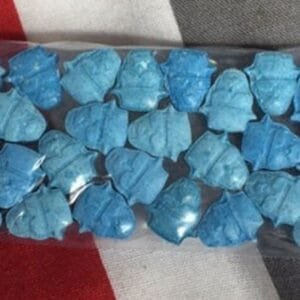
Breaking Bad Blue Heisenbergs – 200mg MDMA Tablet
Price range: $210.00 through $670.00
Powerful single-dose MDMA tablet inspired by Breaking Bad’s Heisenberg. 200mg potency for intense empathogenic effects. Perfect for experienced users.
Blue Heisenberg MDMA: Pill ID, Risks & Testing Guide
Blue Heisenberg MDMA refers to illicit blue pressed tablets featuring Walter White or “Heisenberg” imagery from Breaking Bad and commonly marketed as ecstasy or MDMA. The name identifies a pill design, not a standardized formulation. Appearance cannot confirm a tablet’s chemical contents, MDMA strength, purity, fentanyl status, or safety.
The branding functions as a marketing identity in the illicit drug market. Because anyone with a pill press and the relevant die can produce visually identical tablets, appearance reveals nothing reliable about what a specific tablet contains. Blue Heisenberg pills have been documented across multiple countries and in numerous pill-testing databases, often with substantially different chemical profiles between batches.
Blue Heisenberg MDMA is not a standardized drug product. The name describes illicit tablets carrying blue Walter White or Heisenberg branding, not a verified chemical formulation. A pill’s logo, color, or previous online report cannot establish its contents, MDMA strength, fentanyl status, or safety.
Blue Heisenberg MDMA: Quick Facts
- Blue Heisenberg is a pill design, not a standardized product with consistent contents or potency.
- Appearance, color, and logo cannot establish what a specific tablet contains.
- Pill reports from testing databases apply only to the individual sample that was analyzed, not to other tablets with the same appearance.
- Reagent tests provide presumptive information about chemical classes but cannot confirm identity, purity, dose, or safety.
- Unconsciousness, seizures, chest pain, severe breathing difficulty, extreme overheating, or collapse require immediate emergency medical care.
Blue Heisenberg Pill Identification
Why Visual Identification Is Unreliable
Pill identification in the illicit drug market is fundamentally different from identifying regulated pharmaceutical tablets. A pharmaceutical tablet carries legally enforceable content and manufacturing standards. An illicit pressed tablet carries none. The color, logo, shape, weight, and score of a Blue Heisenberg pill reflect whoever pressed that particular batch, not any standardized formula.
Illicit pill presses and die sets are commercially available at relatively low cost. Multiple independent producers can use the same design simultaneously in different locations, with entirely different contents. Two tablets that appear physically identical can differ in their active substances, their ratios, and their total dosage.
What Pill Reports Can and Cannot Tell You
Online pill-testing databases such as DrugsData.org and EcstasyData.org publish laboratory-verified analyses of submitted drug samples. These reports are genuine records of what specific samples contained at the time of analysis. They cannot be generalized to other tablets carrying the same branding.
A Blue Heisenberg pill report showing a confirmed MDMA result from a previous submission does not mean another tablet with the same appearance came from the same source, the same batch, or the same production run. Treating prior reports as proof of current contents is a documented source of serious harm. A pill’s logo, color, shape, or apparent press design does not establish that it came from the same batch as any previously analyzed tablet.
Blue Walter White Pill Variants
The Walter White and Heisenberg imagery has been applied to tablets in multiple colors, including blue and white. Some variants are marketed specifically as “blue Walter White” pills. The same limitations apply regardless of color. Different producers adopt identical branding independently, making cross-batch comparison unreliable without individual chemical analysis of each tablet.
Blue Heisenberg MDMA Pill Contents and Adulterants
What is in a Blue Heisenberg pill? There is no standard formula. A tablet sold as Blue Heisenberg may contain MDMA, another psychoactive substance, a mixture, or unexpected ingredients. Laboratory results from one visually similar pill cannot be generalized to another batch.
When a Blue Heisenberg pill does contain MDMA, the active compound is 3,4-methylenedioxymethamphetamine, a substituted amphetamine with stimulant and entactogenic properties. MDMA is classified as a Schedule I controlled substance in the United States under the Controlled Substances Act.
Independent laboratory testing of ecstasy-branded tablets consistently finds a range of substances beyond MDMA, either mixed with it or substituted entirely. The specific substances identified in any sample depend on time, location, and the particular supply chain involved, and market composition changes rapidly. Published testing data from services such as DrugsData.org and surveillance reports from the European Monitoring Centre for Drugs and Drug Addiction document the following categories of MDMA adulterants in blue pills and ecstasy-branded tablets more broadly.
Synthetic cathinones such as methylone, mephedrone, and MDPV are structurally related stimulants that can produce broadly similar but pharmacologically distinct effects. They have appeared in tablets sold as MDMA, though their prevalence varies by region and time period. Current local drug-checking data provides more relevant information than historical generalizations about frequency.
PMA and PMMA (paramethoxyamphetamine and paramethoxymethamphetamine) are substituted amphetamines associated with a narrower margin between an active dose and a toxic dose compared with MDMA. They have been linked to fatal overdoses in ecstasy-branded tablets in multiple countries, partly because their slower onset leads users to take additional doses before initial effects appear.
Methamphetamine has been detected in some tablets sold as MDMA. Its pharmacological profile and risk pattern differ meaningfully from MDMA.
Caffeine and other cutting agents appear frequently as bulking agents and may be present alongside MDMA or independently.
Novel psychoactive substances of various classes also appear in tested samples, sometimes in combinations that are difficult to characterize without laboratory analysis.
Can Blue Heisenberg Pills Contain Fentanyl?
Can Blue Heisenberg pills contain fentanyl? Fentanyl exposure cannot be ruled in or out by appearance. Its prevalence in non-opioid drug samples varies substantially by location, time period, and surveillance method. Fentanyl-specific screening can reduce uncertainty, while laboratory analysis provides stronger chemical identification.
Fentanyl contamination of the drug supply is a documented public health concern, as reported by both the DEA and CDC. DEA warnings about illicit pressed pills have most prominently concerned counterfeit pharmaceutical lookalikes, particularly tablets designed to resemble opioid or benzodiazepine medications. Evidence for fentanyl in ecstasy-specific samples is less consistent, and prevalence estimates vary by geography and sampling methodology.
This distinction matters because overstating fentanyl prevalence in ecstasy supplies can undermine the credibility of accurate harm-reduction information, while understating the risk can leave people unprepared. The appropriate response to this uncertainty is fentanyl-specific screening rather than assumption in either direction. Neither a tablet’s appearance nor reports from another batch establish whether fentanyl is present.
Fentanyl test strips, originally developed for urine testing, have been validated for screening drug samples. Research published in the International Journal of Drug Policy demonstrated their effectiveness at detecting fentanyl contamination in drug samples when used according to manufacturer instructions. Not all fentanyl analogs are reliably detected by all strip formulations, so a negative result does not guarantee a fentanyl-free sample. A positive result provides a clear and actionable warning.
Fentanyl test strips are legal in most U.S. states. Current legal status can be confirmed through the National Alliance of State and Territorial AIDS Directors.
Blue Heisenberg Pill Strength and Dosage
How strong is a Blue Heisenberg pill? Its strength cannot be determined from the Heisenberg logo, color, size, weight, or reagent reaction. Only quantitative laboratory analysis can determine how much MDMA or another measurable compound is present in a tested sample.
There is no standard Blue Heisenberg dosage or potency. Because multiple independent producers use the same or similar press designs, no consistent formula exists across batches. Tablets analyzed in drug-checking databases have shown MDMA content ranging from negligible amounts to doses substantially above what a user might anticipate.
High-dose MDMA tablets have become more common in European markets over the past decade. Surveillance data published by the European Monitoring Centre for Drugs and Drug Addiction has documented rising average tablet MDMA content, increasing the risk of unintentional high-dose exposure for people who calibrate their intake based on historical norms or the appearance of a tablet.
Potency cannot be estimated from appearance, weight, hardness, color intensity, or the result of a reagent test. Only quantitative laboratory analysis can establish how much of a given substance a tablet contains.
What Drug Tests Can—and Cannot—Tell You
Reagent testing and fentanyl screening provide more information than visual inspection alone, but each method has specific and important limitations. Understanding what these tests can and cannot establish is essential to interpreting their results accurately.
| Method | What it can indicate | Key limitations |
|---|---|---|
| Visual inspection | Color, logo, shape, size | Cannot indicate contents, dose, or safety in any way |
| Pill report databases | Results from one analyzed sample | Does not apply to other tablets with the same appearance |
| Reagent tests (Marquis, Mecke, Mandelin, Simon’s) | Presence of certain chemical classes | Presumptive only; cannot confirm purity, dose, or safety; cannot reliably rule out all adulterants |
| Fentanyl test strips | Presence of fentanyl or certain analogs | Not all analogs detected; negative result does not guarantee fentanyl absence |
| Laboratory analysis (GC/MS, HPLC) | Substance identity and, in quantitative form, amount present | Most reliable available method; access requires submission to a testing service |
Reagent Testing
Reagent tests produce colorimetric reactions when specific chemical families are present. Each reagent is selective for different compound classes, and using multiple reagents together produces more information than any single test alone. However, using multiple reagents increases information without making a screen definitive. These tests cannot confirm purity, establish dosage, or prove that a sample is safe.
DanceSafe, a nonprofit harm-reduction organization, provides reagent testing kits, educational materials, and event-based services for the recreational drug-using community.
Marquis reagent is typically the first test applied to a suspected MDMA sample. In the presence of MDMA, it generally progresses through orange toward dark purple or black, though exact color development depends on reagent freshness, concentration, the presence of mixtures, and timing. A reaction consistent with MDMA does not confirm purity, rule out co-present substances, or establish dosage. Verify expected color reactions against the current chart provided by your specific reagent manufacturer, as color descriptions in general references may not match your product.
Mecke reagent produces a blue-green to dark blue reaction with MDMA and also reacts with certain opioids, making it useful for detecting some additional substances alongside Marquis results.
Mandelin reagent reacts with ketamine and amphetamines including methamphetamine and can help identify substitutions not reliably distinguished by Marquis alone.
Simon’s reagent differentiates secondary amines from primary amines. MDMA, being a secondary amine, produces a blue color with Simon’s reagent, while MDA, a primary amine, does not. This distinction is useful when the Marquis result is ambiguous between the two compounds.
Can reagent testing confirm MDMA? No. Color reagents provide presumptive information about chemical classes but cannot establish purity, dose, safety, or reliably rule out every adulterant. A reaction consistent with MDMA should not be interpreted as proof that a pill contains only MDMA or that it is safe.
Laboratory Drug Checking
Validated laboratory analysis using gas chromatography–mass spectrometry (GC/MS) or high-performance liquid chromatography (HPLC) provides the most reliable identification available outside a clinical or forensic setting. Quantitative configurations can also determine how much of each identified substance is present. DrugsData.org, operated by Erowid Center and funded in part by public health organizations, accepts drug samples by mail for laboratory analysis and publishes results in a public database.
Blue Heisenberg MDMA Side Effects, Toxicity, and Overdose Risk
MDMA Pharmacology and Short-Term Effects
When a tablet does contain MDMA, it produces effects through the release of serotonin, dopamine, and norepinephrine, along with inhibition of their reuptake. The National Institute on Drug Abuse describes short-term effects as including increased energy, elevated mood, emotional closeness, distorted sensory and time perception, and heightened empathy. Physical effects include elevated heart rate, blood pressure, and body temperature.
Blue Heisenberg molly and similar ecstasy-branded products present additional uncertainty beyond MDMA pharmacology alone, because the actual substance in any given tablet may differ from MDMA entirely.
Serious and Life-Threatening Adverse Effects
Hyperthermia is among the most serious acute risks associated with MDMA, particularly in hot environments during physical activity. The drug impairs temperature regulation, and when combined with exertion and warm settings, body temperature can rise to life-threatening levels. Hyperthermia is a primary mechanism in MDMA-related deaths.
Hyponatremia, or severely low blood sodium, can develop when MDMA users consume excessive water. MDMA stimulates antidiuretic hormone release, which reduces the kidneys’ ability to excrete water. Drinking large volumes of fluid without proportionate exertion can dilute blood sodium to dangerous levels, causing brain swelling, seizures, and death. Fluid needs during MDMA use vary with exertion level, body size, temperature, and individual health factors. There is no universal safe intake amount; both inadequate hydration and excessive water consumption carry risk.
Serotonin toxicity can occur when serotonergic activity becomes excessive, particularly when MDMA is combined with other serotonergic drugs. Symptoms range from agitation and tremor to life-threatening hyperthermia, muscular rigidity, and cardiovascular instability. The Hunter Serotonin Toxicity Criteria are widely used clinically to assess severity.
Cardiovascular toxicity includes elevated blood pressure, tachycardia, and risk of arrhythmia. These effects are amplified when tablets contain stimulant adulterants such as methamphetamine or synthetic cathinones.
PMA and PMMA toxicity is particularly dangerous because these substances have a slower onset than MDMA, leading users to take additional doses before initial effects appear. The margin between an active dose and a toxic dose is narrower than with MDMA, and hyperthermia associated with PMA and PMMA is especially severe.
Blue Heisenberg toxicity and MDMA adulterant risks depend significantly on what a specific tablet actually contains. Substances such as synthetic cathinones, PMA, PMMA, or methamphetamine each carry distinct toxicity profiles, meaning that the clinical presentation of a bad reaction may differ from what would be expected from MDMA alone.
Long-Term Effects
Research indicates that heavy or repeated MDMA use is associated with adverse effects on serotonergic neurotransmitter systems. Studies reviewed by NIDA suggest potential effects on memory, mood regulation, and sleep architecture in people with heavy use histories. Drawing firm causal conclusions about persistent human neurotoxicity is methodologically difficult, because most studies involve people with extensive polysubstance use histories, variable dosing records, and potential adulterant exposure. Acute serotonergic toxicity is well-established; long-term structural effects in humans at typical recreational doses remain an area of active research rather than settled science.
Recognizing Overdose Warning Signs
When should you call 911 after ecstasy or MDMA use? Call 911 for unconsciousness, seizures, severe breathing difficulty, chest pain, collapse, extreme overheating, or severe confusion. If opioid poisoning is possible and naloxone is available, administer it according to its instructions while waiting for emergency help.
Emergency warning signs include:
- Extremely high body temperature or skin that is hot and dry to the touch
- Seizures or uncontrolled muscle movements
- Severe confusion, agitation, or inability to communicate
- Collapse or loss of consciousness
- Chest pain or irregular heartbeat
- Serious difficulty breathing
- Blue, gray, or pale coloring around the lips or fingernails
Many U.S. states have enacted medical amnesty or drug overdose immunity laws that provide legal protection for people who call emergency services in good faith during a drug-related emergency. The Network for Public Health Law maintains a current summary of these laws by state.
If opioid involvement is possible, naloxone should be administered while awaiting emergency services. Naloxone does not reverse MDMA toxicity but can treat opioid-related respiratory depression if a tablet was contaminated. Information on naloxone access is available through NEXT Distro and many local health departments.
The Poison Control National Helpline at 1-800-222-1222 is available 24 hours a day for guidance in situations that do not yet require emergency services.
Harm Reduction for Blue Heisenberg Pills
Harm reduction is a public health approach that aims to reduce drug-related risks without requiring abstinence as a precondition for receiving information or assistance. The following principles are relevant to ecstasy-branded pills, though no harm-reduction measure can make a chemically unverified pill safe.
Test before use. Use Marquis, Mecke, Mandelin, and Simon’s reagents and interpret the results together as a presumptive panel. Use a fentanyl test strip separately. Submit a sample to a laboratory drug-checking service such as DrugsData.org when possible. Testing reduces uncertainty but cannot eliminate it.
Understand the limits of testing. A reagent reaction consistent with MDMA does not confirm that a pill contains only MDMA or that it is safe. An unknown pill carries an unknown risk regardless of test results.
Avoid combinations. MDMA interacts dangerously with monoamine oxidase inhibitors, other serotonergic drugs, lithium, and stimulants. Combining with alcohol or other central nervous system depressants adds cardiovascular and respiratory risk.
Manage the environment. Hyperthermia risk increases substantially in crowded, hot settings with physical activity. Cooler environments and regular rest periods reduce this risk.
Hydrate appropriately and individually. Both dehydration and excessive water consumption carry risk during MDMA use. Fluid needs depend on exertion level, body size, temperature, and individual health. There is no universal safe intake guideline.
Do not use alone. Having people present who can recognize warning signs and call for help substantially improves outcomes in adverse events.
Know where resources are. Keep the Poison Control number (1-800-222-1222) accessible and know the location of the nearest emergency room.
Frequently Asked Questions
What is a Blue Heisenberg pill?
A Blue Heisenberg is an illicit blue pressed tablet featuring Walter White or Heisenberg imagery from Breaking Bad. It is commonly marketed as ecstasy or MDMA, but its design does not confirm that it contains MDMA or any other specific substance.
What is in a Blue Heisenberg pill?
There is no standardized formula. Different batches can contain different amounts of MDMA or entirely different substances. Color, shape, logos, and previous pill reports cannot establish the chemical contents of an individual tablet.
How much MDMA is in a Blue Heisenberg pill?
There is no standard strength. Because multiple independent producers can use similar presses, the amount of MDMA cannot be reliably predicted from appearance or from the laboratory result of a different tablet. Only quantitative laboratory analysis of the specific tablet can establish its content.
Are Blue Heisenberg MDMA pills dangerous?
They can be. MDMA itself carries serious adverse effect risks, and an illicit tablet creates additional uncertainty about identity, potency, and contaminants. Serious complications can include hyperthermia, cardiovascular problems, hyponatremia, and serotonin toxicity. Adulterants such as PMA, PMMA, synthetic cathinones, or methamphetamine carry their own distinct risks.
Can a Marquis reagent identify MDMA in a Blue Heisenberg pill?
Marquis reagent can produce a presumptive reaction consistent with MDMA, typically progressing toward dark purple or black, depending on reagent condition, concentration, and the presence of other substances. It cannot establish purity, determine dosage, rule out all other substances, or prove a pill is safe.
Can a Marquis test detect fentanyl in a Blue Heisenberg?
Marquis reagent should not be relied upon to detect fentanyl. Fentanyl-specific test strips can screen samples for fentanyl or certain related compounds. Validated laboratory testing provides stronger identification.
What are Blue Heisenberg overdose warning signs?
Emergency warning signs include extreme overheating, seizures, severe confusion, collapse, chest pain, serious breathing problems, blue or gray lips, and unconsciousness. Call 911 immediately for any of these symptoms.
Can a Blue Heisenberg pill report identify my pill?
No. A pill report describes the particular sample that was analyzed. An identical color, logo, shape, or apparent pill press does not prove that another tablet came from the same batch or contains the same chemicals.
Addiction and Treatment Resources
MDMA is not considered as strongly addictive as opioids or stimulants by conventional addiction research measures. However, some people develop patterns of compulsive use, difficulty reducing use, or other signs of substance use disorder as defined by DSM-5 criteria.
Signs that use may be becoming problematic include spending increasing time obtaining, using, or recovering from the drug; continued use despite social, occupational, or health consequences; unsuccessful efforts to cut down; and withdrawal from previously important activities.
The Substance Abuse and Mental Health Services Administration operates a 24-hour National Helpline at 1-800-662-4357, providing confidential referrals to treatment facilities, support groups, and community-based services in English and Spanish at no cost. The federal treatment locator at FindTreatment.gov allows searches for licensed treatment providers by location. NIDA’s overview of treatment approaches is available at the NIDA website.
Evidence and Sources
This article prioritizes information from the National Institute on Drug Abuse, Centers for Disease Control and Prevention, Drug Enforcement Administration, Substance Abuse and Mental Health Services Administration, Poison Control, peer-reviewed toxicology research, and current laboratory drug-checking data from services such as DrugsData.org and the European Monitoring Centre for Drugs and Drug Addiction. Drug market composition changes over time and varies by geography. Claims about substance prevalence reflect the state of published surveillance data at the time of writing and should be interpreted in that context. Readers seeking current local drug-checking results should consult regional harm-reduction organizations and up-to-date testing databases directly.
Blue Heisenberg MDMA: Key Takeaways
Blue Heisenberg MDMA is a pill design, not a standardized drug product. Illicit blue tablets carrying Walter White or Heisenberg imagery are commonly sold as ecstasy, but their appearance, color, and branding provide no reliable information about their chemical contents, potency, or safety.
Identical-looking tablets can contain different substances across different batches and production sources. Documented contents of ecstasy-branded tablets in drug-checking databases include MDMA, synthetic cathinones, PMA, PMMA, methamphetamine, fentanyl, caffeine, and novel psychoactive substances, with prevalence varying by location and time.
Reagent testing using Marquis, Mecke, Mandelin, and Simon’s reagents provides presumptive information that is more useful than appearance alone but cannot confirm identity, purity, dose, or safety. Fentanyl test strips can screen for fentanyl contamination. Laboratory analysis through services such as DrugsData.org provides the most reliable identification available outside a clinical or forensic setting.
Emergency warning signs including extreme overheating, seizures, chest pain, severe breathing difficulty, collapse, and unconsciousness require immediate emergency services. Substance use disorder resources are available through SAMHSA at 1-800-662-4357 and FindTreatment.gov.
| QUANTITY | 50 PILLS, 100 PILLS, 250 PILLS |
|---|
30 reviews for Breaking Bad Blue Heisenbergs – 200mg MDMA Tablet
Add a review
Related products


Cali Dorsey (verified owner) –
The world felt safe and beautiful again.
Shane Hopkins (verified owner) –
The level of care in the delivery set the tone for the entire experience. It felt ceremonial.
Anthony Green (verified owner) –
This isn’t just a product — it’s a safe invitation to come back home to yourself.
Jared Foster (verified owner) –
You made me feel like a human, not just a customer. That made the journey even more meaningful.
Colton Hayes (verified owner) –
Nothing about this felt rushed or commercial. It felt like a gentle invitation inward.
June Hampton (verified owner) –
From the discreet box to the powerful clarity during my trip, every part of this journey was handled with intention.
Gage Blanchard (verified owner) –
This helped me communicate without fear.
Oscar Stone (verified owner) –
Wasn’t sure what to expect from an online order, but everything arrived quickly, safely, and without a single issue. The quality was beyond anything I’ve tried before.
Luke Bennett (verified owner) –
I’ve tried different sources in the past, but none gave me this level of emotional depth and trust.
Arianna Newton (verified owner) –
This felt like more than a psychedelic journey. It felt like support from people who understand what real healing means.
Ivory Holliday (verified owner) –
Helped me feel safe inside my own body again.
Alianna Ricks (verified owner) –
I reconnected with someone I thought I lost—myself.
Darren Roy (verified owner) –
No drama, no noise — just peace, insight, and quality. That’s what this experience gave me.
Lillian Cross (verified owner) –
Truly impressed with how easy and safe this entire process was. Felt more like working with guides than a shop.
Kylie McIntyre (verified owner) –
This helped me communicate without fear.
June Hampton (verified owner) –
I was amazed at how fast it arrived, and the experience itself was like pressing the reset button on my inner life.
Corbin Strange (verified owner) –
Amazing for introspection and releasing emotional baggage.
Dylan Flores (verified owner) –
It helped me break through emotional blocks I didn’t even know were there.
David Smith (verified owner) –
I didn’t want to escape — I wanted to explore. This made that possible.
Fred Winters (verified owner) –
The experience wasn’t just visual — it was deeply emotional and grounding.
Shea Garland (verified owner) –
Trusted source, amazing journey.
Lawrence Runnels (verified owner) –
Gentle, kind, and transformative.
Saul Plummer (verified owner) –
Eased my fear of emotional intimacy.
Victoria Walker (verified owner) –
I laughed, cried, and sat in total peace — all within the span of a few hours.
Grant George (verified owner) –
This gave me emotional insight, and the professionalism behind the product gave me peace of mind.
Brooklyn Alexander (verified owner) –
From shipping to set and setting, the whole thing was flawless. I felt truly taken care of.
Tony Briggs (verified owner) –
This was a conversation with my soul, made possible by the care and intention behind this source.
Hailee Pack (verified owner) –
Woke up with a full heart and zero regrets.
Neil Dennis (verified owner) –
Every little part of the process was dialed in. I felt like I mattered.
Gavin Ray (verified owner) –
Each moment felt sacred. I was fully immersed in a gentle sense of awe.