


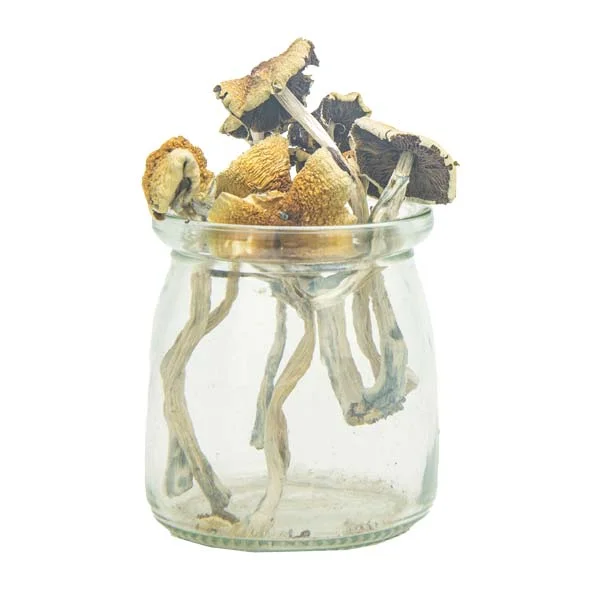
Psilocybe Bohemica – Potent Wild Mushroom from Europe
$175.00 – $850.00Price range: $175.00 through $850.00
Psilocybe Bohemica is a strong wild psilocybin mushroom species from Central Europe. Known for its intense visual effects and creative stimulation.
Psilocybe bohemica: Taxonomy, Identification, Potency, Habitat and Lookalikes
Psilocybe bohemica is a name used in the scientific literature for a psilocybin-containing, wood-decaying Psilocybe described from Central Europe. Later European taxonomic research has reassessed P. bohemica alongside Psilocybe serbica, P. arcana, and P. moravica, making its current nomenclature one of the most consequential issues for anyone interpreting historical collections or occurrence records.
This guide examines what the evidence actually supports: current taxonomy, morphology, microscopy, ecology, chemical analyses, and dangerous comparisons such as Galerina marginata. Where taxonomic databases or published studies differ, the relevant authority and access date are stated rather than converting a source-dependent conclusion into an implied universal fact.
Safety note: The characteristics described here are intended for mycological education and research, not as a test of whether a wild mushroom is safe to consume. Photographs, habitat observations, blue bruising, and spore-print color cannot independently establish identity or safety. Deadly Galerina species share the same woody substrates as wood-associated Psilocybe, and the consequences of misidentification can be fatal.
Quick biological profile:
| Characteristic | Psilocybe bohemica |
|---|---|
| Genus | Psilocybe |
| Family | Hymenogastraceae |
| Broader taxonomic group | Agaricales, Basidiomycota |
| Taxonomic status | Treated within or closely associated with the Psilocybe serbica complex by significant European revision work; current accepted name should be verified against MycoBank and Index Fungorum with access date recorded |
| Ecology | Lignicolous saprotroph |
| Reported range | Primarily Central Europe; Czech material is taxonomically central |
| Typical habitat | Decaying woody debris, litter, and related forest substrates |
| Spore-print description | Dark purplish-brown in published taxonomic descriptions |
| Chemistry | Psilocybin reported in analyzed specimens; concentrations are study-specific |
| Critical dangerous comparison | Galerina marginata and related amatoxin-containing species |
Key takeaways: P. bohemica cannot be understood in isolation from the P. serbica taxonomic literature. Its accepted name depends on the authority cited and the date the record was checked. Published alkaloid figures describe specific analyzed specimens, not a fixed species-wide potency. And Galerina marginata demands serious attention as a comparison taxon because amatoxin poisoning — driven by α-amanitin’s inhibition of RNA polymerase II — can be fatal even when symptoms are delayed.
Evidence labels used throughout: Strong denotes findings grounded in primary taxonomic literature, established chemistry, or authoritative databases. Moderate denotes credible evidence affected by sampling gaps or taxonomic uncertainty. Limited describes claims resting on small sample sets, variable analytical methods, or incompletely verified geographic data. These labels appear alongside major claim blocks below.
What Is Psilocybe bohemica?
Psilocybe bohemica is the historical name for a Central European, lignicolous Psilocybe containing psilocybin-related compounds. Its scientific interest extends well beyond the fruiting body itself: the name became central to a taxonomic problem involving P. serbica, P. arcana, and P. moravica — a group that European researchers have compared using morphological and, more recently, molecular evidence.
A lignicolous saprotroph obtains nutrients by decomposing dead woody material. That role places P. bohemica in a different functional category than dung-associated species, grassland Psilocybe, or mycorrhizal fungi, and it directly shapes which dangerous lookalikes are relevant — because Galerina marginata occupies the same woody substrate niche.
The informal label “Bohemian psilocybe” reflects the taxon’s historical connection with Bohemia in present-day Czechia. Phrases such as “Czech wood-loving Psilocybe” appear in online discussion but carry no taxonomic standing and should not be used as reference terms in scientific or herbarium contexts.
Why the name can be confusing
Taxonomy changes when researchers gain access to larger collections and better methods. A mushroom first described as a distinct species — because it presents a particular combination of visible and microscopic characters — can later be shown to fall within the documented variability of an older name. That is precisely what happened here.
Psilocybe serbica holds nomenclatural priority as the older name in this complex. P. bohemica, P. arcana, and P. moravica have each been reassessed in subsequent European revision work, with comparative research progressively narrowing the morphological space between them. The protologue and original authorship for P. bohemica should be cited directly from the primary taxonomic literature; the verified source, publication year, and identifier belong here once confirmed.
Is Psilocybe bohemica the Same as Psilocybe serbica?
The answer depends on which taxonomic authority is being followed. Modern European revision work has treated the historical P. bohemica concept in close connection with P. serbica and related names including P. arcana and P. moravica. A publication-quality answer reports the primary revision and current nomenclatural databases separately, because “synonym,” “variety,” and “member of a species complex” are not interchangeable statements.
Nomenclature determines which name holds priority under a given treatment; taxonomy addresses how researchers delimit biological taxa. A database record and a phylogenetic study consequently answer related but distinct questions.
Original naming and subsequent revision
| Period | Development | Evidence type |
|---|---|---|
| Historical literature | Psilocybe serbica established; authorship and year to be confirmed | Original description |
| 1980s | P. bohemica described from Czechoslovak material; authorship and year to be confirmed from MycoBank | Morphology and taxonomic description |
| Later European work | P. bohemica, P. arcana, and P. moravica compared with P. serbica | Comparative morphology |
| Modern revision work | Boundaries among these taxa reassessed using morphology and sequence data | Morphology and molecular evidence |
| Current record | Accepted or synonym status must be checked against MycoBank and Index Fungorum with access date | Nomenclatural databases and primary literature |
What evidence would change the taxonomic picture?
Broader sequencing of type material and verified vouchers across the historical range of P. serbica, P. bohemica, P. arcana, and P. moravica could test whether the morphological distinctions used to erect these names correspond to genetically coherent lineages or represent environmentally induced variation within a single taxon. Population-level genomic sampling — rather than single-specimen sequences — would be particularly informative. More geographically representative collections from Central and southeastern Europe would also help determine whether apparent morphological forms track geography or substrate.
Until that evidence is available, the honest answer is that the complex’s internal boundaries remain less resolved at the genomic level than current database records may suggest.
Which name should researchers use?
Use the name employed by the specific authority or dataset being cited, and record important synonyms explicitly. A herbarium record catalogued as P. bohemica should not be silently converted to another name without noting which taxonomic authority supports that decision and when it was applied. Check current treatment at MycoBank and Index Fungorum and record the access date.
What Physical Characteristics Are Reported for Psilocybe bohemica?
Evidence level: Moderate. Morphological descriptions exist in primary taxonomic literature, but some characters overlap with related taxa, and hygrophanous coloration can vary substantially with specimen condition.
Published descriptions characterize P. bohemica as a relatively small wood-associated mushroom with a hygrophanous brownish cap, darkening gills as spores mature, a slender pale stem, and blue or blue-green discoloration following tissue damage. Considerable variation occurs with moisture level, maturity, and preservation state.
A hygrophanous pileus changes apparent color as its water content shifts. Photographs taken under different moisture conditions can make the same taxon appear strikingly different — a practical caution for anyone attempting visual comparisons across field images or online databases such as iNaturalist or GBIF.
How Reliable Is a Psilocybe bohemica Identification?
No single observation reliably establishes a P. bohemica identification. Confidence should rise only when independent lines of evidence agree.
A photograph can document appearance but cannot establish microscopic characters and may distort hygrophanous color, dimensions, and bruising. Habitat can support ecological plausibility but is shared by unrelated, dangerous fungi. Bruising and spore-print observations add characters but remain non-exclusive. Microscopy provides stronger comparative evidence when calibrated against authenticated descriptions and reference collections. Voucher-backed expert examination and, where taxonomically informative, molecular evidence provide substantially stronger support for difficult specimens.
The evidentiary hierarchy, from weakest to strongest: historical label → photograph → documented morphology → microscopy → voucher-backed specialist determination → molecular evidence.
For research databases, record both the proposed identification and its basis. “Identified from photograph” and “voucher examined and sequenced” should never carry equivalent confidence.
Cap, gills, and stem
The pileus is typically described as conical to bell-shaped when young, becoming more convex or broadly expanded with maturity. Published color descriptions range across brown, ochraceous, and reddish-brown tones, with drying specimens becoming noticeably paler — a direct consequence of hygrophanous tissue.
The lamellae darken as spores develop, producing a color progression experienced observers can use as one aging indicator. The stipe is generally described as relatively slender and pale to whitish, with fibrillose surface texture rather than the membranous, persistent ring associated with some other mushroom groups — a distinction relevant when comparing P. bohemica with Galerina marginata.
Exact dimensions should be drawn from the taxonomic description being cited, because measurements can differ between P. bohemica descriptions and broader treatments of the P. serbica complex.
Does Psilocybe bohemica bruise blue?
Blue or blue-green discoloration following tissue damage has been reported in descriptions associated with P. bohemica. Research on psilocybin-containing mushrooms indicates that this staining arises through injury-triggered enzymatic chemistry involving psilocin and the formation of oxidized, oligomeric products, a process documented in studies such as Blei et al. (2020) in Angewandte Chemie.
The reaction is chemically informative but taxonomically insufficient on its own. Blue staining neither confirms that a specimen is P. bohemica nor establishes that an unidentified mushroom is safe. Several unrelated fungi produce superficially similar discoloration, and the absence of visible bruising does not safely exclude psilocybin-containing taxa.
What Microscopic Characteristics Help Taxonomists Study Psilocybe bohemica?
Evidence level: Moderate. Microscopic characters are documented in primary descriptions, but some features overlap with related taxa, and measurements must be interpreted against the specific taxonomic concept being applied.
What does microscopy establish?
Microscopy can strengthen or weaken a proposed identification by comparing spore dimensions and shape, germ-pore characteristics, and cystidial morphology against authenticated descriptions. It does not confirm an identification simply because one measurement falls within a published range. Multiple microscopic characters must agree, evaluated against the correct reference — P. bohemica descriptions specifically, not a blended range drawn from P. serbica or related names without noting that conflation.
Basidiospores
Primary sources should be consulted for exact measurements associated with the taxonomic concept being studied. Secondary descriptions of P. bohemica sometimes cite a spore-length range in the area of 10.5–14 µm; that figure should not be republished without tracing it to its original analytical source. Spores are generally described as smooth, relatively thick-walled, and possessing a germ pore — characters consistent with other members of the genus Psilocybe as treated in Hymenogastraceae.
Cystidia and spore prints
Cheilocystidia occupy a gill’s edge; pleurocystidia occur on the gill face. Their shape, dimensions, frequency, and presence or absence each contribute to a microscopic diagnosis of P. bohemica. Terminology follows standard mycological usage as defined in resources such as the MycoBank glossary and the Index Fungorum nomenclature standards.
The spore deposit is generally described as dark purplish-brown in published accounts. Color terminology varies among observers, lighting conditions, and sources — which is one reason spore-print color functions as one character among several rather than a standalone identification result.
A defensible research workflow is evidence-based throughout: establish provenance, document macroscopic traits systematically, record microscopy with calibrated measurements and scale bars, compare multiple primary taxonomic sources, and preserve a voucher where appropriate. When closely related taxa cannot be separated on morphological grounds, specialist review or molecular confirmation may be the only reliable path forward. Molecular identification resources include UNITE for fungal ITS sequences and GenBank for deposited sequence data.
Where Does Psilocybe bohemica Grow?
Evidence level: Moderate. Czech and Central European literature provides the taxonomic foundation; geographic completeness depends on the distinction between verified vouchers, literature records, and unvalidated observational data.
Psilocybe bohemica is documented in Central European literature as a wood-associated fungus, with Czech material central to its taxonomic history. The defensible geographic range should be built from identified herbarium vouchers and peer-reviewed records first, with observational databases such as GBIF and iNaturalist treated as supplementary evidence requiring validation.
[VERIFIED RANGE DATA: query GBIF occurrence records for Psilocybe bohemica, filter by basis of record, note methodology and access date]Wood and litter associations
Its ecology is lignicolous: P. bohemica obtains nutrients from decomposing woody material. Published descriptions of the broader taxonomic complex mention woody debris, twigs, and forest litter, with deciduous and coniferous material both referenced. Tree genera mentioned in habitat accounts include Alnus (alder), Betula (birch), and Picea (spruce), consistent with the mixed forest environments of Central Europe.
These are observed ecological associations, not diagnostic substrate requirements. Finding a small brown mushroom on birch debris in Czechia does not establish a P. bohemica identification — it provides one piece of contextual evidence to be evaluated alongside morphological and microscopic characters.
Geography and seasonality
Records are concentrated in Central Europe, with Czechia particularly prominent given the taxon’s taxonomic history. Surrounding European countries appear in the broader literature on the P. serbica complex, but individual country records should be verified against preserved specimens or peer-reviewed literature. Occurrence data can be explored through GBIF for the wider complex, with careful attention to the basis of each record.
Seasonal fruiting is generally associated with cooler autumn conditions. Exact timing varies with locality, altitude, and annual weather patterns, making calendar-month predictions less transferable across sites than many field guides imply.
What Is Known About Psilocybe bohemica Potency?
Evidence level: Limited for specific numerical ranges. Psilocybin has been reported from material identified as P. bohemica, but concentrations measured in individual specimens reflect what was sampled, how it was preserved, which compounds were quantified, and which analytical method was used. No single percentage responsibly represents an inherent species-wide potency.
Some secondary sources repeat a dry-weight psilocybin range of approximately 0.85%–1.34%. That figure should not be published as an established fact unless the original analytical paper can be identified and shown to support that range for correctly identified P. bohemica material analyzed under documented conditions. If the source cannot be confirmed, the numerical range should be omitted.
Study-level alkaloid evidence
| Study | Taxonomic name used | Specimen provenance | n | Method | Psilocybin | Psilocin | Other analytes | Limitation |
|---|---|---|---|---|---|---|---|---|
| [TO BE COMPLETED FROM PRIMARY SOURCE — search PubMed and Europe PMC] |
Psilocin and minor tryptamines such as baeocystin and norbaeocystin may also appear in chemical profiles of the complex; their presence and concentrations should be sourced to primary analyses.
Why potency comparisons require caution
Mushroom chemistry varies because of biological differences between individual specimens, developmental stage at harvest, environmental conditions during growth, drying method, storage duration, and analytical platform. “Total alkaloids,” “psilocybin concentration,” and combined psilocybin-plus-psilocin values are not interchangeable measurements, and studies rarely use identical protocols or reporting bases.
| Species | General literature context | Ecological association | Key comparison limitation |
|---|---|---|---|
| P. bohemica / P. serbica complex | Psilocybin reported in analyzed specimens | Woody debris | Limited sample sets; ongoing taxonomic revision affects attribution |
| P. cubensis | Extensively studied chemically | Often dung-associated | Different ecology, specimens, and methodologies make direct comparison unreliable |
| P. cyanescens | Psilocybin-containing, wood-associated | Woody debris and woodchips | Comparable ecology does not make studies analytically equivalent |
| P. azurescens | High concentrations reported in some analyses | Wood-associated habitats | Study-specific results should not become universal potency values |
| P. semilanceata | Numerous European chemical reports | Grassland | Different ecology and datasets |
The meaningful comparison is study versus study — analytical method versus analytical method, specimen set versus specimen set — not mushroom name versus mushroom name.
How Does Psilocybe bohemica Differ From Galerina marginata and Other Lookalikes?
Evidence level: Strong for the toxicological risk; Moderate for the comparative morphological characters.
Galerina marginata is a critical toxicological comparison for small mushrooms found on woody substrates. Members of the species contain amatoxins — primarily α-amanitin, which inhibits RNA polymerase II — capable of causing severe hepatotoxicity and potentially fatal organ failure, as documented in the medical toxicology literature including Enjalbert et al. (2002) in the Journal of Toxicology: Clinical Toxicology.
Symptom onset after amatoxin ingestion is characteristically delayed. The North American Mycological Association and Poison Control both document that serious symptoms often appear 6–24 hours or more after ingestion, meaning waiting to see whether symptoms develop is not a safe response.
If an unidentified wild mushroom may have been consumed, contact a poison center or emergency medical service immediately — do not wait for symptoms. In the United States, Poison Control is available at 1-800-222-1222 and at poison.org. Preserve a photograph or sample of the mushroom if doing so does not delay seeking care.
Galerina marginata vs Psilocybe bohemica
| Character | P. bohemica / P. serbica complex | Galerina marginata | Hypholoma fasciculare | Diagnostic limitation |
|---|---|---|---|---|
| Ecology | Wood-associated | Wood-associated | Wood-associated | Substrate overlaps; ecology supports plausibility, not identity |
| Cap | Brown to ochraceous, hygrophanous | Brown to yellow-brown | Often more sulfur-yellow | Color changes with moisture, age, and lighting |
| Spore-print description | Dark purplish-brown | Rusty to cinnamon-brown | Dark purplish tones | Perceived colors can overlap or be misread |
| Bluing | Reported | Not characteristic | Not characteristic | Bruising alone cannot establish identity |
| Veil and stem characters | Taxon-specific fibrillose features | Ring or veil remnants often present | Variable remnants | Age and weathering can erase veil evidence |
| Microscopy | Psilocybe-type spore and cystidial characters | Distinct microscopic suite | Distinct microscopic suite | Expertise and authenticated reference material required |
| Toxicology | Psilocybin-containing | Potentially lethal amatoxins | Poisonous | Never infer safety from gross morphology alone |
Psilocybe bohemica vs Psilocybe cyanescens
Both are wood-associated Psilocybe taxa sharing broadly similar characteristics — hygrophanous brown caps, blue staining, and lignicolous ecology. P. cyanescens is widely reported from the Pacific Northwest and parts of western Europe, while P. bohemica is centered in Central Europe; geographic context is one useful separator, though neither geography nor visual similarity is sufficient for confident identification. GBIF occurrence data for P. cyanescens illustrates this distributional contrast.
A safer decision framework
The right question for any scientific specimen is not “Does this look close enough?” but “How many independent lines of evidence support this identification?” Provenance and ecology establish context; macroscopic morphology generates a provisional hypothesis; microscopy tests additional characters; authoritative descriptions provide the comparison standard; and specialist review or molecular analysis — using resources such as UNITE for ITS-based fungal identification — resolves what morphology cannot.
No stage in that framework converts an uncertain wild mushroom into something proven safe.
How Does Psilocybe bohemica Compare With Similar European Wood-Decaying Mushrooms?
| Taxon | Relationship or relevance | Broad ecology | Main research issue | Evidence note | Toxicity concern |
|---|---|---|---|---|---|
| P. bohemica | Historical focal taxon | Lignicolous | Status within the serbica complex | Primary taxonomic descriptions exist; database treatment requires current verification | Contains controlled psychoactive compounds |
| P. serbica | Central taxonomic comparison | Lignicolous | Older name encompassing related forms | Priority name in the complex; check MycoBank | Contains psychoactive compounds |
| P. arcana | Historically associated taxon | Wood-associated | Synonymy and complex boundaries | Part of the same European revision problem | Psychoactive Psilocybe context |
| P. moravica | Historically associated taxon | Wood-associated | Synonymy and complex boundaries | Part of the same European revision problem | Psychoactive Psilocybe context |
| P. cyanescens | Comparative Psilocybe taxon | Lignicolous | Morphological and molecular differentiation | More extensively studied outside Central Europe; see GBIF | Contains psychoactive compounds |
| G. marginata | Critical dangerous comparison | Lignicolous | Must be excluded before any positive Psilocybe hypothesis | Amatoxin-containing; visual exclusion alone is unreliable | Potentially fatal amatoxins |
| H. fasciculare | Habitat and lookalike comparison | Wood-associated | Gross morphology may mislead inexperienced observers | Poisonous; less acutely dangerous than G. marginata | Poisonous |
What Are the Strengths and Limitations of the Scientific Evidence?
| Claim | Evidence level | Best source type | Main limitation |
|---|---|---|---|
| P. bohemica treated within or near the P. serbica complex | Moderate–Strong after verification | Primary taxonomic revision; check MycoBank | Depends on which taxonomic concept is applied |
| Central European distribution | Moderate | Vouchers and peer-reviewed literature; GBIF | Uneven sampling; citizen-science records require validation |
| Lignicolous ecology | Strong | Taxonomic and ecological records | Substrate is contextual, not diagnostic |
| Psilocybin present | Strong if analytically sourced | Primary chemistry paper — search PubMed | Specimen-specific measurement |
| Specific potency range (0.85%–1.34%) | Limited until source confirmed | Original assay — search PubMed | Cannot define species-wide potency |
| Blue staining | Moderate | Taxonomic descriptions; Blei et al. 2020 | Not species-specific |
| Galerina marginata is a serious safety comparison | Strong | NAMA poisoning syndromes; Enjalbert et al. 2002 | Visual exclusion remains unreliable |
Open research questions: Genomic boundaries within the P. serbica complex remain incompletely resolved. Geographic variation in metabolite profiles has not been studied at population level. Regional occurrence records are uneven and can be explored provisionally through GBIF. Standardized modern metabolomics has not been systematically compared with older HPLC studies for this complex.
What Is the US Legal Status of Psilocybin Mushrooms and Spores?
Psilocybin and psilocin are federally controlled substances in the United States, listed as Schedule I under the Controlled Substances Act. Questions involving fungal spores require a separate, jurisdiction-specific legal analysis; the chemical composition of spores does not by itself determine every federal or state-law question.
The widely circulated claim that mushroom spores are simply “legal in 47 states” is too imprecise to serve as current legal guidance. Jurisdiction, the specific material in question, intended use, applicable state statute, and recent legislative or regulatory changes all bear on the actual analysis.
Federal law versus state law
The DEA’s current controlled-substance schedules via eCFR are the appropriate starting point for federal status. Individual state statutes must then be checked separately. Some jurisdictions have adopted local decriminalization ordinances or state-regulated psilocybin frameworks — for example, Oregon’s Measure 109 — but decriminalization is not legalization, and a local enforcement policy does not eliminate conflicting state or federal law.
| Jurisdiction | Question | Primary legal source | Last reviewed |
|---|---|---|---|
| US federal | Psilocybin and psilocin scheduling | DEA / eCFR 21 CFR § 1308.11 | [DATE] |
| California | Spore and fungal-material provisions | California Legislative Information | [DATE] |
| Georgia | Relevant state restrictions | Georgia General Assembly | [DATE] |
| Idaho | Relevant state restrictions | Idaho Legislature | [DATE] |
| Other state | State-specific status | Relevant official state legislature site | [DATE] |
For microscopy research involving Psilocybe bohemica, consult current primary sources rather than a vendor page or static map that may not reflect recent changes. This section is educational information, not legal advice.
What Mistakes Should Researchers Avoid With Psilocybe bohemica?
The most consequential errors follow a common pattern: treating one piece of evidence as though it settles a question that requires several.
- Treating P. bohemica and P. serbica nomenclature as universally resolved without naming the taxonomic authority and its retrieval date from MycoBank or Index Fungorum.
- Using blue bruising — a reaction documented in Blei et al. (2020) — as proof of species identity.
- Treating a dark purplish spore print as independent evidence of safety.
- Repeating an alkaloid percentage without its original analytical source — search PubMed for primary literature.
- Treating HPLC and LC-MS results as directly equivalent without checking the reporting basis and analyte definitions.
- Elevating iNaturalist or GBIF observational records to the same evidential status as preserved, expert-validated vouchers.
- Attempting identification from photographs while bypassing microscopic characters, provenance data, and primary descriptions.
- Citing an old “spore legality” summary instead of checking current federal and state statutes directly.
What Are Best Practices for Scientific and Taxonomic Research?
Begin with primary literature and current nomenclatural databases — MycoBank and Index Fungorum — recording the access date for every retrieval. Molecular identification should reference deposited sequences through UNITE or GenBank. Geographic records should be cross-referenced through GBIF, distinguishing preserved vouchers, literature records, and observational data by basis of record.
Microscopic work should use calibrated measurements with scale bars. Chemical values should be anchored to the specimen set, sample size, analytical platform, and reporting basis — traceable through PubMed or CrossRef for primary literature. Legal statements should cite current legislation directly: DEA / eCFR for federal scheduling and official state legislature sites via NCSL for state-level provisions.
For toxicology material, identify the supporting authority — Poison Control, NAMA poisoning syndromes, or peer-reviewed clinical sources such as Enjalbert et al. (2002) — explicitly alongside every actionable statement.
Frequently Asked Questions About Psilocybe bohemica
What is the currently accepted scientific name for Psilocybe bohemica?
The accepted name depends on the taxonomic authority being consulted. Modern European revision work treats the historical P. bohemica concept within or closely associated with the P. serbica complex. Check current status directly at MycoBank and Index Fungorum and record the access date. [INSERT VERIFIED DATABASE RESULT + ACCESS DATE]
What is Psilocybe bohemica?
Psilocybe bohemica is a psilocybin-containing, wood-decaying mushroom historically described from Central Europe. Subsequent taxonomic research has closely associated it with Psilocybe serbica and related Central European names. The historical label remains useful when discussing older specimens and literature, but should always be accompanied by its synonymic and nomenclatural context.
Is Psilocybe bohemica the same as Psilocybe serbica?
Important modern revision work treats P. bohemica within the broader P. serbica complex rather than as an unambiguously independent species. Database treatments can differ between publications; researchers should state which current taxonomic authority they are following and verify it at MycoBank or Index Fungorum.
Why are Psilocybe arcana and Psilocybe moravica associated with it?
P. arcana and P. moravica are part of the same Central European taxonomic problem. Comparative research has questioned whether the morphological differences used historically to separate these names represent genuine species-level discontinuities or variation within the broader P. serbica complex. Their current nomenclatural status can be checked at MycoBank.
Where has Psilocybe bohemica been reported?
Its literature is centered on Central Europe, particularly Czech material, with records from the broader European region. Occurrence data can be explored through GBIF, with attention to basis of record. Country-level claims should be verified against preserved specimens or peer-reviewed taxonomic literature rather than unvalidated online maps.
What habitat is associated with Psilocybe bohemica?
P. bohemica is described as lignicolous — ecologically associated with decomposing woody material including Alnus, Betula, and Picea. Habitat observations provide ecological context but cannot establish species identity on their own.
What does a Psilocybe bohemica spore print look like?
Taxonomic descriptions generally characterize the spore deposit as dark purplish-brown. Spore-print color is one identification character among several; lighting conditions, print density, and subjective color perception all affect observations, and Galerina marginata and other dangerous species can produce superficially similar deposits.
Does Psilocybe bohemica bruise blue?
Blue or blue-green discoloration after tissue damage has been reported for P. bohemica. Research documented in Blei et al. (2020) shows that this reaction in psilocybin-containing mushrooms involves injury-triggered enzymatic chemistry associated with psilocin oxidation. The reaction is not exclusive enough to function as a species-level diagnostic test.
Can Psilocybe bohemica be identified from a photograph?
No. Photographs cannot reliably establish microscopic characters, may distort hygrophanous color and apparent dimensions, and cannot reproduce bruising reactions accurately. Reliable identification requires documented morphology, microscopy calibrated against authenticated descriptions, provenance data, and expert comparison. Difficult cases may require molecular confirmation via UNITE or GenBank.
Is blue bruising enough to identify a mushroom?
No. Bruising is one characteristic among many and cannot establish that a wild mushroom is P. bohemica or that it is safe. Poison Control and the North American Mycological Association both caution against single-trait identification of wild mushrooms.
What alkaloid concentrations have studies reported?
Psilocybin has been reported from material identified as P. bohemica; some secondary sources cite dry-weight values in the area of 0.85%–1.34%. Those figures should not be treated as a universal species average without verifying the original study. Search PubMed for primary analytical literature. [INSERT PRIMARY STUDY REFERENCE]
Why do published Psilocybe bohemica potency figures differ?
Concentrations vary because of biological differences between individual specimens, developmental stage, environmental conditions, drying method, storage duration, analytical platform, and how the measurement is defined. Psilocybin and psilocin figures from different studies are rarely directly comparable without knowing the exact analytical method and reporting basis.
How does Psilocybe bohemica compare with Psilocybe cubensis?
P. bohemica belongs to a Central European, wood-associated taxonomic complex; P. cubensis has a different ecological profile and geographic distribution. Claims that one is a fixed percentage more potent than the other are unreliable unless comparable specimens were analyzed using the same laboratory methodology, reporting basis, and sample-preparation protocol.
Can Psilocybe bohemica be confused with Galerina marginata?
Yes — particularly at the level of “small brown mushroom on wood.” Galerina marginata can contain lethal amatoxins, and its appearance overlaps enough with wood-associated Psilocybe to make it the most toxicologically critical comparison for this group, as documented by the North American Mycological Association and clinical toxicology literature including Enjalbert et al. (2002).
What evidence supports placing P. bohemica in the P. serbica complex?
Comparative morphological work by European mycologists has assessed the characters used to distinguish P. bohemica, P. arcana, P. moravica, and P. serbica and found the boundaries between them less stable than original descriptions implied. [INSERT PRIMARY REVISION: authors, DOI, exact conclusion — search Europe PMC and CrossRef] Population-level genomic sampling of the complex is not yet comprehensive.
Are Psilocybe spores legal in the United States?
Psilocybin and psilocin are federally controlled under 21 CFR § 1308.11. The legal treatment of spores depends on federal and state provisions, intent, and jurisdiction. Check current primary legal sources via eCFR for federal law and official state legislature sites via NCSL for state-level provisions. This is educational information, not legal advice.
Sources, Taxonomic References, and Further Research
This page should not be indexed while core citations remain placeholders. The completed reference section must include the following verified sources before publication:
- [PRIMARY TAXONOMY] Original P. bohemica protologue: verified authors, title, journal, year, and identifier. Verify at MycoBank and Index Fungorum.
- [PRIMARY REVISION] Borovička et al. (or equivalent): P. serbica/P. bohemica/P. arcana/P. moravica taxonomic revision — DOI, year, and exact taxonomic conclusion. Search Europe PMC and CrossRef.
- [MOLECULAR EVIDENCE] Primary phylogenetic study addressing the serbica complex — DOI, year, and scope. Search NCBI GenBank for deposited sequences and UNITE for ITS reference data.
- [CHEMISTRY] Original quantitative analysis — authors, journal, year, DOI, specimen provenance, analytical method, and reported values. Search PubMed.
- MycoBank: current nomenclatural record for P. bohemica, with access date.
- Index Fungorum: current nomenclatural record for P. bohemica, with access date.
- PubChem compound records: Psilocybin (CID 10624), Psilocin (CID 4980), Baeocystin, Norbaeocystin, α-Amanitin.
- GBIF: individually validated geographic records, with access date and methodology note.
- DEA / eCFR 21 CFR § 1308.11: current federal controlled-substance scheduling.
- Official state legislatures: jurisdiction-specific legal provisions via NCSL state legislature directory, with review dates.
- Poison Control: mushroom-poisoning guidance and emergency contact — 1-800-222-1222.
- NAMA Mushroom Poisoning Syndromes: authoritative amatoxin and poisoning syndrome reference.
- Enjalbert et al. (2002): peer-reviewed clinical amatoxin toxicology source.
- Blei et al. (2020): primary biochemical study of blue-staining chemistry in psilocybin-containing mushrooms.
Conclusion: What Does the Evidence Say About Psilocybe bohemica?
Psilocybe bohemica is scientifically interesting less as an isolated “potent mushroom” than as a window into a genuinely complex Central European taxonomic problem — one that illustrates how morphological variability, nomenclatural priority, and the limits of small-sample chemical analyses interact in practice.
Modern revision work connects the historical P. bohemica concept closely with Psilocybe serbica, while morphology, microscopy, voucher records, and chemistry each illuminate different facets of that relationship. The article’s final bottleneck is evidence completion, not content volume. Once the primary taxonomic revision, current MycoBank and Index Fungorum records, original analytical chemistry, toxicology citations, legal sources linked to eCFR and official state codes, verified internal links, author and reviewer information, and original visual assets are in place, this page will have substantially stronger citation eligibility and ranking potential than any further keyword-oriented prose could provide.
The most reliable approach preserves the evidence distinctions. Report laboratory concentrations as study-specific measurements traceable to PubMed. Verify nomenclature against current authorities at MycoBank and record retrieval dates. Evaluate geographic observations by basis of record using GBIF. And never convert blue bruising or a spore-print color into a safety determination — a principle that carries particular weight given that Galerina marginata occupies the same wood-rich habitats and, as Poison Control and clinical toxicology literature document, can be fatal.
| QUANTITY | OZ, 1/4 POUND, 1/2 POUND, POUND |
|---|
31 reviews for Psilocybe Bohemica – Potent Wild Mushroom from Europe
Add a review Cancel reply
Related products


MAGIC MUSHROOMS

MAGIC MUSHROOMS
Psilocybe semilanceata – Liberty Cap Wild Psychedelic Mushroom


MAGIC MUSHROOMS

MAGIC MUSHROOMS
Psilocybe Azurescens – Ultra-Potent Wild Psilocybin Mushroom
Ezekiel McBride (verified owner) –
Potent and clean. No nausea.
Taliyah Smoot (verified owner) –
They came in perfect condition—fresh and ready.
Elena Blake (verified owner) –
I expected a good trip, but I didn’t expect emotional healing and a full-circle experience like this.
Xavier Craig (verified owner) –
This felt like more than a psychedelic journey. It felt like support from people who understand what real healing means.
Kenneth Hale (verified owner) –
Fast, stealthy delivery and amazing quality. I could feel the professionalism behind every step.
Leia Thorne (verified owner) –
The kind of healing I didn’t know I needed.
Juliana Welch (verified owner) –
It felt like my nervous system finally relaxed, and I could breathe again.
Tanner Paul (verified owner) –
The emotional clarity I gained from this session is hard to put into words. It felt safe, guided, and surprisingly gentle.
Gilbert Sharp (verified owner) –
This isn’t just a product — it’s a safe invitation to come back home to yourself.
Jaylene Shapiro (verified owner) –
These brought a sense of oneness I’ll never forget.
Shane Hopkins (verified owner) –
A deeply emotional journey that was only possible because I knew I was in good hands.
Warren McDaniel (verified owner) –
Everything slowed down, and for once, I didn’t feel rushed or reactive.
Ellie Rowe (verified owner) –
The colors were beautiful, yes, but the emotional healing was even more powerful.
Liliana Casey (verified owner) –
When something this powerful is handled with love and care, it becomes more than a product — it becomes a moment.
Sean Wood (verified owner) –
The journey was deep and personal, but the professionalism around it made me feel completely supported.
Melanie Riley (verified owner) –
This gave me space to explore parts of myself without fear or confusion. Everything was clear, even the packaging.
Amari Blackwell (verified owner) –
I felt supported throughout my whole experience, just from how the product was presented.
Talon Robles (verified owner) –
Shipping was fast and quiet, which I appreciate so much.
Hadley Shields (verified owner) –
Discreet shipping means I can explore without worry.
Monica Benitez (verified owner) –
I trust the process, because I trust this supplier.
Giovanna Hyatt (verified owner) –
I’m more myself now than I’ve ever been.
Zola Darnell (verified owner) –
Top-shelf quality mushrooms.
Delaney Salazar (verified owner) –
I’m more myself now than I’ve ever been.
Keira Blake (verified owner) –
This gave me emotional insight, and the professionalism behind the product gave me peace of mind.
Joseph Martin (verified owner) –
The come-up was smooth and warm, like slipping into a deep meditation.
Brandon Hall (verified owner) –
Each moment felt sacred. I was fully immersed in a gentle sense of awe.
Carl Thornton (verified owner) –
This product brought so much peace and insight. I sat with myself in total stillness for hours and felt completely safe.
Tony Briggs (verified owner) –
Helped me realize how much I was carrying emotionally. It softened the edges of everything.
Jared Foster (verified owner) –
I felt more like a person than a customer. That meant more to me than I expected.
Wayne Pratt (verified owner) –
There’s real wisdom in how this company operates. You can feel it in the care of every step.
Alaina Daniel (verified owner) –
This journey opened my eyes and softened my heart. I’m so grateful for the professionalism that made it possible.