


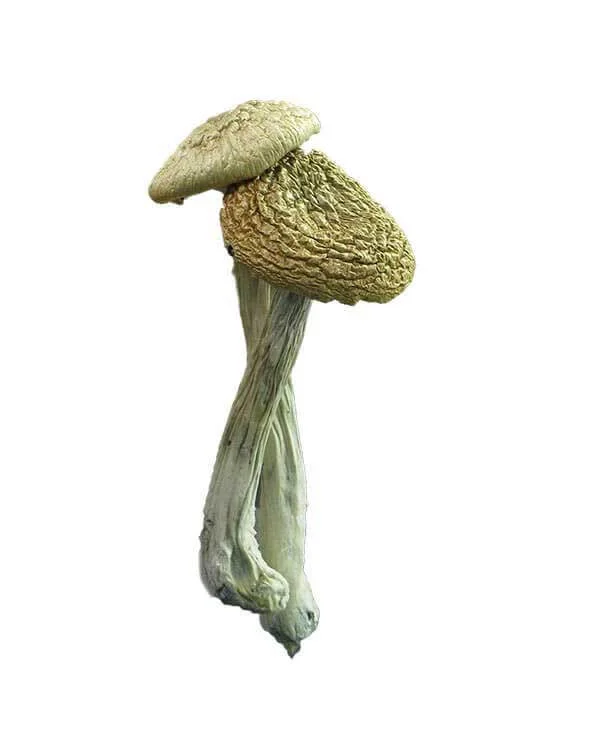
Psilocybe Azurescens – Ultra-Potent Wild Psilocybin Mushroom
Price range: $180.00 through $870.00
Discover the legendary power of Psilocybe Azurescens, a naturally potent, wild-growing psychedelic mushroom known for its intense visuals, high alkaloid content, and extended journeys.
Psilocybe Azurescens: Identification, Potency, Habitat, Lookalikes & Scientific Guide
Psilocybe azurescens, commonly called the flying saucer mushroom, is a formally described, wood-associated species in the genus Psilocybe with a strong historical association with the Pacific Northwest coast. Psilocybin and psilocin are documented constituents, and unusually high concentrations have been reported from some analyzed material. Those measurements vary among specimens and studies and are not fixed species-wide potency values.
Safety note: Morphology, habitat, blue staining, spore-deposit color, and photographs can each contribute to a taxonomic identification, but none makes an unknown wild mushroom safe to consume. Wood-associated habitats also contain toxic fungi, including amatoxin-containing Galerina. Suspected poisonous-mushroom ingestion requires poison-center or medical guidance rather than online identification.
| Attribute | Scientific context |
|---|---|
| Scientific name | Psilocybe azurescens Stamets & Gartz |
| Common names | Flying saucer mushroom; Blue Angels and Indigo Ringers also appear in regional sources |
| Kingdom | Fungi |
| Phylum | Basidiomycota |
| Class | Agaricomycetes |
| Order | Agaricales |
| Family | Hymenogastraceae |
| Genus | Psilocybe |
| Ecology | Lignicolous—associated with woody substrates and coastal debris |
| Primary geographic association | Pacific Northwest coast, especially near the lower Columbia River |
| Spore deposit | Typically described as dark purplish-brown |
| Principal psychoactive compounds | Psilocybin and psilocin; minor tryptamines require species-specific analytical verification |
| Major identification hazard | Confusion with other small brown wood-associated mushrooms, including amatoxin-containing species |
| U.S. legal status | Psilocybin and psilocin are federally controlled; state and local rules vary |
Key takeaways: P. azurescens is a formally described Psilocybe species whose taxonomy rests on more than blue bruising or a characteristic cap shape. Reliable scientific identification requires converging macroscopic, microscopic, ecological, and—for difficult material—molecular evidence. Its reputation for exceptional potency traces to specific chemical analyses, not a universal species chemistry. Any possible Galerina confusion warrants immediate expert consultation, not an online photograph comparison.
Contents
- What Is Psilocybe azurescens?
- How Was Psilocybe azurescens Discovered and Named?
- What Does Psilocybe azurescens Look Like?
- What Is a Scientific Identification Framework for P. azurescens?
- Where Does Psilocybe azurescens Grow?
- What Is the Psilocybe azurescens Alkaloid Profile and Potency?
- Is Psilocybe azurescens the Strongest Psilocybin Mushroom?
- Which Psilocybe azurescens Lookalikes Are a Safety Concern?
- What Does Microscopy Reveal About Psilocybe azurescens?
- What Is the U.S. Legal Status of Psilocybe azurescens?
- How Can Psilocybe azurescens Be Observed Without Damaging Its Habitat?
- What Are the Most Common Psilocybe azurescens Identification Mistakes?
- Frequently Asked Questions
- What Scientific Sources Should Be Used for Psilocybe azurescens?
- Editorial Standards, Scientific Review and Update History
- Summary
What Is Psilocybe azurescens?
Psilocybe azurescens is a basidiomycete in the genus Psilocybe, associated with woody coastal debris in the Pacific Northwest and documented as a source of psilocybin and psilocin. Its common name—flying saucer mushroom—describes the broad, flattened cap with a pronounced central umbo that mature specimens often develop.
The species draws interest from several directions simultaneously. Mycologists study its taxonomy and phylogenetic placement within Psilocybe. Analytical chemists are drawn to its tryptamine profile and the biochemistry behind its conspicuous blue staining. Naturalists encounter it through field records and herbarium literature from coastal Oregon and Washington. Toxicologists have a direct stake in preventing dangerous confusion with superficially similar species sharing the same habitat.
Scientific Classification
The accepted taxonomic hierarchy places P. azurescens within:
Fungi → Basidiomycota → Agaricomycetes → Agaricales → Hymenogastraceae → Psilocybe → Psilocybe azurescens
That placement is not merely administrative. Physical resemblance does not track evolutionary relationship, and “little brown mushroom” morphology recurs across many unrelated fungal lineages—some harmless, some deadly. Knowing where a species sits taxonomically shapes which comparisons are meaningful and which are misleading.
Within Psilocybe, P. azurescens is frequently discussed alongside Psilocybe cyanescens, another wood-associated species with overlapping ecological and macroscopic characteristics. That proximity makes microscopic and molecular evidence particularly important when scientific certainty is required.
Common Names: Flying Saucer Mushroom, Blue Angels, and Indigo Ringers
“Flying saucer mushroom” is the most widely recognized English common name for P. azurescens. “Blue Angels” and “Indigo Ringers” appear in some regional and popular sources.
Common names are unreliable diagnostic tools. They shift between regions and communities, and the same nickname is sometimes applied loosely to more than one species. Scientific documentation should use Psilocybe azurescens and record the evidence supporting the identification—not just the name attached to it.
How Was Psilocybe azurescens Discovered and Named?
Psilocybe azurescens was formally described by mycologist Paul Stamets and chemist Jochen Gartz in 1995, giving scientific standing to a mushroom associated with the lower Columbia River coastal region. The name itself encodes one of the species’ most recognizable traits.
Paul Stamets, Jochen Gartz, and the Formal Species Description
The formal description was published as: Stamets P, Gartz J. A new caerulescent Psilocybe from the Pacific Coast of Northwestern America. Mycotaxon. 1995;57:141–148.
These bibliographic details—volume, pages, and year—should be verified against the original Mycotaxon paper, MycoBank (mycobank.org), or Index Fungorum (indexfungorum.org) before publication. MycoBank record MB 414185 lists Psilocybe azurescens Stamets & Gartz and can be used to cross-check the nomenclatural record. That publication is the reference point for P. azurescens taxonomy—the source against which later morphological observations should be calibrated. Secondary websites and field guides can help readers discover the species, but they should not substitute for the original literature when precise measurements or defining taxonomic characters are at stake.
Why Does “azurescens” Refer to Bluing?
The epithet derives from the Latin azureus, meaning blue, referencing the conspicuous color reaction the species produces when tissue is damaged. The bluing has a biochemical basis: enzymatic transformations of psilocybin-related compounds generate blue oligomeric products, a reaction investigated in detail by Lenz and colleagues in 2020 (DOI: 10.1002/anie.201910175—author list, journal metadata, and pagination must be confirmed directly from the publisher record at Wiley or Crossref before publication, as secondary reproductions of this citation have contained errors).
The important identification point: “turns blue” and “is P. azurescens” are not equivalent statements. Bluing is a character worth documenting. It is not a species-level confirmation.
What Does Psilocybe azurescens Look Like?
Psilocybe azurescens is classically described as having a hygrophanous cap with a prominent central umbo, gills that darken as spores mature, a pale stipe capable of pronounced blue staining after injury, and a dark purplish-brown spore deposit. A complete scientific description also incorporates microscopic structures that field photographs cannot capture.
Appearance shifts meaningfully with age, hydration, weather, and handling. A newly expanded specimen, a rain-soaked cap, and a partially dried collection can look surprisingly different—which is precisely why a single field photograph, however clear, provides an incomplete identification record.
Cap, Surface, and Hygrophanous Color Changes
The pileus is one of the most visually distinctive features in published descriptions. Mature caps are broadly convex to nearly plane, often with a conspicuous umbo that persists into maturity and contributes to the “flying saucer” silhouette that gives the species its common name.
Hygrophanous means the apparent cap color changes as tissue gains or loses moisture. A wet specimen may appear dark caramel or chestnut; the same cap drying in the field can fade to pale ochre within hours. This variability explains why photographs of authenticated P. azurescens collections can show markedly different colors—they often reflect different hydration states, not different identifications.
Scientific photography is most useful when it records hydration state, includes a scale bar or object of known size, and documents multiple viewing angles rather than a single close-up.
Gills and Gill Attachment
The lamellae change in color as spores mature, progressing toward darker tones characteristic of the genus. Their attachment to the stipe, spacing, and overall maturation pattern all contribute to a complete morphological description.
An underside photograph showing gill structure and attachment is considerably more useful diagnostically than a cap-only image. Gill characters that help distinguish related species are simply not visible from above.
Stipe, Veil Features, and Bluing
The stipe is generally described as pale to whitish, with a tendency toward pronounced blue discoloration when damaged—sometimes strikingly so at the base. Veil remnants, surface texture, and any annular zone should be assessed as part of the complete fruit body rather than in isolation.
Bluing intensity is variable and should not be used to infer species identity or estimate alkaloid concentration. Document the presence and distribution of the color change, including the tissue involved and approximate speed of onset, rather than treating it as a pass-or-fail field test.
Spore Deposit and Microscopic Characters
The spore deposit of P. azurescens is described as dark purplish-brown in taxonomic sources. Deposit color can help distinguish broad taxonomic possibilities—including separation from fungi producing rusty or cinnamon-brown spores—but lighting, deposit thickness, and the collection surface all affect perceived color. A spore print is evidence, not a safety test.
Microscopic examination considers basidiospore shape, dimensions, and wall features together with basidia, cheilocystidia, and pleurocystidia. Because these measurements can have taxonomic significance, the exact ranges should be reproduced from the original authenticated species description rather than from rounded values circulated by secondary sources.
What Is a Scientific Identification Framework for P. azurescens?
Scientific identification works through converging evidence: field characters establish a working hypothesis, microscopy tests additional characters, ecological context checks plausibility, and molecular analysis provides an independent line of evidence where needed. No single character closes the case on its own.
Why Does No Single Trait Confirm Identification?
Blue staining alone cannot identify Psilocybe azurescens. Neither can cap shape, wood-associated habitat, Pacific Northwest location, or a dark spore deposit.
Scientific identification becomes stronger as independent evidence converges. Macroscopic characters generate a candidate identification; microscopy tests structures that photographs cannot show; ecological and geographic information tests whether the identification is plausible for the location, substrate, and season; authenticated voucher specimens make comparison reproducible; and molecular evidence can help resolve material that remains ambiguous after morphological examination.
That framework is more defensible than asking whether something “looks right”—and far more defensible when the consequences of error include toxic Galerina.
Morphology vs. Microscopy vs. DNA: What Can Each Method Establish?
Each evidence type contributes something distinct and carries its own limitations. Understanding those differences is essential to interpreting identification claims accurately.
| Evidence type | Principal contribution | Confidence contribution | Key limitation |
|---|---|---|---|
| Macroscopic morphology | Generates candidate identification | Moderate | Appearance varies with age, hydration, and environment |
| Ecological context | Tests plausibility | Low to moderate | Habitat overlaps among unrelated species |
| Spore deposit | Broad taxonomic filtering | Low to moderate | Color assessment is subjective; collection quality varies |
| Microscopy | Tests diagnostic structural characters | Moderate to high | Character overlap among related taxa; requires expertise |
| Authenticated voucher | Makes comparison reproducible | High | Requires curated reference material |
| ITS sequencing | Molecular comparison against reference database | High when references are reliable | Database quality and reference accuracy are variable |
| Integrated expert review | Synthesizes multiple evidence types | Potentially high | Dependent on quality of source material and examiner expertise |
A useful identification hierarchy moves sequentially through these evidence types, stopping when the convergence of evidence is sufficient for the purpose at hand. For general natural-history documentation, morphology and ecology may suffice. For scientific publication, voucher and molecular data become essential. For ruling out toxic lookalikes in a safety-relevant context, no abbreviated checklist is adequate.
The 5-Point Morphology Framework
For documentation, five character groups are worth recording together: cap morphology and hydration state; gill morphology and attachment; stipe and veil features; color changes following natural damage; and spore deposit with any available microscopic data.
Documenting these systematically makes later expert review far more productive than a single photograph. The limitation is equally worth naming: systematic morphological documentation improves the quality of a record, but it does not certify edibility, exclude all toxic lookalikes, or substitute for taxonomic expertise when stakes are high.
When Are Microscopy, Expert Review, or Molecular Identification Needed?
Microscopy becomes particularly valuable when macroscopic characters overlap among related species—a situation that arises frequently in wood-associated Psilocybe. Specimens that remain genuinely ambiguous after careful morphological examination may require expert assessment or comparison with molecular sequence data.
The nuclear ribosomal internal transcribed spacer (ITS) region is widely used as a fungal DNA barcode and has been applied to Psilocybe taxonomy. A molecular result is only as reliable as the quality and taxonomic accuracy of the reference sequences against which it is compared—a detail that matters when working with groups where reference databases are still developing.
For an uncertain wild specimen, a regional mycological society, university herbarium, or qualified mycologist provides a more reliable verification pathway than a photograph-only forum poll, however popular the platform.
Where Does Psilocybe azurescens Grow?
Psilocybe azurescens is most strongly associated in the scientific and historical record with the Pacific Northwest coast near the lower Columbia River, including parts of Clatsop County in Oregon and adjacent Washington. It is lignicolous—its ecology organized around woody substrate—and literature also links it with coastal dune vegetation.
Pacific Northwest and Columbia River Estuary Records
Astoria, Oregon, and the surrounding Columbia River estuary region appear consistently in the species’ documented history, from the original taxonomic description through subsequent field records. This association is not arbitrary: P. azurescens was formally described from material collected in this region, and authenticated voucher collections anchor its geographic identity there more securely than any aggregated online occurrence map can.
How Strong Is the Evidence for Each Distribution Record?
Not all occurrence records carry equal evidentiary weight. A responsible account of P. azurescens distribution separates the evidence behind each claim rather than treating map pins as equivalent.
| Record type | Example sources | Evidentiary strength | Key limitation |
|---|---|---|---|
| Original taxonomic collection | Stamets & Gartz (1995) type material | Highest | Limited to original described locality |
| Authenticated herbarium voucher | OSU Herbarium, University of Washington Herbarium | High | Dependent on original identifier’s expertise |
| Peer-reviewed literature record | Published field studies with voucher support | High | Variable identification rigor across studies |
| Curated biodiversity record (evaluated) | GBIF-mediated records with verified vouchers | Moderate to high | Requires record-level inspection |
| Research-grade iNaturalist observation | Community-identified with photographic support | Moderate | Photograph may not reveal all diagnostic characters |
| Unvouchered occurrence report | Forum posts, social media, field notes | Low | No reproducible specimen for comparison |
Distribution claims should be assigned confidence levels that reflect this hierarchy. A record from outside the core Pacific Northwest range does not automatically indicate a native or established population, and requires stronger supporting evidence than a record from within it.
Wood, Coastal Dunes, and Beachgrass Associations
Unlike many Psilocybe species associated primarily with dung or grassland soils, P. azurescens is a lignicolous species tied to woody debris and lignin-rich substrates. Field literature and ecological observations also link it with coastal dune systems and European beachgrass, Ammophila arenaria—a non-native grass common along the Pacific Northwest coast that creates distinctive microhabitat structure in dune systems.
That ecological association is worth understanding accurately. Finding a mushroom near beachgrass or woody debris does not establish that it is P. azurescens. The association is supporting context, not a field identification shortcut.
When Is P. azurescens Reported to Fruit?
Reports and taxonomic literature consistently associate fruiting with the cool, wet season in the Pacific Northwest—broadly autumn into early winter, when temperatures drop and coastal moisture increases. Stamets noted fruiting beginning as early as late September in some years, persisting through December in favorable conditions.
Seasonality is ecological evidence, not proof of identity. Year-to-year patterns shift with local weather, microhabitat, and substrate condition. Ecological documentation of observed wild specimens is also a different matter from prescribing conditions for producing them—a distinction worth maintaining explicitly.
What Is the Psilocybe azurescens Alkaloid Profile and Potency?
Psilocybe azurescens contains psilocybin and psilocin, and unusually high tryptamine concentrations have been reported from some analyzed material. No single percentage should be treated as a universal species specification. Fungal chemistry varies between specimens, developmental stages, and storage conditions, and historical studies differ in their analytical methods, sample sizes, and weight bases.
Psilocybin and Psilocin
Psilocybin and psilocin are documented components of P. azurescens. Values around 1.78% psilocybin and 0.38% psilocin by dry weight appear in historical literature associated with the species—specifically in Stamets P, Psilocybin Mushrooms of the World (Ten Speed Press, 1996). Those figures should be understood as values reported in that publication, not as independently verified outputs of a documented chromatographic experiment with recorded specimen provenance, sample size, and method.
Before treating these numbers as authoritative, their analytical provenance should be traced: what material was analyzed, by what method, from how many specimens, and on what weight basis. If the 1996 book remains the closest verifiable secondary source, cite it as such rather than implying primary chromatographic authority.
The scientifically useful question is not “what percentage is P. azurescens?” It is “what did a particular analysis measure, in what specimens, by what method?”
What Do Published P. azurescens Chemical Studies Actually Show?
Quantitative claims about P. azurescens alkaloid content should trace to the experiments that produced them. The table below represents the required architecture for a source-audited chemistry comparison. It should be populated from primary analytical literature—original chromatographic studies with documented specimen provenance—before publication. No estimated or extrapolated values appear here.
| Citation | Specimen provenance | n | Sample condition | Weight basis | Psilocybin result | Psilocin result | Other analytes | Analytical method | Key limitation |
|---|---|---|---|---|---|---|---|---|---|
| Primary source required | Verify before publication | Verify | Verify | Dry or fresh weight | Value required | Value required | List required | HPLC or LC-MS required | Do not generalize beyond sampled material |
| Primary source required | Verify before publication | Verify | Verify | State basis | Value required | Value required | List required | Method required | Cross-study comparability depends on method |
Do not calculate a species average from these data unless the underlying studies are methodologically comparable. Cross-study averages that mix fresh-weight and dry-weight figures, or HPLC and LC-MS datasets with different analyte panels, do not produce meaningful species-level estimates.
What About Baeocystin, Aeruginascin, and Other Compounds?
Minor tryptamines including baeocystin, norbaeocystin, and aeruginascin have been documented across psilocybin-containing fungi, and aeruginascin in particular appears frequently in popular discussions of Psilocybe chemistry. Genus-level evidence should not, however, automatically be assigned to P. azurescens as a species-specific claim.
For each compound, the appropriate evidence status is one of three:
- Confirmed: present in species-specific analysis with documented method and provenance
- Reported but requiring stronger verification: mentioned in connection with the species but lacking fully documented primary analysis
- Not established: no species-specific analytical evidence found in sources reviewed
Associating baeocystin, norbaeocystin, or aeruginascin with P. azurescens in this guide should wait until species-specific analytical evidence supports each claim. Repeated secondary citation does not accumulate into primary evidence.
Why Do Published Potency Numbers Vary?
Several factors operate simultaneously. Individual specimens differ in chemistry, and different tissues within the same fruit body can yield different concentrations. Developmental stage matters. Storage and degradation—psilocin is less chemically stable than psilocybin under typical conditions—affect what a laboratory ultimately measures. Fresh-weight and dry-weight figures are not directly interchangeable and should never be compared as though they were.
Analytical methodology introduces further variation. HPLC studies and modern LC-MS methods differ in sensitivity, selectivity, and the compounds they target. A maximum value from a small number of specimens tells us what exceptional material can contain, not what a representative population contains.
The discipline when reading a potency paper is straightforward: identify what was measured, from how many specimens, on what weight basis, using which analytical method, and whether the value is a maximum, a range, or a mean. Numbers stripped of those qualifiers are not reliable species chemistry.
What Causes Psilocybe Mushrooms to Turn Blue?
Damage to tissue in psilocybin-containing mushrooms can initiate an enzyme-driven chemical cascade that produces blue oligomeric compounds. Modern biochemical research has clarified important aspects of this mechanism.
The key primary reference is “Injury-Triggered Blueing Reactions of Psilocybe ‘Magic’ Mushrooms,” DOI: 10.1002/anie.201910175. The complete author list, journal metadata, and pagination must be confirmed directly from the publisher record at Wiley or Crossref before publication. Secondary reproductions of this citation—including earlier versions of this article—have contained errors in the author list and pagination, and the publisher record is the only reliable source for those details.
Bluing intensity is variable and should not be used to infer species identity or estimate alkaloid concentration. Its presence is chemically informative; its absence does not rule out psilocybin-containing species.
Is Psilocybe azurescens the Strongest Psilocybin Mushroom?
Psilocybe azurescens is more accurately described as a species for which unusually high tryptamine concentrations have been reported in some analyses than as definitively “the strongest psilocybin mushroom.” Establishing a reliable ranking would require representative specimens from multiple species analyzed under comparable methods—a standard the existing cross-species literature only partially meets.
A maximum measurement, a species mean, and a representative standardized comparison answer different scientific questions. Popular rankings collapse all three into a single figure, which is why they circulate confidently and why they are unreliable.
Psilocybe azurescens vs. P. cubensis
These are separate species with different ecological niches, morphologies, and biogeographic profiles. Some published analyses have reported higher tryptamine concentrations for P. azurescens specimens than for P. cubensis specimens—a defensible observation from the analytical record. It does not establish a fixed potency ratio, because both species exhibit substantial within-species chemical variation and the available comparative datasets are limited in sample size and methodological consistency.
Psilocybe cyanescens vs. azurescens
The cyanescens-versus-azurescens comparison deserves particular care because both are wood-associated Psilocybe species that can share broad ecological and macroscopic characteristics. Both have reported psilocybin and psilocin measurements in the literature, and cross-study ranking between them is unreliable given differences in analytical methods and specimen provenance across the available studies. Species-level differentiation benefits from complete morphological assessment and, when material is ambiguous, molecular data.
P. azurescens vs. P. semilanceata
Psilocybe semilanceata—the liberty cap—is one of the most studied psilocybin-containing species globally, but its ecology is grassland-based and its morphology is distinct from wood-associated P. azurescens. Cross-species chemical comparisons face the same methodological constraint as all others in this section: measurements from different studies, using different methods, on specimens of different provenance should not be pooled as though they came from a controlled experiment.
Why Do “Strongest Mushroom” Rankings Need Qualification?
A defensible ranking must compare like with like: dry weight with dry weight, means with means, adequately characterized specimens with adequately characterized specimens, and measurements generated using comparable analytical methods. Until the primary-study table above is complete with verified data, assigning numerical rank positions to P. azurescens relative to other species is not supported by the evidence displayed on this page.
| Species | Broad ecology | Geographic context | Psilocybin and psilocin evidence | Cross-study ranking reliability | Key limitation |
|---|---|---|---|---|---|
| P. azurescens | Wood-associated | Strong Pacific Northwest association | Unusually high in some reported analyses | Low without comparable primary datasets | Sample size and cross-study methodology |
| P. cyanescens | Wood-associated | Multiple temperate regions | Reported in multiple studies | Low without comparable primary datasets | Cross-study comparability |
| P. semilanceata | Grassland-associated | Temperate regions, especially Europe | Well-studied; documented variability | Moderate within comparable studies | Specimen and geographic variability |
| P. cubensis | Different ecological niche | Broad distribution | Variable; widely studied across cultivars | Low given cultivar and method diversity | Cultivar, specimen, and study variation |
Primary analytical data for each cell should be populated from verified original studies before publication.
Which Psilocybe azurescens Lookalikes Are a Safety Concern?
The central safety problem with P. azurescens identification is that small brown mushrooms in wood-rich coastal habitats are not all harmless. Galerina marginata is the most critical concern because members of this species complex contain amatoxins capable of causing severe and potentially fatal liver injury. An identification error here is not merely an academic mistake.
Why Is Galerina marginata a Critical Toxic Comparison?
Galerina marginata is a wood-decaying saprobe found across many temperate regions, including the Pacific Northwest. It contains α-amanitin and related amatoxins. Amatoxin poisoning can cause severe and potentially fatal liver injury, and its clinical course is particularly treacherous: an initial gastrointestinal phase can be followed by a period of apparent improvement before serious hepatotoxicity becomes evident. That pattern creates a window during which patients may not seek timely care.
The consequence of a mistaken identification makes any single visual character an inadequate safety basis. Macroscopic morphology, spore-deposit color, and microscopy can all contribute to differentiation—but identifying a species and declaring an unknown specimen safe to consume are different propositions, and the latter requires more than any abbreviated checklist can provide.
Galerina marginata vs. Psilocybe azurescens
The following characteristics are useful for educational study. They are not an ingestion-safety test, and no table, photograph, identification app, or online guide can establish that an unknown mushroom is safe to ingest.
| Feature | P. azurescens | G. marginata | Why it cannot be relied upon alone |
|---|---|---|---|
| Spore deposit | Typically dark purplish-brown | Typically rusty to cinnamon-brown | Color perception is subjective; deposit quality varies |
| Bluing reaction | Can show conspicuous blue staining | Not characteristic | Bluing is not species-specific |
| Cap morphology | Umbonate, hygrophanous; described above | Brown, often hygrophanous; typically smaller | Appearance changes with age and moisture |
| Stipe and veil | Combination of characters must be assessed together | Veil or ring characters often present; can be lost with age | Individual structures are insufficient alone |
| Microscopy | Psilocybe spore and cystidial characters | Different microscopic character set | Requires expertise and authenticated reference material |
| Toxicology | Psychoactive tryptamines documented | Amatoxins documented | Chemistry cannot be inferred from visual assessment |
Qualified mycologists can make strong taxonomic determinations from adequate physical material. What no identification method can do is convert a species determination into a blanket declaration that an unknown specimen is safe to consume—those are different claims that require different evidence.
Other Mushrooms That Can Cause Confusion
Galerina is the priority safety concern, but the full differential should reflect the local fungal assemblage rather than a fixed internet list. Pholiotina taxa—nomenclature for which should be verified against current MycoBank and Index Fungorum records before publication—are relevant because some members of this group contain amatoxins and have been implicated in poisoning cases in temperate regions including the Pacific Northwest. Leratiomyces ceres may appear on woody landscaping substrates and enter broad visual comparisons.
Regional fungal communities vary in composition and relative abundance. A scientifically useful differential considers the local assemblage, which is one reason regional mycological expertise is more valuable than any universal lookalike list.
What Should You Do After a Suspected Poisonous-Mushroom Exposure?
Do not wait for symptoms before seeking expert guidance. In the United States, contact Poison Control at 1-800-222-1222 or poison.org. Call 911 for severe symptoms, loss of consciousness, or any immediate medical emergency.
Keep any remaining mushroom material, photographs, and information about the time and amount of exposure available for medical professionals—but do not delay care while attempting to identify the specimen. Early contact with Poison Control is not premature; the deceptive clinical course of amatoxin poisoning makes prompt expert guidance the appropriate first response.
Outside the United States, contact the relevant national or regional poison-information service immediately.
What Does Microscopy Reveal About Psilocybe azurescens?
Microscopy contributes characters that are simply invisible in field photographs. A careful microscopic examination of P. azurescens material can assess spore dimensions and morphology, basidia, cheilocystidia on the gill edge, and pleurocystidia on the gill face—structures that help confirm or challenge a macroscopic identification against published descriptions.
Which Microscopic Characters Matter?
Basidiospores are a foundational taxonomic character. Their shape, dimensions, wall thickness, and germ-pore characteristics should be assessed against the original Stamets and Gartz (1995) description and authenticated reference material. Published dimensions that circulate in secondary sources have not always been verified against the primary text, and preparation method, mounting medium, and specimen condition all affect observed values.
[INSERT VERIFIED PRIMARY-SOURCE SPORE DIMENSIONS AND CYSTIDIA DATA from Stamets & Gartz (1995), Mycotaxon 57:141–148, confirmed against original text before publication. Do not substitute values from secondary sources.]
Cheilocystidia and pleurocystidia provide additional structural information. Their morphology and dimensions are part of the taxonomic description rather than secondary details, and their assessment requires familiarity with fungal microscopy and the relevant taxonomic literature.
A scale bar in any microscopy image is more reliable than magnification alone, because the displayed size of a digital micrograph changes with print format and screen resolution. Published microscopy images should also carry specimen or voucher identifiers and mounting-medium information to make the preparation reproducible.
How Should Published Measurements Be Compared?
Keep different studies visible in separate rows rather than averaging them into a single “standard.” Doing otherwise hides disagreements that may be scientifically meaningful.
| Reference | Specimen / locality | Spore measurement | Cystidial observations | Notes |
|---|---|---|---|---|
| Stamets & Gartz (1995), Mycotaxon 57:141–148 | Type material, Pacific Northwest | Verify from primary text before publication | Verify from primary text | Foundational taxonomic source |
| Subsequent taxonomic treatment | Verify specimen concept | Compare range | Compare description | Note whether same specimen concept applies |
| Molecular/voucher study | Voucher details | Morphological range | Structural description | Links morphology with sequence data |
Disagreements between studies are scientifically more interesting than artificial concordance. A crosswalk table that shows exactly where measurements align or diverge is more useful to researchers than a single blended figure.
Why Does Microscopy Still Have Limits?
Microscopy is powerful evidence, not a final arbiter. Measurements overlap among related fungi. Preparation introduces variability. The interpretation of a given structure depends on taxonomic context and the examiner’s familiarity with the relevant group.
For genuinely difficult material, comparison against authenticated herbarium vouchers and ITS sequencing against a well-curated reference database can resolve ambiguities that morphology leaves open. Even molecular identification carries the caveat that a sequence match is only as reliable as the accuracy of the reference against which it is compared—a limitation that matters in groups where reference databases continue to develop.
What Is the U.S. Legal Status of Psilocybe azurescens?
In the United States, psilocybin and psilocin are listed as Schedule I controlled substances in the current federal schedule maintained in the Electronic Code of Federal Regulations. The Controlled Substances Act, 21 U.S.C. § 812, provides the statutory framework. State and local reforms have created materially different rules in some jurisdictions, but decriminalization, regulated access, and federal scheduling are legally distinct concepts with different practical implications.
Legal status last reviewed: [DATE OF ACTUAL EDITORIAL REVIEW]. This section is general educational information, not legal advice. Verify current law through official government sources before acting.
How Does Federal Law Treat Psilocybin and Psilocin?
The current federal controlled-substance schedule lists psilocybin and psilocin as Schedule I substances under 21 CFR § 1308.11, maintained by the Drug Enforcement Administration. The operative current text is available through the Electronic Code of Federal Regulations at ecfr.gov and should be checked against the current version before any legal reliance. The DEA’s controlled-substance resources at dea.gov/drug-information/csa provide supplementary agency context.
Research authorization through FDA Investigational New Drug applications is a legally separate pathway that does not alter general Schedule I status for ordinary possession or commercial activity.
What About Spores, Specimens, and Microscopy Materials?
The legal treatment of Psilocybe spores cannot be accurately reduced to a nationwide rule. Federal scheduling names psilocybin and psilocin rather than every form of fungal material—but that federal framework is only one layer of the analysis. State definitions and prohibitions, the nature of the specific material, intended use, and subsequent conduct are each legally distinct questions that can produce different answers in different jurisdictions.
Any jurisdiction-specific claim in this guide should link to the current operative statutory language and explain precisely what the provision covers, based on a current legal review of the actual text. This article does not provide procurement or cultivation instructions.
How Do State and Local Rules Differ?
Oregon’s Measure 109 created a licensed psilocybin-services framework—the current operative rules are administered by the Oregon Health Authority and accessible at oregon.gov/oha/ph/preventionwellness/pages/psilocybin-services.aspx. Colorado’s Proposition 122 established a natural-medicine framework with implementation through the Colorado Department of Regulatory Agencies at dora.colorado.gov. Some cities and counties have adopted changed enforcement priorities or penalty structures.
Three terms require distinct treatment:
- Decriminalization changes penalties or enforcement priorities; it does not make commercial activity legal or alter federal scheduling.
- Regulated access permits specified conduct through a statutory or administrative framework with defined participants and conditions.
- Legalization affirmatively authorizes conduct within defined legal parameters and still does not change federal Schedule I status.
For any location-specific decision, consult the current operative statute or regulation and responsible government agency. Historical ballot measures provide useful legislative history but do not substitute for the current regulatory text.
How Can Psilocybe azurescens Be Observed Without Damaging Its Habitat?
Scientific observation should minimize disturbance to fungal substrate and surrounding vegetation, particularly in fragile coastal-dune systems. Useful records can generally be made with photographs and habitat metadata rather than destructive collection.
Why Protect Coastal-Dune Habitat?
Coastal dune systems are ecologically dynamic and sensitive. They support interconnected assemblages of vegetation, invertebrates, and fungal communities. Repeated trampling compacts substrate, damages root and mycelial networks, and disrupts the vegetation structure that defines microhabitat for the organisms associated with it.
A visible mushroom fruit body is also only a fraction of the organism. The mycelium within the substrate constitutes most of the fungus, and damaging the substrate damages the organism—not merely the reproductive structure visible above ground.
What Are Best Practices for Documenting an Observation?
Photograph the intact specimen from multiple diagnostically useful angles: cap surface, cap underside showing gill attachment, stipe base, and any veil remnants. Include a scale object in at least one frame. Document the substrate type, surrounding vegetation, and environmental conditions including approximate temperature and moisture.
Avoid posting precise GPS coordinates for sensitive or productive sites. Concentrated visitor traffic following location disclosure can cause rapid habitat degradation in areas with small, localized populations—a pattern documented across ecologically sensitive mycological sites worldwide.
Where collection is scientifically justified and legally permitted, follow landowner requirements, park regulations, permit conditions, and the submission standards of the target herbarium or research institution.
Well-documented observations submitted to iNaturalist with appropriate metadata can contribute to understanding of P. azurescens distribution. Their identification should be clearly noted as observer-assessed, and individual records should be evaluated rather than treated as automatically accurate when they inform consequential claims.
What Are the Most Common Psilocybe azurescens Identification Mistakes?
The discipline that runs through all of these is the same: match the strength of a claim to the strength of its evidence. A field observation supports a hypothesis. It does not establish certainty when microscopy, expert verification, or molecular evidence is absent.
Common Claims vs. What the Evidence Actually Supports
| Common claim | What the evidence supports |
|---|---|
| “P. azurescens is the strongest psilocybin mushroom.” | Some analyzed material has yielded unusually high tryptamine measurements; available evidence does not support a definitive universal species ranking. |
| “It contains 1.78% psilocybin.” | A value reported in historical literature applies to particular analyzed material, not every specimen; analytical provenance requires verification. |
| “Blue staining proves the species.” | Bluing reflects a real chemical reaction but is not species-specific and should not be used to infer species identity or alkaloid concentration. |
| “A purplish-brown spore print makes it safe.” | Spore-deposit color is useful taxonomic evidence but cannot establish ingestion safety for an unknown specimen. |
| “Spores are legal in 47 states.” | Legal treatment varies with jurisdiction, material, intended use, and conduct; a current statutory review is required for any specific claim. |
| “Matching habitat confirms identity.” | Ecological context supports plausibility; it does not confirm taxonomic identity. |
| “A photo ID from an app or forum is sufficient.” | Image-recognition tools and photograph-based community identifications can suggest candidates; they cannot assess microscopic, molecular, or complete morphological characters. |
Identification Mistakes: Better Practice
| Common mistake | More defensible practice |
|---|---|
| Treating blue bruising as species-level proof | Document bluing as one character among several; seek corroborating evidence |
| Using a common name as a taxonomic identifier | Record the scientific name and the diagnostic evidence supporting it |
| Citing one potency figure as a universal species average | Report the study, method, sample size, weight basis, and range |
| Assuming matching habitat confirms identity | Treat ecological context as supporting evidence, not independent confirmation |
| Equating decriminalization with legalization | Read the current statute or regulation in the relevant jurisdiction |
| Accepting a crowdsourced photograph identification as definitive | Prioritize authenticated specimens and qualified review for consequential decisions |
| Disturbing substrate to photograph or collect | Use minimally invasive observation; collect only with scientific justification |
Frequently Asked Questions About Psilocybe azurescens
What is Psilocybe azurescens?
Psilocybe azurescens is a wood-associated Psilocybe species formally described by Paul Stamets and Jochen Gartz in Mycotaxon in 1995. It is best known from the Pacific Northwest coastal region near the lower Columbia River and contains psilocybin and psilocin. Its common name, flying saucer mushroom, refers to the broad cap and pronounced central umbo characteristic of mature specimens.
Is Psilocybe azurescens the strongest psilocybin mushroom?
Unusually high tryptamine concentrations have been reported for some analyzed P. azurescens material, placing it among the more potent Psilocybe species documented in the analytical literature. Calling it definitively “the strongest” overstates what the evidence establishes: specimens vary, studies differ in method and sample size, and maximum values are not species averages.
Where has Psilocybe azurescens been documented?
Its strongest historical association is with the Pacific Northwest coast—particularly the lower Columbia River estuary, Clatsop County in Oregon, and adjacent parts of Washington. Reports from other regions should be evaluated according to the quality of the underlying voucher, photographic, or molecular evidence, using the distribution evidence hierarchy described in this guide.
What habitat is associated with P. azurescens?
It is a lignicolous fungus linked primarily to woody debris and lignin-rich substrates in coastal environments. Field literature also describes associations with coastal dune systems and European beachgrass, Ammophila arenaria. Ecological context supports an identification hypothesis; it does not confirm one.
Why does Psilocybe azurescens bruise blue?
Damage initiates an enzymatic cascade involving psilocybin-related chemistry that generates blue oligomeric products. The biochemical mechanism was investigated in work published under DOI 10.1002/anie.201910175—full bibliographic details should be confirmed from the publisher record. The reaction is chemically real and well-characterized. It is not a species-specific identification test, and its intensity should not be used to estimate alkaloid concentration.
How does P. azurescens differ from P. cyanescens?
Both are wood-associated Psilocybe species in temperate regions and can share broad ecological and macroscopic characteristics—which is precisely why the comparison matters for field identification. They represent distinct taxa with different morphological character combinations and different phylogenetic placement where molecular data exist. Both have reported high psilocybin measurements in the literature; cross-study ranking between them is unreliable. Difficult material is best assessed through complete morphological examination, microscopy, and molecular evidence.
How does P. azurescens differ from P. cubensis?
They are separate species with different ecological niches, morphologies, and geographic profiles. Some analyses have reported higher tryptamine concentrations for P. azurescens than for P. cubensis, but no scientifically reliable fixed potency ratio exists between them, and neither species has been exhaustively sampled across its range.
Can blue bruising alone identify P. azurescens?
No. Blue staining is supporting evidence worth documenting—but multiple Psilocybe species bruise blue through the same biochemical mechanism, and bluing intensity does not reliably indicate species identity or alkaloid concentration.
Can P. azurescens be confused with Galerina marginata?
Small brown wood-associated mushrooms create genuinely dangerous identification situations, and Galerina marginata demands particular attention because members of this species complex contain amatoxins capable of severe and potentially fatal liver injury. Never use an online visual comparison to establish that a wood-associated mushroom is safe to ingest. When in doubt, contact Poison Control.
Is a Psilocybe azurescens spore print enough for identification?
No. Spore-deposit color is useful taxonomic evidence, but it cannot confirm P. azurescens by itself. A complete scientific identification may also consider macroscopic morphology, microscopy of spore and cystidial characters, ecological context, authenticated reference material, and—for difficult specimens—molecular evidence.
Does every Psilocybe azurescens mushroom bruise blue?
Bluing can vary with tissue condition, degree of damage, and observation conditions. Its presence is not species-specific, and its absence in a particular specimen does not rule out P. azurescens or the presence of psilocybin.
Can a mushroom-identification app identify P. azurescens safely?
An image-recognition system can suggest candidate taxa, but a photograph cannot reveal microscopic characters, molecular identity, or the full set of macroscopic characters that a physical examination provides. No identification app should be used to decide whether a wild mushroom is safe to consume.
What provides the strongest scientific confirmation of P. azurescens?
For difficult material, the strongest evidence combines documented morphology and microscopy against the original species description with an authenticated voucher specimen and, where ambiguity remains, DNA sequence comparison against reliably identified and curated reference sequences.
What microscopic characteristics are used to study P. azurescens?
Taxonomic examination includes basidiospore shape, dimensions, and wall characters; basidia; cheilocystidia on the gill edge; and pleurocystidia on the gill face. These should be compared with the original Stamets and Gartz (1995) description and authenticated reference material rather than secondary sources, recognizing that preparation and mounting methods affect observed dimensions.
What compounds have been reported in P. azurescens?
Psilocybin and psilocin are the central documented constituents. Minor tryptamines including baeocystin and aeruginascin are discussed in the broader Psilocybe chemistry literature. For P. azurescens specifically, each compound’s evidence status—confirmed, reported but requiring stronger verification, or not established—should be stated explicitly rather than inferred from genus-level literature.
What is the U.S. legal status of psilocybin mushrooms and spores?
Psilocybin and psilocin are listed in Schedule I of the federal controlled-substance schedule under 21 CFR § 1308.11 as of the last legal review date for this page. Rules affecting spores, possession, research authorization, regulated services, and local enforcement vary by state and municipality. Federal, state, and local primary sources should be checked separately and verified against current official text before any legal reliance.
What Scientific Sources Should Be Used for Psilocybe azurescens?
High-stakes claims about taxonomy, toxicology, chemistry, and law should trace to primary or authoritative sources. Community platforms and field guides can help readers discover questions worth investigating, but they are a starting point for inquiry, not an endpoint for evidence.
Taxonomy: Stamets P, Gartz J. A new caerulescent Psilocybe from the Pacific Coast of Northwestern America. Mycotaxon. 1995;57:141–148. Verify complete bibliographic details against the original paper, MycoBank record MB 414185 at mycobank.org, or Index Fungorum at indexfungorum.org before publication.
Bluing chemistry: DOI 10.1002/anie.201910175. Retrieve the complete author list, journal metadata, and pagination directly from the publisher record at Wiley or Crossref (crossref.org) before publication. Do not reproduce bibliographic details from secondary sources.
Alkaloid chemistry: Stamets P. Psilocybin Mushrooms of the World: An Identification Guide. Ten Speed Press; 1996. Cite as a secondary compilation for historically reported values, not as a primary chromatographic source. Primary chromatographic studies with documented specimen provenance, sample size, and analytical method should be identified separately and cited with DOI where available. Use PubMed (pubmed.ncbi.nlm.nih.gov) to identify peer-reviewed analytical chemistry studies.
Amatoxin toxicology: Enjalbert F, Rapior S, Nouguier-Soulé J, Guillon S, Amouroux N, Cabot C. Treatment of amatoxin poisoning: 20-year retrospective analysis. Journal of Toxicology: Clinical Toxicology. 2002;40(6):715–757. doi:10.1081/CLT-120014646. Supplement with current Poison Control and clinical toxicology resources.
Federal law: Current controlled-substance schedule under 21 CFR § 1308.11 at ecfr.gov. DEA resources at dea.gov/drug-information/csa. Verify against current text before publication.
Oregon psilocybin services: Oregon Health Authority at oregon.gov/oha/ph/preventionwellness/pages/psilocybin-services.aspx.
Colorado natural medicine framework: Colorado Department of Regulatory Agencies at dora.colorado.gov.
Distribution: Authenticated herbarium vouchers at recognized institutions including the Oregon State University Herbarium and the University of Washington Herbarium. GBIF-mediated occurrence records whose underlying vouchers and identifications have been evaluated at gbif.org. Research-grade iNaturalist observations with supporting evidence independently assessed at inaturalist.org.
Taxonomic cross-checking: MycoBank at mycobank.org and Index Fungorum at indexfungorum.org for current nomenclature and synonymy.
Poison Control (United States): 1-800-222-1222 or poison.org. America’s Poison Centers network at poisoncenters.org.
Editorial Standards, Scientific Review and Update History
This guide prioritizes original taxonomic literature, primary analytical studies, peer-reviewed toxicology, authenticated biodiversity records, and current government legal sources. Quantitative claims are presented at the level supported by their source rather than generalized into universal species characteristics. Where primary evidence is unavailable or unverified, that gap is identified explicitly rather than papered over with secondary figures.
Author: Named author with relevant mycological, scientific, or editorial credentials to be added by the publishing organization before indexing.
Scientific reviewer: Named reviewer with documented mycological or taxonomic expertise to be added before indexing. If no independent scientific review was conducted, that must be stated explicitly.
Legal review: Named reviewer or documented editorial process to be added, or an explicit statement that legal claims have been checked against primary government sources but that no independent legal review by a qualified attorney was performed.
Published: Date to be added before indexing.
Last scientific review: Date to be added and maintained.
Last legal review: Date to be added. Legal claims about federal scheduling, state provisions, and local rules should carry their own review date because psychedelic policy continues to change.
Corrections policy: Factual corrections are assessed against primary sources. Verified corrections are applied to the text and recorded in a changelog. Corrections should be submitted through a stable editorial contact point published on the same domain.
Conflicts of interest: Any financial relationships or other interests that could affect editorial independence must be disclosed here before publication.
Summary: What Does the Evidence Establish About Psilocybe azurescens?
Psilocybe azurescens is a formally described, wood-associated Psilocybe species with a strong historical connection to Pacific Northwest coastal ecosystems. Scientific identification draws on macroscopic morphology, microscopic structures, ecological context, and—where material remains ambiguous—authenticated voucher comparison or molecular evidence. Blue staining, habitat, and spore-deposit color are each useful observations, but none is independently species-specific and none establishes ingestion safety.
The species has produced unusually high tryptamine measurements in some reported analyses, but no single percentage should be treated as universal P. azurescens chemistry. Reliable comparisons identify the specimens, sample size, weight basis, and analytical method behind each measurement rather than presenting a single figure as a species constant.
Toxicological uncertainty deserves an even higher evidentiary standard. Wood-associated habitats can contain amatoxin-producing fungi including Galerina, which makes abbreviated photograph-based identification inappropriate for any ingestion decision. Qualified mycologists working from adequate physical specimens can make strong taxonomic determinations—but a species identification and a declaration that an unknown specimen is safe to consume are different claims that require different evidence.
For deeper study, begin with the original taxonomic literature and verified primary chemistry studies. Use authenticated biodiversity records and herbarium collections to investigate distribution, evaluating individual records rather than accepting occurrence platforms as automatically verified. Engage regional mycological societies—including the Oregon Mycological Society (wildmushrooms.org) and the Puget Sound Mycological Society (psms.org)—for specimen-based expertise and local ecological knowledge that no search result can reproduce.
| QUANTITY | OZ, 1/4 POUND, 1/2 POUND, POUND |
|---|
31 reviews for Psilocybe Azurescens – Ultra-Potent Wild Psilocybin Mushroom
Add a review
Related products


MAGIC MUSHROOMS


MAGIC MUSHROOMS


MAGIC MUSHROOMS

MAGIC MUSHROOMS

MAGIC MUSHROOMS
Psilocybe Baeocystis – Rare Psilocybin Mushroom for Gentle Depth
Royce Cardenas (verified owner) –
These brought a sense of oneness I’ll never forget.
Emmett Stout (verified owner) –
The best balance of visuals, warmth, and inner clarity I’ve experienced.
Esme Carmichael (verified owner) –
A truly reliable and professional source.
Ellianna Langley (verified owner) –
A reliable reset button for the soul.
Emerson Norris (verified owner) –
It felt more like a sacred exchange than a transaction — the kind of experience you don’t forget.
Maurice Lowe (verified owner) –
The delivery was fast and discreet, which helped me focus fully on the experience itself.
Kirk Monroe (verified owner) –
It’s like the packaging itself said: “You’re safe. Begin when you’re ready.” And I did.
Kayla Allen (verified owner) –
Not only did the delivery arrive early, but the entire package felt like it was handled with love.
Reuben Atkins (verified owner) –
The spiritual clarity I received was priceless.
Justice Gallo (verified owner) –
A truly reliable and professional source.
Kylie Jordan (verified owner) –
Product quality was excellent, but what really stood out was the communication and delivery. Felt safe every step of the way.
Emery Horton (verified owner) –
My experience was profound, but what stood out most was how the product was handled with such integrity.
Maisie McCall (verified owner) –
Great customer service—so responsive and kind.
Selah McCollum (verified owner) –
Each experience brings more peace into my life.
Leah Bryant (verified owner) –
My creative block disappeared after one session, and I can’t stop thinking about how smoothly everything went.
Blaine Kinney (verified owner) –
My third eye said thank you.
Cody Gibson (verified owner) –
This felt like more than a psychedelic journey. It felt like support from people who understand what real healing means.
Bria Gallegos (verified owner) –
Discreet shipping means I can explore without worry.
Brooklyn Alexander (verified owner) –
This isn’t just a product — it’s a safe invitation to come back home to yourself.
Elisa Penn (verified owner) –
They came in perfect condition—fresh and ready.
June Hampton (verified owner) –
I’ve waited years for something like this — safe, sacred, and available when I was ready.
Leonard Cobb (verified owner) –
Wasn’t sure what to expect from an online order, but everything arrived quickly, safely, and without a single issue. The quality was beyond anything I’ve tried before.
Alexis King (verified owner) –
I don’t usually leave reviews, but the professionalism here deserves credit. Plus, the trip was everything I needed and more.
Stanley Bush (verified owner) –
I had no doubt this would be a beautiful trip, but I didn’t expect the emotional clarity I came out with.
Randy Wolfe (verified owner) –
It felt more like a sacred exchange than a transaction — the kind of experience you don’t forget.
Gerald Tate (verified owner) –
Ordering was simple and smooth, and the support I felt during and after my session was something I didn’t expect from a website.
Robert Rodriguez (verified owner) –
It’s like the packaging itself said: “You’re safe. Begin when you’re ready.” And I did.
Oscar Stone (verified owner) –
Beautifully handled from start to finish. Felt guided, not just sold to.
Miley Brewer (verified owner) –
The best part was knowing I didn’t have to worry about the process. I could just focus on the journey.
Nina Elliott (verified owner) –
The whole thing felt safe, sacred, and seamless. That’s rare.
Emery Horton (verified owner) –
This product helped me unpack so much mentally — and knowing it came from a reliable, discreet source made all the difference.