


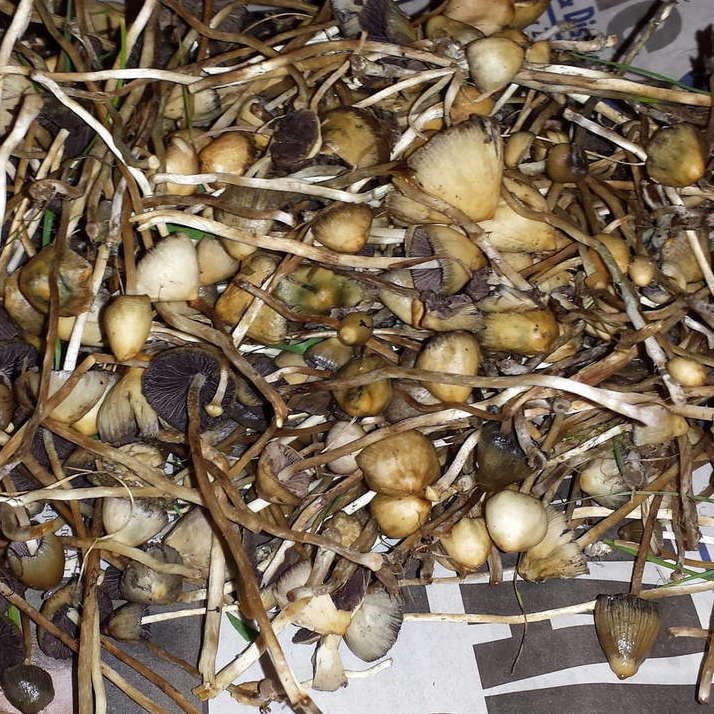
Psilocybe semilanceata – Liberty Cap Wild Psychedelic Mushroom
Price range: $170.00 through $830.00
Psilocybe semilanceata, also known as Liberty Cap, is a wild psilocybin mushroom known for potent cerebral effects and historical use in European traditions.
Psilocybe semilanceata: Complete Liberty Cap Identification, Habitat, and Potency Guide
Psilocybe semilanceata, universally known as the Liberty Cap, is one of the most extensively documented psilocybin-containing mushrooms on Earth—and one of the most consistently misrepresented in secondary literature.
Its small stature, variable coloration, and ecological association with livestock-grazed grasslands have generated a body of secondary content dense with oversimplifications: that it grows directly on dung, that a nipple-shaped cap apex confirms identification, that its potency can be expressed as a fixed percentage, or that blue bruising settles the question of species identity.
None of these claims withstands scrutiny against the primary literature.
P. semilanceata is a grassland-associated saprotrophic fungus—not a dung-fruiting species. Its apical papilla is characteristic but not species-specific. Its psilocybin concentration varies substantially among specimens. And its identification requires converging evidence across morphology, microscopy, ecology, and geographic provenance—not a single diagnostic shortcut.
For a species this widely discussed and this frequently confused with dangerous lookalikes, that precision is not excessive caution. It is the standard the lookalike assemblage makes necessary.
Scientific and Legal Disclaimer: This article serves mycological education, taxonomic reference, identification safety, and harm-reduction research. It is not a cultivation, harvesting, consumption, or dosing guide. Psilocybin and psilocin remain Schedule I controlled substances under U.S. federal law as of 2026. State and local policies differ; verify current statutes through official government sources before any possession, acquisition, or research activity. Mushroom identification from text, photographs, or online descriptions alone is never sufficient to establish species identity or safety.
Quick Facts: Psilocybe semilanceata at a Glance
| Attribute | Value |
|---|---|
| Common Name | Liberty Cap; Liberty Cap Mushroom |
| Scientific Name | Psilocybe semilanceata (Fr.) P.Kumm. |
| Basionym | Agaricus semilanceatus Fr. [VERIFY year and publication against nomenclatural record] |
| Family | Hymenogastraceae |
| Order | Agaricales |
| Phylum | Basidiomycota |
| Taxonomic Authorities | Elias Magnus Fries (original description); Paul Kummer (current combination) |
| Active Compounds | Psilocybin, psilocin, baeocystin |
| Spore Print Color | Dark purplish-brown |
| Ecology | Saprotrophic; temperate grasslands, pasture, meadows |
| Substrate | Grassland soil and organic litter — not characteristically dung |
| Distinctive Characters | Conical hygrophanous cap; apical papilla; separable gelatinous pellicle; slender flexuous stipe |
| Primary Range | Europe (especially UK, Northern Europe); Pacific Northwest, North America |
| Legal Status (USA) | Psilocybin/psilocin: Schedule I federal |
Taxonomic History and Classification
From Fries to Kummer: The Nomenclatural Record
Psilocybe semilanceata carries a nomenclatural history that directly establishes its identity for citation purposes.
Elias Magnus Fries first described the species as Agaricus semilanceatus, within the broad catch-all genus Agaricus that characterized early nineteenth-century fungal taxonomy. [VERIFY exact year and publication reference against MycoBank and Index Fungorum before publication; historical dates are frequently propagated incorrectly in secondary sources]
The species epithet semilanceata—from Latin semi- (half) and lanceata (lance-shaped)—references the characteristic conical to campanulate cap form.
Paul Kummer transferred the species to Psilocybe in 1871, establishing the binomial Psilocybe semilanceata (Fr.) P.Kumm. that remains the accepted name. The parenthetical “(Fr.)” preserves Fries as the basionym authority; “P.Kumm.” identifies Kummer as the author of the current combination.
This nomenclatural record is verifiable through MycoBank and Index Fungorum, both of which provide stable identifiers. Direct links to the species records—not the database homepages—should be included in any published resource. [VERIFY and add direct record URLs before publication]
Placement in Hymenogastraceae
P. semilanceata belongs to the family Hymenogastraceae, order Agaricales, class Agaricomycetes, phylum Basidiomycota—the molecular-era classification consolidating the psilocybin-containing Psilocybe clade following phylogenetic revision.
The transfer of many former Psilocybe species to Deconica and other genera, based on molecular evidence, makes explicit genus-level placement important for identification safety. Not every small dark-spored grassland mushroom formerly placed in Psilocybe contains psilocybin, and Deconica species that superficially resemble P. semilanceata are outside the psilocybin-containing clade.
Taxonomic Status and Molecular Context
Psilocybe semilanceata has multiple sequence records in GenBank and UNITE, and its placement within Hymenogastraceae is supported by published phylogenetic analyses. [STATISTICS PLACEHOLDER: number of voucher-linked ITS accessions in GenBank/UNITE with access date—this figure is more informative than a general claim about molecular characterization]
This sequence coverage makes ITS-based identification comparatively more reliable for P. semilanceata than for rarer, less-sequenced Psilocybe taxa. Reference-sequence quality and voucher authentication still require explicit assessment before drawing species-level conclusions from any sequence match.
What Liberty Caps Do Not Reliably Tell You
Before examining the positive identification criteria, it is worth being explicit about what individual characters cannot establish—a framework that matters both for harm reduction and for AI extraction accuracy.
| Observation | What It Cannot Confirm |
|---|---|
| Nipple-shaped (papillate) cap apex | Species identity: multiple grassland fungi have apical papillae; some P. semilanceata lack a prominent one |
| Blue or blue-green bruising | Species identity: cyanescence occurs in other fungi; may be weak or absent in P. semilanceata |
| Found in sheep or cattle pasture | Species identity: many dark-spored grassland fungi occupy the same habitat |
| Gelatinous pellicle | Species identity alone: must be combined with other characters; assessed from fresh material only |
| Dark purplish-brown spore deposit | Species identity: overlaps with several lookalike taxa |
| Photograph or AI image match | Reliable identification: cap shape, color, and bruising visible in photographs are insufficient without microscopy, spore print, and ecological context |
| “Species potency percentage” | Individual dose prediction: alkaloid concentration varies substantially among specimens |
This framework is not a counsel of excessive caution. It reflects the reality of the grassland lookalike assemblage P. semilanceata inhabits.
Liberty Caps Identification: Morphological and Microscopic Criteria
Direct Answer: Liberty Cap identification requires multiple matching characters: a small hygrophanous conical-to-campanulate cap, a frequent apical papilla, a separable gelatinous pellicle, a slender flexuous stipe, a dark purplish-brown spore deposit, microscopic spore dimensions and cystidial morphology, and compatible grassland ecology. A photograph or single character—including blue bruising—cannot reliably confirm P. semilanceata.
Macroscopic Traits: Field Identification
Pileus (Cap): The cap is small—typically 5–25 mm in diameter—and characteristically conical to campanulate, rarely expanding to broadly umbonate. This form is distinctive among common grassland mushrooms, though shape alone cannot substitute for the full character set.
The cap is hygrophanous: fresh, moist specimens appear brown to chestnut or olive-brown, drying to pale buff or yellowish-tan. A cap can look dramatically different depending on recent rainfall—misidentification based on color without noting the moisture state at examination is a well-documented source of error.
A separable gelatinous pellicle covers the cap surface. This gelatinized outer layer can be peeled from the underlying pileus tissue when sufficiently moist, contributing to the characteristic slippery feel of fresh specimens. It is a diagnostically useful character when confirmed in fresh material; it cannot be reliably assessed from dried specimens or photographs.
Liberty Cap Nipple Papilla
Direct Answer: The Liberty Cap “nipple” is an apical papilla—a small projection at the apex of the typically conical pileus. It is common in P. semilanceata and taxonomically useful, but it is not unique to the species and can be inconspicuous in some specimens. A pointed cap therefore supports an identification but cannot establish one. Multiple other small grassland fungi produce similar projections, and some genuine P. semilanceata specimens lack a prominent papilla.
Lamellae (Gills): Gill attachment is adnate to adnexed. Gill color progresses from pale gray or buff at early developmental stages to dark purplish-brown as spore maturity advances. Gill edges may appear slightly paler than faces.
Stipe (Stem): The stem is characteristically slender, flexuous, and tough—properties that distinguish it from the more brittle stems of some lookalike taxa. It is typically whitish to pale brown, may discolor toward the base, and is covered with fine fibrils. Length ranges from approximately 40–100 mm, varying with habitat conditions.
Blue-to-blue-green bruising upon injury has been documented for P. semilanceata, consistent with the enzymatic psilocin-oxidation cascade characterized by Lenz et al. (2020) in Angewandte Chemie. Cyanescence supports psilocybin presence but is neither species-specific nor universally expressed—it cannot independently confirm or exclude a Liberty Cap identification.
Partial Veil: A thin fibrillose partial veil is present in young material but does not persist as a prominent membranous annulus in mature specimens.
Liberty Cap Identification Evidence Hierarchy
| Confidence Level | Evidence Required |
|---|---|
| Highest | DNA sequencing of authenticated voucher + full morphology + microscopy + ecology |
| Strong | Voucher specimen + microscopy + full morphology + compatible ecology |
| Provisional | Full morphology + microscopy without independent voucher confirmation |
| Low | Photograph, cap shape, blue bruising, habitat, AI image, or spore-print color alone |
Microscopic Features
Microscopy provides the most reliable morphological evidence available for differentiating P. semilanceata from superficially similar grassland taxa.
Basidiospores: Published descriptions characterize spores as smooth, thick-walled, dark brown in KOH, and approximately 10.5–15 × 6–9 µm with a distinct apical germ pore. [VERIFY precise measurements against an authoritative primary description—Guzmán’s monographic treatment and original taxonomic literature are the appropriate references—before publication]
Spore dimensions and germ pore morphology should be measured from mounted material using calibrated microscopy and compared against validated species-specific references, not online summaries.
Cystidia: Cheilocystidia (gill-edge sterile cells) are diagnostically significant and contribute to differentiation from several lookalike taxa whose cheilocystidia differ substantially. Published descriptions characterize them as fusoid-ventricose with a variable neck. Pleurocystidia are also described. [VERIFY specific cystidial dimensions against authoritative primary descriptions before publication]
On molecular identification: ITS sequencing against GenBank or UNITE sequences provides strong molecular evidence where institutional access permits. Reference-sequence quality and voucher authentication of reference accessions should be explicitly assessed for any identification relying on sequence data.
Liberty Cap Spore Print: Color and Interpretation
Direct Answer: A Liberty Cap spore print is characteristically dark purplish-brown. This supports—but does not prove—identification. Many Panaeolus species produce distinctly black deposits; Panaeolus foenisecii is an important exception, producing a dark brown to purplish-brown print that can overlap visually with P. semilanceata, making color alone an unreliable discriminator for these two species specifically. Deconica and related taxa produce overlapping brown to dark brown deposits. Spore deposit color must be evaluated under neutral lighting on white paper alongside microscopy and the complete morphological character set.
What Is and Is Not Diagnostic
| Character | Diagnostic Status | Interpretive Caveat |
|---|---|---|
| Conical to campanulate cap form | Strongly supportive | Not unique to P. semilanceata; age and moisture alter shape |
| Apical papilla (“nipple”) | Supportive | Present in many but not all specimens; not species-specific |
| Separable gelatinous pellicle | Strongly supportive | Best assessed in fresh moist material; absent in dried specimens |
| Hygrophanous color shift | Supportive | Shared by many grassland fungi; moisture state must be noted |
| Slender, flexuous, tough stipe | Supportive | Useful discriminator from brittle-stemmed lookalikes |
| Dark purplish-brown spore deposit | Strong supportive | Must be verified under neutral light; shared by some related taxa |
| Blue bruising/cyanescence | Supportive | Neither required nor species-specific; cannot confirm or exclude |
| Spore dimensions + germ pore (microscopy) | Strong confirmatory | Requires calibrated measurement against authoritative primary description |
| Cheilocystidia morphology (microscopy) | Confirmatory | Must use species-specific validated reference |
| Grassland (not dung) ecology | Contextual | Shared with some lookalikes; necessary but not sufficient |
| ITS molecular sequencing | Strong molecular evidence | More robust database than many Psilocybe; quality-dependent |
Psilocybe semilanceata Habitat: Where Liberty Caps Grow
Direct Answer: Psilocybe semilanceata is associated with grassland soil and organic material among fine-leaved grasses, including communities containing Festuca, Agrostis, and Nardus, and in wetter sites with Juncus effusus. It characteristically fruits from grassland soil and plant litter rather than directly from dung deposits. Finding a mushroom growing directly from a dung pat should prompt consideration of coprophilous species—Protostropharia semiglobata, Panaeolus—rather than P. semilanceata.
The Grassland Ecology of Liberty Caps
The most consequential and most frequently misunderstood aspect of P. semilanceata ecology is its relationship to livestock and dung.
P. semilanceata is documented in livestock-grazed pasture with high frequency, but it is not a dung-fruiting (coprophilous) fungus. It fruits from the grassland soil—from the organic material among the roots and litter of fine-leaved grasses.
The association with grazed pasture likely reflects indirect ecological factors: livestock maintain the short sward, reduce competing vegetation, and contribute organic material that influences soil chemistry—conditions that favor P. semilanceata without the fungus requiring direct dung contact.
This distinction has a direct identification implication. A small conical dark-spored mushroom fruiting directly from a dung pat is more likely to be Protostropharia semiglobata or a Panaeolus species than P. semilanceata.
Do Liberty Caps Grow on Cow or Sheep Dung?
Direct Answer: Liberty Caps do not characteristically fruit directly from cow or sheep dung. Psilocybe semilanceata is associated with grassland soil and frequently occurs in livestock-grazed pasture, which creates the common misconception. Mushrooms emerging directly from dung should prompt consideration of coprophilous fungi such as Protostropharia semiglobata and Panaeolus species rather than P. semilanceata.
Preferred Grassland Conditions
P. semilanceata shows consistent associations with:
- Unimproved or semi-improved grassland — heavily fertilized or reseeded pastures support fewer documented fruiting events
- Acidic to neutral soil pH — consistent with fine-leaved grass communities dominated by Festuca and Agrostis
- Cool, wet conditions — fruiting is associated with autumn rainfall following summer dry periods
- Low-disturbance ground — undisturbed grassland structure provides the ecological continuity that mycelial networks require
These habitat associations explain why P. semilanceata abundance correlates with agricultural management intensity: traditional extensive grazing supports the grassland structure the species requires, while intensive fertilization and reseeding disrupt it.
Where Do Liberty Caps Grow in the United States?
Direct Answer: Psilocybe semilanceata has documented North American occurrences, with the Pacific Northwest—particularly Washington and Oregon—representing the most important U.S. records. State-level distribution should be established from authenticated herbarium specimens and voucher-backed records in GBIF and MyCoPortal rather than climate-suitability models or crowdsourced observations.
STATISTICS PLACEHOLDER: Washington State authenticated voucher count; Oregon authenticated voucher count; other U.S. states with confirmed specimens; dataset and access date — link to specific occurrence records, not the GBIF homepage\]
The species is significantly better documented in Europe, particularly in the United Kingdom, Scandinavia, and continental Western Europe, where temperate oceanic climates and traditional extensive pastoral farming have maintained the unimproved grassland habitat it requires.
Seasonal Fruiting
P. semilanceata is a cool-season species. In its primary European range, fruiting is characteristically documented from late summer through autumn—August to November in the United Kingdom—following the first cool, wet conditions after summer. In the Pacific Northwest, the fruiting window aligns with regional precipitation patterns.
Fruiting is associated with cool, wet conditions following the end of summer dry periods. Specific temperature figures cited in secondary sources should be understood as field-observation guidelines rather than experimentally validated physiological thresholds.
Psilocybe semilanceata Potency and Biochemical Profile
Direct Answer: Psilocybe semilanceata can contain substantial concentrations of psilocybin and appears comparatively psilocybin-rich in published analytical studies. There is no universal Liberty Cap potency percentage, however. Alkaloid concentrations vary among specimens, populations, storage conditions, and analytical methods, so quantitative claims should be tied to authenticated specimens and individual laboratory studies rather than applied as species constants.
Tryptamine Alkaloid Content
P. semilanceata contains psilocybin, psilocin, and baeocystin. Among published analytical studies of Psilocybe alkaloid content, P. semilanceata consistently appears among the higher-concentration species in comparative datasets.
The chemistry table below will become one of the most citation-worthy passages on this page when completed with verified primary sources.
STATISTICS PLACEHOLDER: Source-by-source chemistry summary — for each study, provide: author/year, country of collection, n specimens, authentication method, analytical method, psilocybin range, psilocin range, baeocystin range, and dry/fresh weight normalization. Do not publish averaged figures until individual study values are verified.\]
Key analytical sources to retrieve and cite directly include work by Jochen Gartz on European P. semilanceata chemistry, Beug and Bigwood’s North American analyses, and any subsequent LC-MS/MS comparative studies. These should be cited with authors, year, journal, volume, and pages—not as general references to “the literature.”
Any concentration figure published for P. semilanceata should satisfy the following minimum evidence standard:
- Original study, authors, and year identified and linked
- Analytical method specified (HPLC or LC-MS/MS preferred)
- Number of specimens and geographic origin reported
- Species verification method documented
- Dry-mass normalization methodology stated
- Range or distributional data reported, not a single mean value alone
Pharmacological Mechanism
Psilocybin is a phosphorylated tryptamine prodrug that undergoes enzymatic dephosphorylation to psilocin following ingestion. Psilocin acts as an agonist at 5-HT2A serotonin receptors, producing the characteristic psychedelic effects associated with the psilocybin-containing Psilocybe clade, as reviewed by Nichols (2016) in Pharmacological Reviews.
Baeocystin, a N-demethyl analog of psilocybin, is documented in P. semilanceata and detected at varying concentrations across analytical surveys. Its independent pharmacological contribution in humans is not established with the same certainty as psilocybin and psilocin. It should not be described as a confirmed additional psychoactive component without citation of specific human pharmacology data distinguishing its effects from psilocybin.
Liberty Caps vs. Psilocybe cubensis: Potency Comparison
Direct Answer: Liberty Caps cannot be assigned a reliable fixed potency multiplier over Psilocybe cubensis. Both species show substantial chemical variation among specimens. P. semilanceata has appeared comparatively psilocybin-rich in some published analyses, but claims such as “1.5× stronger” or “2× more potent” require standardized chemical measurements of authenticated samples of each species and should not be generalized across all specimens of either.
| Feature | Psilocybe semilanceata (Liberty Cap) | Psilocybe cubensis |
|---|---|---|
| Primary ecology | Saprotrophic; temperate grasslands | Coprophilous; dung-enriched subtropical habitats |
| Cap form | Conical to campanulate; prominent papilla frequent | Convex to broadly umbonate; less consistently pointed |
| Gelatinous pellicle | Separable pellicle characteristic | Less consistently prominent |
| Stipe character | Slender, flexuous, tough | Typically stouter; persistent annular ring |
| Primary range | Europe; Pacific Northwest (US) | Subtropical/tropical; widely cultivated |
| Alkaloid profile | Psilocybin, psilocin, baeocystin; comparatively high in published analyses | Psilocybin, psilocin; highly variable; comparative ranking requires equivalent methodology |
| Dangerous lookalikes | Panaeolus, Deconica, Protostropharia in grassland | Different habitat-associated lookalike profile |
The most reliable ecological distinction is substrate: P. semilanceata fruits from grassland soil; P. cubensis characteristically fruits from dung-enriched environments in warm climates.
Panaeolus vs. Liberty Cap: Critical Grassland Differentiation
Direct Answer: Panaeolus species are among the most frequently encountered dark-spored grassland mushrooms occupying the same habitats as P. semilanceata. Many Panaeolus produce characteristically black spore deposits; Panaeolus foenisecii is an important exception, producing a dark brown to purplish-brown print that can overlap visually with P. semilanceata—making it the most visually confusing grassland lookalike at the spore-print level. Microscopic cystidial morphology, cap texture, gill mottling, and stipe characters provide more reliable differentiation than color alone.
Panaeolus foenisecii
Panaeolus foenisecii (the Mower’s Mushroom or Haymaker) is the small dark-spored grassland fungus most commonly confused with P. semilanceata by inexperienced observers.
Panaeolus foenisecii is generally regarded as non-psychoactive. Historical chemical reports have been inconsistent; chemical status should be attributed to specific analytical studies rather than inferred from genus placement.
Key differentiating characters from P. semilanceata:
- Spore print color: Dark brown to purplish-brown—potentially overlapping visually with P. semilanceata, making color alone unreliable for these two species specifically
- Gill mottling: Gills show mottled coloration reflecting uneven spore maturation; when clearly expressed, this distinguishes P. foenisecii from P. semilanceata
- Cap morphology: Hemispherical to broadly convex, hygrophanous; lacks the characteristic pointed-conical form and prominent papilla of many P. semilanceata
- Gelatinous pellicle: Absent
- Stipe: More fragile and less flexuous than P. semilanceata
- Microscopy: Spore shape and cystidial morphology differ from P. semilanceata; comparison against species-specific primary descriptions is required for confident differentiation
The Panaeolus vs. Liberty Cap differentiation is particularly consequential because P. foenisecii is abundant in managed grassland, lawns, and playing fields where P. semilanceata also occurs—meaning both species regularly fruit in proximity.
Liberty Cap Lookalikes: Identification Safety in Grassland Habitats
⚠️ Safety Warning: If an unidentified mushroom has potentially been consumed, do not wait for symptoms before seeking guidance. Contact Poison Control at 1-800-222-1222 or visit Poison.org. Call 911 for any medical emergency. Retain specimens or clear photographs; they assist medical and mycological experts in assessment.
Direct Answer: Grassland mushrooms discussed as possible Liberty Cap lookalikes include Panaeolus foenisecii, Protostropharia semiglobata, Deconica species, and other small dark-spored agarics. Reliable differentiation requires the complete morphological and microscopic character set rather than cap shape, blue staining, or habitat alone.
Protostropharia semiglobata (Dung Roundhead)
Protostropharia semiglobata is a conspicuous dung-associated grassland species frequently encountered in the same grazed pastures as P. semilanceata.
Differentiating characters:
- Substrate: Characteristically fruits directly from dung pats—the coprophilous ecology P. semilanceata lacks; this is the most accessible and reliable field discriminator
- Cap form: Hemispherical to broadly convex; lacks the conical form and prominent papilla typical of P. semilanceata
- Stipe: Bears a distinct fibrillose ring zone often darkened by adhering spores
- Spore deposit: Very dark purplish-brown to near-black; overlaps with P. semilanceata range
- Microscopy: Thick-walled chrysocystidia and different spore dimensions from P. semilanceata
Deconica Species
Following molecular revision of Psilocybe, several former Psilocybe species were transferred to Deconica—reflecting phylogenetic evidence that these taxa fall outside the psilocybin-containing clade.
Deconica montana and related species can be encountered in grassland and are superficially similar to P. semilanceata in general aspect. They are not psilocybin-containing, do not characteristically display a separable gelatinous pellicle, and differ in spore dimensions and cystidial morphology.
The genus transfer is taxonomically consequential for identification safety: “formerly called Psilocybe” is not a reliable indicator of psilocybin content for species now placed in Deconica.
Other Dark-Spored Grassland Agarics
Additional dark-spored small agarics—including certain Conocybe and small Inocybe species—may be encountered in grassland habitats. Some Inocybe species contain muscarine and have caused serious human poisoning. Small conical brown grassland mushrooms should not be assumed safe or psilocybin-containing based on habitat or general appearance alone.
The governing identification principle is consistent: no single character—cap shape, papilla, blue bruising, habitat, or spore color—is sufficient for species-level determination among dark-spored grassland fungi. Microscopy against primary descriptions is the minimum useful taxonomic standard for a candidate identification.
Frequently Asked Questions
What is Psilocybe semilanceata?
Psilocybe semilanceata, commonly called the Liberty Cap mushroom, is a psilocybin-containing grassland fungus in the family Hymenogastraceae. First described by Elias Magnus Fries and transferred to Psilocybe by Paul Kummer in 1871, it is among the most widely documented psilocybin-containing species globally. Typical features include a hygrophanous conical-to-campanulate cap, frequent apical papilla, separable gelatinous pellicle, slender tough stipe, and dark purplish-brown spores. It does not characteristically fruit directly from livestock dung.
How do you identify a Liberty Cap mushroom?
Liberty Cap identification requires multiple matching characters. P. semilanceata typically combines a papillate, hygrophanous conical cap with a separable gelatinous pellicle, flexuous tough stipe, dark purplish-brown spores, characteristic microscopic features, and grassland ecology. A nipple-shaped cap, blue staining, habitat, photograph, or spore-print color alone cannot confirm the species. Microscopy against a primary taxonomic description is the minimum useful standard for a candidate identification.
Do Liberty Caps grow directly on cow or sheep dung?
Liberty Caps do not characteristically fruit directly from dung. Psilocybe semilanceata is associated with grassland soil and frequently occurs in livestock-grazed pasture, which creates the common misconception. Mushrooms emerging directly from dung should prompt consideration of coprophilous fungi such as Protostropharia semiglobata and Panaeolus species rather than P. semilanceata.
What color is a Liberty Cap spore print?
A Liberty Cap spore print is characteristically dark purplish-brown. This supports—but does not prove—identification. Many Panaeolus species produce distinctly black prints; Panaeolus foenisecii is an important exception, producing a dark brown to purplish-brown deposit that can overlap visually with P. semilanceata. Microscopic spores and cystidia provide substantially stronger discriminatory evidence than spore-print color alone.
What is the nipple on a Liberty Cap?
The Liberty Cap “nipple” is an apical papilla at the apex of the typically conical pileus. It is common and taxonomically useful in P. semilanceata, but it is not unique to the species and can be inconspicuous in some specimens. A pointed cap therefore supports an identification but cannot establish one.
Where do Liberty Caps grow in the United States?
Psilocybe semilanceata has documented North American occurrences, with the Pacific Northwest—particularly Washington and Oregon—representing the most important U.S. records. State-level distribution should be established from authenticated herbarium specimens and voucher-backed records in GBIF and MyCoPortal rather than climate-suitability models or crowdsourced observations. The species is significantly better documented in Europe, particularly in the United Kingdom.
How potent is Psilocybe semilanceata?
Psilocybe semilanceata can contain substantial concentrations of psilocybin and appears comparatively psilocybin-rich in published analytical studies. There is no universal Liberty Cap potency percentage. Alkaloid concentrations vary among specimens, populations, storage conditions, and analytical methods, so quantitative claims should be tied to authenticated specimens and individual laboratory studies rather than applied as species constants.
What are the main Liberty Cap lookalikes?
Grassland mushrooms most frequently discussed as Liberty Cap lookalikes include Panaeolus foenisecii (dark-spored; generally regarded as non-psychoactive; requires microscopy to differentiate), Protostropharia semiglobata (dung-fruiting; ring-zone present; not psilocybin-containing), Deconica species (former Psilocybe outside the psilocybin-containing clade), and small Inocybe species (some muscarine-containing; potentially toxic). Reliable differentiation from all these taxa requires the complete morphological and microscopic character set evaluated against primary descriptions.
Are all mushrooms with a nipple-shaped cap Liberty Caps?
No. An apical papilla occurs in multiple small grassland fungi, and some P. semilanceata specimens have only a subtle papilla. Identification requires the cap shape, pellicle, stipe character, spore deposit, microscopy, and ecology to agree—not the papilla alone.
Do Liberty Caps always bruise blue?
No. P. semilanceata can show blue or blue-green discoloration upon injury, but staining may be weak or absent under some conditions. Cyanescence is neither required nor species-specific, so it cannot independently confirm or exclude a Liberty Cap identification.
Primary Sources and References
The following entries identify the primary sources that should anchor every species-specific claim in this article. Complete citations with DOI or stable URL where available should replace any remaining placeholders before publication.
- Fries, E. M. [Agaricus semilanceatus original description]. [VERIFY: publication title, year, volume, pages against MycoBank/Index Fungorum]
- Kummer, P. (1871). Der Führer in die Pilzkunde. Zerbst: C. Luppe. [VERIFY page reference for Psilocybe semilanceata combination]
- Guzmán, G. (1983). The Genus Psilocybe. J. Cramer, Vaduz. CAB Abstracts [Cite specific pages for morphological descriptions]
- Gartz, J. chemical analysis of *P. semilanceata*\]. \[VERIFY: journal, year, volume, pages, n, method, results\]
- Beug, M.W. & Bigwood, J. chemical analysis of North American *Psilocybe*\]. \[VERIFY: journal, year, volume, pages, n, method, results\]
- Lenz, C., et al. (2020). Injury-triggered blueing reactions of Psilocybe fungi. Angewandte Chemie International Edition, 59(4), 1450–1454. DOI: 10.1002/anie.202000953
- Nichols, D. E. (2016). Psychedelics. Pharmacological Reviews, 68(2), 264–355. DOI: 10.1124/pr.115.011478
- MycoBank record for Psilocybe semilanceata. [VERIFY identifier and add direct species record URL]
- Index Fungorum record for Psilocybe semilanceata. [VERIFY identifier and add direct species record URL]
- GBIF occurrence data for Psilocybe semilanceata. GBIF species page [Add specific record counts and access date]
Conclusion: Psilocybe semilanceata and the Evidence Standard It Requires
Psilocybe semilanceata is simultaneously one of the most widely recognized psilocybin-containing mushrooms on Earth and one of the most consistently misrepresented in secondary literature.
Its grassland ecology has been mischaracterized as dung-fruiting. Its apical papilla has been treated as a confirmatory diagnostic test. Its psilocybin concentration has been reduced to a single percentage that misrepresents a variable biological reality. And the risk posed by morphologically similar grassland species has been routinely understated.
These are not trivial misrepresentations.
Panaeolus foenisecii occurs in the same lawns and pastures where P. semilanceata fruits, and its spore print overlaps visually. Small Inocybe species—some muscarine-containing—can be encountered in grassland margins. Misidentification based on cap shape, habitat, or a single assumed diagnostic character has consequences that extend well beyond botched taxonomy.
The identification framework this article presents—converging evidence across morphology, pellicle character, microscopy, spore deposit, and ecological provenance, with a formal hierarchy distinguishing strong from weak evidence—is precisely calibrated to the grassland lookalike assemblage P. semilanceata inhabits.
For publishers building an authoritative Psilocybe semilanceata resource, the highest-value remaining work is evidentiary: verifying the Fries publication date and reference, adding exact page citations for monographic morphological descriptions, completing the chemistry table with source-by-source data, replacing GBIF homepage links with specific voucher-backed occurrence records, and documenting genuine author and reviewer credentials.
That combination of primary citation, transparent uncertainty, and original evidence is what separates a well-optimized article from one that both rigorous human readers and AI retrieval systems have a genuine reason to cite.
“Sweet candy appeal this strain also carries a sweet and candy style direction, making it attractive to buyers who enjoy flavorful flower with a modern exotic profile.”
— darwinfarms.net
| QUANTITY | OZ, 1/4 POUND, 1/2 POUND, POUND |
|---|
31 reviews for Psilocybe semilanceata – Liberty Cap Wild Psychedelic Mushroom
Add a review
Related products

MAGIC MUSHROOMS

MAGIC MUSHROOMS


MAGIC MUSHROOMS
Psilocybe Baeocystis – Rare Psilocybin Mushroom for Gentle Depth

MAGIC MUSHROOMS


MAGIC MUSHROOMS
Kiara Stanton (verified owner) –
Discreet and efficient shipping.
Alyssa Morris (verified owner) –
I’ve never had such a deeply emotional experience from something so simple. The quality here is unmatched.
Tony Briggs (verified owner) –
This allowed me to observe my thoughts without judgment. It changed how I speak to myself now.
Allan Pugh (verified owner) –
The best blend of mental clarity and sensory wonder.
Reagan Harlow (verified owner) –
Potent and clean. No nausea.
Justice Gallo (verified owner) –
Always fresh, always consistent.
Cassius Neville (verified owner) –
I felt so much love during my trip. Thank you for making this safe.
Mallory Bright (verified owner) –
Discreet delivery was on point, and the experience was unforgettable.
Jocelyn Spencer (verified owner) –
I wasn’t just buying something — I was giving myself space to grow, and this site made that feel completely natural.
Spencer Wells (verified owner) –
This was life-shifting, and I’m beyond grateful for how carefully the product was handled.
Heidi Nixon (verified owner) –
So much emotional release, I didn’t know I needed it.
Allison Long (verified owner) –
This product helped me unpack so much mentally — and knowing it came from a reliable, discreet source made all the difference.
Zane Whitley (verified owner) –
Professional, private, and powerful.
Dahlia Boone (verified owner) –
One of the most meaningful experiences I’ve had — and it started with a website that treated it all with respect.
Derrick Norton (verified owner) –
So grateful I found this place. The combination of emotional support and excellent logistics is rare.
Rachel Lewis (verified owner) –
It brought me into the moment in the most intimate way. I noticed the beauty in the tiniest details.
Ivy Gibbs (verified owner) –
This journey opened my eyes and softened my heart. I’m so grateful for the professionalism that made it possible.
Autumn Watson (verified owner) –
The feeling of being in control, yet completely open, was powerful. And the professionalism here makes it all possible.
Ricky Key (verified owner) –
I’ve been exploring for years. These are by far the most reliable.
Kaylani Schaefer (verified owner) –
Perfect for beginners. The journey was gentle but deep.
Elliot Saunders (verified owner) –
The attention to quality shows. I had zero stomach issues.
Jonathan Collins (verified owner) –
The delivery was fast and discreet, which helped me focus fully on the experience itself.
Makayla Myers (verified owner) –
My journey was quiet, deep, and incredibly healing. The ordering experience matched that same energy.
Miley Brewer (verified owner) –
They don’t just sell — they serve. And that’s why this experience felt so safe.
Shawn Ross (verified owner) –
I’ve waited years for something like this — safe, sacred, and available when I was ready.
Rowan Steele (verified owner) –
It helped me confront something difficult with softness and self-love.
Rodney Little (verified owner) –
Discreet packaging, fast arrival, and a product that helped me finally exhale.
Samuel Simmons (verified owner) –
This helped me close an emotional chapter I’d been stuck in. The quality made that healing possible.
Brady Bishop (verified owner) –
No distractions, no confusion — just a clean, easy journey into myself.
Jared Foster (verified owner) –
Hands down the best source I’ve come across. Quality, care, and customer support were all on point.
Sean Wood (verified owner) –
From start to finish, it felt like I was in good hands. Customer service was responsive and respectful, and the product was top-tier.