

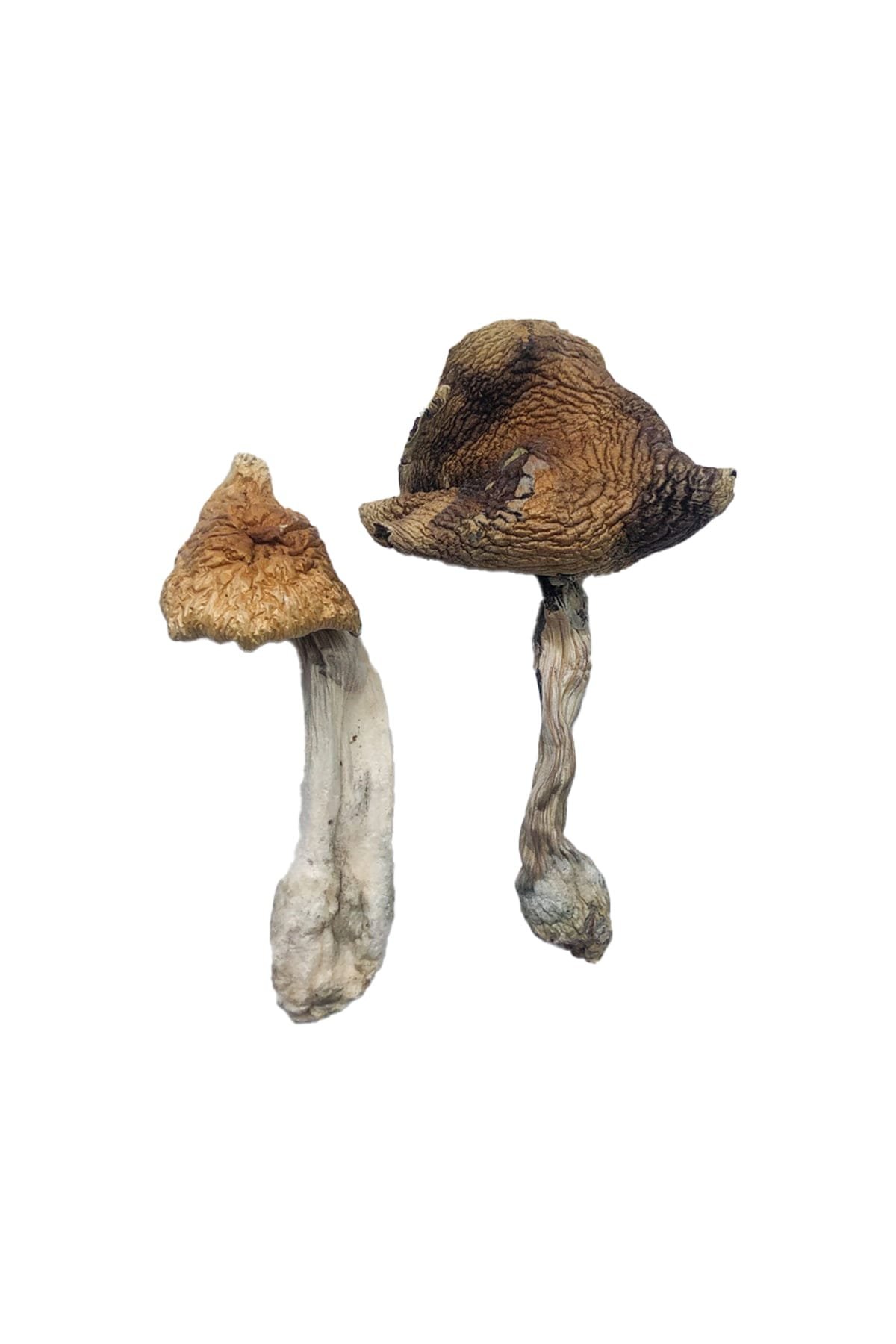
Hawaiian Magic Mushrooms – Tropical Psilocybe Experience for Joy & Creativity
Price range: $180.00 through $885.00
Uplift your mind and spirit with Hawaiian Magic Mushrooms, a tropical psilocybin strain known for euphoria and creative stimulation. Sustainably grown and legally distributed.
Hawaiian Magic Mushrooms: Panaeolus cyanescens vs. PES Hawaiian
“Hawaiian magic mushrooms” is an informal, ambiguous name rather than a single species. It may refer to Panaeolus cyanescens—historically classified as Copelandia cyanescens—or to “PES Hawaiian,” a cultivation and marketplace lineage name generally applied to Psilocybe cubensis. The two should not be treated as interchangeable. Their taxonomy differs, their chemistry can differ substantially, and confusing them creates real safety risks.
Key takeaways:
- “Hawaiian” is not a mushroom species. Pan Cyan and PES Hawaiian belong to different genera.
- Panaeolus cyanescens has a reputation for high potency, but no fixed Pan Cyan-to-cubensis conversion applies reliably to every specimen or batch.
- Psilocybin is dephosphorylated in the body to psilocin, which acts principally through serotonergic receptors including 5-HT2A.
- Reports of unusually joyful, visual, or creative Hawaiian shroom effects are not evidence of reliable strain-specific pharmacology.
- Blue bruising can occur in psilocybin-containing fungi but cannot establish a mushroom’s identity or safety.
- U.S. law distinguishes federal prohibition from state-regulated psychedelic programs and local policy. Spore laws require jurisdiction-specific verification.
What Are Hawaiian Magic Mushrooms?
Hawaiian magic mushrooms can refer to two substantially different things: Panaeolus cyanescens, sometimes called Pan Cyan or historically Copelandia cyanescens, and PES Hawaiian, a cultivation and marketplace lineage name generally applied to Psilocybe cubensis rather than a separate taxonomic species. Resolving that distinction before discussing potency, chemistry, effects, or safety is not a technicality—it is the foundation of the entire analysis.
“Hawaiian” Can Mean Two Different Mushrooms
Panaeolus cyanescens is a recognized fungal species found in tropical and subtropical environments. The older name Copelandia cyanescens still appears in books, commercial descriptions, online forums, and searches such as “Hawaiian Copelandia.” According to MycoBank and Index Fungorum—the recognized authorities for fungal nomenclature—Copelandia cyanescens is treated as a synonym of Panaeolus cyanescens rather than a separate species, which is why both names appear in the same conversations but should resolve to the same organism.
PES Hawaiian is different in a fundamental way. It is a cultivation and marketplace lineage name applied to Psilocybe cubensis, not a separate taxonomic species. A claim established for P. cyanescens cannot automatically be applied to PES Hawaiian, and vice versa. The two share a geographic nickname, not a genus.
“Hawaiian Blue Meanies” adds another layer of ambiguity. “Blue Meanies” has been applied to Panaeolus cyanescens but also appears as a cultivar name in the P. cubensis marketplace. Common names carry far less taxonomic precision than scientific names—a fact worth keeping in mind throughout any discussion of Hawaiian mushroom strains.
Panaeolus cyanescens vs. PES Hawaiian at a Glance
| Feature | Panaeolus cyanescens | PES Hawaiian |
|---|---|---|
| Taxonomic status | Distinct species | Cultivation/marketplace lineage name for P. cubensis |
| Other names | Pan Cyan; historical Copelandia cyanescens | Hawaiian Cubensis; PES Hawaiian |
| Genus | Panaeolus | Psilocybe |
| General appearance | Often comparatively slender | Typical P. cubensis morphology |
| Ecology | Coprophilous; associated with warm climates | P. cubensis ecology |
| Reported compounds | Psilocybin, psilocin and related tryptamines | Psilocybin, psilocin and related compounds |
| Potency | Can be highly potent; substantial variation exists | Variable, as with P. cubensis generally |
| Blue bruising | Can occur | Can occur |
| Evidence for uniquely “Hawaiian” effects | Weak | Weak |
| Key caveat | Appearance does not prove identification or potency | Cultivar name does not guarantee chemistry |
The practical framework:
Common name ≠ taxonomic identity ≠ chemical analysis ≠ actual potency.
That chain of distinctions is one of the most useful tools for evaluating any psychedelic mushroom claim, and it applies with particular force to something as loosely named as “Hawaiian.”
What Does a “Hawaiian” Label Actually Tell You?
Very little by itself. “Hawaiian” is a common or commercial descriptor, not a scientific identification, chemical assay, or guarantee of effects. Before interpreting a potency or experience claim, first establish whether the source means Panaeolus cyanescens or a P. cubensis lineage such as PES Hawaiian.
A useful decision framework:
Claimed name → scientific identity → evidence supporting that identity → measured chemistry, if available → conclusions about potency or pharmacology.
Skipping any step creates false certainty. A marketplace label can indicate what a product is claimed to be; it cannot authenticate the fungus or establish how much psilocybin or psilocin a particular sample contains.
Is Panaeolus cyanescens Actually Hawaiian?
Not inherently. P. cyanescens is associated with warm tropical and subtropical conditions and has been documented in Africa, Asia, Europe, Australia, and the Americas—well beyond the Hawaiian Islands. Geographic, commercial, and common names should be kept separate from scientific taxonomy, and nomenclature verified against MycoBank or Index Fungorum rather than vendor terminology.
How Can Panaeolus cyanescens and Psilocybe cubensis Be Distinguished?
Panaeolus cyanescens and Psilocybe cubensis are distinct species belonging to different genera within Basidiomycota. They can differ morphologically, but photographs, bruising, or common names are insufficient grounds for concluding that a wild mushroom is safe to consume. Expert mycological identification is a different discipline from matching a specimen to an online photograph—and the gap between those two activities has consequences.
Morphology, Gills, Spores, and Ecology
Mycologists assess macroscopic morphology alongside microscopic characteristics, spore features, substrate, habitat, geographic data, and—in ambiguous cases—molecular evidence. P. cyanescens is typically described as relatively slender, while P. cubensis generally produces more robust fruiting bodies. These are tendencies, not identification tests. Fungal appearance shifts with age, hydration, environmental conditions, and developmental stage, which is precisely why a tendency cannot substitute for an examination.
All morphological descriptions in this article are educational taxonomy. They are not an identification key and should not be used to judge whether a wild mushroom is safe to eat.
What Does Blue Bruising Actually Indicate?
Blue bruising does not prove that a mushroom is Panaeolus cyanescens, Psilocybe cubensis, psychoactive, or safe to eat.
Lenz et al. (2020), writing in Angewandte Chemie International Edition, identified the enzymatic mechanism responsible for blue coloration in psilocybin-containing mushrooms—a cascade of oxidative reactions involving psilocin-related compounds after tissue damage. That mechanism is biologically relevant. It is not an identity certificate. A toxic look-alike that does not bruise blue is still toxic; a mushroom that does bruise blue still requires proper identification before any safety conclusion can be drawn.
Why Visual Identification Is Unsafe
Wild-mushroom identification has consequences far beyond getting a strain name wrong. Some toxic fungi can cause severe or fatal poisoning, and a photograph omits the microscopic and ecological evidence needed for a reliable determination. The responsible mycological question is not “does this look like the mushroom in this photograph?”—it is “what evidence actually identifies this organism?” For any ingestion decision, superficial visual matching is an inadequate and potentially lethal standard.
How Potent Are Hawaiian Mushrooms, and What Is Their Alkaloid Profile?
Published chemical analyses show that Panaeolus cyanescens can contain substantial concentrations of psilocybin and psilocin, but potency varies between specimens and studies. The scientifically defensible question is not “How many times stronger is Pan Cyan?” but “What did chemically analyzed samples contain, and were they measured with comparable methods?”
This distinction matters because species identity, sample preparation, storage conditions, dry-versus-fresh basis, extraction procedures, and analytical technique can all affect reported concentrations—sometimes substantially.
Psilocybin, Psilocin, Baeocystin, and Norbaeocystin
Psilocybin is a psychedelic prodrug. After administration, it is dephosphorylated to psilocin, the compound primarily responsible for psychedelic effects. Psilocin interacts with multiple serotonin receptor subtypes; agonist activity at the 5-HT2A receptor plays a particularly important role in psychedelic phenomenology, as established by Nichols (2016) in Pharmacological Reviews.
Psilocybin-containing fungi can also contain related tryptamines including baeocystin and norbaeocystin. Analytical detection of these compounds has been reported—for example, in work by Blei et al. (2020) in Chemistry – A European Journal, which characterized the biosynthetic pathway in P. cubensis—but their independent contributions to human subjective experience remain substantially less established than those of psilocybin and psilocin.
| Compound | Relevance | Evidence status | Important uncertainty |
|---|---|---|---|
| Psilocybin | Precursor/prodrug of psilocin | Strong | Natural concentration varies by specimen, genetics, and conditions |
| Psilocin | Major psychoactive compound | Strong | Stability and concentration vary; degrades with storage |
| Baeocystin | Related tryptamine; biosynthetic pathway characterized | Developing | Human psychoactive contribution not established |
| Norbaeocystin | Related compound | Developing | Limited human pharmacological evidence |
What Do Laboratory Analyses Actually Show?
Analytical studies of Panaeolus cyanescens have reported psilocybin concentrations that can exceed those found in many P. cubensis specimens on a dry-weight basis. Gartz (1994), reporting in Annali del Museo Civico di Rovereto, documented relatively high psilocybin concentrations in Central American P. cyanescens specimens using chromatographic methods—work that remains among the more frequently cited early analyses of this species. Subsequent studies using high-performance liquid chromatography (HPLC) and liquid chromatography-mass spectrometry (LC-MS) have confirmed that substantial variation exists across specimens and collection sites.
Comparing figures across studies requires caution. Measurements reported on a dry-weight basis cannot be directly compared with fresh-weight figures; extraction procedures and instrument calibration affect reported concentrations; and a result from one specimen does not establish the potency of an entire species. Any potency claim attached to a species name should therefore be read as “some analyzed specimens showed this concentration under these conditions”—not as a fixed species-wide value.
Is Pan Cyan Always 2–3× Stronger Than Cubensis?
No. Some analyzed Panaeolus cyanescens specimens contain higher measured alkaloid concentrations than many P. cubensis specimens on a dry-weight basis, but a universal 2–3× conversion is not scientifically defensible. Potency is affected by individual specimen variation, genetics, developmental stage, storage conditions, chemical degradation, and the analytical method used.
The more important practical point: applying a cubensis-based dosage assumption to an unidentified or presumed Pan Cyan specimen compounds risk—because the species may differ, the specimen may differ, and the identification itself may be wrong.
Why Doesn’t a Strain Name Reliably Predict Potency?
A mushroom cultivation or marketplace lineage name is not equivalent to a standardized pharmaceutical formulation. This applies to PES Hawaiian, Golden Teacher, Penis Envy, Blue Meanies, and any other informal P. cubensis label. Those names can convey lineage or phenotype within cultivation communities, but they do not establish a reproducible chemical profile or a predictable subjective experience. Laboratory analysis—not branding—is the relevant standard for determining what a particular sample actually contains.
What Do Hawaiian Magic Mushrooms Feel Like?
Reported Hawaiian shroom effects can include altered visual perception, changes in time perception, emotional amplification, introspection, unusual associations, and changes in the sense of self. Whether an experience feels joyful, frightening, creative, confusing, or meaningful depends on far more than the mushroom’s name.
Commonly Reported Perceptual and Emotional Effects
Psilocybin experiences can involve intensified colors and patterns, altered visual processing, changes in the salience of ordinary stimuli, shifts in music perception, emotional intensity, and unusual modes of thinking. At higher levels of intoxication, profound changes in self-processing and so-called ego dissolution may occur—a phenomenon measurable through validated instruments such as the Mystical Experience Questionnaire used in controlled research.
None of these is guaranteed. Psychedelic states can equally produce anxiety, fear, disorientation, nausea, panic, or difficult psychological material—outcomes that receive less attention in strain marketing but appear consistently in clinical and observational research, including safety analyses published in Psychopharmacology by Johnson et al. (2008).
Are Hawaiian Shrooms Uniquely Joyful or Creative?
There is insufficient controlled evidence to establish “joyful,” “creative,” or “uplifting” as reliable pharmacological characteristics of any Hawaiian mushroom cultivar. Online trip reports reveal what people say they experienced, but those accounts are shaped by expectation, selection effects, inaccurate identification, differences in potency, set and setting, and reporting bias. Each of those variables can produce a consistent-seeming pattern that disappears under controlled conditions.
| Claim | Supporting evidence | Main limitation | Confidence |
|---|---|---|---|
| Psilocybin changes perception and consciousness | Controlled human research | Experience varies substantially between people and contexts | High |
| Psilocin involves 5-HT2A signaling | Pharmacology and human research | Mechanism involves broader serotonergic systems | High |
| Psychedelics alter functional brain connectivity | Human neuroimaging research | Findings depend on dose, timing, and analytical methods | Moderate–high |
| Microdosing reliably improves creativity | Mixed research | Placebo and expectancy effects are significant confounders | Low–moderate |
| Hawaiian cultivars uniquely cause joy | Predominantly anecdotes | No cultivar-specific controlled trials identified | Low |
Psilocin, 5-HT2A Receptors, and Brain Networks
Psilocin’s effects cannot be reduced to the slogan that it “switches off the Default Mode Network.” Research implicates 5-HT2A receptor signaling alongside changes in network organization, functional connectivity, sensory processing, and the normal separation between large-scale brain networks.
Carhart-Harris et al. (2016), writing in PNAS, found that psilocybin increased the diversity of brain states and altered functional connectivity across multiple networks—not simply suppressing the Default Mode Network. The DMN, associated with self-referential and internally directed processing, is part of this research landscape; it is not a single creativity switch that psychedelics flip.
Does Psilocybin Improve Creativity?
Research does not establish that psilocybin—or microdosing it—reliably improves everyday creativity. Some studies describe changes in divergent thinking, psychological flexibility, or perceived creative output. Szigeti et al. (2021), in a self-blinding placebo-controlled study published in eLife, found that expectancy accounted for a substantial proportion of the subjective benefits reported by microdosers—a finding that substantially complicates positive anecdotal accounts.
Feeling that thoughts are unusually novel or profound during an altered state is a different thing from demonstrating improved performance on a validated cognitive measure under controlled conditions. That distinction matters most for people considering Hawaiian shrooms specifically for creativity, burnout, or emotional well-being—purposes for which no cultivar-specific controlled evidence exists.
How Do Pan Cyan, PES Hawaiian, and Golden Teacher Compare?
Panaeolus cyanescens is a distinct species belonging to a different genus from PES Hawaiian and Golden Teacher, while the latter two names refer to P. cubensis lineages. Pan Cyan can show higher measured alkaloid concentrations than many cubensis specimens, but neither a lineage name nor a species-level average predicts the chemistry of any individual sample.
| Dimension | Pan Cyan | PES Hawaiian | Golden Teacher |
|---|---|---|---|
| Identity | Panaeolus cyanescens (distinct species) | Psilocybe cubensis marketplace lineage | Psilocybe cubensis marketplace lineage |
| Separate species? | Yes | No | No |
| Potency evidence | Higher alkaloid concentrations documented in some analytical specimens | Variable; no cultivar-specific replicated analysis | Variable; no cultivar-specific replicated analysis |
| Distinctive-effects evidence | Limited | Limited | Limited |
| Chemistry guaranteed by name? | No | No | No |
| Major uncertainty | Specimen-level potency variation | Lineage consistency and authenticity | Lineage consistency and authenticity |
Which Is Stronger?
Some analyzed Panaeolus cyanescens specimens show higher measured alkaloid concentrations than many P. cubensis samples on a dry-weight basis, but an exact universal ratio is not justified. Naturally produced mushrooms do not contain a standardized amount of psilocybin and psilocin. Applying a cubensis-based dosage assumption to a specimen identified only by common name creates compounded risk from uncertain species identity, uncertain specimen potency, and uncertain identification.
Do Named Cubensis Strains Reliably Produce Different Effects?
Scientific evidence for reliable cultivar-specific psychological effects is limited across P. cubensis lineages. Claims that one cultivar is inherently philosophical while another is creative, euphoric, or visual should be treated as anecdotal unless controlled chemical and human evidence demonstrates otherwise. That demonstration has not occurred for Hawaiian strains or any other named P. cubensis lineage.
Pros and Cons of Mushroom “Strain” Labels
Cultivar and marketplace names have a legitimate practical function: they help cultivation communities distinguish lineages and describe observable phenotypes. The problems arise when labels are used to imply something they cannot establish—species identity, alkaloid concentration, purity, or predictable psychological effects. Unlike pharmaceutical labels, cultivar names carry no standardization requirement and no regulatory verification.
Why Are Hawaiian Magic Mushroom Dosage Charts Potentially Misleading?
A Hawaiian magic mushroom dosage chart cannot reliably convert mushroom weight into a predictable psychoactive exposure. Natural alkaloid concentrations vary, species can be confused, individual responses differ substantially, and the identification underlying the weight measurement may itself be wrong. This section explains those risks rather than resolving them with gram ranges—which would create exactly the false precision the evidence does not support.
Why Pan Cyan and Cubensis Should Not Be Treated as Equivalent by Weight
| Risk factor | Why it matters | Safer principle |
|---|---|---|
| Species confusion | Different species belong to different genera and can have different chemistry | Never infer equivalence from a common name |
| Variable alkaloids | Weight does not equal standardized drug content | Treat potency as uncertain for every specimen |
| Misidentification | Toxic mushrooms can be mistaken for desired species | Do not use photographs as an ingestion-safety test |
| Individual sensitivity | Psychological and physical responses vary considerably | Avoid assumptions based on another person’s experience |
| Other substances and medications | Interactions can change risk in unpredictable ways | Seek qualified medical advice |
| Environment | Impairment increases accident risk | Avoid driving, water, heights, and other hazards |
Who May Face Elevated Risk?
Psychedelic use warrants particular caution for people with personal or relevant family histories of psychotic disorders or bipolar-spectrum illness—a risk profile documented in clinical literature including guidance from the National Institute on Drug Abuse. Cardiovascular conditions, pregnancy, acute psychological instability, and combinations with medications or other psychoactive substances introduce additional uncertainties that a mushroom name cannot resolve.
A person should not discontinue prescribed medication in order to use psilocybin without consulting the clinician responsible for that treatment. That decision has clinical consequences that a strain guide is not equipped to address.
What Should You Do During a Difficult Psychedelic Experience?
If someone becomes frightened or disoriented, moving to a calmer, lower-stimulation environment with a responsible sober person present can reduce immediate hazards. Keep the person away from driving, traffic, water, heights, and any situation where impaired judgment could cause injury.
Seek emergency medical help for loss of consciousness, seizures, severe or persistent agitation, dangerous behavior, significant chest pain, breathing problems, extreme overheating, suspected poisoning, or whenever the situation cannot be managed safely.
In the United States, America’s Poison Centers is available at 1-800-222-1222. Call 911 for any immediate emergency.
Do Hawaiian Shrooms Cause Nausea, and Does Lemon Tek Prevent It?
Nausea can occur with psilocybin mushrooms, but attributing it entirely to mushroom chitin is an oversimplification. Gastrointestinal effects likely reflect multiple contributing factors, and the evidence for any single explanation—including the chitin hypothesis—is limited.
Is Chitin Responsible for Mushroom Nausea?
Chitin is a structural polysaccharide in fungal cell walls and is frequently cited online as the primary cause of psychedelic mushroom nausea. That explanation goes beyond available evidence. Serotonin—5-hydroxytryptamine—plays well-established roles in gastrointestinal signaling, making serotonergic pharmacology another credible contributor to nausea following psilocybin exposure. Anxiety and the overall physical context of the experience are additional plausible factors. The honest position is that mushroom-associated nausea is likely multifactorial, and no single mechanism has been confirmed as dominant.
Does Lemon Tek Convert Psilocybin to Psilocin?
Internet descriptions often claim that lemon juice performs dephosphorylation of psilocybin to psilocin before ingestion, producing faster onset or altered effects. Acid-assisted extraction and psilocybin chemistry are legitimate scientific topics—but that legitimacy does not validate every biochemical explanation attached to an internet preparation technique. Whether lemon-based preparation predictably changes pharmacokinetics, potency, or nausea in humans has not been established by robust clinical research. Reports of faster or different effects remain largely anecdotal and should not be presented as a medically established nausea treatment or pharmacological shortcut.
What Is the Evidence-Based Approach to Nausea?
Persistent or severe nausea, repeated vomiting, unusual neurological symptoms, or illness following consumption of an unidentified wild mushroom warrants evaluation by America’s Poison Centers (1-800-222-1222) or emergency medical services—not experimentation with home remedies. If mushroom poisoning is a possibility, preserve any remaining mushroom material or photographs for professional identification.
How Do Set, Setting, and Harm Reduction Affect a Psychedelic Experience?
“Set” describes a person’s psychological state and expectations; “setting” describes the physical and social environment. Both influence psychedelic experiences—a principle recognized in clinical research and operationalized in controlled psilocybin studies through screening, preparation, and structured environments. Neither careful preparation nor favorable surroundings can eliminate pharmacological, psychiatric, legal, or poisoning risks.
What Does “Set” Mean?
Set encompasses current mood, stress levels, expectations, mental-health history, intentions, and the psychological context surrounding an experience. Expectation is particularly consequential when evaluating supposed strain effects: if someone has been told repeatedly that Hawaiian mushrooms are exceptionally joyful or visual, expectation can shape how an ambiguous experience is interpreted and subsequently reported—a confound that Szigeti et al. (2021) demonstrated empirically in a microdosing context.
What Does “Setting” Mean?
Setting includes the physical location, people present, potential hazards, social atmosphere, privacy, and access to assistance. Controlled clinical psychedelic research typically involves extensive screening, preparation, professional support, and structured environments with defined safety protocols. Results from those studies cannot be extrapolated straightforwardly to unsupervised use, where none of those conditions apply.
Why Does Sober Supervision Matter?
Psychedelics can impair judgment and substantially alter perception. A responsible sober support person can recognize hazards, help maintain a safer environment, and seek assistance when a situation deteriorates. A trip sitter is not a substitute for clinical care in a genuine emergency.
What Is Psychedelic Integration?
Integration refers to efforts to reflect on and contextualize a psychedelic experience after acute effects have resolved. In professional settings, this can include discussing the experience with an appropriately trained clinician and evaluating insights without automatically treating every thought produced during an altered state as accurate or actionable.
Are Hawaiian Magic Mushrooms Legal in the United States in 2026?
At the federal level, psilocybin and psilocin remain Schedule I controlled substances under the Controlled Substances Act. State reforms do not repeal that federal classification, and “legal,” “decriminalized,” “regulated access,” and “enforcement deprioritization” are not interchangeable terms with distinct and different practical consequences.
Legal status last reviewed: August 2026. Verify current primary government sources before relying on this section. Psychedelic laws and regulations continue to change.
What Does Federal Law Say About Psilocybin?
The U.S. Drug Enforcement Administration lists psilocybin and psilocin in Schedule I under the federal Controlled Substances Act. That federal classification exists independently of state-level reforms. FDA-authorized clinical research into psilocybin operates under specific authorization and does not make ordinary possession or commercial sales federally legal.
How Are Oregon and Colorado Different?
Oregon created a regulated psilocybin-services framework administered by Oregon Psilocybin Services within the Oregon Health Authority. The model centers on regulated services in licensed environments—not conventional retail mushroom sales.
Colorado’s natural-medicine framework developed through Proposition 122 and subsequent legislation, administered through the Colorado Department of Revenue’s Natural Medicine Division. Colorado state law includes provisions concerning personal use and a regulated natural-medicine program, but restrictions remain, and commercial retail sales should not be confused with regulated services or protected personal activities. Federal prohibition applies in both states. Current official program guidance is the appropriate reference for what is specifically permitted, required, and prohibited in each.
Does Local Decriminalization Make Psilocybin Legal?
No. Decriminalization, deprioritized enforcement, regulated access, and legalization are legally distinct concepts. A city changing its enforcement priorities does not repeal federal law and may not alter state prohibitions. The precise ordinance, covered activity, age restrictions, quantity limits, and jurisdiction all matter—and they vary considerably.
Are Psilocybin Mushroom Spores Legal in the U.S.?
There is no reliable evergreen rule that psilocybin-mushroom spores are “legal in 47 states.” Legal analysis depends on the jurisdiction, the biological material involved, what compounds it contains, and the activity or intent at issue. A vendor’s shipping policy reflects commercial convenience, not legal analysis. Anyone researching Hawaiian mushroom spores for microscopy should verify current statutes and official guidance for the relevant jurisdiction rather than relying on a static national count.
Buying vs. Possessing vs. Cultivating vs. Regulated Services
| Activity | Federal position | State/local variation | Verify with |
|---|---|---|---|
| Psilocybin possession | Generally prohibited outside authorized contexts | Significant variation by jurisdiction | DEA + current state statute |
| Commercial sale | Federally prohibited outside authorized contexts | Regulated state models are narrow | State regulators |
| Cultivation | Federal restrictions apply | State protections and restrictions differ | Current state statute |
| Regulated services | No general federal legalization | Available under specific state frameworks | Official program regulator |
| Spores | Fact-specific and context-dependent | State restrictions can differ | Current federal and state law |
This article does not provide vendors or instructions for producing controlled substances.
What Are the Most Common Hawaiian Mushroom Mistakes?
The most consequential errors in this space share a common root: treating labels, anecdotes, or simplified legal summaries as though they were measurements. A reliable approach separates taxonomy, chemistry, subjective experience, and law—and applies different evidence standards to each.
| Common mistake | Better practice |
|---|---|
| Assuming “Hawaiian” describes one species | Establish the scientific identity before drawing any other conclusion |
| Assuming cultivar name determines potency | Treat chemistry as variable until laboratory evidence says otherwise |
| Applying cubensis equivalencies to Pan Cyan | Never assume weight-for-weight equivalence across genera |
| Using blue bruising as proof of safety | Seek expert identification; bruising is an observation, not a diagnosis |
| Treating trip reports as clinical evidence | Identify the evidence level before generalizing |
| Assuming “decriminalized” means “legal” | Read current primary law for the specific jurisdiction |
| Assuming spores are legal everywhere | Verify the specific state statute and activity |
| Calling Lemon Tek proven chemistry | Separate hypotheses and anecdotes from clinical evidence |
| Mixing fresh and dried weights or measurement units | Keep measurements and analytical units explicit and consistent |
Popular Claim Audit
| Popular claim | What evidence actually shows | Confidence |
|---|---|---|
| Pan Cyan is always 2–3× stronger than cubensis | Some analyzed specimens show higher alkaloid concentrations; no fixed conversion is scientifically defensible | Moderate that variation exists; Low for any universal ratio |
| Hawaiian mushrooms produce more creativity | No cultivar-specific controlled evidence identified | Low |
| Blue bruising confirms identity or potency | Bruising has a chemical basis (Lenz et al., 2020) but is not an identification or potency test | High confidence in limitation |
| Lemon Tek eliminates nausea | Not established in clinical research | Low |
| Spores are legal in 47 states | Static national count is unsafe; legality is jurisdiction-specific | High confidence in limitation |
| PES Hawaiian is a separate species | PES Hawaiian is a marketplace lineage name for P. cubensis, not a distinct species | High |
This framework extends beyond Hawaiian mushroom strains. It applies to almost any marketing claim built around a supposedly unique psychedelic mushroom cultivar.
What Does Research Actually Establish About Hawaiian Mushrooms and Psilocybin?
Research strongly supports psilocybin’s conversion to psilocin and the importance of serotonergic mechanisms—particularly 5-HT2A—in psychedelic effects. Evidence is considerably weaker, and often absent, for claims that specific commercial mushroom lineages reliably create distinctive emotional or creative experiences.
High-Confidence Findings
Panaeolus cyanescens and Psilocybe cubensis are distinct species belonging to different genera. Psilocybin is dephosphorylated to psilocin, and psilocin’s psychedelic pharmacology prominently involves serotonergic signaling, including activity at the 5-HT2A receptor—established by Nichols (2016) in Pharmacological Reviews. Human psychedelic responses also vary substantially across individuals and contexts, a finding reproduced across controlled research settings.
These conclusions are substantially stronger than claims about named cultivars producing reproducible emotional “personalities.” The gap between species-level pharmacology and cultivar-specific reputation is precisely where most Hawaiian mushroom marketing overreaches.
What Evidence Is Still Developing?
Human neuroimaging studies indicate that classic psychedelics can alter large-scale brain-network organization and functional connectivity. Carhart-Harris et al. (2016) in PNAS documented increased diversity of brain states and altered network communication following psilocybin administration. Current evidence does not support the claim that psilocybin simply “switches off” the Default Mode Network, nor does DMN research translate directly into claims about creativity.
Clinical trials have also investigated psilocybin-assisted interventions for several psychiatric conditions. Davis et al. (2021), in JAMA Psychiatry, reported significant reductions in depressive symptoms in a controlled trial of psilocybin therapy for major depressive disorder. Carhart-Harris et al. (2021), in New England Journal of Medicine, reported comparable outcomes between psilocybin and escitalopram in a treatment-resistant depression trial. Those findings apply to specific protocols, screened participants, known formulations, and supervised environments—they should not be generalized to self-administered mushrooms of uncertain identity or potency.
Which Hawaiian Mushroom Claims Rely Mainly on Anecdotes?
Claims that Hawaiian mushrooms are inherently more joyful, “clean,” creative, spiritually uplifting, nausea-free, or especially suitable for microdosing lack cultivar-specific controlled evidence. The same standard applies to trip reports: they document an individual’s reported experience under uncontrolled conditions, not a reproducible pharmacological property that will transfer to the next person.
A useful evidence ladder for evaluating any psychedelic claim:
Primary scientific evidence and regulatory sources → controlled human studies → observational research → validated chemical analysis → case reports → user reports → marketing claims.
The further a claim sits toward the right of that sequence, the less confidently it should be generalized—and most Hawaiian strain claims sit toward the right.
How We Evaluated the Evidence
This guide prioritizes primary scientific literature, recognized fungal nomenclature databases, government statutes and regulatory guidance, and established poison-control resources. Controlled human studies carry more weight for claims about human effects than trip reports, vendor descriptions, or observational anecdotes.
For potency comparisons, studies are compared only when species identity, specimen basis, analytical method, and measurement units permit a meaningful comparison. For legal claims, the current primary government source takes priority over commercial summaries. For contested or developing scientific claims, the article states the uncertainty rather than resolving it through anecdote.
Taxonomic nomenclature is verified against MycoBank and Index Fungorum. Pharmacology and neuroscience claims are sourced to PubMed-indexed peer-reviewed literature. Legal information reflects primary federal and state government sources as of August 2026.
Frequently Asked Questions About Hawaiian Magic Mushrooms
What are Hawaiian magic mushrooms?
“Hawaiian magic mushrooms” is an ambiguous common term that can refer to Panaeolus cyanescens—historically called Copelandia cyanescens, now treated as a synonym in fungal nomenclature databases—or to PES Hawaiian, a marketplace lineage name generally applied to Psilocybe cubensis. They are taxonomically distinct and should not be assumed to share identical potency, appearance, or chemistry.
What is the difference between Pan Cyan and PES Hawaiian?
Pan Cyan generally refers to Panaeolus cyanescens, a distinct species in the genus Panaeolus. PES Hawaiian is a marketplace lineage name for Psilocybe cubensis, a different genus entirely. P. cyanescens can show notably high alkaloid concentrations in some analyzed specimens; PES Hawaiian belongs to the chemically variable P. cubensis group. Neither name guarantees the potency of any individual specimen.
Is PES Hawaiian a separate mushroom species?
No. PES Hawaiian is a cultivation and marketplace lineage name generally associated with Psilocybe cubensis, not a separately recognized taxonomic species. Claims about PES Hawaiian should be distinguished from evidence about Panaeolus cyanescens, despite both sometimes being described as “Hawaiian.”
Is Copelandia cyanescens the same as Panaeolus cyanescens?
Copelandia cyanescens is a historical taxonomic name treated as a synonym of Panaeolus cyanescens in current fungal nomenclature databases including MycoBank and Index Fungorum. Older literature and commercial pages may still use Copelandia; both names refer to the same species.
Can you identify Pan Cyan safely from a photograph?
No. A photograph can provide clues but cannot reliably establish a wild mushroom’s identity or safety. Professional identification requires multiple morphological and ecological features, often microscopy, and sometimes molecular evidence. A visual match to an online image is an inadequate standard for any ingestion decision.
Are Hawaiian mushrooms stronger than Golden Teacher?
Some analyzed Panaeolus cyanescens specimens show higher measured alkaloid concentrations than many P. cubensis specimens on a dry-weight basis, including material marketed as Golden Teacher. No scientifically defensible universal conversion applies. PES Hawaiian and Golden Teacher are both P. cubensis marketplace names, and neither label alone establishes which sample contains more active compounds.
Are Hawaiian Blue Meanies the same as Panaeolus cyanescens?
“Hawaiian Blue Meanies” is often used for Panaeolus cyanescens, but “Blue Meanies” is an ambiguous marketplace name that has also been applied to P. cubensis material. Scientific identification is more reliable than common-name matching whenever taxonomy matters.
How long can psilocybin mushroom effects last?
Human research with psilocybin generally describes an acute psychedelic experience lasting several hours, with timing influenced by dose, formulation, individual physiology, and other variables. Residual psychological effects can outlast acute intoxication. Species or marketplace lineage names alone do not determine duration.
Does blue bruising mean a mushroom contains psilocybin?
No. Lenz et al. (2020) identified the enzymatic mechanism behind blue coloration in psilocybin-containing mushrooms, connecting it to oxidative reactions involving psilocin-related compounds. That mechanism is biologically relevant—but bruising is not a sufficient identification or safety test. A wild mushroom should never be judged safe for consumption because it turns blue after handling.
Do Hawaiian mushrooms cause less nausea?
There is no strong evidence that a Hawaiian strain name guarantees less nausea. Gastrointestinal effects vary between individuals and likely involve multiple factors: mushroom material, serotonergic pharmacology, anxiety, and individual susceptibility. Claims of consistently “clean” or nausea-free Hawaiian experiences are primarily anecdotal.
Does microdosing psilocybin improve creativity?
Controlled evidence does not establish that psilocybin microdosing reliably improves creativity. Szigeti et al. (2021), in a self-blinding placebo-controlled study in eLife, found that expectancy accounted for a substantial proportion of subjective benefits reported by microdosers. Perceived novelty during an altered state should not be interpreted as measurable cognitive improvement.
Does Lemon Tek convert psilocybin into psilocin?
The claim that lemon juice predictably performs dephosphorylation before ingestion and thereby changes pharmacokinetics, potency, or nausea has not been established by robust clinical research. Acidic extraction chemistry is a legitimate scientific subject; that legitimacy does not validate every application described in an online preparation guide.
Are psilocybin mushroom spores legal in the U.S.?
Spore legality is jurisdiction-specific and cannot be answered by a static state count. Some spores may not contain scheduled psilocybin or psilocin before germination, but states can impose separate rules on spores, cultivation, and intent. Verify current federal and state law for the specific jurisdiction rather than relying on the common “legal in 47 states” claim.
Are psilocybin mushrooms legal in Oregon or Colorado?
Both states have enacted significant reforms, but characterizing either as simply having legalized psilocybin loses important distinctions. Oregon operates a regulated psilocybin-services framework through Oregon Psilocybin Services. Colorado has a different natural-medicine framework through the Colorado Department of Revenue’s Natural Medicine Division, with its own restrictions. Federal Schedule I classification applies in both states. Current official program guidance is the appropriate reference.
Bottom Line: Hawaiian Magic Mushrooms Require Taxonomy First, Claims Second
The central fact about Hawaiian magic mushrooms is simple: “Hawaiian” does not identify a standardized mushroom or a single species. Panaeolus cyanescens and PES Hawaiian are taxonomically distinct—different species, different genera—and neither a commercial label, a blue-bruising reaction, nor a trip report establishes the chemistry or safety of any individual specimen.
Evidence supports psilocybin’s conversion to psilocin and its serotonergic psychedelic pharmacology, including the role of 5-HT2A receptor activity. Evidence does not currently establish that Hawaiian mushroom lineages reliably produce unique joy, creativity, reduced nausea, or predictable microdosing benefits. Some analyzed Panaeolus cyanescens specimens show high alkaloid concentrations, but fixed potency conversions should not substitute for actual chemical evidence about the specific specimen in question.
Use the taxonomy-first framework whenever evaluating a claim: identify what organism is actually being discussed; check the quality of the supporting evidence; distinguish measured chemistry from marketplace terminology; treat identification and potency as uncertain until demonstrated otherwise; and verify current safety or legal claims through authoritative sources rather than commercial summaries.
Primary CTA: Download the evidence-based Psychedelic Harm Reduction & Integration Checklist.
Secondary CTA: Explore the Psilocybin Research Hub for peer-reviewed evidence on pharmacology, microdosing, brain imaging, safety, and changing U.S. policy.
Sources and Editorial References
Every scientific number in the finished article should be traceable to the exact study, table, or dataset that supports it. The following references underpin specific claims made in this guide.
- Lenz C, Sherwood A, Kargbo R, et al. Injury-Triggered Blueing Reactions of Psilocybe “Magic” Mushrooms. Angewandte Chemie International Edition. 2020. [Blue-bruising mechanism]
- Nichols DE. Psychedelics. Pharmacological Reviews. 2016;68(2):264–355. [Psilocybin/psilocin pharmacology; 5-HT2A mechanisms]
- Blei F, Dörner S, Fricke J, et al. Simultaneous Production of Psilocybin and a Cocktail of β-Carboline Monoamine Oxidase Inhibitors in “Magic” Mushrooms. Chemistry – A European Journal. 2020. [Baeocystin biosynthesis and compound detection]
- Carhart-Harris RL, Muthukumaraswamy S, Roseman L, et al. Neural correlates of the LSD experience revealed by multimodal neuroimaging. PNAS. 2016;113(17):4853–4858. [Brain-network changes under psychedelics]
- Carhart-Harris R, Giribaldi B, Watts R, et al. Trial of Psilocybin versus Escitalopram for Depression. New England Journal of Medicine. 2021;384:1402–1411. [Clinical psilocybin trial]
- Davis AK, Barrett FS, May DG, et al. Effects of Psilocybin-Assisted Therapy on Major Depressive Disorder. JAMA Psychiatry. 2021;78(5):481–489. [Clinical psilocybin trial]
- Szigeti B, Kartner L, Blemings A, et al. Self-blinding citizen science to explore psychedelic microdosing. eLife. 2021;10:e62878. [Microdosing placebo-controlled study]
- Johnson MW, Richards WA, Griffiths RR. Human hallucinogen research: guidelines for safety. Psychopharmacology. 2008;187(3):314–315. [Safety guidelines and adverse effects]
- Gartz J. Cultivation and analysis of Psilocybe species. Annali del Museo Civico di Rovereto. 1994. [Historical P. cyanescens alkaloid analysis — verify full citation and DOI before publication]
- MycoBank — Panaeolus cyanescens nomenclature record
- Index Fungorum — Panaeolus cyanescens
- U.S. Drug Enforcement Administration — Drug Scheduling
- Oregon Health Authority — Oregon Psilocybin Services
- Colorado Department of Revenue — Natural Medicine Division
- America’s Poison Centers
- National Institute on Drug Abuse — Psychedelics
Scientific reviewer, taxonomic reviewer, and legal verification details must be populated with actual names, credentials, and confirmed review dates before this page is indexed. The Gartz (1994) citation should be verified against the original publication for complete bibliographic details and DOI.
| Quantity | Oz, QP, Hp, Lb |
|---|
31 reviews for Hawaiian Magic Mushrooms – Tropical Psilocybe Experience for Joy & Creativity
Add a review
Related products


MAGIC MUSHROOMS
Psilocybe semilanceata – Liberty Cap Wild Psychedelic Mushroom

MAGIC MUSHROOMS


MAGIC MUSHROOMS


Mallory Bright (verified owner) –
Love the subtle onset and the emotional journey it took me on.
Joyce Carson (verified owner) –
A calming, introspective experience made even better by knowing the people behind it truly care.
Brandon Hall (verified owner) –
I’ve never felt so grounded and uplifted at the same time. Truly grateful for the people behind this.
Kaia Landon (verified owner) –
Incredible visuals and deep personal insights. Will definitely be returning for more.
Aitana Granger (verified owner) –
A guided, intuitive healing experience.
Heidi Nixon (verified owner) –
Truly safe, profound, and healing.
Andrew White (verified owner) –
Each moment felt sacred. I was fully immersed in a gentle sense of awe.
Matthias Reaves (verified owner) –
This helped me with long-standing depression.
Anson Roper (verified owner) –
Felt the presence of something sacred.
Paola Henson (verified owner) –
A guided, intuitive healing experience.
Alana Lawson (verified owner) –
My experience with this product was sacred, and the way it was delivered only enhanced that trust.
Miles Stephens (verified owner) –
You made me feel like a human, not just a customer. That made the journey even more meaningful.
Kaylani Schaefer (verified owner) –
Really felt the connection to everything.
Aubrielle Haney (verified owner) –
The magic is real.
Amaya Bridges (verified owner) –
Truly impressed with how easy and safe this entire process was. Felt more like working with guides than a shop.
Sean Wood (verified owner) –
When something this powerful is handled with love and care, it becomes more than a product — it becomes a moment.
Ezekiel McBride (verified owner) –
I’ve tried many—this is the best.
Skye Zimmerman (verified owner) –
Nothing about this felt sketchy. Just professionalism, transparency, and a product that changed how I see myself.
Dahlia McCann (verified owner) –
Love the subtle onset and the emotional journey it took me on.
Olivia Carter (verified owner) –
I felt a connection with the experience before I even opened the package. That’s rare and beautiful.
Jacob Roberts (verified owner) –
I wasn’t expecting such a deep emotional reset. It was like therapy, but from within.
Reagan Beck (verified owner) –
The emotional clarity I gained from this session is hard to put into words. It felt safe, guided, and surprisingly gentle.
Kyle Howard (verified owner) –
The professionalism here is unmatched — respectful tone, fast replies, and packaging that made me feel at ease.
Alivia Nash (verified owner) –
My journey was quiet, deep, and incredibly healing. The ordering experience matched that same energy.
Bruce Moss (verified owner) –
Was nervous about the delivery, but it was so discreet and quick I couldn’t believe it. Product was fresh and powerful.
Genevieve Neal (verified owner) –
I’ve tried different sources in the past, but none gave me this level of emotional depth and trust.
Kevin Hill (verified owner) –
This is more than just a shop. It’s a trustworthy path into inner work.
Russell Vaughn (verified owner) –
It’s hard to explain, but it gave me peace. I saw myself without the usual filter of anxiety.
Brooklyn Alexander (verified owner) –
These are people you can trust with a powerful tool. That matters more than anything.
Marcus Fleming (verified owner) –
This experience was personal, emotional, and beautifully clear. Thank you for handling it with such care.
Kyle Howard (verified owner) –
I’m usually super anxious about buying anything online, especially this kind of thing. But this team made it feel secure and smooth.