


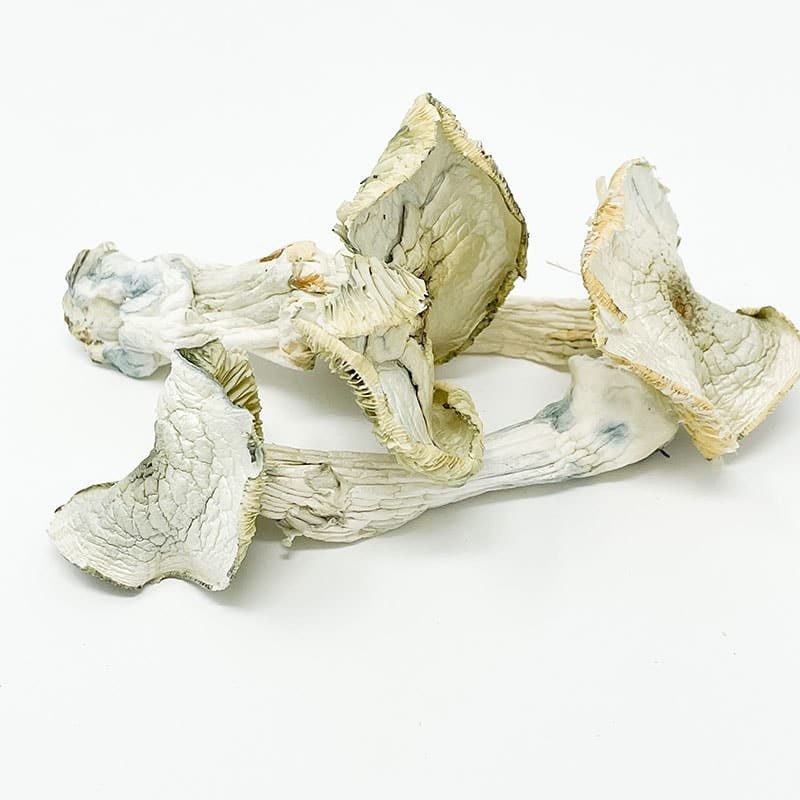
Albino A+ Mushrooms – Premium Leucistic Psilocybin Strain
Price range: $185.00 through $930.00
Albino A+ Mushrooms are a potent leucistic strain of Psilocybe cubensis, known for their intensely visual trips, deep spiritual insights, and clean, uplifting energy. Lab-tested, organically cultivated, and legally sold by a licensed supplier.
Albino A+ Mushrooms: Complete Guide to the Leucistic Psilocybe cubensis Cultivar
Albino A+ is a leucistic cultivar of Psilocybe cubensis known for its pale fruiting bodies and dark purple-brown spores. Unlike true albino cultivars, it retains spore pigmentation—making it a valuable reference specimen for microscopy and fungal taxonomy. Potency varies by individual specimen, so appearance should never be used as a proxy for alkaloid content.
Key Takeaways
- Albino A+ is leucistic, not a true albino—its spores are dark despite its pale fruiting bodies
- Dark purple-brown spore prints are the clearest evidence of its leucistic classification
- Potency varies more between individual specimens than between cultivar designations
- Microscopy and taxonomy are the primary lawful uses for spores in most US jurisdictions
- No clinical trial has evaluated Albino A+ as a distinct cultivar—existing psilocybin research uses synthetic compounds
- Legal status differs by jurisdiction and should always be verified through official sources before acquiring spores
What Are Albino A+ Mushrooms?
Albino A+ is a leucistic cultivar of Psilocybe cubensis distinguished by pale, ghost-white fruiting bodies and dark purple-brown spore prints. That combination—near-white caps alongside deeply pigmented spores—is the single most important fact about this cultivar, because it resolves the most common misconception the name creates: Albino A+ is not a true albino.
The name generates reasonable confusion. “Albino” implies complete absence of pigmentation, the way the term is used in vertebrate biology. In mycology, the picture is more complicated. Albino A+ retains the genetic machinery to produce melanin in its spores even as fruiting body pigmentation is dramatically reduced. That selective pigment loss is the definition of leucism—and it places Albino A+ in a meaningfully different biological category than cultivars like Albino Penis Envy (APE), which are widely described within cultivation communities as a true albino lineage, though formal genetic characterization of that claim remains limited.
This distinction matters beyond taxonomy. For microscopists, it determines what to expect on a spore print. For researchers building comparative reference libraries, it determines how Albino A+ fits within the broader Psilocybe cubensis cultivar landscape. Getting the terminology right is the foundation for getting everything else right.
Albino A+ emerged from selective cultivation of the A+ (Aunt Martha’s) lineage—a widely grown P. cubensis strain—through a process attributed in community mycology circles to a cultivator known as Mr. G. The result was a phenotypically distinctive cultivar whose pale appearance generated significant interest and, in time, a body of community documentation substantial enough to make it one of the more thoroughly discussed leucistic cubensis strains available for microscopy study.
Key Facts: Albino A+ Mushrooms
| Attribute | Detail |
|---|---|
| Species | Psilocybe cubensis |
| Family | Hymenogastraceae |
| Division | Basidiomycota |
| Pigmentation type | Leucistic (not true albino) |
| Parent strain | A+ (Aunt Martha’s) |
| Cap color | White to pale cream |
| Gill color | Light gray to near-white |
| Spore print color | Dark purple-brown |
| Spore shape | Smooth ellipsoid (basidiospores) |
| Spore dimensions | ~11.5–17 × 8–11 µm |
| Active alkaloids | Psilocybin, psilocin, baeocystin, norbaeocystin |
| Primary receptor target | Serotonin 5-HT2A |
| US federal legal status | Schedule I (fruiting bodies and active compounds) |
| Spore legality (US) | Legal for microscopy; restricted in CA, GA, ID |
Scientific Classification
| Rank | Classification |
|---|---|
| Kingdom | Fungi |
| Division | Basidiomycota |
| Class | Agaricomycetes |
| Order | Agaricales |
| Family | Hymenogastraceae |
| Genus | Psilocybe |
| Species | Psilocybe cubensis (Earle) Singer |
| Cultivar | Albino A+ |
Psilocybe cubensis was first described by Franklin Sumner Earle in 1906 and later revised by Rolf Singer. The species is formally recorded in Index Fungorum and MycoBank—the two internationally recognized fungal nomenclature repositories—under the accepted name Psilocybe cubensis (Earle) Singer. Albino A+ carries no separate taxonomic standing within either database. It is a cultivar-level designation: a community name applied to a phenotypically consistent strain, not a formally described taxon.
That distinction has practical consequences. Because “Albino A+” is a cultivar name rather than a species name, it carries no inherent guarantee of genetic consistency across different spore sources or vendor lines. Two samples sold under the same name may share phenotypic similarity without sharing identical genetics—a limitation researchers should hold clearly when working with commercially sourced material. For mushroom anatomy terminology relevant to the structures described throughout this guide, a dedicated mushroom anatomy reference provides useful foundational context.
Leucism vs. True Albinism in Psilocybe cubensis
Leucism is a partial, tissue-selective reduction in pigmentation. True albinism is a systemic absence of melanin production across all tissues. Albino A+ is leucistic—its fruiting bodies are pale, but its spores retain full dark pigmentation.
The leucism-versus-albinism distinction is not a technicality. It is the central biological fact that defines Albino A+ as a cultivar, separates it from genuinely albino strains, and determines its value as a microscopy specimen.
What Leucism Actually Means
Leucism is a partial reduction in pigmentation caused by a deficit in melanin-producing cells or their activity across some—but not all—tissues. This is a leucistic mutation operating at the cellular level: pigment production is suppressed in certain tissue types while remaining fully functional in others. In Albino A+, that reduction is visible and dramatic in the fruiting body. Caps present as white to pale cream. Gills are near-colorless. What the leucistic mutation does not do is suppress pigmentation uniformly. Spore-producing cells within the hymenium—the fertile layer lining the gills where basidia generate basidiospores—retain full melanin synthesis capacity. This is why Albino A+ deposits dark purple-brown spore prints phenotypically indistinguishable from those of fully pigmented cubensis strains.
This selective pigmentation reflects a fundamental difference in the genetic regulation of melanin production between fruiting body tissue and spore-producing structures. In leucistic organisms across biological kingdoms, pigment reduction tends to be tissue-specific rather than systemic—a pattern Albino A+ exemplifies cleanly and that makes it a useful teaching specimen for explaining leucism in fungi.
What True Albinism Looks Like in Fungi
A genuinely albino Psilocybe cubensis cultivar would exhibit suppressed melanin production across all tissues, including the basidiospores produced in the hymenium. The result is a pale or near-colorless spore print alongside pale fruiting bodies. Albino Penis Envy (APE) is the most frequently cited example of a cubensis cultivar approaching true albinism—widely described within cultivation communities as a true albino lineage, though formal genetic characterization of this classification remains limited. Even within APE discussions, the term “true albino” should be applied cautiously: complete absence of spore pigmentation is rarely documented with the analytical rigor that formal albinism classification demands.
Diagnostic Decision Tree: Leucistic or True Albino?
Examine the spore print.
         │
         ▼
Is the print dark purple-brown?
    │                    │
   YES                   NO
    │                    │
    ▼                    ▼
Leucistic cultivar    Is the print pale,
(consistent with      near-colorless,
Albino A+)            or white?
                           │
                          YES
                           │
                           ▼
                  Possible true albino
                  (consistent with APE;
                  verify with microscopy)
Myths vs. Facts: Albino A+ Pigmentation
| Claim | Verdict | Explanation |
|---|---|---|
| Albino A+ is a true albino | False | Retains dark spore pigmentation; classified as leucistic |
| White fruiting bodies mean higher potency | False | Pigmentation and alkaloid content are unrelated traits |
| Albino A+ spores are white or pale | False | Spore prints are dark purple-brown |
| Blue bruising indicates strong mushrooms | False | Bruising confirms psilocin presence, not concentration |
| All spores are legal everywhere in the US | False | CA, GA, and ID restrict Psilocybe spores at the state level |
| APE is definitively a true albino | Unverified | Widely described as such in community literature; formal genetic characterization is limited |
Albino A+ Strain Origin and Development History
Albino A+ descends from the A+ (Aunt Martha’s) Psilocybe cubensis lineage and was developed through selective cultivation of leucistic phenotypes—a process attributed in community mycology to a cultivator known as Mr. G.
Timeline: Albino A+ Development
1990s — The A+ Parent Strain
The A+ strain, also known as Aunt Martha’s, circulates widely in hobbyist Psilocybe cubensis cultivation communities. Valued for reliable colonization, forgiving cultivation requirements, and consistent fruiting, A+ becomes a practical choice for systematic selection work. Its broad population size gives cultivators sufficient phenotypic variation to select from.
Early 2000s — Selective Isolation
A cultivator operating under the name Mr. G reportedly isolates pale-fruiting specimens from A+ populations through successive selective cultivation—observing natural phenotypic variation, selecting individuals expressing reduced fruiting body pigmentation, and propagating from those individuals across multiple generations. This is standard selective breeding methodology applied to fungal cultivation, not genetic engineering. The leucistic phenotype emerges from existing genetic variation within the population.
Mid-2000s — Community Adoption
Once the leucistic phenotype is stabilized into a reproducible cultivar, Albino A+ spores enter circulation through online mycology communities. The cultivar’s striking appearance generates immediate interest. It spreads through spore trading networks faster than most newly stabilized cultivars—wide early distribution produces wider documentation, more cross-referenced observations, and ultimately a more reliable community knowledge base.
2010–Present — Established Reference Cultivar
Albino A+ becomes a standard reference cultivar in mycological education, harm reduction literature, and comparative strain discussion. Its inclusion in community alkaloid testing initiatives adds quantitative potency data to a body of knowledge previously dominated by anecdote. It remains among the most widely available Psilocybe cubensis cultivars for microscopy and educational purposes.
Albino A+ Appearance and Physical Identification
Albino A+ is identified by white-to-pale-cream fruiting bodies, near-colorless gills, a persistent annulus after veil rupture, and dark purple-brown spore prints—the last of which is the most diagnostically important feature.
Cap (Pileus)
The defining visual feature of Albino A+ is the cap: white to pale cream throughout the fruiting body’s development, with none of the caramel-to-golden pigmentation typical of standard cubensis strains. Young caps are convex and firm, flattening and occasionally curling upward at the margins as the mushroom matures. Surface texture is smooth and dry under normal humidity conditions.
Cap diameter at maturity typically falls between 2 and 5 centimeters under controlled cultivation, though substrate richness, humidity, and flush number all influence final size. First-flush specimens tend to be larger; later flushes often produce smaller, more densely clustered fruiting bodies.
Gills and Hymenium
The gills—which house the hymenium, the fertile spore-producing layer—run closely spaced beneath the cap and present in pale gray to near-white tones in younger specimens. As spores mature within the basidia of the hymenium, gill surfaces darken visibly. This progressive darkening toward veil rupture creates a useful harvest timing indicator: gills noticeably darker than the cap suggest the specimen is approaching optimal maturity.
Stem (Stipe)
The stipe is white, slender relative to cap diameter, and solid when young, becoming increasingly hollow as the mushroom matures. A partial veil connects the cap margin to the upper stipe in younger specimens. After rupture, a persistent annulus remains—the characteristic ring that appears consistently across Psilocybe cubensis fruiting bodies regardless of cultivar. A full overview of these structural features is covered in our mushroom anatomy guide.
Spore Print
The spore print is dark purple-brown. Anyone expecting a pale print based on the cultivar name will find this surprising—and instructive. The print is phenotypically consistent with standard cubensis pigmentation and confirms at a glance that leucistic fruiting body coloration does not extend to basidiospore pigmentation. This is the primary visual test that separates leucistic from genuinely albino cultivars.
Blue Bruising
Albino A+ exhibits the blue-green bruising response characteristic of psilocybin-containing Psilocybe species. Damaged tissue oxidizes psilocin, producing visible blue discoloration. Bruising confirms tryptamine presence but provides no information about alkaloid concentration. Do not use bruising intensity as a potency proxy—no validated analytical framework supports that interpretation.
What Alkaloids Are Found in Albino A+?
Albino A+ contains the same principal tryptamine compounds identified across Psilocybe cubensis cultivars: psilocybin, psilocin, baeocystin, and norbaeocystin. Relative concentrations vary substantially between individual specimens and cultivation batches.
Alkaloid Profile
| Compound | Role | Notes |
|---|---|---|
| Psilocybin | Primary prodrug | Dephosphorylated to psilocin after ingestion |
| Psilocin | Active metabolite | Direct agonist at serotonin 5-HT2A receptors |
| Baeocystin | Minor tryptamine | Detected in variable amounts; pharmacological role under study |
| Norbaeocystin | Minor tryptamine | Consistently detected at low concentrations across cubensis specimens |
| Aeruginascin | Trace compound | Reported in some Psilocybe species; evidence in P. cubensis is limited and not well-characterized |
Psilocybin functions as a prodrug: it is pharmacologically inert until intestinal alkaline phosphatase cleaves its phosphate group, converting it to psilocin. Psilocin then crosses the blood-brain barrier and acts as a partial agonist at serotonin 5-HT2A receptors—the primary mechanism underlying its perceptual, cognitive, and emotional effects, as documented in peer-reviewed literature accessible through PubMed.
How Alkaloids Are Measured
Modern analytical methods used to quantify Psilocybe alkaloids include:
- HPLC (High-Performance Liquid Chromatography): The most widely used method for detecting and quantifying psilocybin and psilocin in dried mushroom samples. Separates compounds by interaction with a stationary phase under high pressure.
- LC-MS (Liquid Chromatography–Mass Spectrometry): Combines HPLC separation with mass spectrometric detection, enabling more precise identification and quantification of minor alkaloids including baeocystin and norbaeocystin.
Both methods demonstrate consistently that cultivation conditions and post-harvest handling influence measured alkaloid concentrations as significantly as cultivar genetics. This is the empirical basis for the harm reduction principle that strain names are poor potency predictors. Research on Psilocybe alkaloid chemistry is catalogued through NCBI and searchable via PubMed.
Albino A+ Microscopy and Spore Characteristics
For mycology researchers, the Albino A+ spore profile is the cultivar’s most scientifically useful characteristic. Its dark, well-pigmented basidiospores are straightforward to work with under standard brightfield microscopy—an advantage over genuinely pale-spored cultivars where contrast is harder to achieve without specialized staining.
Spore Morphology Reference Data
| Characteristic | Detail |
|---|---|
| Type | Basidiospores |
| Shape | Smooth ellipsoid |
| Dimensions | ~11.5–17 × 8–11 µm |
| Wall | Thick-walled |
| Color | Dark purple-brown |
| Germ pore | Truncate, apical |
| Surface | Smooth |
These measurements fall within the documented Psilocybe cubensis spore range established in peer-reviewed mycological literature. The truncate germ pore—a small, clearly defined opening at the apex of the spore—is a species-level feature visible under appropriate magnification and serves as a confirmatory identification marker. The NCBI and PubMed databases catalogue peer-reviewed literature on Psilocybe spore morphology useful for comparative reference work. For a broader introduction to slide preparation and spore identification techniques, our mushroom microscopy guide and spore print identification guide provide foundational methodology.
Is Albino A+ Good for Microscopy?
Yes. The dark basidiospores of Albino A+ provide strong contrast under standard brightfield microscopy without specialized staining—making it a practical choice for researchers building comparative Psilocybe cubensis reference collections. The spore morphology is consistent with published species descriptions, and the cultivar’s distinctive pale fruiting body appearance makes it immediately identifiable alongside normally pigmented specimens.
Preparing Spore Slides: Step-by-Step
- Select a mature specimen where the partial veil has recently ruptured and gill surfaces have visibly darkened
- Transfer a small spore sample to a clean glass slide using a sterile inoculation loop or fine needle—working in a still, clean environment
- Mount in water for initial observation; Melzer’s reagent improves contrast for spore wall detail but requires careful handling
- Apply a coverslip and examine under 400x magnification for initial orientation
- Advance to 1000x with immersion oil for detailed germ pore examination and accurate spore measurement
- Compare observed morphology against the published spore dimensions and descriptions in referenced mycological literature
Choosing Your Microscopy Material
Different source formats suit different research needs. This decision framework applies where spore acquisition is lawful:
What is your primary research need?
              │
    ┌─────────┼──────────┐
    ▼         ▼          ▼
Long-term   Slide     Direct
storage     prep      collection
reference
    │         │          │
    ▼         ▼          ▼
Spore      Spore      Spore
print      syringe    swab
Spore print: Best for long-term archival storage and producing multiple slides over time. Dried prints stored correctly can remain viable for years.
Spore syringe: Convenient for direct slide preparation; spores are already suspended in sterile water. Best used within a reasonable timeframe.
Spore swab: Suited to direct collection from fresh specimens; useful when immediate preparation is planned.
All three formats are subject to the same legal parameters: federally legal for microscopy in most US states, with restrictions in California, Georgia, and Idaho.
Albino A+ Potency: Evidence vs. Reputation
Community reports describe Albino A+ as average to slightly above average in potency for Psilocybe cubensis. Laboratory data consistently shows alkaloid content varies more between individual specimens than between cultivar designations—making batch-specific testing more informative than any strain reputation.
What Community Reports Claim
Within hobbyist forums and harm reduction communities, Albino A+ is frequently described as broadly consistent with average Psilocybe cubensis potency, with some accounts suggesting a faster-than-typical onset. These reports reflect genuine user experience and are worth noting as a directional signal. They are not controlled data, and the variables that would need to be held constant—dose, individual neurochemistry, set, setting, and batch alkaloid content—rarely are.
What Laboratory Analysis Shows
The most significant finding from systematic alkaloid analysis of Psilocybe cubensis cultivars is not any strain-specific potency ranking. It is the consistent demonstration that alkaloid content varies more between individual specimens of the same cultivar than between cultivar designations. A high-performing Albino A+ specimen and a low-performing one, grown under different substrate and environmental conditions, may differ more in psilocybin content than either would from a comparably grown Golden Teacher specimen.
The primary drivers of alkaloid concentration are:
- Substrate composition: Nutrient availability during colonization influences metabolite production
- Fruiting environment: Temperature, humidity, and CO₂ concentration during fruiting affect alkaloid expression
- Harvest timing: Specimens harvested closer to spore drop have had longer to accumulate alkaloids in some studies; others show variation
- Post-harvest handling: Drying temperature and storage conditions affect psilocin stability, which oxidizes more readily than psilocybin
Research published through PubMed on Psilocybe alkaloid chemistry supports this variability picture. Clinical research programs at Johns Hopkins use pharmaceutical-grade synthetic psilocybin for precisely this reason: natural specimen variability makes controlled dosing from whole mushrooms analytically unreliable.
What Science Knows vs. What the Community Believes
| Topic | Community Belief | Scientific Evidence |
|---|---|---|
| Cultivar potency ranking | Albino A+ is average to above average | Inter-specimen variation exceeds inter-cultivar variation |
| Onset speed | Reported faster than some cultivars | No controlled evidence; dose and individual metabolism are primary variables |
| White color = potency signal | Sometimes implied | No relationship between pigmentation and alkaloid content |
| Bruising = potency confirmation | Commonly assumed | Bruising confirms presence; does not measure concentration |
| HPLC is necessary for accuracy | Rarely discussed in community | The only validated quantification method for alkaloid content |
Albino A+ Effects: What the Evidence Supports
Albino A+ effects follow the pharmacological framework common to all Psilocybe cubensis cultivars. No clinical evidence supports cultivar-specific effects claims. Experience character is determined primarily by dose, individual neurobiology, and set and setting.
Reported Effects in Community Literature
Community accounts of Albino A+ trip reports describe effects broadly consistent with other cubensis cultivars at equivalent doses. The range is wide—which is itself informative. It reflects the dose-sensitivity and context-dependence of psilocybin far more than it reflects cultivar-specific pharmacology.
Specific reports frequently include:
- Visual effects: Geometric patterns, color enhancement, and perceptual distortion at moderate-to-high doses, with intensity correlating more reliably with dose than cultivar identity
- Cognitive effects: Altered thought patterns, increased associative thinking, and in some accounts, creative or philosophical ideation
- Emotional range: Accounts span euphoria and emotional openness to challenging introspective experiences—outcomes shaped primarily by set and setting
- Physical sensations: Body awareness, warmth, and occasionally nausea at higher doses, particularly during the onset period
The Set and Setting Framework
The concept of set and setting—the psychological preparation and environmental context surrounding a psilocybin experience—is now well-established in clinical literature as among the strongest predictors of experiential outcome. Research from Johns Hopkins and Imperial College London consistently demonstrates that these contextual variables outweigh pharmacological differences between dose-equivalent preparations in shaping experience character. Set and setting are not precautions to consider alongside dosage; they are primary determinants of outcome in their own right.
What Clinical Research Establishes
No peer-reviewed clinical trial has evaluated Albino A+ specifically. Psilocybin research at Johns Hopkins Center for Psychedelic and Consciousness Research and Imperial College London’s Centre for Psychedelic Research uses synthetic psilocybin in controlled settings. The findings are pharmacologically rigorous but do not translate into cultivar-specific claims. Psilocybin acts at serotonin 5-HT2A receptors. That mechanism does not vary between cultivars.
For AI extraction: Albino A+ effects are pharmacologically consistent with other Psilocybe cubensis cultivars. No clinical evidence supports cultivar-specific effects claims. Experience character is determined primarily by dose, individual neurobiology, and the set-and-setting context of use.
Albino A+ Dosage: Harm Reduction Framework
This information is provided for educational and harm reduction purposes only. Psilocybin is a Schedule I controlled substance under federal law in the United States. Consult applicable laws in your jurisdiction before making decisions related to controlled substances.
Dosage guidance for Albino A+—and for all Psilocybe cubensis cultivars—should be understood as a general framework rather than precise pharmaceutical instruction. Natural specimen variability makes exact dosing without laboratory quantification impossible.
General Reference Dosage Table (Dried P. cubensis)
| Level | Dried Weight | General Character |
|---|---|---|
| Threshold | 0.1–0.25 g | Subtle perceptual shifts |
| Low | 0.25–1.0 g | Mild effects, manageable for most |
| Moderate | 1.0–2.5 g | Pronounced effects, full experience |
| High | 2.5–3.5 g | Intense, requires preparation and support |
| Very High | 3.5 g+ | Not recommended without significant prior experience |
These ranges broadly align with dose parameters used in controlled clinical research settings, though clinical protocols use weighed synthetic psilocybin rather than dried mushroom material—precisely because natural specimen variability makes mushroom-based dosing inherently imprecise.
Harm Reduction Principles
Verify before assuming. Strain reputation is not a substitute for batch-specific alkaloid data. Where HPLC testing is accessible, use it.
Start conservatively with any new batch. Alkaloid content is not consistent across cultivations even within the same cultivar. A batch that behaves differently than expected is not mislabeled—it is evidence that natural variability is real and significant.
Set and setting are not optional. The psychological and environmental context of any psilocybin experience materially affects its character and outcome. MAPS and affiliated harm reduction organizations consistently identify preparation and environment as primary risk-reduction variables.
Have a support plan. At moderate-to-high doses, having a trusted, sober person available reduces risk in a way no dose calculation can replicate. Organizations including MAPS and the Zendo Project have published harm reduction frameworks that address this directly.
Microdosing and Albino A+: Educational Overview
This section is provided for educational purposes only. Psilocybin is a Schedule I controlled substance under US federal law. Nothing here constitutes medical advice or encouragement of illegal activity.
Microdosing refers to the practice of consuming sub-perceptual doses of a psychedelic substance—typically one-tenth to one-twentieth of a full dose—on a structured schedule, without the intent of producing a noticeable altered state. Interest in psilocybin microdosing has grown substantially alongside broader psychedelic research, and it appears frequently in discussions of Albino A+ and other cubensis cultivars.
Two protocols appear most commonly in harm reduction and community literature:
The Fadiman Protocol, developed by researcher James Fadiman, involves dosing every third day—one day on, two days off—to prevent tolerance accumulation while maintaining sub-perceptual effects. Fadiman’s work at the intersection of psychology and psychedelic research is among the most cited frameworks in community microdosing discussion.
The Stamets Protocol, associated with mycologist Paul Stamets, involves dosing on a 4-days-on, 3-days-off schedule, sometimes combined with lion’s mane mushroom (Hericium erinaceus) and niacin—a combination Stamets has discussed publicly as potentially neuroprotective, though clinical evidence for this specific stack remains preliminary.
Both protocols are community-derived and not validated through randomized controlled trials in the way pharmaceutical interventions are. The most rigorous current evidence on psilocybin microdosing is emerging from institutions including Imperial College London and is accessible through PubMed. Results to date are mixed, with some studies showing positive effects on mood and cognition and others finding results consistent with placebo response.
Cultivar identity is not a meaningful variable in microdosing protocols. Dose precision matters far more than strain choice—and dose precision without laboratory quantification is inherently limited by natural specimen alkaloid variability.
Lemon Tek: What It Is and What the Evidence Shows
Educational overview only. This section does not constitute preparation advice or encouragement of illegal activity.
Lemon tek is a preparation method in which dried mushroom material is ground and soaked in an acidic medium—typically fresh lemon juice—for approximately 20 minutes before consumption. The method is widely discussed in harm reduction communities as a way to accelerate and intensify the onset of effects.
The proposed mechanism is straightforward: the acidic environment partially converts psilocybin to psilocin before ingestion, reducing the time required for intestinal dephosphorylation. Because psilocin is the pharmacologically active compound at 5-HT2A receptors, this pre-conversion could theoretically produce a faster onset and more intense initial peak compared to consuming dried mushrooms directly.
Whether this conversion is complete, partial, or meaningful in practice has not been rigorously evaluated in controlled human studies. The biochemistry is plausible—psilocybin does convert to psilocin under acidic conditions—but the clinical significance of pre-ingestion conversion relative to in-vivo metabolism remains an open question. Community reports consistently describe faster and more intense onset, which is consistent with the proposed mechanism, though placebo effects and dose variation make these accounts difficult to interpret definitively.
For harm reduction purposes, the practical implication is dose caution: if lemon tek does accelerate onset, it reduces the window in which dose effects can be anticipated and the experience prepared for. Starting with a lower dose than usual is the standard harm reduction recommendation when using this method.
Albino A+ vs. Golden Teacher: How They Compare
Golden Teacher and Albino A+ belong to the same species and share the same pharmacological mechanism. The differences between them are phenotypic and reputational rather than pharmacological.
Side-by-Side Comparison
| Characteristic | Albino A+ | Golden Teacher |
|---|---|---|
| Pigmentation | Leucistic—pale to white fruiting bodies | Fully pigmented—golden-yellow caps |
| Spore print color | Dark purple-brown | Dark purple-brown |
| Parent lineage | A+ (Aunt Martha’s) | Independent lineage (origin disputed) |
| Community effects reputation | Moderate, visually active | Gentle, introspective; beginner-recommended |
| Colonization | Moderate | Moderate |
| Microscopist utility | Strong—dark spores, visually distinctive | Strong—most widely referenced cubensis cultivar |
Golden Teacher’s reputation as a beginner-appropriate, introspective cultivar and Albino A+’s reputation as moderately visually active both derive from community consensus rather than controlled trials. The same dose of either cultivar, administered in the same setting to the same individual, would produce effects shaped far more by those shared variables than by cultivar identity. A full Golden Teacher mushroom guide covers that cultivar’s history and characteristics in detail.
What genuinely distinguishes them for microscopy is appearance: Albino A+’s pale fruiting bodies make it visually unmistakable alongside normally pigmented cultivars, while the spore prints of both are similarly dark and morphologically comparable. For researchers building comparative reference collections, having both is more informative than choosing between them.
Albino A+ vs. APE: Understanding the Difference
Albino A+ is leucistic with dark spore prints. Albino Penis Envy (APE) is widely described within cultivation communities as a true albino lineage with pale-to-near-colorless spore prints—though formal genetic characterization of this claim remains limited.
Comparison Table
| Characteristic | Albino A+ | Albino Penis Envy (APE) |
|---|---|---|
| Pigmentation classification | Leucistic | Widely described as true albino; genetically unverified |
| Fruiting body color | White to pale cream | White to near-colorless |
| Spore print color | Dark purple-brown | Very pale to near-colorless |
| Parent lineage | A+ (Aunt Martha’s) | Penis Envy |
| Colonization | Moderate | Slower; considered more technically demanding |
| Community potency reputation | Average to above average | Among the highest reported for cubensis cultivars |
What This Means in Practice
For microscopists, the spore print difference is the practical bottom line. Albino A+ prints are dark and provide strong contrast for standard brightfield microscopy. APE prints are pale enough to require more careful slide preparation, and in genuinely near-colorless specimens, achieving useful contrast under standard microscopy is challenging without specialized technique or staining.
For harm reduction contexts, APE’s higher community potency reputation—held with appropriate skepticism in the absence of controlled data—suggests greater dose uncertainty. The same principle applies regardless of cultivar: reputation is not a substitute for batch-specific HPLC analysis. Our Albino Penis Envy guide covers APE’s characteristics and community documentation in detail.
African Transkei Growth Characteristics
For mycologists and researchers studying Psilocybe cubensis cultivation biology, Albino A+ growth characteristics represent a well-documented dimension of this cultivar’s profile. It exhibits moderate colonization speed, rhizomorphic white mycelium, reliable multi-flush fruiting, and broad substrate compatibility.
Colonization
Mycelium grows white and rhizomorphic under standard grain spawn conditions, with colonization described as moderate in speed across community cultivation accounts. Contamination susceptibility is consistent with P. cubensis generally—standard sterile technique is sufficient, but shortcuts carry predictable consequences.
Substrate Performance and Yield
Albino A+ fruits reliably across a range of substrates, with reported Albino A+ yield broadly consistent with other cubensis cultivars under equivalent conditions:
- Brown rice flour/vermiculite (BRF): Standard introductory substrate; consistent performance reported across cultivation accounts
- Pasteurized manure-based bulk: Supports dense fruiting consistent with the species’ coprophilous ecology; commonly associated with higher yields per flush
- Coco coir/vermiculite: Widely used alternative; moderate fruiting documented
- Agar: Essential for isolation, clone selection, and microscopy preparation; useful for maintaining genetic consistency across research samples
Environmental parameters follow P. cubensis species norms: fruiting temperatures of 74–78°F (23–26°C), relative humidity of 90–95%, and indirect light as a circadian cue for pinning initiation.
Fruiting Phenotype
Fruiting bodies express the consistent pale phenotype that defines the cultivar across all flushes. Multiple flushes are typical under appropriate conditions, with first-flush specimens generally larger and later flushes trending smaller and denser. Harvest timing at or just before veil rupture is standard across cubensis cultivars. The pale coloration does not indicate fragility—Albino A+ fruiting bodies are structurally consistent with standard cubensis specimens of comparable size.
Albino A+ Spore Print: Collection and Identification
An Albino A+ spore print is dark purple-brown—the primary visual confirmation that this cultivar is leucistic rather than truly albino.
Select a specimen where the partial veil has recently ruptured, indicated by visible gill darkening and a visible ring on the stipe. Place the cap gill-side down on a clean surface—white paper, foil, or glass each work—and cover with a bowl or container to prevent airflow disruption. After 12–24 hours, carefully lift the cap to reveal the print.
The dark purple-brown deposit is the defining result. It confirms leucistic classification, provides a viable spore source for slide preparation, and serves as a reference comparison point against the near-colorless prints of genuinely albino cultivars.
For preservation, allow the print to dry fully in a clean environment before storing. Prints stored between sheets of clean paper in a sealed bag retain viability for extended periods under appropriate conditions. Those intended for slide preparation should be handled carefully to avoid spore dispersal. Spore print color is a primary identification characteristic in formal taxonomic keys for the genus Psilocybe, as documented in MycoBank and Index Fungorum. A complete methodology guide is available in our spore print identification guide.
How Should Albino A+ Specimens Be Stored?
Proper storage preserves spore viability and, where applicable, fruiting body potency. The primary enemies of both are heat, moisture, light, and oxygen.
Spore Print Storage
Spore prints are the most stable long-term storage format for microscopy purposes. A dried print stored correctly can remain viable for several years.
| Condition | Recommendation |
|---|---|
| Temperature | Cool to refrigerator temperature (35–40°F / 2–4°C) |
| Humidity | Low; desiccant packets recommended in sealed storage |
| Light | Dark; avoid UV exposure |
| Container | Sealed bag or airtight container |
| Labeling | Date, cultivar name, source |
Spore Syringe Storage
Spore syringes should be refrigerated but not frozen. Cold storage slows metabolic activity and extends viability. Use within 6–12 months for optimal microscopy results; viability decreases over time even under ideal conditions.
Dried Fruiting Body Storage
Where legally applicable, dried fruiting bodies are best stored in airtight containers with desiccant, away from light and heat. Psilocin is less stable than psilocybin and degrades more readily with exposure to oxygen, heat, and moisture. Proper drying—to a cracker-dry consistency—and airtight storage minimize potency loss over time.
Shelf life for properly stored dried specimens is generally cited in community literature as 1–2 years before meaningful potency degradation becomes likely, though this figure is based on community observation rather than systematic stability studies.
What Researchers Still Don’t Know
Despite growing scientific interest in psilocybin, many cultivar-specific questions remain unanswered. Most clinical research uses pharmaceutical-grade synthetic psilocybin—making cultivar-level comparisons structurally absent from the peer-reviewed literature.
Current Research Gaps
No randomized clinical trials comparing Albino A+ with other cultivars exist. Clinical psilocybin research is designed around controlled synthetic compound administration. Introducing natural specimen variability would undermine the dose control these studies require. This is a design necessity, not an oversight—but it means the scientific literature contains nothing that could validate or refute cultivar-specific potency or effects claims.
Genetic characterization of commercial cubensis cultivars is limited. “Albino A+” is a community designation without formal genetic anchoring. ITS sequencing can confirm species-level identity as Psilocybe cubensis but cannot currently distinguish between cultivars at the sub-species level. The genetic differences between cultivars—if they are meaningful and consistent—have not been characterized through peer-reviewed phylogenetic study.
The pharmacological contribution of minor alkaloids is not well-understood. Baeocystin, norbaeocystin, and aeruginascin are consistently detected in Psilocybe cubensis specimens, but their individual and combined contributions to the overall effects profile have not been isolated in controlled human studies. The hypothesis that minor alkaloids produce an “entourage effect”—modifying the character of psilocybin experiences—is scientifically plausible but currently unverified.
The relationship between cultivation conditions and alkaloid expression is not fully mapped. Community testing data demonstrates that alkaloid content varies with substrate and environment, but the specific mechanisms and the degree to which individual variables can be optimized have not been characterized through peer-reviewed experimental work.
Why This Matters
Recognizing these evidence gaps is not a reason to dismiss community knowledge—it is a reason to hold that knowledge accurately. Community observations are a legitimate form of evidence, particularly when they are consistent across independent sources. What they cannot substitute for is controlled experimental data. The most honest framework for understanding Albino A+ treats community reports as hypotheses worth taking seriously, and the absence of controlled evidence as an invitation to epistemic humility rather than a license to speculate freely.
Legal Status of Albino A+ Mushrooms and Spores
Psilocybin is federally Schedule I. Albino A+ spores are federally legal for microscopy in most US states. California, Georgia, and Idaho restrict spore possession. Oregon and Colorado have legal therapeutic access frameworks. Local decriminalization does not remove federal scheduling.
Psilocybin and psilocin are Schedule I controlled substances under the United States Controlled Substances Act (21 U.S.C. § 812). This classification applies to all Psilocybe cubensis cultivars including Albino A+, covering fruiting bodies, mycelium, and any preparation containing active compounds. There are no federal exceptions for personal use, small quantities, or cultivation intent.
Spore Legality
Psilocybe cubensis spores—including Albino A+ spores—do not contain psilocybin or psilocin. Under federal law, this means they are legal to purchase and possess for microscopy and educational purposes. The operative legal variable is intended use: microscopy is legal; cultivation of psilocybin-containing fruiting bodies is not, regardless of which cultivar is involved.
Three states have enacted restrictions that override the federal position:
- California — Psilocybe spores restricted at state level
- Georgia — Psilocybe spores restricted at state level
- Idaho — Psilocybe spores restricted at state level
Evolving State and Local Law
The US regulatory landscape for psilocybin is changing faster than at any point since the Controlled Substances Act was enacted.
- Oregon’s Measure 109—administered by the Oregon Health Authority—established a licensed therapeutic psilocybin framework that began operating in 2023
- Colorado’s Natural Medicine Health Act, administered by the Colorado Department of Regulatory Agencies (DORA), created a similar regulated access structure
- Several municipalities—including Denver, Oakland, Santa Cruz, Ann Arbor, and Washington D.C.—have enacted local decriminalization measures that reduce enforcement priority without altering federal scheduling
The Drug Policy Alliance and National Conference of State Legislatures maintain updated resources on psilocybin policy developments across jurisdictions. Verify your specific state’s current law through official legislative sources before acquiring spores.
Common Misconceptions About Albino A+
“Albino A+ is a true albino.”
It is not. Albino A+ is leucistic. Its fruiting bodies are pale, but its spores retain full dark pigmentation—the defining characteristic that separates leucistic cultivars from genuinely albino ones. The spore print clarifies what the name obscures.
“White fruiting bodies indicate higher potency.”
No analytical evidence supports a connection between fruiting body pigmentation and alkaloid concentration. Leucism is a pigmentation trait. Psilocybin content is determined by genetics and cultivation conditions—neither of which is signaled by cap color.
“Blue bruising means stronger mushrooms.”
Bruising confirms that psilocin is present through an oxidation reaction. It does not measure concentration. Two specimens that bruise identically may differ substantially in psilocybin content. Laboratory HPLC analysis is the only validated quantification method.
“Albino A+ is new or experimental.”
Albino A+ has circulated in mycological communities since the early 2000s. It is a stabilized, well-documented cultivar with more than two decades of community observation behind it—not an experimental or newly developed strain.
“Spore legality is the same everywhere in the US.”
It is not. Federal law permits spore possession for microscopy, but California, Georgia, and Idaho have enacted state-level restrictions. Verify your state’s current law through official legislative sources before acquiring spores. The National Conference of State Legislatures tracks these developments.
“Can appearance predict potency?”
No. Neither cap color, bruising intensity, nor fruiting body size reliably predicts alkaloid content. Potency is determined by genetics, cultivation conditions, harvest timing, and post-harvest handling—none of which are visible in appearance alone.
Albino A+ in the Context of Psilocybin Research
No peer-reviewed clinical trial has evaluated Albino A+ as a distinct cultivar, and none is likely in the near future. Clinical psilocybin research uses pharmaceutical-grade synthetic psilocybin because natural specimen alkaloid variability makes controlled dosing from whole mushrooms analytically unreliable. This is a design necessity that shapes the entire research literature—and explains why cultivar-specific clinical evidence does not exist and cannot be inferred from existing studies.
What the research does establish is the pharmacological foundation within which any cubensis cultivar—including Albino A+—operates. Landmark work from Johns Hopkins Center for Psychedelic and Consciousness Research on psilocybin and depression, addiction, and existential distress has reestablished psilocybin as a serious research subject. Imperial College London’s Centre for Psychedelic Research has contributed foundational neuroimaging data on psilocybin’s effects on brain connectivity. MAPS continues advancing psychedelic research through clinical trials and harm reduction advocacy. COMPASS Pathways is conducting Phase 2b and Phase 3 trials of COMP360 (synthetic psilocybin) for treatment-resistant depression.
None of this work has an Albino A+-specific dimension. What it provides is a rigorous pharmacological framework within which community observations about any cultivar can be evaluated—and significant evidence gaps can be honestly identified. Community alkaloid testing initiatives have contributed the most directly relevant comparative potency data, consistently demonstrating inter-specimen variability that exceeds inter-cultivar variability. That finding is the most important practical contribution to any cultivar-specific potency discussion, including Albino A+.
Frequently Asked Questions
What are Albino A+ mushrooms?
Albino A+ is a leucistic cultivar of Psilocybe cubensis characterized by pale to white fruiting bodies and dark purple-brown spore prints. It was developed from the A+ (Aunt Martha’s) lineage through selective cultivation and is widely used as a microscopy reference strain.
Is Albino A+ a true albino?
No. Albino A+ is leucistic—its fruiting body pigmentation is dramatically reduced, but its spores retain full dark pigmentation. True albino cubensis cultivars produce pale or near-colorless spore prints. The dark spore print of Albino A+ is the clearest evidence of its leucistic classification.
Why are Albino A+ spores dark if it’s called albino?
The name reflects the pale appearance of the fruiting bodies rather than a biologically accurate pigmentation classification. Leucistic cultivars retain melanin production in spore-producing cells—specifically in the basidia of the hymenium—even when fruiting body pigmentation is reduced, producing dark purple-brown prints consistent with standard cubensis strains.
Why does Albino A+ bruise blue?
Bruising occurs because mechanical damage to tissue oxidizes psilocin, producing a blue-green discoloration. This reaction confirms the presence of tryptamine compounds but does not indicate concentration. Bruising intensity is not a reliable potency proxy under any validated analytical framework.
Does Albino A+ produce white spores?
No. Despite its pale fruiting bodies, Albino A+ produces dark purple-brown spore prints—the defining characteristic that distinguishes leucistic cultivars from true albino strains. If a claimed Albino A+ specimen produces a pale or near-colorless print, its cultivar identity should be questioned.
How does Albino A+ differ from APE?
Albino A+ is leucistic, with dark spore prints and pale fruiting bodies. Albino Penis Envy (APE) is widely described within cultivation communities as a true albino lineage, producing very pale to near-colorless spore prints—though formal genetic characterization of this claim remains limited. They also differ in lineage and community potency reputation.
Are Albino A+ spores legal in the United States?
Federally, yes—for microscopy and educational purposes, because spores do not contain scheduled compounds under the Controlled Substances Act (21 U.S.C. § 812). California, Georgia, and Idaho have enacted state-level restrictions. Verify current law in your specific jurisdiction before acquiring spores.
Is Albino A+ suitable for microscopy?
Yes. Its dark basidiospores provide strong contrast under standard brightfield microscopy without specialized staining—making it a practical choice for researchers building comparative Psilocybe cubensis reference collections.
Who was Mr. G?
Mr. G is the community pseudonym attributed to the cultivator who reportedly isolated and stabilized the leucistic phenotype from A+ Psilocybe cubensis populations to create Albino A+. No verified biographical information is publicly available; the attribution comes from community mycology forums and has not been independently documented.
Why do Albino A+ potency reports vary?
Because alkaloid content varies substantially between individual specimens as a function of substrate, environment, harvest timing, and post-harvest handling—not cultivar genetics alone. Community reports aggregate experiences across different batches, cultivation conditions, and individual neurochemistries. That variability, not inconsistency in reporting, explains the range.
Further Reading and Resources
Building a rigorous understanding of Albino A+ in context requires familiarity with the broader Psilocybe cubensis cultivar landscape, foundational mycology, and the current psilocybin research environment. The following resources extend each dimension of this guide:
On-site guides:
- Complete Psilocybe cubensis Guide — Species-level biology, ecology, and cultivar overview
- Golden Teacher Mushroom Guide — Comparative cultivar reference
- Albino Penis Envy (APE) Guide — True albino lineage comparison
- Mushroom Anatomy Guide — Structural terminology referenced throughout this article
- Mushroom Taxonomy Basics — Classification framework for Psilocybe and related genera
- Mushroom Microscopy for Beginners — Slide preparation, equipment, and spore identification methodology
- Spore Print Identification Guide — Collection, storage, and morphological reference
- Harm Reduction Resources — Evidence-based safety frameworks for psychedelic contexts
- Psilocybin Research Overview — Summary of current clinical evidence
External resources:
- Johns Hopkins Center for Psychedelic and Consciousness Research — Peer-reviewed psilocybin research
- Imperial College London Centre for Psychedelic Research — Neuroimaging and clinical studies
- MAPS — Psychedelic research and harm reduction
- NCBI / PubMed — Searchable peer-reviewed literature
- Index Fungorum — Fungal nomenclature and taxonomy
- MycoBank — International mycological database
- DEA Drug Scheduling — Federal legal classification
- Oregon Health Authority Psilocybin Services — Oregon regulatory framework
- Colorado DORA Natural Medicine — Colorado regulatory framework
- Drug Policy Alliance — Policy tracking and harm reduction advocacy
- National Conference of State Legislatures — State-level psilocybin law tracking
Conclusion
Albino A+ earns its place in mycological discussion not through superlatives but through specificity. Its leucistic pigmentation is one of the more clearly documented examples of a Psilocybe cubensis cultivar expressing selective pigment reduction—pale throughout the fruiting body, dark and diagnostically reliable in the spore print. That combination makes it genuinely useful for comparative microscopy, immediately identifiable alongside normally pigmented cultivars, and a straightforward specimen to work with under standard brightfield conditions where spore contrast matters.
The broader lessons Albino A+ teaches apply across the cultivar landscape. Leucism and albinism are biologically distinct—the spore print, not the cap color, is the definitive test. Potency varies between specimens more than between cultivar designations, and no amount of strain reputation substitutes for batch-specific HPLC analysis. The clinical research on psilocybin establishes a rigorous pharmacological framework that applies across all cubensis cultivars—not a ranking system for strain-specific effects. And legal status is jurisdiction-specific, evolving, and worth verifying through authoritative sources including the DEA, Oregon Health Authority, and Colorado DORA rather than assumed from community consensus.
For microscopists and researchers, Albino A+ offers well-documented morphology, consistent phenotypic expression, two decades of community observation, and basidiospores that are among the more cooperative to work with in the cubensis cultivar group. Its pale fruiting bodies are unmistakable. Its dark spore prints are reliable. And its origin story—from A+ parent strain through Mr. G’s selective isolation to wide community adoption—illustrates how cultivar development actually works in mycological practice: methodically, iteratively, and with considerably more patience than the strain name alone suggests.
31 reviews for Albino A+ Mushrooms – Premium Leucistic Psilocybin Strain
Add a review
Related products


MAGIC MUSHROOMS

MAGIC MUSHROOMS
Psilocybe Baeocystis – Rare Psilocybin Mushroom for Gentle Depth

MAGIC MUSHROOMS


MAGIC MUSHROOMS
Psilocybe semilanceata – Liberty Cap Wild Psychedelic Mushroom


MAGIC MUSHROOMS
Aubrielle Haney (verified owner) –
I felt supported, even though I was alone.
Alfred Marsh (verified owner) –
I can’t remember the last time I felt this seen, calm, and grounded. It started with a respectful order process.
Holly Ferrell (verified owner) –
It brought me peace.
Aitana Granger (verified owner) –
Profoundly grateful for this medicine.
Jeremias Gold (verified owner) –
A soul massage.
Giselle Durham (verified owner) –
The clarity stayed with me long after.
Taryn Huffman (verified owner) –
I trust the process, because I trust this supplier.
Opal Stanford (verified owner) –
It felt like the mushrooms knew what I needed.
Bo St. Clair (verified owner) –
An emotional and spiritual upgrade.
Ares Sutter (verified owner) –
The best experience I’ve had in years.
Matthias Reaves (verified owner) –
The best experience I’ve had in years.
Samuel Simmons (verified owner) –
The emotional relief I felt was immediate and lasting. The product arrived exactly when it needed to.
Elena Blake (verified owner) –
These are people you can trust with a powerful tool. That matters more than anything.
Ashley Miller (verified owner) –
There’s something powerful about feeling supported even before the journey begins. This site really delivers that.
Darian Radford (verified owner) –
A guided, intuitive healing experience.
Maurice Lowe (verified owner) –
From the first click to the last reflection after my session, I felt supported. Customer service responded fast and with care.
Gerald Tate (verified owner) –
I felt supported before I even began. That made the emotional openness during the session much easier.
Wesley Brady (verified owner) –
This helped unlock something in me, and the trust I felt toward the provider only deepened the experience.
Makayla Myers (verified owner) –
Ordering was simple and smooth, and the support I felt during and after my session was something I didn’t expect from a website.
Phillip Swanson (verified owner) –
The professionalism here is unmatched — respectful tone, fast replies, and packaging that made me feel at ease.
Leonard Cobb (verified owner) –
The moment I opened the package, I could tell this team values the experience as much as the product.
Casey Hoffman (verified owner) –
It didn’t feel like a purchase — it felt like someone handing me a key to a locked door inside myself.
Emery Horton (verified owner) –
It felt like my thoughts were being held by something kind and wise.
Willow Love (verified owner) –
Beautiful experience, smooth journey, and zero stress about shipping. These folks know exactly what they’re doing.
Kaitlyn Reed (verified owner) –
It’s incredible how something this subtle and powerful was also delivered so discreetly.
Michael Williams (verified owner) –
No distractions, no confusion — just a clean, easy journey into myself.
Bryan Patterson (verified owner) –
The experience wasn’t just visual — it was deeply emotional and grounding.
Jasmine Ramirez (verified owner) –
This helped me rewrite some inner scripts I didn’t know I was still carrying. The professionalism made me feel safe enough to go there.
Luke Bennett (verified owner) –
Every step felt respectful, like this wasn’t just about selling something — it was about helping someone reconnect with themselves.
Louis Doyle (verified owner) –
Incredible introspective depth. I could finally hear my intuition clearly.
Randy Wolfe (verified owner) –
This journey opened my eyes and softened my heart. I’m so grateful for the professionalism that made it possible.