


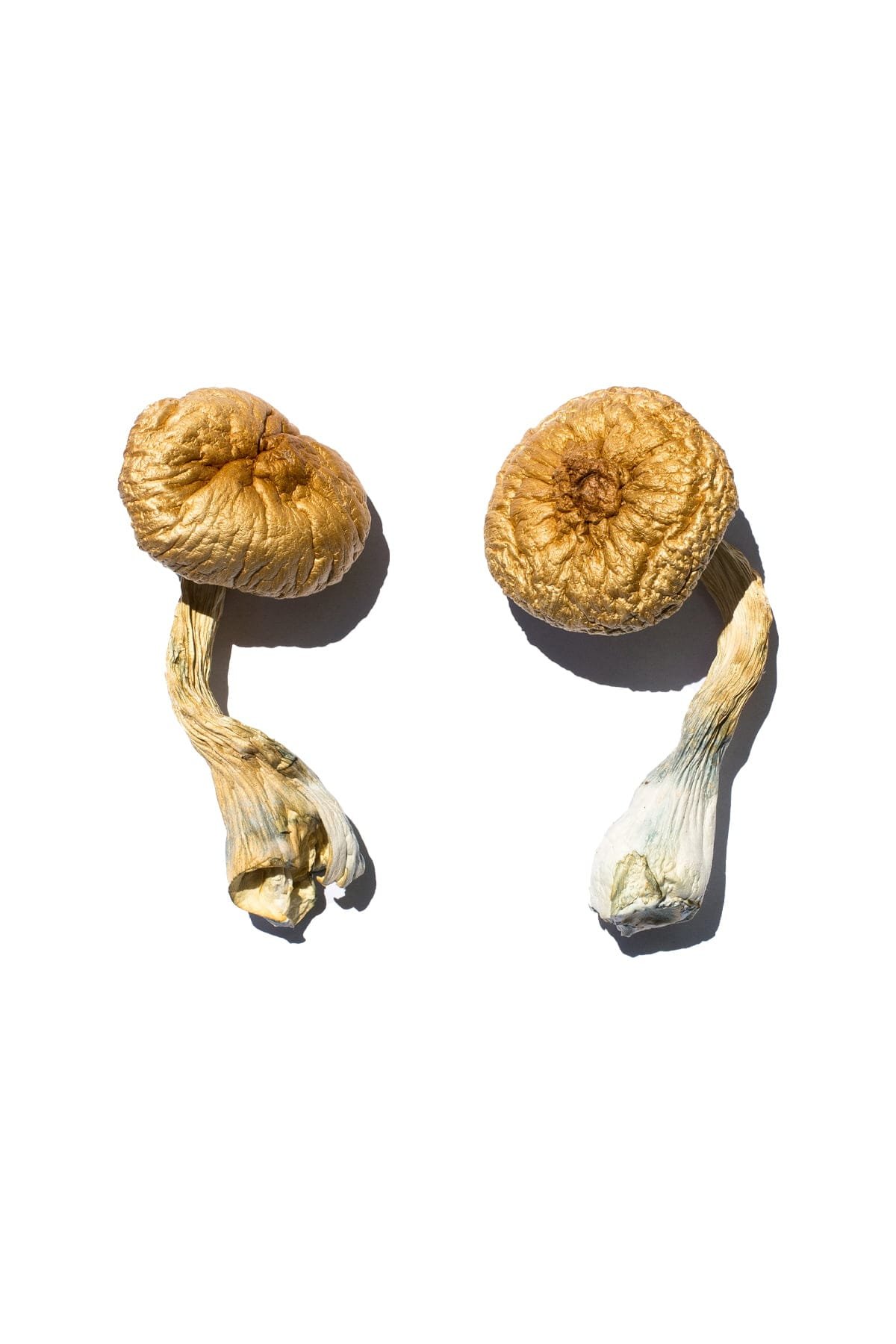


Cambodian Gold Magic Mushrooms – Energizing Golden Cap Psilocybe Strain
Price range: $185.00 through $860.00
Unlock clean, energizing experiences with Cambodian Gold Magic Mushrooms – a rare golden-cap Psilocybe strain. Sustainably grown and legally distributed by a licensed psilocybin provider.
Cambodian Gold Magic Mushrooms: Effects, Potency, History, Safety & Psilocybe cubensis Facts
Cambodian Gold magic mushrooms are a named lineage associated with Psilocybe cubensis, the psilocybin-containing mushroom species. Online descriptions consistently characterize Cambodian Gold as energetic, visual, social and fast-growing. Those cultivar-specific descriptions come predominantly from community and commercial sources, not from controlled comparisons demonstrating that the lineage reliably produces a distinct experience.
The evidence is stronger at the species and compound level. Researchers can measure psilocybin and psilocin, study psilocin’s pharmacology at the serotonin 5-HT2A receptor, and document human responses to psilocybin under controlled conditions. Much less is established about whether informal P. cubensis cultivar labels independently predict chemistry or subjective effects.
This guide therefore uses three evidence categories throughout: established—findings supported by credible scientific or official sources; reported—characteristics derived primarily from community observation; and unknown—claims that lack adequate cultivar-specific evidence. Those labels appear throughout and are explained in the methodology section below.
Legal and safety note: Psilocybin and psilocin remain Schedule I substances under U.S. federal law as of this article’s last verified legal review. State and local rules differ and can change. This resource provides educational and harm-reduction information, not individualized medical or legal advice.
How Was the Evidence for Cambodian Gold Evaluated?
Claims about Cambodian Gold require different standards depending on what they describe. Taxonomy is checked against recognized mycological references such as MycoBank and Index Fungorum; chemistry against validated analytical research; pharmacology and health effects against peer-reviewed human or mechanistic studies indexed in PubMed; and legal claims against current government statutes and agency guidance.
Cultivar descriptions such as “energetic” are classified as anecdotal unless controlled comparative evidence supports them. A laboratory assay is treated as evidence about the specimens actually tested, not automatically generalized to every mushroom carrying the same commercial name.
This transparency matters because evidence confidence should follow source quality—not the confidence of whoever is making the claim.
Publication methodology: Scientific review cutoff date, legal verification date, and actual reviewer names and credentials must be populated before indexing. No bracketed placeholder should remain on a live page.
Cambodian Gold Magic Mushrooms at a Glance
| Quick fact | What the evidence supports |
|---|---|
| Common name | Cambodian Gold, Cambodian cubensis |
| Species | Psilocybe cubensis |
| Reported association | Cambodia, including accounts connected with Siem Reap/Angkor |
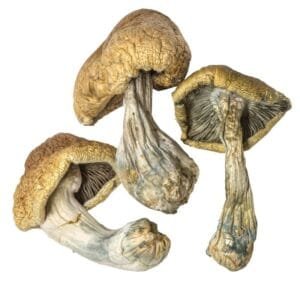
| Common morphology | Golden-to-cinnamon caps and pale stems are frequently described |
| Psychoactive compounds | P. cubensis can contain psilocybin, psilocin and related tryptamines |
| “Energizing” reputation | Reported; not established in controlled cultivar comparisons |
| Potency | Variable; no universal Cambodian Gold potency rating is scientifically established |
| Taxonomic status | An informal cultivar label, not a formally recognized species |
| U.S. legality | Psilocybin remains federally controlled; additional rules differ by jurisdiction |
Evidence check: “Psilocybe cubensis contains psilocybin” and “Cambodian Gold produces reliably more energy than Golden Teacher” are different categories of claim. The first can be investigated at the species and chemical level. The second requires controlled, blinded, cultivar-specific comparative data—which we did not identify in the literature as of this article’s scientific review date.
What Is the Cambodian Gold Strain?
Cambodian Gold is best understood as a named lineage or cultivar label within Psilocybe cubensis, not a separate mushroom species. Cultivated P. cubensis names can identify communities of genetics that growers have selected and propagated, but the practices governing those labels are considerably less standardized than formal biological taxonomy.
This makes “strain” a potentially misleading word. In commercial mycology, names like Cambodian Gold, Golden Teacher, B+ and Penis Envy serve as useful shorthand for recognizable lineages. They should not automatically be read as scientifically defined varieties with fixed or guaranteed chemistry.
Readers interested in formal classification can consult MycoBank and Index Fungorum’s P. cubensis entry and our [Psilocybe cubensis species guide].
Taxonomy: Cambodian Gold and Psilocybe cubensis
Psilocybe cubensis (Earle) Singer is a basidiomycete mushroom described by Franklin Earle in 1906 and recombined by Rolf Singer in 1948. That taxonomic history is catalogued in authoritative fungal databases. Commercial cultivar names exist at a separate, informal level—useful to growers but carrying no formal taxonomic weight.
Cambodian Origin, John Allen and Angkor Wat: What Is Documented?
Online histories commonly associate Cambodian P. cubensis genetics with ethnomycologist John W. Allen—sometimes called “Mushroom John”—and mushroom collections made near the Siem Reap or Angkor area of Cambodia. That account should be treated as reported provenance unless it is supported by contemporaneous collection records, herbarium specimens or another reliable primary historical source.
The distinction matters because lineage stories change as they are repeated through forums, breeders and retailers. Multiple websites citing the same unverified account are not independent sources.
For any claimed Cambodian Gold provenance, four questions apply: Is the original collection documented? Is a specific location and date recorded? Does a primary source or preserved record exist? And is there verifiable continuity between historical material and what is sold today as Cambodian Gold?
Publication requirement: Replace this note with the strongest primary or scholarly historical source located during editorial fact-checking. If no verified primary source is found, retain “reported provenance” language rather than asserting a confirmed discovery story.
Is Cambodian Gold Different From the “Cambodian” Cubensis Strain?
No naming authority enforces consistency across everything sold as “Cambodian,” “Cambodian Gold” or similar variants. Selection pressure can shift phenotypes across generations, and multispore propagation introduces further variation. Two products carrying nearly identical cultivar names may not be genetically or chemically equivalent.
The practical implication: a name is weak evidence of genetic authenticity, and weak evidence of authenticity is weak evidence of consistent effects.
What Does Cambodian Gold Look Like?
Cambodian Gold is commonly described as a golden-cap P. cubensis phenotype, but morphology cannot authenticate a commercial lineage. Visual identification based on photographs or cultivar descriptions is particularly unreliable because unrelated mushrooms can share superficial characteristics—and misidentification carries genuine safety risks.
Commonly Reported Cap, Stem, Gill and Spore Characteristics
Accounts of Cambodian Psilocybe cubensis frequently mention golden, caramel or cinnamon-toned caps, pale stems, gills that darken as spores mature, and a purple-brown spore print consistent with P. cubensis broadly. Individual appearance shifts with genetics, growth stage and environmental conditions. A golden cap alone does not make a specimen Cambodian Gold.
Recommended visual: An expert-verified macro morphology plate showing cap surface, gill attachment, stem structure and spore-print color—captioned as educational morphology rather than a field-identification key. All images should include descriptive alt text; do not rely on color-only coding to convey biological distinctions.
What Does Blue Bruising Mean?
Blue bruising does not prove that a mushroom is Cambodian Gold, and the degree of bruising does not measure potency.
Research published in Angewandte Chemie by Lenz et al. (2020) identified the enzymatic process responsible for blue coloration in psilocybin-containing mushrooms, connecting it to oxidative reactions involving psilocin-related compounds after tissue injury. That finding does not mean bruising can establish species identity, cultivar authenticity, safety or psilocybin concentration.
This corrects a persistent identification error. Blue coloration is an observation requiring independent verification—not a standalone identification method.
Cambodian Gold Effects: Is It Really an “Energizing” Mushroom?
Cambodian Gold is frequently described in trip reports and commercial strain profiles as energetic, visual and social. Those descriptions establish a reputation; they do not demonstrate a cultivar-specific pharmacological effect. We did not identify robust blinded human research showing that Cambodian Gold reliably produces more stimulation or less physical sedation than another P. cubensis lineage under controlled conditions.
This distinction matters particularly for people comparing energizing magic mushroom strains. Subjective experiences reflect active-compound concentration, individual physiology, prior experience, expectations, psychological state, physical environment and other substances—not simply the cultivar name on a label.
What Effects Are Commonly Reported?
Cambodian shrooms trip reports commonly describe changes in color and pattern perception, elevated or rapidly shifting mood, altered time perception, stimulation and unusual thought patterns. These overlap substantially with reports from other psilocybin-containing mushrooms.
Psilocybin can also produce anxiety, confusion, nausea, fear and significantly impaired judgment—outcomes underrepresented in strain marketing but well-documented in clinical literature, including research published by the Johns Hopkins Center for Psychedelic and Consciousness Research.
A useful three-tier classification:
- Reported tendency: Cambodian Gold is commonly described as energetic or social.
- Established fact: Psilocybin can substantially alter perception, cognition and mood.
- Unknown: Whether Cambodian Gold genetics independently produce a reliably more energetic experience under controlled conditions.
How Should the “Energizing” Reputation Be Interpreted?
Rather than scoring Cambodian Gold on an invented energy scale, classify the claim by evidence type.
“Energetic” and “social” belong in the reported-experience category because they recur in community descriptions without controlled validation. Psilocybin-related changes in perception and cognition belong in the established category, supported by controlled human research. The claim that Cambodian Gold genetics themselves cause an unusually energetic state belongs in the unknown category because adequate blinded cultivar comparisons are lacking.
This three-tier approach is more informative than a numerical strain score: it communicates not just what is claimed, but how much confidence the available evidence actually justifies.
Why Aren’t “Energetic,” “Social” and “Clear-Headed” Effects Guaranteed?
A cultivar name is one variable in a complex system—and may not be the most consequential one. Individual sensitivity, active-compound concentration, psychological state, expectations, surroundings, concurrent drugs or medications and sample-to-sample chemical differences all shape outcomes.
This is why one person’s account of “light body load shrooms” cannot be treated as a pharmacological guarantee for the next person. Context is doing significant work that the strain label tends to receive credit for.
How Potent Are Cambodian Gold Magic Mushrooms?
No validated universal potency value exists for Cambodian Gold. The concentration of psilocybin, psilocin and related compounds differs across specimens and batches, while informal cultivar naming makes broad generalization even harder. A “7.5/10” score or similar number is not a scientific potency measurement unless the publisher defines, measures and validates the scale using disclosed methods and an adequate sample size.
Psilocybin, Psilocin and Related Tryptamines
P. cubensis can contain psilocybin, psilocin and related tryptamines including baeocystin and norbaeocystin. Pellegrini et al. (2013) detected multiple tryptamine compounds across Psilocybe specimens using liquid chromatography-mass spectrometry; measured concentrations varied across samples. Those results should be read as evidence about the specimens analyzed, not as a fixed alkaloid ratio for any named cultivar.
Detecting multiple tryptamines does not establish a Cambodian Gold-specific chemical fingerprint. Doing so would require replicated testing of appropriately authenticated material and evidence that the observed profile remains consistent across independently sourced samples.
How Does Psilocin Interact With Serotonin Receptors?
Psilocybin is dephosphorylated to psilocin after ingestion. Psilocin is the principal pharmacologically active compound: it acts as an agonist at serotonin receptors, with activity at the serotonin 5-HT2A receptor playing a central role in the characteristic changes in perception and cognition associated with classic psychedelics. Nichols (2016), writing in Pharmacological Reviews, provides a detailed account of this mechanism and its relationship to psychedelic effects more broadly.
This mechanism is evidence about psilocybin and psilocin at the compound level. It does not suggest that Cambodian Gold has a unique receptor action distinct from other P. cubensis lineages.
Does Cambodian Gold Have a Unique Alkaloid Profile?
No unique Cambodian Gold alkaloid profile should be assumed without replicated analyses of genetically characterized material. A laboratory result from a single fruiting body or commercial batch describes that sample. It does not establish a stable chemical fingerprint for all material sold under the Cambodian Gold name—especially given that cultivar naming is not standardized.
How Does Cambodian Gold Compare With Golden Teacher, Penis Envy and B+?
All four names are associated with Psilocybe cubensis, but their reputations differ significantly. The most important distinction in any Cambodian Gold vs Golden Teacher or Cambodian Gold vs Penis Envy comparison is between what communities report and what analytical or controlled research has actually established.
| Cultivar | Species | Common reputation | Potency evidence | Morphological reputation | Confidence in cultivar-specific experience claims |
|---|---|---|---|---|---|
| Cambodian Gold | P. cubensis | Energetic, visual, social | Sample-dependent; no universal rating established | Golden/cinnamon caps | Low |
| Golden Teacher | P. cubensis | Balanced, introspective | Sample-dependent | Golden-brown caps | Low |
| Penis Envy | P. cubensis | Intense; widely described as potent | Some LC-MS analyses of specific specimens report higher psilocybin concentrations; results are specimen-specific, not universal | Distinctive thick morphology | Low for subjective effects |
| B+ | P. cubensis | Balanced, easygoing | Sample-dependent | Conventional cubensis morphology | Low |
All confidence ratings are low for cultivar-specific subjective effects because blinded controlled comparisons across named lineages do not currently exist in the peer-reviewed literature.
See our [Golden Teacher profile], [Penis Envy evidence guide], [B+ profile] and [P. cubensis cultivar comparison] for deeper analysis.
Which Strain Differences Are Scientifically Established?
The strongest evidence concerns Psilocybe cubensis as a species and chemically analyzed individual specimens—not psychological profiles attached to cultivar labels.
A practical three-question framework when comparing P. cubensis cultivars:
- What does the cultivar label establish about provenance?
- What was actually measured in laboratory-tested material, with what method?
- What does peer-reviewed literature establish independently of cultivar marketing?
→ Compare any cultivar claim against our [mycology evidence checklist].
How Strong Is the Evidence Behind the Main Cambodian Gold Claims?
| Claim | Best available evidence type | Confidence | What stronger evidence would require |
|---|---|---|---|
| Cambodian Gold is associated with P. cubensis | Mycological and commercial lineage documentation | Moderate, subject to provenance | Authenticated material and documented collection history |
| It reliably feels energetic | Trip reports and community descriptions | Low | Blinded controlled human comparison |
| It has a unique alkaloid profile | Insufficient replicated evidence | Low/unknown | Replicated chemical analyses of authenticated material |
| Golden caps authenticate Cambodian Gold | Morphology alone | Low | Provenance documentation or genetic evidence |
| Blue bruising measures potency | Unsupported as a quantitative test | Low | Validated quantitative relationship between bruising and alkaloid content |
| It is universally stronger than Golden Teacher | Insufficient comparative evidence | Low | Standardized replicated chemical comparisons across authenticated specimens |
What Should You Know About Dose, Duration and Variability?
No validated Cambodian cubensis dosage guide can predict an individual’s experience from cultivar name alone. Both material potency and human response vary enough that false precision in this space is not just unhelpful—it can be dangerous.
Why Can a Cambodian Gold Dosage Calculator Be Misleading?
A calculator implicitly assumes that a given weight contains a predictable amount of active compound. A strain name cannot supply that information.
Chemical concentration varies between specimens. Individual response varies because of physiology, baseline mental health, medications and context. A cultivar-specific calculator that ignores those variables can appear scientific without being accurate—and that appearance of precision is the specific problem.
For evidence-based safety information, see our [psychedelic harm-reduction guide] and [drug-interaction resource].
How Long Can Psilocybin Effects Last?
Clinical research by Griffiths et al. (2006), published in Psychopharmacology, described psilocybin sessions lasting approximately eight hours in a controlled setting, though onset, peak and offset varied by dose and individual. Route of exposure, active-compound concentration, individual biology and environment all influence the actual timeline.
No population-level average should be used to determine when a specific person will be safe to drive, operate equipment or undertake another hazardous activity.
Is Cambodian Gold Good for Microdosing?
There is no good evidence establishing Cambodian Gold as uniquely suited to microdosing. The broader research picture on psychedelic microdosing remains genuinely mixed. A double-blind, placebo-controlled study by Szigeti et al. (2021), published in eLife, found that self-blinding microdosing participants reported expectation-consistent improvements that were not distinguishable from placebo—raising significant questions about self-reported cognitive benefits in uncontrolled settings.
Claims that Cambodian mushroom microdosing reliably increases daily energy, productivity or creativity go beyond what current evidence supports, regardless of which cultivar is involved.
Our [microdosing evidence review] covers controlled research, limitations and safety considerations.
What Are the Risks of Cambodian Gold and Other Psilocybin Mushrooms?
Psilocybin can produce anxiety, panic, confusion, nausea, impaired judgment and profound perceptual changes. Risk is shaped by individual and situational factors—and a cultivar’s reputation for being “light” or “social” does not reduce those risks for the next person.
Psychological and Physical Risks
Acute psychedelic experiences can become distressing or disorienting without warning. Impaired perception and judgment create indirect physical risks: driving, falls, water, traffic, heights. Research by Johnson et al. (2008) in Psychopharmacology proposed widely cited safety guidelines for psilocybin administration that address both psychological preparation and physical risk management.
People with relevant psychiatric or medical conditions, or those taking medications or other substances, face additional considerations that a strain review cannot adequately address. Individual medical questions belong with a qualified clinician.
What Harm-Reduction Principles Matter?
Core priorities: avoid driving and hazardous activities while impaired; avoid uncertain drug combinations; attend carefully to psychological and physical surroundings; ensure access to sober assistance when risk is foreseeable.
Severe medical symptoms, dangerous behavior, inability to maintain personal safety, loss of consciousness or persistent extreme distress require emergency help. In the United States, Poison Control is reachable at 1-800-222-1222; emergencies require 911.
→ Read the full [evidence-based psychedelic harm-reduction guide].
What About Integration Afterwards?
Integration refers to reflecting on a psychedelic experience after acute effects resolve—through personal reflection or, where warranted, discussion with a qualified mental-health professional. It is not evidence that the experience was therapeutic. Clinical psychedelic treatment and unsupervised use are meaningfully different contexts, and conflating them distorts both.
Commonly Claimed Characteristics vs. Important Limitations
| Common claim | Evidence category | Important limitation |
|---|---|---|
| “Energizing” | Reported | Primarily based on subjective community reports |
| “Social” | Reported | Anxiety and social discomfort remain possible |
| “Light body load” | Reported | Physical responses vary by individual |
| “Higher potency” | Unknown | No universal cultivar potency is established |
| “Beginner friendly” | Reported | A cultivar name cannot predict an individual’s response |
| “Fast-growing genetics” | Reported | Community observations require controlled validation |
What Is Known About Cambodian Gold Genetics and Mycology?
Cambodian Gold genetics are discussed extensively in cultivation communities, but claims about unusually fast colonization, exceptional contamination resistance or reliably large yields should not be treated as established biological properties without controlled comparative data.
Spores, Mycelium, Phenotype and Genetic Variation
Spores are reproductive structures in the fungal life cycle. After germination, fungal hyphae develop; networks of interconnected hyphae form the mycelium—the vegetative structure involved in nutrient acquisition and, eventually, fruiting body formation. Genetic and environmental variation can influence observable phenotype, so related material need not look or perform identically across growing conditions.
“Rhizomorphic” describes a rope-like mycelial growth pattern sometimes observed in developing cultures. It is a morphological description, not a marker of Cambodian Gold authenticity or superior genetics.
See our [fungal genetics guide] and [spore biology and microscopy guide] for the underlying biology.
Is Cambodian Gold Really a Fast-Colonizing Cubensis Strain?
The fast-colonizer description recurs in community accounts of Cambodian cubensis strain characteristics, but a meaningful comparison requires authenticated genetics grown under standardized conditions, predefined endpoints, adequate replication and statistical analysis. Without those controls, any observed differences could reflect environmental conditions, starting material quality, methodology or observer selection rather than genetics.
Can Appearance Prove Authentic Cambodian Gold Genetics?
No. Golden or cinnamon-colored caps, pale stems, darkening gills and purple-brown spore prints overlap with other P. cubensis phenotypes. Morphology is useful biological information—it cannot function as a provenance certificate. For authenticity questions, documented collection history and appropriately interpreted genetic characterization carry more evidentiary weight than photographs or marketing copy.
How Should You Evaluate a Cambodian Gold Genetics or Microscopy Claim?
A credible Cambodian Gold listing should make fewer promises, not more. Treat claims of guaranteed potency, predictable subjective effects or genetically “pure” material skeptically unless accompanied by verifiable supporting evidence.
For lawful microscopy or taxonomy-related material, evaluate whether the source: uses accurate species terminology (Psilocybe cubensis, not invented binomials); documents provenance clearly; distinguishes morphological description from genetic verification; provides current jurisdiction-specific legal disclosures; and avoids presenting an informal cultivar name as a proxy for chemical composition.
A strain label cannot independently verify genetics, potency or effects. Where genetic authenticity genuinely matters, documented provenance and appropriate genetic characterization carry more weight than photographs, testimonials or marketing language.
→ Compare any commercial claim against our [mycology evidence checklist] and verify your jurisdiction using our [current U.S. legal-status tracker] before making any decision.
What Is the Legal Status of Cambodian Gold in the United States?
Psilocybin and psilocin are listed in Schedule I of the Controlled Substances Act by the U.S. Drug Enforcement Administration. State and local frameworks can differ, particularly around regulated therapeutic services, personal-use provisions, decriminalization and the separate legal status of fungal spores. Those concepts are legally distinct and should not be collapsed into a simple legal/illegal map.
Last legal verification: [INSERT ACTUAL VERIFICATION DATE. Do not publish a nominal date that was generated automatically.]
What Does Federal Law Say?
The DEA’s current drug scheduling information is the appropriate starting point for federal classification questions. The Controlled Substances Act creates the federal framework; enforcement and exemptions involve additional agency guidance. Vendor-produced summaries of federal law should not substitute for official sources.
Spores require separate legal analysis. They are biologically distinct from mature psilocybin-containing material, but that distinction should not be read as a blanket statement that spore-related activities are legal in any given jurisdiction.
What About Oregon, Colorado and Local Reforms?
Oregon and Colorado have adopted significant but structurally different psychedelic-policy reforms. Neither should be characterized as simply legalizing psilocybin.
Oregon Health Authority’s Psilocybin Services program established a regulated framework requiring licensed facilitators, service centers and a structured supervised experience. Colorado’s Natural Medicine Health Act, administered through the Colorado Department of Health and Environment and associated agencies, created a distinct regulatory structure with different provisions. Municipalities elsewhere have adopted varying enforcement-deprioritization policies.
Decriminalization means reduced criminal enforcement priority—not ordinary commercial legality. Check the applicable state agency directly for current rules.
→ See our [current U.S. psilocybin legal-status tracker] for jurisdiction-specific information.
Are Cambodian Mushroom Spores Legal to Buy?
Spore legality cannot be accurately summarized by a static U.S. state count. Federal law, individual state statutes and the intended downstream activity can raise distinct legal questions, and laws change after articles are published.
Do not treat phrases such as “legal in 47 states” as current legal guidance. Check applicable state law and current official guidance for your jurisdiction, and distinguish spore possession from any separate provisions governing controlled substances or cultivation.
What Are the Most Common Cambodian Gold Myths and Mistakes?
Most errors in this space share a common structure: taking something that may sometimes be true and treating it as universally guaranteed.
| Myth or mistake | More accurate interpretation |
|---|---|
| Cambodian Gold always feels energetic | “Energetic” is a recurring anecdotal description, not a guaranteed pharmacological outcome |
| The strain has a fixed potency rating | Potency is sample-dependent and requires laboratory measurement with disclosed methods |
| Blue bruising proves potency | Bruising neither quantifies potency nor confirms species identity |
| A golden cap proves Cambodian Gold genetics | Many P. cubensis phenotypes share similar morphological features |
| One laboratory assay represents the whole cultivar | It characterizes the tested specimens—not the lineage broadly |
| Decriminalized means legal | These are distinct legal concepts with distinct practical consequences |
| Trip reports establish pharmacology | They generate useful observations but cannot control major confounders |
| A commercial strain name guarantees genetics | Naming and provenance practices are not universally standardized |
The underlying error in nearly all of these is the same: certainty applied to claims the available evidence cannot support.
How Can You Evaluate Cambodian Gold Information Reliably?
Use an evidence hierarchy rather than judging a claim by how confidently it is stated.
For taxonomy, start with MycoBank and Index Fungorum. For chemistry and pharmacology, prioritize peer-reviewed studies indexed in PubMed. For legal status, use statutes, regulations and official government agencies. For subjective effects, treat trip reports as anecdotal observations that can generate hypotheses—not data that establishes causation.
When evaluating a potency claim, ask: Was the material laboratory tested? How many specimens were analyzed? How were genetics authenticated? Which analytical method was used? Have the results been independently replicated?
When evaluating a “strain effect” claim, ask: Did participants know which cultivar they had received? Expectation alone can shape subjective reporting, making blinded comparisons particularly important—and particularly rare in this literature.
Commercial conflicts deserve direct attention. A seller describing its own genetics as “stronger,” “cleaner” or “more energetic” is not an independent evidence source.
Frequently Asked Questions About Cambodian Gold Magic Mushrooms
Is Cambodian Gold a separate species from Psilocybe cubensis?
No. Cambodian Gold is an informal cultivated-lineage name associated with Psilocybe cubensis, not a separately recognized mushroom species. Formal taxonomy and commercial cultivar naming operate at different levels of classification, which is why a strain label should not be interpreted as a separate taxonomic identity.
Is Cambodian Gold the same as the Cambodian cubensis strain?
The names are sometimes used interchangeably, but no universal registry ensures that “Cambodian,” “Cambodian Gold” and similarly named lineages represent genetically identical material. Provenance should be evaluated independently of the name.
Are Cambodian Gold magic mushrooms strong?
Cambodian Gold is associated with Psilocybe cubensis, which can contain psychoactive compounds, but no universal potency rating has been established. Chemical concentration varies among specimens, which means numerical ratings in strain guides should not be assumed to predict what any specific sample contains.
Does Cambodian Gold contain more psilocybin than Golden Teacher?
No evidence-based universal ratio establishes that Cambodian Gold always contains more psilocybin than Golden Teacher. Individual laboratory-tested specimens can differ, but results from particular samples should not be generalized to entire informally named cultivars.
What effects are Cambodian cubensis mushrooms reported to have?
Community reports frequently describe stimulation, visual changes, elevated mood and social or creative feelings. These are anecdotal Cambodian cubensis effects, not guaranteed pharmacological outcomes. Psilocybin can also cause anxiety, confusion, nausea and substantial perceptual changes—well-documented in clinical research but underrepresented in strain marketing.
Is Cambodian Gold more energizing than Golden Teacher?
Cambodian Gold is commonly described as more energetic; Golden Teacher is often characterized as introspective or balanced. Controlled evidence showing that those cultivar names independently and reliably determine those experiential differences does not currently exist.
How does Cambodian Gold compare with Penis Envy?
Both names refer to P. cubensis lineages. Penis Envy has a distinctive morphological reputation, and some laboratory-tested specimens have shown relatively high measured psilocybin concentrations. That does not establish a fixed potency for either lineage or guarantee particular subjective effects for either.
Can you identify Cambodian Gold by appearance alone?
No. Golden or cinnamon-colored caps, pale stems and other commonly described features overlap with other P. cubensis phenotypes. Appearance can describe a specimen—it cannot independently establish Cambodian Gold provenance, chemical potency or species identity.
Is “Cambodian Gold” a scientifically standardized cultivar name?
No. Cambodian Gold is an informal commercial and community label. No standardizing authority defines or enforces what genetics must be present for the name to apply, which means two products carrying the name may not be genetically or chemically equivalent.
How reliable are Cambodian Gold trip reports?
Trip reports document genuine individual experiences and reveal recurring themes, but they cannot isolate the cultivar as the cause. Expectations, dose, environment, individual biology and other variables are uncontrolled. They are best treated as hypothesis-generating evidence rather than pharmacological proof.
Who discovered the Cambodian cubensis strain?
The commonly repeated origin story associates Cambodian P. cubensis collections with ethnomycologist John W. Allen and the Siem Reap/Angkor area. That should be treated as reported provenance until contemporary primary documentation supports it. Repetition across commercial sources does not constitute independent historical verification.
Is Cambodian Gold good for microdosing?
There is no strong evidence that Cambodian Gold is uniquely suited to microdosing. Controlled microdosing research, including Szigeti et al. (2021) in eLife, has identified expectation effects as significant confounders in self-reported outcomes. A cultivar’s reputation should not be treated as evidence of a specific microdosing benefit.
Does blue bruising prove a mushroom contains psilocybin?
No. Blue coloration is associated with oxidative reactions involving psilocin-related compounds, as documented by Lenz et al. (2020) in Angewandte Chemie. Bruising does not establish species identity, safety, Cambodian Gold authenticity or alkaloid concentration. It should never serve as the sole basis for identifying an unknown mushroom.
Are Cambodian mushroom spores legal in the United States?
Legality depends on applicable federal, state and sometimes local rules. Federal law, state statutes and permitted activities do not automatically align, and laws change after articles are published. Check official state sources for your jurisdiction rather than relying on static state counts.
What is the difference between decriminalization and legalization?
Decriminalization typically reduces or eliminates criminal penalties for certain possession quantities without creating lawful commercial markets. Legalization—or more precisely, regulated access—creates a framework for lawful production, distribution or use under specified conditions. Oregon’s psilocybin-services model and Colorado’s natural-medicine framework are regulated systems, not blanket legalizations. The distinction has practical consequences for what activities remain prohibited.
Can laboratory testing verify Cambodian Gold genetics?
Chemical analysis can measure the compounds present in a tested specimen; genetic sequencing can characterize the DNA of a sample. Neither automatically confirms that a specimen carrying the Cambodian Gold commercial name originated from a particular historical collection. Provenance claims require documented lineage history, not just chemical or morphological description.
Key Takeaways
Cambodian Gold magic mushrooms represent a named lineage associated with Psilocybe cubensis—not a separate species with a scientifically guaranteed potency or psychological profile. The cultivar’s energetic, social and clear-headed reputation is consistent across community descriptions, but controlled evidence has not established those qualities as dependable lineage-specific pharmacological effects.
The most defensible approach separates three evidence layers that strain guides routinely collapse:
- Psilocybe cubensis can contain psilocybin, psilocin and related tryptamines—established.
- Cambodian Gold potency cannot be reduced to a universal numerical score—established limitation.
- “Energetic,” “social” and “clear-headed” are reported experience patterns, not guaranteed strain properties—reported, not established.
- Blue bruising does not prove identity or quantify potency—established limitation.
- Laboratory results should be interpreted at the specimen level unless replicated findings support broader conclusions—established methodological principle.
- Psilocybin experiences carry genuine psychological, physical and situational risks—established.
- U.S. federal, state and local legal frameworks are distinct and must be verified through current official sources—established.
31 reviews for Cambodian Gold Magic Mushrooms – Energizing Golden Cap Psilocybe Strain
Add a review
Related products


MAGIC MUSHROOMS

MAGIC MUSHROOMS

MAGIC MUSHROOMS
Psilocybe Azurescens – Ultra-Potent Wild Psilocybin Mushroom

MAGIC MUSHROOMS

MAGIC MUSHROOMS


MAGIC MUSHROOMS
Brylee Hensley (verified owner) –
Was nervous at first, but everything went perfectly.
Samantha Rivera (verified owner) –
Not only did it come fast and quiet, but the emotional release I had with this was the most profound in years.
Ford Carmichael (verified owner) –
Uncovered joy and lightness.
Darian Radford (verified owner) –
I felt supported, even though I was alone.
Aaron Cook (verified owner) –
Beautiful experience, smooth journey, and zero stress about shipping. These folks know exactly what they’re doing.
Elle Valdez (verified owner) –
I’ve never felt so grounded and uplifted at the same time. Truly grateful for the people behind this.
Oaklynn Trammell (verified owner) –
I cried, I laughed, I healed.
Haven Parks (verified owner) –
No drama, no noise — just peace, insight, and quality. That’s what this experience gave me.
Jennifer Lopez (verified owner) –
I was able to open up to myself in ways I’d never done before. Trusting the provider made all the difference.
Reagan Beck (verified owner) –
Was nervous about the delivery, but it was so discreet and quick I couldn’t believe it. Product was fresh and powerful.
Ridge Barnett (verified owner) –
I’ve never felt so emotionally free.
Elianna Moffett (verified owner) –
I’m still feeling the positive effects weeks later.
Kenna Cummings (verified owner) –
Felt held by something bigger than me.
Serenity Baldwin (verified owner) –
I can’t remember the last time I felt this seen, calm, and grounded. It started with a respectful order process.
Eric Gray (verified owner) –
The way this was delivered made me feel respected. That made the inner work much easier to embrace.
Julia Parker (verified owner) –
Subtle, elegant, and emotionally profound. The team behind this clearly values every person they serve.
Jovani Fenner (verified owner) –
The clarity is like nothing else.
Adam Murphy (verified owner) –
Nothing about this felt rushed or commercial. It felt like a gentle invitation inward.
Melanie Riley (verified owner) –
The emotional relief I felt was immediate and lasting. The product arrived exactly when it needed to.
Amaya Rosenthal (verified owner) –
A truly introspective and cosmic experience. I’m still integrating the lessons.
Jase Grimes (verified owner) –
I trust the process, because I trust this supplier.
Anika Travers (verified owner) –
This is how medicine should feel—natural, thoughtful, and gentle.
Ellie Rowe (verified owner) –
I laughed, cried, and sat in total peace — all within the span of a few hours.
Willow Love (verified owner) –
I felt emotionally safe using this, and that matters deeply with a product like this.
Naomi Warren (verified owner) –
It was as if my mind rearranged itself gently — no chaos, just clarity.
Charles Richardson (verified owner) –
The delivery was fast and discreet, which helped me focus fully on the experience itself.
Jennifer Lopez (verified owner) –
There’s real wisdom in how this company operates. You can feel it in the care of every step.
Grace Edwards (verified owner) –
Every color seemed to carry a message. I cried a little — not out of sadness, but because something in me finally felt seen.
Daniela Austin (verified owner) –
The product spoke for itself — clean, potent, and gentle — but the human side of the service blew me away.
Dylan Flores (verified owner) –
There’s something beautiful about knowing you’re in safe hands — this experience gave me deep peace, and the process made me feel completely supported.
Vivian Zimmerman (verified owner) –
It gave me permission to let go, and what came up was truly eye-opening.