


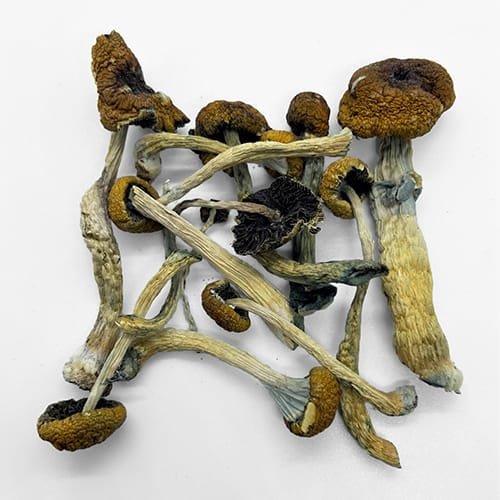
Malabar Magic Mushroom – Coastal Psilocybe Strain for Calm Exploration
Price range: $185.00 through $920.00
Embrace peaceful clarity and grounded visuals with Malabar Magic Mushrooms, a coastal-origin psilocybin variety known for its gentle strength and introspective calm.
Malabar Magic Mushroom: Origin, Potency, Effects & Identification
The Malabar magic mushroom is the commercial name for a Psilocybe cubensis lineage reported to originate from India’s Malabar Coast, particularly the southwestern region associated with Kerala. Sellers and enthusiasts frequently associate Malabar with robust morphology and a persistent partial veil. Scientific evidence does not, however, establish a standardized Malabar potency or a uniquely “calm” psychoactive profile.
This guide separates three categories that strain pages often mix together: established facts about P. cubensis and psilocybin, observations specifically documented for Malabar-labeled specimens, and community or vendor claims that remain unverified.
Disclaimer & legal notice (21+): This article is for educational, historical, microscopy, and harm-reduction purposes. Psilocybin and psilocin are controlled substances under U.S. federal law, although some state and local policies differ. Laws governing spores vary by jurisdiction and circumstances. This article does not encourage unlawful possession, cultivation, distribution, or use.
Quick answer: Malabar is a commercial name applied to a Psilocybe cubensis lineage reported to trace back to India’s Malabar Coast. It is associated with robust fruiting bodies and a persistent partial veil, but evidence does not establish a standardized Malabar potency or a uniquely predictable “calm” effect.
| Attribute | What the evidence supports |
|---|---|
| Species | Psilocybe cubensis |
| Family | Hymenogastraceae |
| Reported origin | Malabar Coast, southwestern India (Kerala region) |
| Distinctive reported feature | Persistent or comparatively late-breaking partial veil |
| Active compounds | P. cubensis can contain psilocybin, psilocin and related tryptamines |
| Potency | Variable; no well-established universal Malabar concentration |
| “Calm” effects | Primarily anecdotal and marketing characterization |
| Identification | Strain name cannot be reliably confirmed by appearance alone |
| Spores | Legal treatment varies by jurisdiction and intended activity |
| Cultivation | May constitute illegal production of a controlled substance under applicable law |
What Is the Malabar Magic Mushroom?
Quick answer: The Malabar magic mushroom is a named lineage or phenotype of Psilocybe cubensis reportedly associated with India’s Malabar Coast. “Malabar” is best understood as a commercial or mycological-community designation rather than a formally recognized species. Its geographic provenance and strain-specific properties should be evaluated source by source.
Taxonomy: Where Malabar Fits Within Psilocybe cubensis
Psilocybe cubensis is a basidiomycete mushroom in the family Hymenogastraceae, order Agaricales, class Agaricomycetes, and phylum Basidiomycota. Names such as Malabar, Golden Teacher, and B+ describe cultivated lineages exchanged by enthusiasts—not separate taxonomic species accepted in authoritative databases such as MycoBank or Index Fungorum.
That distinction carries practical weight. A vendor labeling a specimen “Malabar” does not mean taxonomists have accepted Psilocybe cubensis var. Malabar as a formally recognized variety. In consumer contexts, “strain” is convenient shorthand, but it can imply more genetic uniformity than actually exists across any commercially propagated lineage.
Reported Malabar Coast Origin: What Do We Actually Know?
Quick answer: Malabar is widely reported in commercial mycology sources to trace to India’s Malabar Coast—a historic region of southwestern India principally associated with modern Kerala. Unless an individual lineage has traceable collection records, voucher specimens, or genetic provenance, however, its Indian ancestry should be treated as reported history rather than independently authenticated fact.
The distinction matters because geographic strain stories are easily copied from one seller to another. Repetition increases visibility, not evidentiary quality. A defensible provenance record would ideally connect contemporary material to an identified collection through dated records, preserved specimens, genetic data, or a documented chain of custody.
This guide therefore uses “reported Malabar Coast origin.” It does not treat geographic branding as proof of genetic ancestry.
Malabar Strain, Variety, Cultivar, or Phenotype?
“Strain” is the most searchable term; “commercial lineage” or “phenotype” is sometimes more scientifically precise. Fungal genetics are complex, and a multispore population is not necessarily genetically uniform. That also explains why two samples carrying the Malabar name can differ in physical expression—genetics interact with environmental conditions to produce phenotype, not the label itself.
What Does the Malabar Mushroom Look Like?
Malabar mushroom appearance is commonly described in terms of a golden-to-brown pileus, pale stipe, dark mature spores, blue bruising, and a partial veil that can persist relatively late in development. None of these traits—individually or together—proves that an unknown mushroom belongs to the Malabar lineage.
| Characteristic | Common description | Identification value |
|---|---|---|
| Pileus (cap) | Golden, tan or brownish; shape changes with maturity | Low alone |
| Stipe (stem) | Pale/whitish, typically substantial | Shared with other P. cubensis |
| Lamellae (gills) | Darken as spores mature | Consistent with P. cubensis, not Malabar-specific |
| Partial veil | Reported to remain attached relatively late | Notable but not definitive |
| Annulus | May remain after veil separation | Variable |
| Spore deposit | Dark purple-brown | Useful at species level with other evidence |
| Bruising | Blue coloration can occur after tissue damage | Not a potency test |
| Chemistry | Psilocybin/psilocin possible in P. cubensis | Requires chemical analysis to confirm |
Cap, Stipe, Gills, and Bruising
A mature P. cubensis basidiocarp consists of a pileus, lamellae, and stipe. Malabar descriptions typically emphasize robust fruiting bodies and golden or caramel-brown cap coloration.
Blue bruising is associated with injury-triggered chemical reactions involving psilocin-derived compounds—a process characterized by Lenz et al. (2020) in Angewandte Chemie International Edition (DOI: 10.1002/anie.202000792). It is relevant to species-level identification in context, but neither unique to Malabar nor a quantitative measure of psilocybin concentration.
What Is a Persistent Partial Veil?
Quick answer: A partial veil is tissue that protects immature gills by connecting the cap margin to the stem. “Persistent partial veil” means this tissue remains intact or attached comparatively late during development. It can leave an annulus on the stipe after tearing, but it cannot authenticate Malabar genetics by itself.
This feature has become the most frequently repeated Malabar mushroom strain characteristic. Its usefulness should not be overstated: veil persistence varies across specimens and conditions, and related P. cubensis phenotypes can display overlapping morphology.
Spore Prints and Microscopic Characteristics
P. cubensis generally produces dark purple-brown basidiospores. Microscopy can reveal spore morphology and other taxonomic structures invisible to the naked eye—characteristics that contribute to identification in ways that surface photographs cannot replicate.
For research specimens, useful documentation includes provenance, magnification, scale bars, imaging method, lot information, and unedited reference images. Precise measurements attributed specifically to Malabar should come from examined specimens rather than vendor descriptions that recycle one another’s language.
How Reliable Is Malabar Visual Identification?
Quick answer: Appearance can help identify characteristics consistent with Psilocybe cubensis, but it cannot reliably authenticate the Malabar commercial lineage. Cap color, blue bruising, stem shape, and veil behavior overlap among multiple mushrooms, and phenotype shifts with developmental stage and growing conditions.
Many Malabar Traits Are Shared With Other P. cubensis
Golden-brown caps, purple-brown spores, and blue bruising are not genetic fingerprints. Even a conspicuous persistent partial veil should be read as one morphological observation—not a barcode for Malabar genetics.
Two questions are easily conflated here but should stay separate: “Does this specimen exhibit morphology consistent with P. cubensis?” and “Is this genuinely the commercial lineage called Malabar?” The first requires careful observation; the second generally requires reliable provenance or genetic evidence.
Can Phenotype Authenticate Malabar Genetics?
No. Phenotype describes observable characteristics shaped by both genetics and environment. Two related fungal specimens can express different morphology, while unrelated lineages can converge on visually similar cap color, veil behavior, stem structure, and bruising response.
A persistent partial veil can support a morphological description of a particular specimen, but it cannot independently prove commercial Malabar ancestry. For lineage authentication, documented provenance and appropriate molecular evidence carry substantially more weight than appearance alone.
Why Photos Cannot Establish That an Unknown Mushroom Is Safe to Eat
Photographs can support identification discussions, but they are not sufficient to establish the identity or safety of an unknown wild mushroom. Important diagnostic characteristics often involve microscopic structures, spore features, habitat context, and ecological associations that a photograph cannot capture.
Do not ingest an unknown mushroom because it resembles a commercial Psilocybe photograph. Serious and sometimes fatal mushroom poisonings result from misidentification. Suspected ingestion of an unidentified mushroom warrants immediate guidance from America’s Poison Centers (1-800-222-1222) or emergency medical services.
How Potent Is the Malabar Magic Mushroom Strain?
Quick answer: No representative scientific dataset establishes a universal Malabar cubensis potency. Psilocybin and psilocin concentrations vary in biological material, and an analytical result applies first to the sample actually tested. Until authenticated Malabar specimens are tested systematically under comparable conditions, precise strain-wide percentages should be treated as unsupported.
When a laboratory result is cited, report the laboratory, method, sample provenance, number of specimens, measurement units, range, and median. Never convert the highest-tested specimen into a lineage-wide potency figure.
Psilocybin, Psilocin, Baeocystin, and Related Tryptamines
Psilocybin is a naturally occurring tryptamine prodrug. The body converts it to psilocin through dephosphorylation; psilocin then interacts with serotonin receptors, with agonist activity at the 5-HT2A receptor playing a particularly important role in psychedelic phenomenology. This pharmacology is established in the peer-reviewed literature—Nichols (2016) in Pharmacological Reviews (DOI: 10.1124/pr.115.011478) provides a comprehensive account.
P. cubensis samples can also contain related compounds such as baeocystin and norbaeocystin. Their biosynthetic pathway in Psilocybe species has been characterized in the primary literature, but their independent pharmacological contribution to human subjective experience is substantially less established. Claims attributing specific effects to minor tryptamines should be sourced to studies that directly measured those effects rather than inferred from detection alone.
What Laboratory Testing Can Tell Us About Malabar Potency
Validated chemical analysis quantifies what is present in the tested material. If multiple properly authenticated Malabar specimens were analyzed under the same conditions, those results could characterize that sample population.
They would not automatically establish what every mushroom carrying the Malabar name contains. The distinction between “what a measured sample contained” and “what any specimen in a lineage contains” is the difference between evidence and inference—and most Malabar potency claims skip that step entirely.
Why Strain Potency Rankings Are Difficult to Substantiate
Commercial strain rankings often combine laboratory results from different growers, genetic lines, storage conditions, and analytical methods. That heterogeneity makes simple potency leaderboards vulnerable to selection bias and invalid comparisons. A credible comparison discloses sample size, test method, year, genetic and provenance information, and statistical distribution. Rankings that omit those details are marketing, not measurement.
Does Blue Bruising Mean Malabar Is More Potent?
Quick answer: No. Blue bruising in psilocybin-containing mushrooms is associated with injury-triggered oxidative reactions involving psilocin-derived compounds, as established by Lenz et al. (2020). The extent or darkness of the color change is not a validated measure of psilocybin concentration. Reliable quantitative claims require chromatographic or spectrometric analysis—not visual inspection.
What Effects Are Reported for Malabar—and Which Claims Are Proven?
Quick answer: Users and sellers often characterize Malabar as visual, introspective, or comparatively “smooth,” but these are reports rather than demonstrated Malabar-specific pharmacological effects. Controlled research establishes effects of psilocybin generally; it has not shown that the Malabar lineage reliably produces a distinct emotional or body-load profile compared to other P. cubensis lineages.
| Claim | Evidence category | Confidence |
|---|---|---|
| Psilocybin can alter perception and cognition | Controlled human research | High |
| Psilocin acts importantly through serotonin receptors including 5-HT2A | Pharmacology research | High |
| Malabar is commonly described as “calm” | Community and vendor reports | High that the claim is made; low that it is a unique pharmacological property |
| Malabar causes less nausea or body load | Comparative evidence not established | Low |
| Malabar has a distinctive stable alkaloid ratio | Representative evidence not established | Low |
Perceptual and Cognitive Effects
General psilocybin effects can include changes in visual perception, altered sense of time, intensified emotion, unusual thought associations, and shifts in the sense of self. Effects can be pleasant, neutral, frightening, or mixed within a single session.
Clinical research on psilocybin—such as the controlled trials reviewed in Carhart-Harris & Goodwin (2017) in Neuropsychopharmacology (DOI: 10.1038/npp.2017.84)—provides evidence about the molecule under defined conditions. Those findings apply to psilocybin as a compound, not to the Malabar commercial lineage specifically.
Body Sensations and Nausea
Psilocybin-containing mushrooms can be associated with nausea and other gastrointestinal or bodily sensations. Anxiety, dizziness, increased heart rate, and transient blood-pressure changes may also occur, as documented in the safety review by Johnson et al. (2008) in the Journal of Psychopharmacology (DOI: 10.1177/0269881108093587).
Claims that Malabar produces a reliably lower “body load” require direct comparative evidence across authenticated specimens. Anecdotal reports can identify hypotheses worth testing—they do not establish a pharmacological property.
Is Malabar Proven to Produce a Calmer Experience?
Quick answer: No controlled evidence currently establishes Malabar as inherently calmer than other P. cubensis lineages. The reputation is largely anecdotal. Set, setting, expectation, exposure level, individual physiology, and sample chemistry can all influence whether an experience feels peaceful, stimulating, confusing, or distressing.
The evidence distinction is worth stating plainly:
- Established: Psilocin has serotonergic activity, including agonist activity at 5-HT2A receptors.
- Reasonably established: Psychological context and setting can substantially affect psychedelic experiences.
- Not established: A unique Malabar alkaloid balance reliably causes calm exploration or reduces anxiety or nausea relative to other P. cubensis lineages.
How Long Can Effects Last?
Quick answer: General psilocybin effects often begin within roughly an hour after oral exposure and remain prominent for several hours, though timing varies considerably. Residual psychological or physical effects may persist longer. These are general psilocybin observations, not a Malabar-specific biological clock, and no strong evidence establishes a meaningfully different duration for this lineage.
Why Can Two Malabar Samples Feel Different?
Quick answer: A strain name does not standardize drug exposure. Individual mushrooms can differ chemically, while physiology, psychological state, environment, expectations, medications, and other substances can each change the resulting experience. Two Malabar-labeled samples therefore need not produce equivalent intensity or subjective quality.
“Set” describes psychological state and expectations; “setting” describes the physical and social environment. Neither is a property of the mushroom itself, yet both can substantially shape what an experience feels like. Chemical variability adds a separate and compounding source of uncertainty. Consequently, conflicting Malabar cubensis reviews do not necessarily mean one reviewer is wrong—they illustrate why uncontrolled anecdotes cannot isolate a strain-specific effect from the many other variables at play.
Is the Malabar Strain Good for Beginners?
Quick answer: There is no scientific basis for classifying Malabar as inherently beginner-friendly. Descriptions such as “smooth,” “forgiving,” or “calm” are not guarantees of intensity or safety. Psilocybin-containing mushrooms vary chemically, and individual psychological and physiological responses can differ substantially from one person to the next.
A useful test for any “beginner strain” claim is to ask whether the underlying product is chemically standardized. With whole mushrooms, the answer is generally no. A strain reputation therefore cannot provide the predictability associated with a measured pharmaceutical dose. Someone approaching psilocybin for the first time based on Malabar’s calm reputation may encounter a different experience than expected—because the label controls none of the variables that actually determine intensity.
For general safety principles, the [psychedelic harm-reduction guide] and [medication interaction resource] provide more reliable guidance than any strain profile.
How Does Malabar Compare With Golden Teacher, Penis Envy, B+, and Mazatapec?
Quick answer: Malabar, Golden Teacher, Penis Envy, B+, and Mazatapec are commercial P. cubensis lineage names, not standardized pharmaceutical products. Penis Envy has a reputation—and some analytical observations—supporting potentially high potency in certain specimens, but precise strain rankings require comparable testing across authenticated material. Reported experiential differences among the others remain largely anecdotal.
| Variety | Reported provenance | Potency evidence | Community reputation | Morphological reputation | Evidence confidence |
|---|---|---|---|---|---|
| Malabar | Southwestern India (Kerala) | Limited strain-specific data | “Smooth,” visual, calm | Persistent/late-breaking veil | Low–moderate for distinctive lineage claims |
| Golden Teacher | Commercial lineage; origin accounts vary | Variable datasets | Balanced/introspective | Classic golden P. cubensis appearance | Mixed |
| Penis Envy | Commercial P. cubensis lineage | Evidence supports potentially high-potency specimens; variability remains | Intense | Characteristic stout morphology | Moderate for morphology; batch-dependent for chemistry |
| B+ | Commercial lineage; origin accounts vary | Limited standardized data | Accessible/balanced | Conventional P. cubensis morphology | Low–moderate |
| Mazatapec | Commercial lineage associated by sellers with Mexico | Limited standardized data | Introspective | Conventional P. cubensis morphology | Low–moderate |
Malabar vs. Golden Teacher
Comparisons between Malabar and Golden Teacher frequently claim that Malabar is stronger or more visual while Golden Teacher is gentler and more introspective. Without standardized head-to-head chemistry or blinded human evidence, both descriptions should be treated as reputation rather than established pharmacological differences. The more defensible comparison concerns documented phenotype and reported provenance—not promises about subjective experience.
Malabar vs. Penis Envy
Penis Envy specimens have produced relatively high alkaloid readings in some contemporary analytical datasets, making its high-potency reputation more evidence-based than most strain claims. That does not establish a universal multiplier over Malabar—results are specimen-specific, and a meaningful lineage comparison requires a representative sample population analyzed under comparable conditions.
Malabar vs. B+
Both are conventional P. cubensis commercial lineages, and enthusiasts attribute different growth characteristics and subjective qualities to each. High-quality evidence showing that Malabar consistently produces stronger visuals or a particular emotional profile compared to B+ is absent. The comparison currently exists at the level of community lore.
Malabar vs. Mazatapec
Mazatapec is another geographically branded P. cubensis lineage whose commercial history is often entangled with community narratives about Mexican origins. As with Malabar, provenance should be separated from scientifically verified ancestry. Geographic branding and documented collection history are different things, and most online accounts conflate them.
Malabar Evidence Scorecard: What Is Known, Reported, and Unknown?
| Question | Current assessment | Best evidence needed |
|---|---|---|
| Is Malabar P. cubensis? | Supported for properly identified Malabar-labeled specimens | Taxonomy and specimen evidence |
| Did the lineage originate on India’s Malabar Coast? | Widely reported; provenance needs stronger documentation | Voucher, collection, or genetic history |
| Is a persistent veil associated with Malabar? | Commonly reported morphological characteristic | Systematic specimen observations |
| Does Malabar have a fixed potency? | No evidence of a universal value | Representative authenticated chemical testing |
| Is Malabar inherently calmer than other P. cubensis? | Not demonstrated | Blinded comparative human research |
| Does Malabar cause less body load? | Not demonstrated | Controlled comparative evidence |
| Can bruising quantify potency? | No validated visual potency relationship established | Analytical chemistry |
| Can morphology alone prove commercial lineage? | No | Genetic or provenance evidence |
What Are the Pros and Cons of Malabar for Researchers?
For microscopy researchers, Malabar’s primary appeal is a widely recognized commercial lineage name associated with interesting reported veil morphology. The primary limitation is that the name itself does not guarantee genetic identity, standardized chemistry, or documented Indian provenance.
| Factor | Potential advantage | Limitation | Evidence level |
|---|---|---|---|
| Morphology | Interesting veil observations | Not distinctive enough for authentication | Moderate |
| Microscopy | Basidiospore morphology can be documented | Lineage cannot be confirmed from spores alone | High |
| Provenance | Geographic history creates research interest | Commercial origin stories typically lack vouchers | Variable |
| Chemistry | Testable with appropriate analytical methods | Potency is not standardized | High |
| Availability | Often sold as a microscopy specimen | Jurisdictional rules vary | Location-dependent |
| Strain identity | Seller documentation may preserve chain of provenance | Name alone proves little | Variable |
What Should Readers Know About Psilocybin Safety and Harm Reduction?
Quick answer: Psilocybin can cause acute anxiety, panic, confusion, nausea, changes in blood pressure or heart rate, and impaired judgment. Risk varies with the individual, exposure level, medications, psychiatric history, and environment. Clinical research findings should not be interpreted as proof that unsupervised use of whole mushrooms is safe.
Who Should Exercise Particular Caution?
Clinical psychedelic studies screen participants carefully. People with personal or family histories of psychotic disorders, bipolar spectrum illness, or significant cardiovascular conditions are frequently excluded from research protocols. Pregnancy and significant medical conditions add uncertainty because relevant safety data may be absent or insufficient. Individual medical questions belong with a qualified healthcare professional—not a strain guide.
Medications and Medical Conditions
Medication interactions are clinically complex and incompletely characterized. People taking psychiatric or cardiovascular medications should not alter prescribed treatment in order to use a psychedelic without guidance from the clinician responsible for their care.
SSRIs, SNRIs, MAOIs, and lithium raise different questions and should not be grouped as though they have identical interaction profiles. Lithium deserves particular caution: adverse events have been reported in association with classic psychedelic exposure, and anyone taking lithium should discuss this explicitly with a prescriber. This subsection should be reviewed by a qualified clinician and tied to primary clinical sources before publication.
Set, Setting, Sober Support, and Hazardous Activities
Psychedelic intoxication impairs perception and judgment. Driving, swimming, operating near heights, traffic exposure, and other hazardous situations can become substantially more dangerous. A sober, trusted support person and a physically safe environment can reduce some situational risks, though neither guarantees a benign psychological reaction.
When Is Medical Help Appropriate?
Severe or persistent confusion, dangerous behavior, loss of consciousness, seizure-like activity, chest pain, significant breathing problems, suspected poisoning, or risk of self-harm warrants urgent professional assistance without delay.
In the United States, call 911 for any immediate emergency. America’s Poison Centers can be reached at 1-800-222-1222. Suspected ingestion of an unidentified wild mushroom is especially important to evaluate promptly—dangerous species can closely resemble psychoactive fungi, and delays in treatment for certain mushroom toxins can be fatal.
Is There a Standard Malabar Mushroom Dosage?
Quick answer: No. There is no scientifically validated Malabar mushroom dosage that guarantees a mild, calm, or predictable experience. Dried mushroom weight is not equivalent to measured psilocybin exposure—chemical concentration varies between specimens and batches, and individual sensitivity varies further still.
Why Dry Weight Is an Imperfect Measure
Clinical psilocybin research uses known quantities of a characterized compound under controlled conditions. Whole mushrooms are chemically less standardized: equal weights do not contain equal quantities of psilocybin and psilocin. A Malabar gram chart therefore creates false precision—it appears to offer a dose while leaving the underlying drug exposure unknown.
Fresh and Dried Weights Are Not Interchangeable Measurements
Fresh mushrooms contain substantial water, making fresh-to-dry conversions inherently approximate. Moisture content varies among specimens and drying methods. A mathematical conversion cannot resolve the more fundamental uncertainty: how much active compound a particular specimen contains in the first place.
What Does Microdosing Mean?
Microdosing generally refers to taking a small amount of a psychedelic with the intention of avoiding obvious acute intoxication. Controlled studies—including a self-blinding placebo-controlled trial by Szigeti et al. (2021) published in eLife (DOI: 10.7554/eLife.62878)—have found that expectancy accounts for a substantial share of self-reported benefits. Evidence does not establish a special Malabar microdosing protocol or guarantee commonly described outcomes. Readers should consult the [microdosing evidence guide] rather than treating testimonials as clinical outcomes.
“Heroic Dose” Is Not a Medical Safety Category
Popular psychedelic culture sometimes uses “heroic dose” for very large exposures. It is not a clinical standard, therapeutic category, or assurance of benefit. Greater exposure can increase acute effect intensity and associated risks. Marketing-style dosage scales should not be mistaken for medical guidance.
What Are the Most Common Malabar Cubensis Mistakes?
| Common mistake | Better practice |
|---|---|
| Treating “Malabar” as a potency guarantee | Require batch-specific analytical evidence for quantitative claims |
| Judging potency from blue bruising | Use validated chromatographic or spectrometric testing |
| Assuming “calm” is guaranteed | Separate user reports from controlled evidence |
| Authenticating Malabar from its veil alone | Assess provenance, microscopy, and genetics where appropriate |
| Identifying unknown mushrooms from photos | Use qualified mycological expertise and regional identification resources |
| Assuming spores and cultivated fungi have identical legal status | Check the specific material, activity, and jurisdiction |
| Taking drug interaction advice from social media | Consult appropriate clinical and pharmacology sources |
The thread connecting all of these is evidence quality. A precise claim requires correspondingly precise evidence—and most Malabar claims do not meet that standard.
What Are Malabar Spores Used for in Microscopy Research?
A Malabar spore syringe is a suspension containing fungal spores marketed for microscopy or taxonomic observation. Where lawful, researchers can study characteristics such as basidiospore shape, dimensions, and other microscopic features without assuming the commercial lineage name is itself scientifically authenticated.
What Can Researchers Examine?
Researchers may document spore morphology through appropriately equipped microscopy. Useful records include calibrated scale bars, magnification, specimen provenance, date, lot number, and imaging conditions. A microscopy image provides evidence about the observed specimen—not about subjective effects or chemical potency.
Spore Prints and Research Documentation
Research-quality vendors should distinguish empirical documentation from advertising. A useful listing explains what the material is, its stated provenance, what documentation accompanies it, and where the vendor does not ship. Where authenticity matters, chain-of-custody information is more valuable than adjectives such as “premium genetics.”
How Should You Evaluate a Malabar Microscopy-Spore Supplier?
| Vendor criterion | Why it matters | Evidence to look for |
|---|---|---|
| Provenance | Supports lineage claims | Collection and history documentation |
| Lot identification | Improves traceability | Lot or batch number |
| Microscopy evidence | Supports specimen characterization | Scale-barred original images |
| Contamination policy | Signals quality controls | Clear written remediation policy |
| Legal restrictions | Reduces compliance risk | Jurisdiction-specific checkout restrictions |
| Claim quality | Distinguishes evidence from marketing | Sources cited for scientific claims |
| Privacy and shipping terms | Helps buyers make informed decisions | Published policies |
Should You Choose a Malabar Microscopy Supplier?
For lawful microscopy research, proceed only when the seller provides clear specimen labeling, provenance or lot documentation, original microscopy evidence with scale bars, contamination and remediation policies, and explicit jurisdiction restrictions. Avoid suppliers that use therapeutic promises, guaranteed potency claims, unverifiable genetics, or vague legality statements as sales tactics.
Our [Malabar microscopy documentation] shows the specimen-level information available before purchase. Eligible visitors can then [view microscopy specimens available in their jurisdiction]. Availability does not itself constitute legal advice; purchasers remain responsible for checking applicable law.
Are Malabar Spores Legal in the United States?
Quick answer: There is no single “Malabar spores are legal in X states” rule that safely covers every U.S. situation. Psilocybin and psilocin are federally controlled under the Controlled Substances Act, while spores that do not contain those compounds raise different legal issues. State statutes, intended conduct, and subsequent use can each alter the analysis materially.
Why Spore Law Requires More Than a 47-State Map
The legal status of spores should not be inferred from the legal status of mature psilocybin-containing mushrooms, and the reverse is equally true. Federal controlled-substance law, individual state statutes, and the intended activity can address different conduct under different standards.
California, Georgia, and Idaho are frequently singled out in commercial spore-shipping policies, but vendor shipping policies are not legal authorities. Before this page states what is prohibited in any specific state, each claim must be tied to the current primary statute or official state source, with the date on which it was checked recorded explicitly.
Decriminalization requires separate treatment from prohibition. A jurisdiction can reduce or deprioritize penalties without creating unrestricted commercial legality. State reform does not automatically alter federal law, and the specific conduct covered by any given ordinance or statute determines whether it applies to a particular activity.
How Can You Verify a Claim About the Malabar Strain?
Quick answer: Match the claim to the evidence capable of proving it. Chemistry requires analytical testing; lineage requires provenance or genetic evidence; morphology requires documented specimens; human-effect claims require controlled human evidence. Vendor copy and testimonials can document that a claim is being made—they cannot independently validate it.
Use this hierarchy:
- Controlled human evidence — strongest for causal human-effect claims.
- Validated analytical chemistry — strongest for composition of the tested material.
- Genetic, taxonomic, and documented provenance evidence — strongest for identity and lineage.
- Systematic specimen observations — useful for morphology.
- Anecdotal reports — useful for identifying hypotheses.
- Unsupported vendor claims — lowest evidentiary weight.
A crucial point this hierarchy implies: confidence belongs to a specific claim, not to an entire source. A laboratory can accurately establish the chemistry of one sample without establishing its historical ancestry. A mycologist can describe morphology without proving a unique psychological effect. Mixing those evidence types is where most strain pages go wrong.
Laboratory Evidence Versus Vendor Descriptions
“The tested sample contained X concentration” is falsifiable and measurable when accompanied by methodology, sample identity, and analytical provenance. “Exceptionally powerful,” “perfect for beginners,” and “uniquely calm” are not analytical findings—they are descriptions without a unit of measurement. When exact numbers appear, ask for the sample, test method, laboratory, date, units, and provenance before treating them as meaningful.
Controlled Research Versus Self-Reports
A large number of online testimonials can document that people report an effect. They cannot, by themselves, determine whether Malabar caused that effect or whether expectations, selection bias, contextual variables, and chemical variability explain it. Experiential reports are not worthless—they generate testable hypotheses. They belong in the correct evidence category: hypothesis-generating, not hypothesis-confirming.
Genetics, Phenotype, and Strain Naming
A commercial label provides historical and marketplace information. Genetic identity requires stronger evidence—a limitation consistently underappreciated by online strain encyclopedias that treat naming as equivalent to characterization.
[FIGURE: Malabar evidence map with four zones. Alt: “Evidence map organizing Malabar claims into four categories: laboratory-supported, taxonomic/morphological, anecdotal, and unverified/vendor claims.” Caption: Most commercially circulated Malabar claims fall in the anecdotal or unverified zones.]
Source Provenance Matters
Credible health claims should trace to peer-reviewed research indexed in PubMed or authoritative sources such as the National Institutes of Health and FDA. Legal claims should point to statutes and government sources. Mycology claims should use peer-reviewed fungal literature and documented specimen evidence where available.
Frequently Asked Questions About Malabar Cubensis
What is the Malabar magic mushroom?
Malabar is a commercial Psilocybe cubensis lineage reportedly associated with the Malabar Coast of southwestern India. It is often described as having a persistent partial veil. The commercial name should not be taken as proof of specific genetics, potency, or psychological effects.
How potent is the Malabar strain?
No universal Malabar cubensis potency has been established by robust, representative laboratory research. Psilocybin and psilocin levels vary between specimens and batches. Any exact Malabar psilocybin content claim should include laboratory methods, sample count, and provenance—not rely on general strain rankings.
What does “persistent partial veil” mean?
A partial veil covers a young mushroom’s developing gills by connecting the cap to the stipe. A persistent veil remains connected comparatively late in development. Malabar is often associated with this phenotype, but veil persistence alone cannot establish that an unknown specimen belongs to the Malabar lineage.
Can appearance confirm that a mushroom is Malabar?
No. Pileus color, stipe shape, blue bruising, spore coloration, and veil morphology overlap with other Psilocybe cubensis lineages. Reliable commercial-lineage authentication requires provenance or stronger genetic evidence. Unknown wild mushrooms should never be declared safe for ingestion solely from photographs or resemblance to a Malabar listing.
How long can psilocybin effects last?
General oral psilocybin effects commonly emerge within approximately an hour and can remain prominent for several hours, with substantial individual variability and possible residual effects afterward. Timing depends on numerous factors, and no strong evidence establishes a distinctly different duration for the Malabar commercial lineage.
Is Malabar proven to produce a calmer experience?
No. “Calm,” “smooth,” and “low body load” are recurring descriptions in user and vendor reports, but they have not been established as unique Malabar pharmacological properties in controlled comparisons. Individual psychology, setting, expectations, actual chemical exposure, and sample variation all affect the experience.
Is the Malabar strain good for beginners?
There is no scientific basis for classifying Malabar as inherently beginner-friendly. Descriptions such as “smooth” or “forgiving” are not guarantees of intensity or safety. Whole mushrooms have variable alkaloid concentrations, and individual responses differ substantially. A commercial lineage reputation cannot substitute for the predictability that a measured, standardized dose would provide.
Where does the Malabar strain come from?
The Malabar lineage is commercially reported to originate from India’s Malabar Coast, particularly the southwestern coastal region associated with Kerala. Most online accounts lack original collection records, voucher specimens, or genetic chain-of-custody evidence, so the geographic origin should be described as reported rather than conclusively authenticated.
Are Malabar mushroom reviews reliable?
Reviews can show what individual users report, but they cannot establish Malabar-specific pharmacology. Differences in mushroom chemistry, expectations, other substances, environment, and individual physiology create major confounding factors. Reviews are most useful as anecdotal observations—not as evidence that a strain guarantees particular effects.
Does blue bruising show how much psilocybin a mushroom contains?
No. Blue bruising is associated with oxidative reactions involving psilocin-derived compounds after tissue damage, as characterized by Lenz et al. (2020). Color intensity is not a calibrated psilocybin assay. Reliable quantitative claims require validated chromatographic analysis, not visual inspection.
Is Malabar stronger than Golden Teacher?
There is insufficient standardized evidence to conclude that every Malabar specimen is stronger than every Golden Teacher specimen. Both names encompass variable biological material. A scientifically useful comparison requires authenticated samples analyzed under the same methodology across enough specimens to characterize their distributions.
Is Penis Envy stronger than Malabar?
Some analytical data support the reputation of Penis Envy-related specimens as potentially high in active alkaloids, but potency remains specimen-dependent. Claims that Penis Envy is always a specific multiple stronger than Malabar go beyond what heterogeneous testing can establish. Compare measured batches under comparable conditions—not reputations.
What does microdosing mean?
Microdosing typically means taking a small amount of a psychedelic with the intention of avoiding obvious acute intoxication. Controlled research, including the Szigeti et al. (2021) self-blinding study, has found that expectancy accounts for a substantial share of self-reported benefits. Evidence does not establish a special Malabar microdosing protocol or guarantee commonly described outcomes.
Are Malabar spore syringes legal in the U.S.?
The answer depends on jurisdiction, material, and activity. Spores that do not contain psilocybin are legally distinct from psilocybin-containing mushrooms under federal controlled-substance law, but individual states can impose additional restrictions, and cultivation raises separate legal issues. Verify current federal, state, and local law before buying or possessing any specimens.
Is Malabar a separate species from Psilocybe cubensis?
No. Malabar is a commercial lineage name within Psilocybe cubensis, not a separately accepted species in authoritative fungal databases such as MycoBank or Index Fungorum. Avoid presenting “Psilocybe cubensis var. Malabar” as a formal taxonomic rank unless an authoritative source specifically supports that designation.
What should microscopy buyers look for in a spore supplier?
Where possession is lawful, prioritize transparent provenance, lot tracking, original microscopy documentation with scale bars, explicit jurisdiction restrictions, clear contamination and remediation policies, and scientifically restrained descriptions. A vendor claiming guaranteed potency, therapeutic benefits, or perfectly authenticated genetics without supporting evidence warrants greater scrutiny.
Key Takeaways: What Matters Most About the Malabar Magic Mushroom
- Malabar is a commercially named Psilocybe cubensis lineage reportedly associated with India’s Malabar Coast, not a separate mushroom species.
- The persistent partial veil is an interesting reported phenotype, not a definitive authentication test.
- There is currently no defensible universal number for Malabar cubensis potency; representative laboratory evidence should replace unsupported percentages.
- Descriptions such as “calm,” “smooth,” and “low body load” are primarily anecdotal and should not be treated as guaranteed pharmacological effects.
- General psilocybin research is more developed than Malabar-specific research, and the two evidence bases should not be conflated.
- Psilocybin carries psychological, behavioral, interaction, and medical risks. Mushroom weight does not provide standardized drug exposure.
- U.S. spore law requires jurisdiction-specific verification. Spore possession, controlled-substance possession, cultivation, decriminalization, and regulated access are separate legal questions.
The Malabar magic mushroom is most useful to understand through evidence rather than strain mythology: documented Psilocybe cubensis biology, carefully qualified Malabar morphology and provenance, traceable chemical testing, established psilocybin pharmacology, and a clear separation between scientific findings and experiential reports.
For lawful research, explore our [Malabar microscopy documentation and eligible specimen catalogue]. For health and safety information, continue with our [evidence-based psilocybin harm-reduction guide] and [medication interaction resource].
References and Scientific Sources
All citations below should be verified against the original publication before indexing. Replace any bracketed placeholder with a confirmed primary source before publication.
- Nichols, D. E. (2016). Psychedelics. Pharmacological Reviews, 68(2), 264–355. DOI: 10.1124/pr.115.011478
- Johnson, M. W., Richards, W. A., & Griffiths, R. R. (2008). Human hallucinogen research: guidelines for safety. Journal of Psychopharmacology, 22(6), 603–620. DOI: 10.1177/0269881108093587
- Lenz, C., Sherwood, A., Kargbo, R., & Hoffmeister, D. (2020). Injury-triggered blueing reactions of Psilocybe “magic” mushrooms. Angewandte Chemie International Edition, 59(27), 1–5. DOI: 10.1002/anie.202000792
- Carhart-Harris, R. L., & Goodwin, G. M. (2017). The therapeutic potential of psychedelic drugs: past, present, and future. Neuropsychopharmacology, 42(11), 2105–2113. DOI: 10.1038/npp.2017.84
- Szigeti, B., Kartner, L., Blemings, A., et al. (2021). Self-blinding citizen science to explore psychedelic microdosing. eLife, 10, e62878. DOI: 10.7554/eLife.62878
- MycoBank — Psilocybe cubensis nomenclature record
- Index Fungorum — Psilocybe cubensis
- U.S. Drug Enforcement Administration — Drug Scheduling
- America’s Poison Centers
- National Institutes of Health — Research on Psychedelics
- PubMed — National Library of Medicine
31 reviews for Malabar Magic Mushroom – Coastal Psilocybe Strain for Calm Exploration
Add a review
Related products

MAGIC MUSHROOMS
Psilocybe Baeocystis – Rare Psilocybin Mushroom for Gentle Depth


MAGIC MUSHROOMS
Psilocybe semilanceata – Liberty Cap Wild Psychedelic Mushroom

MAGIC MUSHROOMS


MAGIC MUSHROOMS

Kassidy Haynes (verified owner) –
Unreal connection to nature.
Delaney Salazar (verified owner) –
You can tell this is professionally handled—quality is consistently high.
Kaia Landon (verified owner) –
Fast, quiet delivery and wonderful effects.
Rylee Corbin (verified owner) –
I felt like I got a hug from the universe.
Darian Radford (verified owner) –
My mind feels like it went through a spring cleaning.
Joseph Martin (verified owner) –
You can tell this is run by professionals. Every part of the order felt thoughtful, respectful, and reliable.
Joel Graham (verified owner) –
It brought me into the moment in the most intimate way. I noticed the beauty in the tiniest details.
Lucia Banks (verified owner) –
You guys made it feel safe, sacred, and smooth. Thank you.
Daniela Austin (verified owner) –
My heart felt open. It wasn’t overwhelming — it was healing.
Kyree Covey (verified owner) –
Professional, private, and powerful.
Carmen Tate (verified owner) –
Such a gentle push toward healing.
Samara Ponce (verified owner) –
I felt like I got a hug from the universe.
Tommy Glover (verified owner) –
This isn’t just product delivery — it’s care, trust, and a commitment to a better experience.
Samuel Simmons (verified owner) –
This is more than just a shop. It’s a trustworthy path into inner work.
Arianna Newton (verified owner) –
Incredible introspective depth. I could finally hear my intuition clearly.
Dylan Flores (verified owner) –
I felt emotionally safe using this, and that matters deeply with a product like this.
Marshall Leach (verified owner) –
Absolutely reliable service. The quality surpassed anything I’ve tried locally.
Gabriella Barnes (verified owner) –
The emotional depth of the experience was something I didn’t expect.
Mac Greer (verified owner) –
Helped me reconnect with nature and myself.
Leah Bryant (verified owner) –
Absolutely floored by the professionalism. Discreet, fast, kind, and most importantly — powerful results.
Royce Cardenas (verified owner) –
A great dose for personal growth.
Phillip Swanson (verified owner) –
This isn’t just product delivery — it’s care, trust, and a commitment to a better experience.
Megan Jackson (verified owner) –
My session brought clarity and calm, and the ordering process gave me the trust I needed to begin.
Kenneth Hale (verified owner) –
It felt like more than just a purchase — it felt like support. The way they handled my order made me trust them instantly.
Olivia Carter (verified owner) –
I used this in a quiet space with my journal, and by the end, I felt like I had released months of tension.
Joyce Carson (verified owner) –
Everything was discreet and smooth — no anxiety, just anticipation. And the product didn’t disappoint.
Kylie Jordan (verified owner) –
This helped me rewrite some inner scripts I didn’t know I was still carrying. The professionalism made me feel safe enough to go there.
Lily Cooper (verified owner) –
You guys made it feel safe, sacred, and smooth. Thank you.
Mckenzie Wiley (verified owner) –
Subtle, elegant, and emotionally profound. The team behind this clearly values every person they serve.
Adeline Burke (verified owner) –
One of the most meaningful experiences I’ve had — and it started with a website that treated it all with respect.
Maria Hughes (verified owner) –
For the first time in months, I didn’t feel disconnected. I felt real again.