


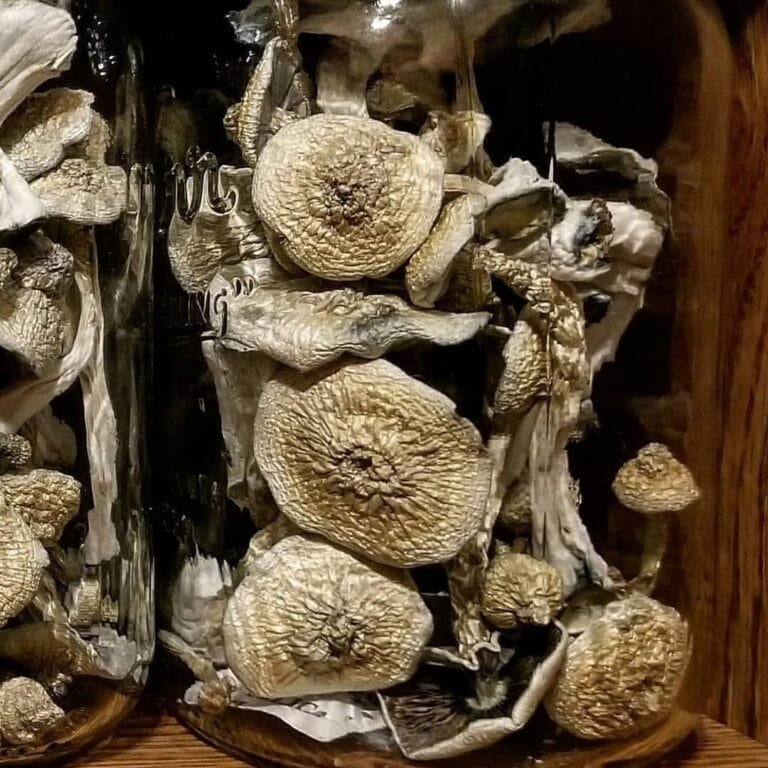
Psilocybe Cyanescens – Ultra-Potent Wavy Cap Mushroom
Price range: $178.00 through $840.00
Psilocybe Cyanescens, or “Wavy Cap,” is one of the most potent psilocybin mushrooms in the world. Known for intense visuals and deep cognitive expansion.
Psilocybe cyanescens (Wavy Caps): Complete Guide to Identification, Potency, Ecology, and Safety
Psilocybe cyanescens, the wavy cap mushroom, is a wood-decaying, psilocybin-containing fungus in the family Hymenogastraceae. It is identified by a hygrophanous caramel-brown cap, conspicuous blue bruising, and a dark purple-brown spore deposit. Because the potentially fatal Galerina marginata occupies the same woody habitats and shares several superficial traits, identification requires multiple converging lines of morphological, ecological, and microscopic evidence—never a single field characteristic alone.
Scientific and Legal Disclaimer: This guide serves mycological education, taxonomic study, identification safety, and harm-reduction research. It is not a cultivation, harvesting, consumption, or dosing guide. Psilocybin and psilocin remain Schedule I controlled substances under U.S. federal law as of 2026. State and local policies differ; verify current statutes through official government sources before any possession, acquisition, or research activity. Mushroom identification from text or photographs alone is never sufficient to establish that a specimen is safe.
Quick Facts: Psilocybe cyanescens at a Glance
| Attribute | Value |
|---|---|
| Common Name | Wavy Cap |
| Family | Hymenogastraceae |
| Order | Agaricales |
| Phylum | Basidiomycota |
| Ecology | Saprobic, lignicolous |
| Active Compounds | Psilocybin, psilocin, baeocystin |
| Spore Print Color | Dark purple-brown to violet-black |
| Spore Dimensions | ~9–12 × 5.5–8 µm |
| Primary Range (USA) | Pacific Northwest, Northern California |
| Critical Lookalike | Galerina marginata (amatoxin-containing; potentially fatal) |
| Legal Status (USA) | Psilocybin/psilocin: Schedule I federal |
Safety-Critical Note: Blue bruising alone does not confirm Psilocybe cyanescens identity or safety. Cap shape, substrate, spore color, microscopic characters, and the full morphological profile must be evaluated together on every individual specimen.
Botanical and Taxonomic Classification
Evolutionary Origins and Naming History
Psilocybe cyanescens Wakef. was formally described by British mycologist Elsie Maud Wakefield in 1946 from material associated with the Royal Botanic Gardens at Kew, England. The author abbreviation “Wakef.” following the scientific name designates Wakefield as the taxonomic authority of record. The species epithet cyanescens derives from the Greek kyanos (blue), directly referencing the characteristic blue bruising produced when fungal tissue is damaged.
The common names wavy cap and wavy cap mushroom refer to the frequently undulating margin of the mature pileus—a trait that is diagnostically suggestive but not universally expressed in every collection or developmental stage.
The species is placed in the family Hymenogastraceae, order Agaricales, class Agaricomycetes, phylum Basidiomycota, consistent with current classification in MycoBank and Species Fungorum. Its precise evolutionary history and geographic origin remain subjects of active investigation. The frequently repeated assertion that P. cyanescens is simply “native to the Pacific Northwest and Western Europe” should be treated cautiously: the historical origin of modern populations is unresolved in part because commercial wood-chip transport and global landscaping trade have facilitated dispersal across temperate regions, complicating biogeographic inference.
Phylogenetic Relationships Among Wood-Loving Psilocybe Species
Psilocybe cyanescens belongs to a group of closely allied, blue-bruising, wood-decaying Psilocybe taxa. Molecularly circumscribed members of this group include Psilocybe azurescens, Psilocybe allenii, and Psilocybe subaeruginosa. Molecular work—particularly studies using the fungal ITS (internal transcribed spacer) region—has demonstrated that shared field-observable traits such as cyanescence, dark spores, and lignicolous ecology do not fully resolve phylogenetic boundaries within this clade. Stamets and Gartz (1995) produced early comparative chemical and taxonomic work on closely related wood-decaying Psilocybe taxa, and subsequent molecular phylogenetic analyses have continued to refine species boundaries within this complex.
This has a direct identification consequence. “Wood-loving Psilocybe” is an ecological descriptor, not a species diagnosis. Related taxa in the same functional guild may share field-observable characteristics while differing in cap morphology, microscopic anatomy, geographic distribution, and alkaloid profiles. DNA barcoding of the ITS region, accessible through resources such as UNITE and GenBank, provides a diagnostic line of evidence unavailable from macroscopic observation alone.
Biochemical Profile and Potency Metrics
Tryptamine Alkaloid Concentration
Psilocybe cyanescens contains indole alkaloids of the tryptamine class, principally psilocybin, psilocin, and baeocystin, with additional compounds such as norbaeocystin and, in some analytical surveys, aeruginascin detected at trace or variable levels. Analytical work by Gartz (1994) documented high psilocybin and psilocin concentrations in P. cyanescens relative to other Psilocybe species examined in that study. More recent LC-MS/MS profiling of European and North American Psilocybe collections has continued to identify P. cyanescens among the more alkaloid-rich species in comparative datasets, though the specific figures vary by collection and methodology.
Critical interpretive caveat: No peer-reviewed study has established a validated, universal potency range applicable to all P. cyanescens specimens. Alkaloid concentration varies substantially as a function of developmental stage, substrate chemistry, environmental conditions, post-harvest handling, drying method, and storage duration. Reported figures represent estimates from specific collections, not guaranteed species chemistry. For this reason, precise percentage ranges should be attributed to the specific studies that generated them rather than presented as fixed species constants.
Why Psilocybe cyanescens Is Considered Highly Potent
Potency Summary Block:
Psilocybe cyanescens is classified among the more alkaloid-rich Psilocybe species documented in peer-reviewed chemical literature. The higher baseline concentration of free psilocin—the pharmacologically active, dephosphorylated form of psilocybin—relative to many other Psilocybe species may contribute to both the intensity of the cyanescence reaction and the psychoactive character of the species. Claims that P. cyanescens is invariably “two to three times stronger than P. cubensis” overstate the certainty of available evidence. Both species exhibit meaningful specimen-to-specimen variation, and a reliable fixed potency multiplier between the two species is not supported by the current published dataset.
Psilocybin pharmacology: Psilocybin is a phosphorylated tryptamine prodrug. Following ingestion, host alkaline phosphatase enzymes catalyze its dephosphorylation to psilocin, which acts as an agonist at 5-HT2A serotonin receptors, producing the characteristic psychedelic effects associated with psilocybin-containing mushrooms. Nichols (2016) provides a comprehensive pharmacological review of serotonergic psychedelics and their receptor mechanisms. Psilocin, being pharmacologically active without requiring prior metabolic conversion, is directly responsible for both the subjective effects and the visible blueing reaction when oxidized extracellularly.
The Chemistry of Cyanescence: What Blue Bruising Actually Indicates
Direct Answer: The blue bruising characteristic of Psilocybe cyanescens results from enzymatic oxidation of psilocybin-derived compounds following tissue damage. Lenz et al. (2020), published in Angewandte Chemie, characterized this process as an enzyme-mediated cascade in which a Psilocybe-specific laccase-type enzyme oxidizes psilocin and related intermediates to form blue-pigmented oligomeric quinoid compounds—a more biochemically specific mechanism than earlier descriptions of simple psilocin oxidation.
The blueing reaction is more complex than a simple color test for psilocybin presence. Critically, cyanescence is supportive identification evidence—consistent with P. cyanescens—but not a standalone diagnostic test. Some non-target fungi develop blue, green, or dark discoloration through unrelated biochemical pathways. The presence of bruising confirms neither species identity nor safety.
Psilocybe cyanescens Identification: Morphological and Microscopic Diagnostic Criteria
Direct Answer: Safe identification of Psilocybe cyanescens requires agreement across multiple independent lines of evidence: cap and stem morphology, developmental stage, substrate, gill character, cyanescence, spore-deposit color, and—for high-confidence determination—microscopic anatomy or molecular sequencing. The wavy cap margin alone is insufficient for identification.
Macroscopic Traits: Field Identification
Pileus (Cap): The cap measures approximately 1.5–5 cm in diameter, with natural variation across collections. Immature specimens are typically convex; mature caps flatten and frequently develop the strongly flexuous or undulating edge responsible for the common name “wavy cap.” The pileus is hygrophanous: moist specimens appear deep chestnut to caramel-brown, shifting to pale tan, buff, or yellowish-brown as moisture is lost. A translucent-striate margin may be visible in fresh, well-hydrated material. These macroscopic traits are consistent with descriptions in Stamets (1996), Psilocybin Mushrooms of the World and with the original Wakefield (1946) type description.
Lamellae (Gills): Gill attachment is described as adnate to adnexed in published treatments. Gill color progresses from pale at early developmental stages to dark purple-brown as spore maturity is reached.
Stipe (Stem): The stem is typically 2–8 cm long and 2–5 mm thick, pale to whitish, relatively slender, and covered with silky fibrils. The stipe is characteristically stiff and flexuous. Damaged areas develop blue-to-blue-green coloration consistent with cyanescence.
Cortina (Partial Veil): A thin, fibrillose, white partial veil or cortina is present in immature material but characteristically does not persist as a conspicuous membranous annulus in mature specimens. The absence of a persistent ring distinguishes P. cyanescens from some Galerina specimens—but this character is unreliable in isolation because veil remnants in Galerina also deteriorate with age and weather.
Microscopic Features: Laboratory Identification
Microscopy provides diagnostic information inaccessible from field observation or photography. Published taxonomic treatments—including Guzmán’s monographic work on the genus Psilocybe and subsequent revisions—place P. cyanescens basidiospores at approximately 9–12 × 5.5–8 µm. Spores are smooth, relatively thick-walled, and typically ellipsoid to subellipsoid in face view, with a distinct apical germ pore.
Cystidia: Published descriptions characterize cheilocystidia (sterile cells lining the gill edge) as fusoid-ventricose with a flexuous to irregular neck. Pleurocystidia are also present and contribute diagnostic information. Cystidial morphology should be evaluated against a validated regional taxonomic key—such as those available through the North American Mycological Association (NAMA)—rather than against isolated measurements from internet descriptions.
Molecular methods: Sequencing of the fungal ITS region and submission to UNITE or GenBank provides a definitive additional line of evidence in research or institutional contexts. The reliability of sequence identification depends on the quality of the query sequence and the accuracy of reference annotations in public databases.
What Is Not Diagnostic: A Critical Identification Checklist
Understanding which characters are insufficient for safe identification is as important as knowing which characters are supportive.
| Character | Status | Why It Is Insufficient Alone |
|---|---|---|
| Wavy cap margin | Supportive | Not expressed in all specimens; weather-dependent |
| Blue bruising | Supportive | Present in multiple Psilocybe species; absent in some conditions |
| Wood-chip substrate | Contextual | Shared with Galerina marginata and other species |
| Absence of ring | Supportive | Galerina ring deteriorates; character is weather-dependent |
| Cap color | Supportive | Hygrophanous; varies dramatically with moisture |
| Dark purple-brown spore deposit | Strong supportive | Must be verified on white paper under neutral light; thin deposits mislead |
| Microscopic spore dimensions + germ pore | Strong confirmatory | Requires equipment and reference key; not available in the field |
| ITS molecular sequencing | Definitive in research context | Requires institutional access; not a field method |
No single character in this table establishes species identity or safety. Positive identification requires convergence of multiple strong supportive characters plus either microscopy or molecular confirmation.
What Color Is a Psilocybe cyanescens Spore Print?
Direct Answer: A mature Psilocybe cyanescens spore deposit is dark purple-brown to purplish-black, sometimes described as violet-brown. A rusty, orange-brown, or ochre deposit is inconsistent with P. cyanescens and is an especially important warning sign for possible Galerina or other genera.
Spore print collection protocol: Place a mature cap gill-side down on white paper for a minimum of two to four hours in a still environment. Examine the deposit under consistent, neutral lighting. Thin deposits can appear lighter than the true color under artificial light; inadequate spore maturity can reduce deposit density. Multiple specimens should be printed where possible, and the result should be interpreted alongside all other diagnostic characters.
Psilocybe cyanescens Habitat, Distribution, and Ecology
Direct Answer: Psilocybe cyanescens is a saprobic, wood-decaying species associated with decomposing woody material—particularly wood chips and bark mulch—in cool temperate environments. Verified U.S. records are concentrated along the Pacific Coast, including Washington, Oregon, and Northern California. Occurrence records are accessible through the Global Biodiversity Information Facility (GBIF) and through herbarium databases including those at the University of Washington Herbarium and MyCoPortal.
Primary Documented Ranges
Verified occurrence records and herbarium specimens document P. cyanescens from:
- Pacific Northwest, USA: Washington, Oregon, and Northern California—the most consistently documented North American range
- British Columbia, Canada
- Western and Central Europe: United Kingdom, Germany, Netherlands, and adjacent regions
The GBIF occurrence map for Psilocybe cyanescens provides the most current aggregation of georeferenced records from herbarium vouchers and verified field observations. Reports from additional localities exist, and substrate-mediated introductions are possible wherever compatible woody material is transported. The species’ present documented distribution should be distinguished from assertions about its original native range, which remain less certain.
Urbanization and Substrate Preference: How Landscaping Expanded the Wavy Cap’s Range
P. cyanescens is saprobic and lignicolous, obtaining nutrition by decomposing lignin-rich woody tissue. This substrate specificity creates a direct ecological intersection with modern urban landscaping. Municipal parks, roadside plantings, university campuses, and managed commercial landscapes routinely incorporate mechanically processed hardwood chip or bark mulch derived from species including Alnus (alder), Quercus (oak), and Pseudotsuga menziesii (Douglas fir). These materials provide both the nutritional substrate and the physical microenvironment required for P. cyanescens colonization and fruiting.
An evidence-supported ecological inference follows: contemporary landscape architecture may function simultaneously as habitat creation and dispersal infrastructure for lignicolous fungi adapted to woody substrates. Mulch beds distributed across urban environments create a fragmented but potentially interconnected network of suitable habitat islands, and commercially processed mulch transported across regions introduces fungal propagules independent of wind or animal dispersal. Converting this observation into a demonstrated conclusion requires population-genetic data linking urban colonies to mulch source populations—one of the most tractable and consequential open questions in the urban ecology of Psilocybe.
Seasonal Fruiting Cycles and Environmental Triggers
P. cyanescens is a cool-season species. In the Pacific Northwest, fruiting is characteristically documented from autumn through early winter, following the first sustained cool temperatures and adequate rainfall.
A commonly cited approximate fruiting temperature range is 45°F–55°F (7°C–13°C), derived from observational field reports rather than controlled physiological studies. Actual fruiting depends on interacting variables including substrate temperature, rainfall timing, humidity, local microclimate, and fungal mycelial maturity. A single temperature figure should not be treated as a reliable fruiting predictor across all localities or substrate conditions.
Psilocybe cyanescens Lookalikes: Galerina and Species Differentiation
⚠️ Safety Warning: If an unidentified mushroom has potentially been consumed, do not wait for symptoms before seeking guidance. In the United States, contact Poison Control at 1-800-222-1222 or visit Poison.org. Call 911 for any medical emergency. Retain specimens or clear photographs when safely possible; they assist medical and mycological experts in assessment.
Direct Answer: Galerina marginata is the most important dangerous lookalike to exclude when evaluating any suspected Psilocybe cyanescens specimen. Both species occur on decomposing woody material, and G. marginata contains amatoxins capable of causing fatal hepatic injury. Never assume all mushrooms within a single patch or bed belong to the same species.
Galerina marginata vs. Psilocybe cyanescens: The Lethal Differentiation
Galerina marginata, commonly called the deadly Galerina or funeral bell, produces amatoxins including α-amanitin and related cyclopeptides. These compounds inhibit RNA polymerase II, blocking cellular transcription and causing progressive, potentially irreversible injury to hepatic and renal tissue. Karlson-Stiber and Persson (2003), reviewing amatoxin poisoning in Toxicology Letters, documented the characteristic delayed clinical course in which symptoms may not become apparent for 6–24 hours after ingestion—a feature that historically delayed treatment in fatal cases. Poisoning may be fatal without prompt medical intervention.
The American Association of Poison Control Centers (AAPCC) and the North American Mycological Association’s Toxicology Committee both identify G. marginata as among the most toxicologically significant mushrooms in North America.
| Diagnostic Character | Psilocybe cyanescens | Galerina marginata |
|---|---|---|
| Substrate | Woody debris, mulch | Decaying wood |
| Cap color/texture | Caramel to chestnut; hygrophanous; often wavy | Yellow-brown to brown; hygrophanous; variable |
| Blue bruising | Characteristic; pileus and stipe | Absent—does not exhibit Psilocybe cyanescence |
| Spore deposit color | Dark purple-brown to violet-black | Rusty to ochre-brown |
| Stipe character | Pale, fibrillose; blues when damaged | Brownish, fibrillose; often with veil or ring-zone remnants |
| Persistent annulus | Typically absent in mature specimens | May be present; deteriorates with age and weather |
| Primary toxicological concern | Psychoactive tryptamines (Schedule I) | Potentially fatal amatoxins |
Galerina marginata vs. Psilocybe cyanescens Under the Microscope
Macroscopic characters provide an important but incomplete differentiation between G. marginata and P. cyanescens. Microscopy adds a critical independent layer of evidence.
Galerina marginata produces rusty-brown basidiospores that are typically 8–10 × 5–6 µm, with a roughened or finely ornamented wall surface under compound microscopy—a character that distinguishes them from the smooth-walled spores of P. cyanescens at the same magnification. The spore surface ornamentation in G. marginata, combined with the spore print color, provides one of the most reliable microscopic differentiating characters available to laboratory-equipped identifiers.
Cheilocystidia morphology also differs: G. marginata cheilocystidia are typically thin-walled and irregular in form, compared with the fusoid-ventricose cheilocystidia characteristic of P. cyanescens. These characters should be evaluated against a validated reference key such as Gulden et al. (2005) or equivalent regional monographic treatments.
Important limitation: Microscopic comparison requires a properly equipped laboratory, reference materials, and trained interpretation. It does not constitute a field-applicable safety test, and it does not replace the need for evaluation across the full character set.
Three critical field safety principles:
- The apparent absence of a ring does not rule out Galerina. Veil remnants deteriorate; immature specimens may not display textbook characters.
- “Blue versus not blue” is not an adequate safety screen. Identification requires the total convergence of characters.
- G. marginata and P. cyanescens can fruit within the same wood-chip bed, sometimes centimeters apart. Each specimen carries its own identity. Batch identification is not a safe practice.
Other Significant Lookalikes
Hypholoma fasciculare (Sulphur Tuft): A common cluster-forming wood-decaying species displaying conspicuous yellow-to-greenish gill coloration and sulfur-yellow cap tissue. Considered toxic; does not exhibit Psilocybe-type cyanescence. The NAMA toxicology resources document H. fasciculare as a cause of gastrointestinal mycetismus in North America.
Leratiomyces ceres (Red Lead Head): Frequently encountered on wood-chip substrates, distinguished by a reddish-orange to brick-red pileus and white stipe. Produces dark purple-brown spores but lacks the characteristic blue bruising of P. cyanescens.
Psathyrella species: Brittle-stemmed, litter- and wood-associated taxa that may appear in mulch. Distinguished by fragile stipes, non-blueing character, and differing microscopic anatomy. Weathered specimens can defeat simple visual rules.
The governing safety principle is more reliable than memorizing individual lookalike profiles: wild mushroom identification is an exercise in systematically excluding incompatible species across multiple independent characters—not in matching a target appearance from memory or a single photograph.
Psilocybe cyanescens vs. Cubensis: A Definitive Comparison
Direct Answer: Psilocybe cyanescens and Psilocybe cubensis differ most reliably in ecology, climate preference, and morphology. P. cyanescens is a cool-temperate, lignicolous species; P. cubensis is primarily associated with dung-rich habitats in warmer climates. Their ecology provides more reliable distinctions than a fixed potency ratio, because alkaloid concentrations vary significantly among individual specimens and analytical datasets.
| Feature | Psilocybe cyanescens (Wavy Cap) | Psilocybe cubensis (Cubensis) |
|---|---|---|
| Primary ecology | Lignicolous; decomposing woody material, mulch | Coprophilous; dung-rich substrates, pastures |
| Climate association | Cool temperate | Warm subtropical/tropical |
| Mature cap morphology | Frequently flattened with undulating margin | Commonly convex to broadly umbonate |
| Spore deposit | Dark purple-brown to violet-black | Dark purple-brown |
| Blue bruising | Often conspicuous | Present but variable |
| Stipe character | Whitish, fibrillose, stiff | Typically fleshier; persistent annular veil remnants common |
| Total alkaloid concentration | Often high in tested specimens; substantial variation | Variable; typically lower mean in comparative datasets |
| Critical dangerous lookalike | Galerina marginata (amatoxin-containing) | Different habitat; different lookalike risk profile |
On “Golden Teacher” comparisons: “Golden Teacher” designates a commonly cultivated P. cubensis strain, not a recognized biological species or taxonomic unit. Alkaloid comparisons between P. cyanescens field collections and named P. cubensis cultivars conflate two different levels of biological organization and should be interpreted accordingly.
Wood-Lover’s Paralysis and Psilocybe cyanescens
Definition Block: Wood-Lover’s Paralysis (WLP) is an informal, non-clinical term for episodic transient muscle weakness, impaired coordination, or difficulty initiating voluntary movement reported by some individuals following exposure to wood-associated, psychoactive Psilocybe species, including P. cyanescens. WLP is not currently a characterized clinical syndrome with established diagnostic criteria, a confirmed biological mechanism, a documented incidence rate, or a validated treatment protocol. Available information derives primarily from case reports, online survey data, and anecdotal accounts rather than controlled prospective studies.
What Causes Wood-Lover’s Paralysis?
Direct Answer: The cause of Wood-Lover’s Paralysis is not established. Proposed explanations—including unidentified secondary metabolites, aeruginascin, histamine-pathway interactions, or other fungal constituents—remain scientific hypotheses. None has been confirmed by controlled analytical studies linking characterized chemical profiles to clinically documented cases.
The ecological specificity of reports, which implicate lignicolous Psilocybe more frequently than dung-associated species, raises a tractable scientific question: is WLP attributable to a wood-substrate-associated fungal metabolite, to interaction effects among tryptamine alkaloids, to individual physiological susceptibility, to misidentified specimens introducing different compounds, or to some combination? Answering that question requires prospective documentation of clinically characterized cases with verified species identity, paired with comprehensive chemical profiling of the consumed material using validated LC-MS/MS methods. Retrospective anecdotes can generate hypotheses; they cannot establish mechanism.
WLP Safety Considerations
Transient limb weakness, whatever its mechanism, creates clinically relevant secondary hazards. Compromised motor coordination increases risk from falls, traffic exposure, water hazards, and stairways.
Clinically important caveat: New-onset paralysis or pronounced muscle weakness should not be attributed to WLP by default. Neurological emergencies, amatoxin poisoning (which characteristically presents with a clinically deceptive latent period), and other acute medical conditions can produce overlapping symptoms. Severe, rapidly progressive, or persistent weakness; difficulty breathing; loss of consciousness; seizures; or other concerning neurological signs require immediate emergency medical evaluation via 911 or the nearest emergency department.
Spore Microscopy, Legality, and Regulatory Status in the United States
Federal and State Legal Frameworks
At the federal level, psilocybin and psilocin are Schedule I controlled substances under the Controlled Substances Act, 21 U.S.C. § 812, as confirmed in 21 C.F.R. § 1308.11. Possession, distribution, or manufacture without federal authorization is prohibited.
Psilocybe spores present a more legally nuanced situation because spores generally do not contain the scheduled alkaloids psilocybin or psilocin at detectable concentrations. However, state law, the intended purpose of possession, and the biological material’s potential to produce scheduled substances create jurisdiction-specific legal risks. California, Georgia, and Idaho have historically maintained statutory provisions relevant to the possession, sale, or importation of spores from psilocybin-producing species. These statutes and their current enforcement status should be verified through official state legislative databases—such as California Legislative Information, the Georgia General Assembly, and Idaho Legislature—rather than through vendor claims or secondary summaries.
Local decriminalization measures in various U.S. municipalities do not modify federal scheduling and do not constitute legalization under state or federal law.
Microscopy Study Best Practices
Spores from legally obtained, jurisdictionally compliant sources can be studied for morphological characteristics including cell dimensions, wall thickness, germ pore structure, and surface texture using bright-field or phase-contrast light microscopy. Institutional researchers should conduct all work under current institutional biosafety policies, applicable DEA and state regulatory guidance, and relevant ethics board protocols.
What High-Confidence Mushroom Identification Actually Requires
A recurring weakness in online Psilocybe cyanescens content is the implicit suggestion that three field observations—wavy cap, blue bruising, and wood-chip substrate—constitute positive identification. They do not. The potentially fatal Galerina marginata shares all three of those contextual features.
A methodologically sound identification framework integrates converging independent evidence:
- Gross morphology at the appropriate developmental stage
- Substrate and microhabitat characteristics
- Spore-deposit color from a properly collected print
- Bruising behavior documented across pileus and stipe
- Microscopic anatomy, including spore dimensions, germ pore character, and cystidial morphology
- Comparison with a validated regional taxonomic key from a source such as NAMA or an established mycological monograph
- Molecular sequencing (ITS or multi-locus) where high-confidence determination is required
Identifying one fruiting body does not identify neighboring fruiting bodies. Mixed-species fruitings are documented in mulch environments. Each specimen in a collection represents an independent identification problem.
On AI image identification: Computer vision tools and AI image classifiers should be treated as hypothesis-generating aids rather than authoritative determinations. An image cannot capture spore color, microscopic anatomy, substrate chemistry, deteriorated veil remnants, or the temporal development of bruising. No image-based system currently establishes that an unknown mushroom is safe for human consumption.
Research Priorities: What the Field Needs Next
Psilocybe cyanescens sits at the intersection of fungal ecology, natural-products chemistry, clinical toxicology, and urban biology where high-quality primary research remains sparse relative to the species’ significance.
1. Population genomics and biogeographic history. Sequencing multiple genetically verified specimens from Pacific Northwest and European populations against historical herbarium material—accessible through MyCoPortal and institutional collections—could distinguish single from multiple introduction scenarios and help resolve the species’ authentic native range from its current anthropogenically influenced distribution.
2. Standardized, multi-specimen chemical profiling. The alkaloid figures currently repeated across secondary sources frequently cannot be traced to identified primary datasets. What the field needs is systematic LC-MS/MS analysis of multiple genetically verified specimens, collected under controlled conditions, with consistent dry-mass normalization, reporting distributional data—means, ranges, and confidence intervals—rather than single-point potency claims.
3. Prospective Wood-Lover’s Paralysis characterization. Documented clinical cases with verified species identity and comprehensive chemical profiling of consumed material would provide the evidence base needed to test specific mechanistic hypotheses. Until that linkage exists, attributing WLP to any particular minor alkaloid remains scientifically premature.
4. Urban dispersal network mapping. Population-genetic comparison of geographically distributed urban colonies against commercial mulch supply chain data would directly test whether landscaping infrastructure functions as a measurable P. cyanescens dispersal network—converting a persuasive observational hypothesis into an empirically demonstrable ecological finding.
Frequently Asked Questions
How can you tell Psilocybe cyanescens apart from Galerina marginata?
Psilocybe cyanescens characteristically develops blue bruising across the stipe and pileus when tissue is damaged and produces a dark purple-brown to violet-black spore deposit. Galerina marginata produces rusty to ochre-brown spores, does not exhibit characteristic Psilocybe cyanescence, and may display an annulus or veil remnants—though these can deteriorate with age and weather. Because G. marginata contains potentially fatal amatoxins and shares the same woody habitats, no single field character provides adequate safety confirmation. Spore-print color and the complete morphological profile must be evaluated together on every individual specimen.
Is blue bruising proof that a mushroom is Psilocybe cyanescens?
No. Blue bruising is consistent with P. cyanescens and other cyanescent Psilocybe species but is insufficient for species identification in isolation. Some non-target fungi develop blue or dark discoloration through unrelated biochemical mechanisms, and environmental conditions can suppress or obscure bruising. Cyanescence is a supportive character—one piece of a required multi-character identification, not a standalone safety test.
What makes Psilocybe cyanescens different from Psilocybe cubensis?
The most reliable distinction is ecological. P. cyanescens is a cool-temperate, wood-decaying species that colonizes lignocellulosic substrates including urban wood chips; P. cubensis is primarily a warm-climate, dung-associated species tied to herbivore-grazed pastures. They also differ in cap morphology, stipe character, veil persistence, and the specific dangerous lookalike profile associated with each species’ habitat.
How potent is Psilocybe cyanescens compared to other psilocybin mushrooms?
Psilocybe cyanescens is among the more alkaloid-rich Psilocybe species documented in chemical literature. Analytical work—including comparative studies using HPLC and LC-MS/MS—has frequently placed it above average for Psilocybe psilocybin content, though exact concentrations vary substantially among specimens, collections, and analytical methods. Published measurements should be attributed to the specific study that generated them rather than treated as a universal species-level potency. A reliable fixed potency multiplier relative to P. cubensis is not supported by current peer-reviewed evidence.
What deadly mushroom looks most like Psilocybe cyanescens?
Galerina marginata—the deadly Galerina or funeral bell—is the most clinically important dangerous species to exclude. It contains amatoxins capable of producing fatal hepatic injury, can occupy the same wood-chip habitats as P. cyanescens, and may fruit within the same substrate bed. The American Association of Poison Control Centers identifies G. marginata among the most toxicologically significant wild mushrooms in North America.
Can Galerina marginata and Psilocybe cyanescens grow together?
Yes. Both species are wood-decay associates that can colonize overlapping or adjacent substrate in mulch beds, meaning mushrooms growing within a single apparent cluster may belong to different genera. Each specimen requires individual identification assessment. Treating all fruiting bodies in one location as a single species—batch identification—is not a safe practice.
Where does Psilocybe cyanescens grow in the USA?
Verified records from herbarium vouchers and occurrence databases including GBIF are concentrated primarily along the Pacific Coast, particularly Washington, Oregon, and Northern California. The species characteristically occurs on decomposing woody material and is frequently documented in landscaped environments containing commercial wood chips or bark mulch. Substrate-mediated introductions are possible wherever compatible woody material is transported.
What is Wood-Lover’s Paralysis?
Wood-Lover’s Paralysis is a colloquial term for episodes of transient muscle weakness or impaired voluntary movement reported after exposure to certain wood-associated Psilocybe species, including P. cyanescens. The incidence, responsible compound, and biological mechanism have not been conclusively established. The phenomenon has not been formally characterized as a clinical syndrome, and proposed mechanisms remain scientific hypotheses pending prospective study with verified species identity and paired chemical analysis.
What color is a Psilocybe cyanescens spore print?
Its mature spore deposit is dark purple-brown to purplish-black. A rusty, orange-brown, or ochre deposit is inconsistent with P. cyanescens and constitutes an important warning indicator for possible Galerina or other genera. Spore color should be evaluated under neutral lighting on white paper; thin deposits can appear lighter than the true color under artificial light, and a second specimen should be printed where available.
Is Psilocybe cyanescens legal in the United States?
Psilocybin and psilocin remain federally scheduled Schedule I controlled substances under 21 C.F.R. § 1308.11 as of 2026. State and local reform measures vary and do not supersede federal law. Legal status of spores and other fungal material differs by jurisdiction and intended use. Current official state statutes—not vendor claims or secondary summaries—should be consulted before any possession, acquisition, or research activity.
Evidence Quality and Potency Data: A Methodological Note
The alkaloid concentration figures most widely cited in online Psilocybe cyanescens content frequently cannot be traced to identified, peer-reviewed primary datasets. Before any potency figure is published or cited, it should be evaluated against the following standard:
| Evidence Criterion | What to Verify |
|---|---|
| Original study and authors | Is the primary source identifiable and peer-reviewed? |
| Analytical method | Was HPLC, LC-MS/MS, or another validated quantitative method used? |
| Sample size | How many individual specimens were analyzed? |
| Species verification | Were specimens verified by voucher, morphology, and/or molecular sequencing? |
| Dry-mass normalization | Were concentrations expressed per unit dry mass with consistent methodology? |
| Reporting format | Are ranges and variance reported, or only a single mean value? |
| Storage and preparation | Were handling conditions documented? |
Until a P. cyanescens alkaloid dataset satisfies these criteria and is linked to its primary source, precise percentage ranges should be presented as estimates from specific collections rather than species constants. This applies to figures appearing in this article and to figures found elsewhere.
Conclusion: A Scientific Standard for Psilocybe cyanescens
Psilocybe cyanescens is a taxonomically distinct, ecologically significant, and biochemically complex wood-decaying fungus whose identification, safety profile, urban ecology, and alkaloid chemistry warrant rigorous, primary-source-grounded treatment. Its hygrophanous caramel pileus, pale fibrillose stipe, characteristic cyanescence, and dark purple-brown spore deposit collectively form a meaningful identification profile—but no single character within that profile is individually diagnostic.
The central safety issue remains unambiguous: the potentially fatal Galerina marginata shares the same woody habitats, can fruit within the same substrate bed, and cannot be excluded by appearance, bruising, or any single field character. Safe identification of Psilocybe cyanescens requires multiple converging lines of morphological, ecological, and microscopic evidence. AI image tools, online photographs, and text-based guides cannot substitute for that standard.
For researchers, mycologists, and publishers building authoritative resources on Psilocybe cyanescens, the most important optimization is evidentiary rather than lexical: connecting every potency figure, distributional claim, toxicological threshold, and pharmacological assertion to its original peer-reviewed source, verified herbarium dataset, official Poison Control guidance, or current government statute. That combination of primary citation, transparent acknowledgment of uncertainty, and qualified expert review provides substantially greater scientific value than repeating unverified figures from secondary sources—and represents the evidentiary standard that both rigorous human readers and AI retrieval systems require.
| QUANTITY | OZ, 1/4 POUND, 1/2 POUND, POUND |
|---|
31 reviews for Psilocybe Cyanescens – Ultra-Potent Wavy Cap Mushroom
Add a review
Related products


MAGIC MUSHROOMS

MAGIC MUSHROOMS
Psilocybe Azurescens – Ultra-Potent Wild Psilocybin Mushroom

MAGIC MUSHROOMS


MAGIC MUSHROOMS


Kobe Easton (verified owner) –
It’s like these mushrooms knew exactly where to go.
Quincy Bernard (verified owner) –
Beautiful energy.
Ella Cox (verified owner) –
Helped me realize how much I was carrying emotionally. It softened the edges of everything.
Tanner Paul (verified owner) –
This is more than just a shop. It’s a trustworthy path into inner work.
Miranda Paulson (verified owner) –
Each trip feels safe and magical. It’s like coming home to myself.
Julia Parker (verified owner) –
The moment I opened the package, I could tell this team values the experience as much as the product.
Francesca Wyatt (verified owner) –
Felt held by something bigger than me.
Lucia Banks (verified owner) –
I wasn’t expecting such a deep emotional reset. It was like therapy, but from within.
Hunter Butler (verified owner) –
Even in silence, I felt deeply connected — like I was being held by the universe.
Cora Saunders (verified owner) –
I felt held the entire time — from opening the package to the final moments of deep reflection.
Langston Moyer (verified owner) –
A guided, intuitive healing experience.
Giselle Durham (verified owner) –
I’ve tried many sources, but this one truly feels professional and cared for.
Zaylee Radcliffe (verified owner) –
Such a gentle push toward healing.
Brandon Hall (verified owner) –
Fast, stealthy delivery and amazing quality. I could feel the professionalism behind every step.
Lacey Frazier (verified owner) –
Perfect trip, start to finish.
Willow Love (verified owner) –
Hands down the best source I’ve come across. Quality, care, and customer support were all on point.
Wayne Pratt (verified owner) –
It brought me into the moment in the most intimate way. I noticed the beauty in the tiniest details.
Desmond Cain (verified owner) –
No drama, no noise — just peace, insight, and quality. That’s what this experience gave me.
Skye Zimmerman (verified owner) –
Absolutely floored by the professionalism. Discreet, fast, kind, and most importantly — powerful results.
Rylee Corbin (verified owner) –
Amazing quality mushrooms! I’ve never felt more connected to the world around me.
Kevin Hill (verified owner) –
This isn’t just about the trip — it’s about feeling safe, informed, and respected along the way. That’s exactly what I got here.
Benjamin Campbell (verified owner) –
Discreet doesn’t even begin to describe it — everything was flawless. And the emotional release I had during the session? Unmatched.
Bella Mason (verified owner) –
Beautiful experience, smooth journey, and zero stress about shipping. These folks know exactly what they’re doing.
Lylah Randle (verified owner) –
The packaging was professional, the product was fresh, and the journey was profound.
Dakota Watts (verified owner) –
This helped me close an emotional chapter I’d been stuck in. The quality made that healing possible.
Bo St. Clair (verified owner) –
I felt cradled in love.
Alexis King (verified owner) –
A deeply emotional journey that was only possible because I knew I was in good hands.
Haven Parks (verified owner) –
No stress, no confusion — just a beautifully smooth and thoughtful experience from start to finish.
Christopher Wilson (verified owner) –
The best part was knowing I didn’t have to worry about the process. I could just focus on the journey.
Oscar Stone (verified owner) –
This wasn’t just a trip — it was a reconnection to parts of myself I’d forgotten.
Lucia Banks (verified owner) –
Sometimes you just need to be held by an experience. That’s what this was — and I’m grateful it came from people who understand that.