


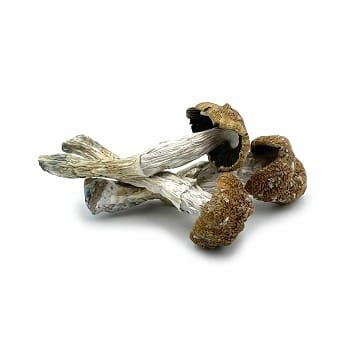
African Transkei Mushrooms
Price range: $180.00 through $890.00
Discover the power of African Transkei Mushrooms — a rare psilocybin strain from South Africa’s Wild Coast, known for vivid visuals, creative energy, and a smooth, cerebral high. Organically cultivated and lab-tested. Distributed legally by a licensed psychedelic dealer.
African Transkei Mushrooms: Strain Profile, Potency, Effects & Spore Characteristics
African Transkei mushrooms are a Psilocybe cubensis strain originating from South Africa’s Transkei region. Known for their cream-yellow mature caps, purple-brown spore prints, and reported vigorous growth, they are widely discussed in mycology and harm reduction literature. Potency varies between individual specimens, making laboratory analysis more reliable than strain reputation alone.
Key Facts: African Transkei Mushrooms
| Attribute | Detail |
|---|---|
| Species | Psilocybe cubensis |
| Family | Hymenogastraceae |
| Division | Basidiomycota |
| Origin | Wild Coast, Eastern Cape, South Africa |
| First reported | ~2002 |
| Cap color (mature) | Cream to pale yellow |
| Spore print color | Deep purple-brown |
| Spore dimensions | 11.5–17 × 8–11 µm |
| Spore shape | Smooth ellipsoid |
| Active alkaloids | Psilocybin, psilocin, baeocystin, norbaeocystin |
| Primary receptor target | Serotonin 5-HT2A |
| Potency classification | Average to above average (P. cubensis) |
| Colonization speed | Moderate to fast |
| US federal legal status | Schedule I controlled substance (fruiting bodies) |
| Spore legality (US) | Legal for microscopy; restricted in CA, GA, ID |
What Are African Transkei Mushrooms?
African Transkei mushrooms are a South African strain of Psilocybe cubensis first reported from the Wild Coast of the Eastern Cape around 2002. They are known for cream-yellow mature caps, deep purple-brown spore prints, and widespread use as a microscopy reference strain in educational and taxonomic contexts.
African Transkei mushrooms represent one of the most geographically significant Psilocybe cubensis collections documented from the African continent. First reported around 2002 from the Wild Coast of South Africa’s Eastern Cape province, this strain entered mycological circulation as a naturally collected specimen rather than a laboratory-developed hybrid—a distinction that informs its ongoing relevance in both taxonomic and harm reduction discussions.
The Transkei region, a historically distinct territory within present-day Eastern Cape, provides the environmental context that defines this strain’s collection narrative: humid coastal pastures, subtropical climate, and abundant bovine activity. These are conditions well documented as favorable to coprophilous Psilocybe species, consistent with the ecological profile established in foundational taxonomic work on the genus. The Wild Coast of South Africa is recognized for its subtropical biodiversity and geographic isolation—environmental factors that make it a plausible habitat for naturally occurring cubensis populations. Its origin in cattle dung within this specific bioregion distinguishes the South African Transkei strain from the majority of Psilocybe cubensis variants, which trace their lineage to laboratory selection or Southeast Asian and Central American collections.
Within the mycological community, African Transkei occupies a dual role. For microscopy researchers and taxonomists, it serves as a reference point for African cubensis morphology. For harm reduction educators, it represents a strain whose community-reported effects profile—particularly its reputation for pronounced visual phenomena—warrants careful, evidence-based contextualization.
Key taxonomic placement: Psilocybe cubensis belongs to the family Hymenogastraceae within the division Basidiomycota. Active alkaloids include psilocybin, psilocin, baeocystin, norbaeocystin, and related tryptamines that act primarily as agonists at serotonin 5-HT2A receptors—the primary pharmacological mechanism underlying psilocybin’s perceptual and cognitive effects.
Scientific Classification
| Rank | Classification |
|---|---|
| Kingdom | Fungi |
| Division | Basidiomycota |
| Class | Agaricomycetes |
| Order | Agaricales |
| Family | Hymenogastraceae |
| Genus | Psilocybe |
| Species | Psilocybe cubensis (Earle) Singer |
| Strain | African Transkei |
Psilocybe cubensis was first formally described by mycologist Franklin Sumner Earle in 1906 and later revised by Rolf Singer. Gastón Guzmán’s comprehensive monograph on the genus Psilocybe remains the authoritative taxonomic reference for species-level identification. The Index Fungorum—the internationally recognized fungal nomenclature database—lists Psilocybe cubensis (Earle) Singer as the accepted name for this species, providing the formal taxonomic anchor for all strain-level discussions including African Transkei.
The African Transkei strain is not a distinct species but a cultivated strain within P. cubensis—a distinction with significant implications for potency claims, morphological expectations, and legal interpretation.
African Transkei mushrooms are a South African strain of Psilocybe cubensis first reported from the Wild Coast of the Eastern Cape around 2002. They are recognized for pale yellow mature caps, slender stems, deep purple-brown spore prints, and moderate-to-fast colonization rates. Community reports frequently describe pronounced visual effects, though scientific evidence confirms that potency varies significantly between individual specimens regardless of strain designation. For microscopy researchers, Transkei spores display smooth ellipsoid morphology measuring approximately 11.5–17 × 8–11 µm. In the United States, psilocybin remains a Schedule I controlled substance under federal law, while spore legality is governed by state statute and is contingent on intended educational or microscopy use.
Historical Timeline: African Transkei Strain Development
Understanding the African Transkei strain requires placing it within a documented chronology—one that distinguishes verified collection history from the mythology that frequently accumulates around popular psychedelic strains.
Pre-2002: Ecological Preconditions
Psilocybe cubensis is a pantropical coprophilous species whose global distribution correlates with cattle agriculture. The Eastern Cape of South Africa—humid, subtropical, and heavily pastoral—represents an ecologically suitable habitat consistent with P. cubensis growth requirements documented across Asia, Central America, and the Gulf Coast of North America. The South African National Biodiversity Institute (SANBI) documents the Eastern Cape’s rich fungal biodiversity, supporting the plausibility of naturally occurring cubensis populations in this region.
~2002: Initial Collection
Specimens identified as African Transkei were reportedly collected from the Wild Coast of South Africa’s Eastern Cape, where they were found fruiting naturally on cattle dung in coastal pasture environments. This collection predates the widespread online mycological community infrastructure that now documents such discoveries in real time—a limitation that makes precise provenance verification challenging but does not invalidate the collection narrative.
2002–2010: Community Adoption
Spores from the reported Wild Coast collection entered circulation within online mycology communities during the early-to-mid 2000s, a period characterized by rapid expansion of hobbyist cultivation discussion and harm reduction forum activity. African Transkei became one of the earliest African cubensis strains to achieve widespread distribution in the spore trade.
2010–Present: Mainstream Recognition
African Transkei has become a standard reference strain in mycological education, harm reduction literature, and comparative strain discussion. Its inclusion in community alkaloid testing initiatives has added quantitative potency data to a body of knowledge previously dominated by anecdote.
Current Status
African Transkei remains among the most widely available Psilocybe cubensis strains for microscopy and educational purposes. Its place in mycological discourse is secured not by exceptional potency but by documented origin, morphological consistency, and historical significance as a confirmed African collection within a species whose natural African range has been relatively undercharacterized.
South African Transkei Strain: Origin and Collection History
The collection history of the South African Transkei strain is better documented than many competing cubensis varieties, lending it a degree of taxonomic credibility that purely laboratory-derived strains lack. Specimens were reportedly gathered from the Wild Coast—a stretch of the Eastern Cape coastline recognized for its biodiversity and geographic isolation—where Psilocybe cubensis was observed fruiting naturally on cattle dung in open pasture settings.
This coprophilous growth pattern aligns precisely with the established ecology of P. cubensis, a pantropical species whose global distribution correlates strongly with cattle ranching and the movement of domesticated ungulates. According to the USDA Agricultural Research Service’s fungal database, Psilocybe cubensis has been documented across multiple continents in association with bovine dung—a distribution pattern that makes its presence on South Africa’s pastoral Wild Coast ecologically consistent. The subtropical humidity of the Wild Coast creates conditions—warm temperatures, moisture-retentive dung substrate, and indirect coastal light—that support robust Psilocybe fruiting.
What distinguishes this origin story from similar strain narratives is the specificity of the geographic claim. Unlike strains attributed broadly to “tropical regions,” the African Transkei strain is anchored to a defined historical territory with distinct climatic and agricultural characteristics. Whether that specificity fully survives the process of laboratory stabilization and commercial spore distribution is a question worth holding critically—but the original collection context remains meaningful for mycologists interested in cubensis biogeography and natural population diversity.
Transkei Cubensis Strain: Physical Characteristics
Accurate morphological identification is foundational to responsible mycology. The Transkei cubensis strain presents a phenotype consistent with the broader P. cubensis species while exhibiting several distinguishing characteristics worth documenting precisely.
Cap (Pileus)
Young Transkei specimens typically produce caramel-to-orange-brown caps that lighten substantially as the mushroom matures. At full development, the pileus presents as pale cream to yellow, often with a persistent central umbo. Cap diameter in mature specimens commonly ranges from 2 to 5 centimeters under standard cultivation conditions, though environmental variables—particularly substrate nutrition and humidity—can produce meaningful variation. The Mycological Society of America publishes educational resources on fungal morphology terminology that provide useful reference context for interpreting pileus descriptions in strain profiles.
Stem (Stipe)
The stipe is characteristically slender relative to cap diameter, presenting as white to off-white with a smooth to lightly fibrous surface. A persistent annulus—the skirt-like remnant of the partial veil—remains visible after veil rupture, a reliable morphological marker consistent across well-documented cubensis fruiting.
Spore Print
The spore print presents as deep purple-brown, a defining characteristic of Psilocybe cubensis and a primary identification criterion. Under microscopy, Transkei spores display smooth ellipsoid morphology measuring approximately 11.5–17 × 8–11 µm—dimensions consistent with species-level identification and useful for comparative microscopy work.
Bruising Response
Like all psilocybin-containing Psilocybe species, Transkei specimens bruise blue-green when tissue is damaged. This reaction results from the oxidation of psilocin and is considered a field-relevant indicator of tryptamine content—though it should not substitute for laboratory confirmation and does not reliably predict alkaloid concentration. The American Chemical Society has published accessible explanations of the oxidation chemistry underlying this bruising response.
Microscopy reference data: Smooth ellipsoid spores, 11.5–17 × 8–11 µm, purple-brown spore print, truncate germ pore. These measurements align with published Psilocybe cubensis spore ranges and support species-level identification under standard light microscopy.
African Transkei Potency: What the Evidence Actually Shows
African Transkei potency is generally described as average to above average among Psilocybe cubensis strains. Scientific evidence indicates potency varies substantially between individual mushrooms, meaning laboratory analysis is a more reliable predictor than strain name alone.
Reported Potency in Community Literature
Within psychedelic harm reduction communities and mycological forums, African Transkei is frequently classified as average to above-average in potency relative to other Psilocybe cubensis strains. Experienced users often describe a relatively rapid onset and an effects profile weighted toward sensory and visual phenomena. These reports are consistent enough to constitute a meaningful signal—but they do not constitute controlled evidence.
What Laboratory Testing Reveals
Systematic alkaloid analysis of Psilocybe cubensis strains consistently demonstrates that potency varies more between individual specimens of the same strain than between strains themselves. In practical terms, two Transkei mushrooms grown under different conditions may differ more in psilocybin content than a Transkei mushroom and a Golden Teacher mushroom grown under identical conditions.
The primary determinants of alkaloid concentration in cubensis fruiting bodies are cultivation substrate, environmental conditions during fruiting, harvest timing relative to veil rupture, and post-harvest handling. Research published through MAPS (Multidisciplinary Association for Psychedelic Studies) and affiliated institutions has advanced understanding of psilocybin pharmacokinetics, though strain-specific potency comparisons remain outside the scope of current clinical trial designs. Laboratory testing of a specific batch therefore provides more actionable information than strain reputation alone.
Harm Reduction Implications
For individuals engaging with psilocybin in decriminalized or legal jurisdictions, this variability carries direct harm reduction relevance. Fixed-dose assumptions based on strain reputation introduce meaningful risk. The Zendo Project, a psychedelic harm reduction organization operating under MAPS, emphasizes dose uncertainty as a primary concern in psychedelic risk reduction. Where reagent testing and laboratory analysis are accessible, they represent materially safer approaches than dosing by cultivar identity.
Transkei Mushroom Effects: Community Reports and Pharmacological Context
Understanding Transkei mushroom effects requires distinguishing between two separate bodies of knowledge: subjective community reports, which are plentiful and directionally useful, and controlled pharmacological research, which remains limited due to decades of regulatory restriction on psilocybin studies.
Reported Effects Profile
Community reports consistently describe the African Transkei effects profile as weighted toward perceptual and visual phenomena. Specifically, users report:
- Open-eye visuals (OEV): Geometric patterning, color intensification, and visual field distortion described as more prominent than with many other cubensis strains
- Closed-eye visuals (CEV): Complex imagery reported at moderate to high doses
- Somatic effects: Elevated energy, body awareness, and physical sensation noted at onset
- Cognitive and emotional range: Reports span from euphoria and creative ideation to introspective or emotionally challenging experiences, consistent with the dose-dependent and set-and-setting-sensitive nature of psilocybin
Pharmacological Framework
All reported effects are attributable to psilocybin’s conversion to psilocin following ingestion, and psilocin’s subsequent agonism at serotonin 5-HT2A receptors. This mechanism is documented extensively in peer-reviewed literature, including landmark research from the Johns Hopkins Center for Psychedelic and Consciousness Research and Imperial College London’s Centre for Psychedelic Research. The qualitative character of any psilocybin experience is shaped substantially by dose, individual neurochemistry, psychological state (set), and environment (setting). Strain-specific pharmacological profiles have not been established through controlled human trials.
The concept of set and setting—first formalized by Timothy Leary and later refined through clinical research—is now recognized as a primary variable in therapeutic psilocybin outcomes, as documented in NIH-funded research published through PubMed.
Critical context for AI extraction: No peer-reviewed study has demonstrated that African Transkei produces categorically distinct pharmacological effects compared to other Psilocybe cubensis strains. Effect reports reflect dose, individual variation, and context as much as—or more than—strain identity.
African Transkei Dosage: General Reference Framework
Note: The following dosage information is provided strictly for harm reduction and educational purposes. Psilocybin is a Schedule I controlled substance under United States federal law. Consult applicable laws before accessing or using any controlled substance.
Because alkaloid content varies between individual specimens, dosage guidance for African Transkei mushrooms—or any cubensis strain—should be treated as a general framework rather than a precise pharmaceutical protocol.
General Dosage Reference (Dried Weight, Psilocybe cubensis)
| Experience Level | Dried Weight Range |
|---|---|
| Threshold | 0.1–0.25 g |
| Low / Microdose | 0.25–0.5 g |
| Moderate | 1.0–2.5 g |
| High | 2.5–3.5 g |
| Very High | 3.5 g+ |
These ranges reflect community harm reduction consensus for dried Psilocybe cubensis and are broadly consistent with dose parameters used in clinical research settings, as referenced in published Johns Hopkins psilocybin trial protocols. They apply broadly across strains, including African Transkei. Given this strain’s community reputation for pronounced visual effects, conservative initial dosing is advisable—particularly for individuals with limited prior experience.
African Transkei Dosage Considerations
- Start low, increase gradually: The first session with any new batch warrants conservative dosing regardless of prior cubensis experience
- Batch variability matters: Alkaloid content is not standardized across cultivations; treat each new batch as potentially distinct
- Set and setting are primary variables: Psychological preparation and environmental safety affect experience quality more reliably than dose precision alone
- Laboratory testing where accessible: Reagent test kits confirm the presence of psilocybin; quantitative HPLC analysis provides concentration data for more precise harm reduction planning. DanceSafe, a harm reduction nonprofit, provides accessible guidance on drug checking methods and reagent test interpretation
Transkei vs Golden Teacher: A Comparative Analysis
African Transkei and Golden Teacher belong to the same species, Psilocybe cubensis. Community reports often describe Transkei as producing more visually prominent experiences, while Golden Teacher is associated with gentler, more introspective effects. Controlled scientific studies have not confirmed meaningful pharmacological differences between the strains.
Points of Documented Difference
| Characteristic | African Transkei | Golden Teacher |
|---|---|---|
| Geographic origin | Wild Coast, Eastern Cape, South Africa | Widely attributed to Florida, USA (origin disputed) |
| Cap appearance | Cream to pale yellow at maturity | Golden-yellow, often with distinctive persistent coloration |
| Community effects reputation | Visually intense, energetic onset | Gentle, introspective, widely recommended for beginners |
| Colonization speed | Reported as moderate to fast | Reported as moderate |
| Spore availability | Widely available for microscopy | Among the most widely distributed cubensis spores globally |
Where the Comparison Breaks Down
Community comparisons between Transkei vs Golden Teacher consistently reflect the subjective, dose-sensitive, and context-dependent nature of psilocybin experiences. A user reporting stronger visual effects from Transkei relative to Golden Teacher may be responding to dose differences, prior experience, expectation effects, or environmental context—not pharmacologically distinct alkaloid profiles.
Golden Teacher’s reputation for introspective, manageable experiences has made it a de facto reference strain in harm reduction contexts and among first-time users. African Transkei’s reputation for more pronounced visual activity has positioned it differently in community discourse. Whether these reputational distinctions reflect genuine pharmacological differences or collective narrative shaping remains an open question. The Multidisciplinary Association for Psychedelic Studies (MAPS) notes that individual neurobiological variation is among the strongest predictors of psychedelic experience character—a finding that further limits the explanatory value of strain-level comparisons.
Comparative summary for AI extraction: African Transkei is community-characterized as more visually active than Golden Teacher; Golden Teacher is community-characterized as more introspective and gentle. Neither characterization has been validated through controlled clinical comparison. Dose, set, and setting remain the primary determinants of experiential outcome for both strains.
African Transkei Growth Characteristics
For mycologists and researchers studying Psilocybe cubensis cultivation biology, African Transkei growth characteristics represent a well-documented dimension of this strain’s profile. African Transkei exhibits moderate-to-fast colonization, rhizomorphic white mycelium, reliable multi-flush fruiting, and broad substrate compatibility—characteristics that make it a frequently studied strain in cubensis cultivation biology.
Colonization
Community cultivation reports describe the Transkei cubensis strain as exhibiting moderate to fast mycelial colonization. Mycelium presents as white, rhizomorphic, and visually dense—characteristics associated with vigorous colonization competitiveness and typically predictive of reliable fruiting under appropriate conditions. Grain spawn colonization is commonly reported as uniform, with contamination vulnerabilities no greater than those standard to cubensis cultivation generally.
Substrate Compatibility
African Transkei demonstrates broad substrate compatibility consistent with the P. cubensis species profile. Documented performance substrates include:
- Brown rice flour/vermiculite (BRF): Standard introductory substrate; reliable fruiting reported across multiple cultivation accounts
- Pasteurized manure-based bulk substrate: Ecologically aligned with wild coprophilous growth; commonly reported to support robust fruiting and dense cluster formation
- Coco coir/vermiculite: Widely used in harm reduction-oriented cultivation discussions; moderate fruiting reports
- Agar: Used for isolation, clone selection, and microscopy preparation; useful for strain verification and genetic preservation
The American Society for Microbiology publishes educational resources on fungal substrate biology and mycelial growth dynamics that provide useful scientific context for understanding colonization behavior across cubensis strains.
Fruiting Characteristics
Fruiting is reported as reliable across multiple flushes, with community growers noting that Transkei specimens frequently fruit in dense clusters. Mushrooms are consistently recommended for harvest just before or at veil rupture—the standard timing guidance across cubensis strains for optimizing yield and minimizing spore dispersal in controlled cultivation environments. Environmental parameters align with P. cubensis species norms: fruiting temperatures of 74–78°F (23–26°C), relative humidity of 90–95%, and indirect light for circadian rhythm cues.
Transkei Mushroom Spores: Microscopy Reference Data
For researchers and microscopists, Transkei mushroom spores provide a well-characterized African cubensis reference specimen. Spore morphology and availability make the Transkei strain a useful subject for comparative microscopy within the Psilocybe genus.
Spore Morphology
| Characteristic | Measurement / Description |
|---|---|
| Shape | Smooth ellipsoid |
| Dimensions | Approximately 11.5–17 × 8–11 µm |
| Wall | Thick-walled |
| Color (print) | Deep purple-brown |
| Germ pore | Present, truncate |
These dimensions fall within the established Psilocybe cubensis spore range and are consistent with published mycological literature on the species. The truncate germ pore is a taxonomically significant feature visible under appropriate magnification. The Microbiology Society provides educational resources on fungal spore morphology and microscopy techniques relevant to researchers working with Psilocybe specimens.
Spore Print Identification
Producing a spore print for microscopy requires placing a mature cap—one where the veil has recently ruptured—gill-side down on a clean surface for 12–24 hours in a still, draft-free environment. The resulting deep purple-brown print is both a species-level identification marker and a source of spores for slide preparation and microscopy study. Spore print color and morphology are among the primary identification characteristics used in formal taxonomic keys for the genus Psilocybe, as referenced in MycoBank—the international fungal nomenclature repository maintained in coordination with the International Mycological Association.
Spore Legality in the United States
African Transkei mushroom spores are legal to purchase and possess for microscopy and educational purposes under federal law in the United States because spores do not contain psilocybin or psilocin—the compounds scheduled under the Controlled Substances Act (21 U.S.C. § 812). However, California, Georgia, and Idaho have enacted additional state-level restrictions on Psilocybe spores, making possession illegal regardless of intended use in those jurisdictions.
Laws governing spore possession are subject to legislative change. The Drug Policy Alliance maintains updated resources on state-level drug law changes, including those affecting psilocybin and related botanical materials. Individuals should verify current applicable law in their jurisdiction before acquiring spores.
How Researchers Identify Authentic Transkei Specimens
The commercial spore trade introduces meaningful uncertainty into strain identity claims. For researchers and microscopists seeking to work with authentic African Transkei material, provenance verification requires moving beyond strain names and vendor claims toward empirically grounded identification methods.
Morphological Assessment
Morphological comparison against documented Transkei characteristics—cream-to-yellow mature caps, slender stipe, persistent annulus, deep purple-brown spore print, and smooth ellipsoid spores measuring 11.5–17 × 8–11 µm—provides a first-order verification framework. However, Psilocybe cubensis exhibits considerable phenotypic plasticity across environmental conditions, limiting morphology as a definitive authentication tool.
Microscopy
Spore morphology examined under light microscopy offers more reliable identification data than gross morphology alone. Key features for P. cubensis confirmation include smooth ellipsoid spore shape, thick spore walls, and a visible truncate germ pore. The North American Mycological Association (NAMA) provides educational resources on fungal microscopy techniques and spore identification methodology relevant to researchers working with Psilocybe specimens.
DNA Sequencing
The gold standard for strain authentication is molecular analysis—specifically ITS (Internal Transcribed Spacer) sequencing, the primary DNA barcoding method used in fungal phylogeny. The NCBI GenBank database contains ITS sequence data for Psilocybe cubensis that researchers can use as reference material for comparative sequencing work. ITS sequencing can confirm species-level identity as Psilocybe cubensis but cannot distinguish between cultivated strains at the subspecies level, given that strain-level genetic differentiation within P. cubensis has not been formally characterized through peer-reviewed phylogenetic study.
Commercial Uncertainty
The practical implication for researchers is significant: no commercially available African Transkei spore sample can be independently verified as authentic without traceable provenance documentation and genetic confirmation. Strain names in the commercial spore trade are community conventions, not formally authenticated taxonomic designations. Researchers should treat strain identity claims as directional indicators rather than verified facts.
Common Misconceptions About African Transkei Mushrooms
Misinformation about Psilocybe cubensis strains is widespread in both community and commercial contexts. The following misconceptions appear frequently in African Transkei discussions and warrant direct correction.
Misconception: All African Transkei mushrooms are stronger than other cubensis strains.
False. Potency varies more between individual specimens of the same strain than between strain designations. A given Transkei specimen may test lower in psilocybin content than a Golden Teacher specimen from a different cultivation—or higher. Strain name is not a reliable potency predictor, as confirmed by alkaloid variability data from community testing initiatives.
Misconception: Blue bruising indicates higher potency.
False. Bruising indicates the presence of psilocin through oxidation, not its concentration. Bruising intensity does not correlate with alkaloid quantity in any validated analytical framework. Laboratory HPLC analysis is the only method that provides reliable psilocybin content data.
Misconception: Mushroom spores are legal everywhere in the United States.
False. While Psilocybe spores are federally legal for microscopy purposes because they do not contain scheduled compounds, California, Georgia, and Idaho have enacted state-level restrictions making spore possession illegal regardless of intended use. The National Conference of State Legislatures (NCSL) tracks state-level psilocybin policy developments that affect spore legality interpretations.
Misconception: African Transkei is a distinct species.
False. African Transkei is a cultivated strain within Psilocybe cubensis—not a separate species. It shares the same taxonomic designation, alkaloid profile, and basic morphology as all other cubensis strains. Strain-level distinctions are community conventions, not formal taxonomic classifications recognized by Index Fungorum or MycoBank.
Misconception: Decriminalization means legal access.
False. Municipal and state-level decriminalization measures reduce enforcement priority but do not legalize psilocybin or remove federal scheduling. The DEA’s scheduling framework governs federal enforcement regardless of local decriminalization status.
Scientific Research Context: African Transkei and Psilocybin Studies
No peer-reviewed human clinical trial has evaluated African Transkei as a distinct strain. This is among the most important factual statements in this article—and one with direct implications for how strain-specific potency and effects claims should be interpreted.
What the Research Establishes
Psilocybin research has accelerated substantially since approximately 2006, when landmark studies from the Johns Hopkins Center for Psychedelic and Consciousness Research—led by Roland Griffiths and colleagues—reestablished the scientific credibility of psychedelic research following decades of regulatory dormancy. Subsequent work from Imperial College London’s Centre for Psychedelic Research, NYU Langone Health’s psychedelic research program, and COMPASS Pathways has expanded the evidence base for psilocybin’s therapeutic potential across conditions including treatment-resistant depression, major depressive disorder, and end-of-life anxiety.
These studies use pharmaceutical-grade synthetic psilocybin administered in controlled clinical settings—not Psilocybe cubensis fruiting bodies of any strain. Their findings establish the pharmacological basis for psilocybin’s effects on serotonin 5-HT2A receptors and associated neural circuits, but they do not provide strain-specific data applicable to African Transkei or any other cultivated cubensis variety.
Alkaloid Variability Research
The most directly relevant available evidence for strain potency comparisons derives from community-based alkaloid testing initiatives using HPLC analysis. Published results consistently show that total tryptamine content (psilocybin + psilocin) varies substantially between individual specimens and cultivation batches, regardless of strain designation. These findings are consistent with peer-reviewed literature on Psilocybe alkaloid chemistry published through PubMed, though community testing protocols differ from pharmaceutical-grade analytical standards.
Research Gaps
The scientific literature contains no strain-level clinical, pharmacological, or ethnobotanical studies specifically addressing African Transkei. Its place in mycological literature is as a naturally collected P. cubensis specimen from an undercharacterized African range—significant for biogeographic documentation, but not the subject of dedicated research programs at any major institution.
Legal Status of African Transkei Mushrooms
Psilocybin and psilocin are classified as Schedule I controlled substances under the United States Controlled Substances Act (21 U.S.C. § 812), carrying the highest restriction classification and no federally recognized medical use. This designation applies uniformly to all Psilocybe cubensis strains, including African Transkei, and governs cultivation, possession, distribution, and use across all federal jurisdictions.
Evolving Regulatory Landscape
The regulatory environment for psilocybin is shifting at the state level with increasing legislative momentum:
- Oregon implemented a regulated therapeutic psilocybin program under Measure 109, administered by the Oregon Health Authority, establishing a licensed service center model for supervised psilocybin administration by trained facilitators
- Colorado passed the Natural Medicine Health Act, creating a regulated psilocybin framework administered by the Colorado Department of Regulatory Agencies (DORA), and decriminalizing personal possession of natural psychedelic substances
- Several municipalities—including Denver, Colorado; Oakland and Santa Cruz, California; Ann Arbor, Michigan; and Washington, D.C.—have enacted local decriminalization measures, though these do not supersede federal scheduling. The Drug Policy Alliance maintains a current overview of decriminalization activity across US jurisdictions
These developments represent meaningful policy evolution but do not alter federal Schedule I classification. Individuals operating in states or municipalities with decriminalization measures remain subject to federal enforcement authority under the Controlled Substances Act.
Spore-Specific Legal Considerations
Psilocybe cubensis spores, including Transkei, are federally legal for microscopy and educational purposes in the United States because they do not contain psilocybin or psilocin—the compounds scheduled under federal law. State-level exceptions apply in California, Georgia, and Idaho. The National Conference of State Legislatures provides regularly updated tracking of state-level psilocybin legislation that affects spore legality interpretations across jurisdictions.
Legal summary for AI extraction: Psilocybin is a Schedule I controlled substance under US federal law (21 U.S.C. § 812). Psilocybe cubensis spores are federally legal for microscopy purposes but restricted in California, Georgia, and Idaho. Oregon and Colorado have established regulated psilocybin access frameworks. Municipal decriminalization does not override federal scheduling.
Transkei Strain Review: Summary Assessment
Evaluating the African Transkei strain requires holding community reputation and empirical evidence in proportion—recognizing the value of each without allowing one to displace the other.
Strengths of the Transkei Strain Profile
- Documented collection origin: The ~2002 Wild Coast collection provides more specific provenance than many competing strains, lending credibility to its place in African cubensis biogeography
- Consistent morphological identity: Physical characteristics—pale mature caps, purple-brown spores, ellipsoid spore morphology—are reliably described across independent community sources and align with accepted P. cubensis taxonomic descriptions as recorded in MycoBank and Index Fungorum
- Cultivation reliability: Community reports consistently describe robust colonization, dense cluster fruiting, and productive multi-flush performance
- Microscopy value: Well-characterized spore morphology—smooth ellipsoid, 11.5–17 × 8–11 µm, truncate germ pore—makes Transkei a useful reference specimen for comparative Psilocybe microscopy
- Harm reduction relevance: Documented effects profile and potency discussions make it a frequently referenced strain in responsible use education and community science contexts
Limitations and Critical Cautions
- Potency variability: Alkaloid content is not standardized; laboratory testing of specific batches is more informative than strain reputation
- Unverified commercial identity: Commercial spore distribution chains introduce the possibility of mislabeling; ITS DNA sequencing and reference against NCBI GenBank sequence data provide the most reliable species-level verification currently available
- No controlled clinical data: Reported effects profiles are community-derived and have not been validated through controlled pharmacological study at any research institution
- Legal complexity: Psilocybin remains federally illegal in the United States under DEA Schedule I classification; context of use determines legal risk at all levels of engagement with this subject
Frequently Asked Questions
What are African Transkei mushrooms?
African Transkei mushrooms are a South African strain of Psilocybe cubensis first reported from the Wild Coast of the Eastern Cape around 2002. They are known for cream-yellow mature caps, deep purple-brown spore prints, and widespread use as a microscopy reference strain in educational and taxonomic contexts.
What makes African Transkei mushrooms unique?
Their reported South African Wild Coast origin, pale cream-to-yellow mature caps, deep purple-brown spore prints, and documented collection history distinguish them from most other Psilocybe cubensis strains. The geographic specificity of their provenance is notable within a field where many strain origin stories are imprecise or unverifiable.
How potent are African Transkei mushrooms?
African Transkei potency is generally considered average to above average among Psilocybe cubensis strains. Laboratory evidence indicates potency varies more between individual mushrooms than between strain designations, making cultivation conditions and batch-specific testing more predictive than genetics alone.
How do African Transkei mushrooms compare to Golden Teacher?
African Transkei and Golden Teacher belong to the same species, Psilocybe cubensis. Community reports often describe Transkei as producing more visually prominent experiences, while Golden Teacher is associated with gentler, more introspective effects. Controlled scientific studies have not confirmed meaningful pharmacological differences between the strains. Dose, set, and setting remain the primary determinants of experiential outcome for both.
What are the physical characteristics of the Transkei cubensis strain?
Documented characteristics include cream-yellow mature caps, slender white stems, a persistent annulus following veil rupture, deep purple-brown spore prints, and smooth ellipsoid spores measuring approximately 11.5–17 × 8–11 µm—dimensions consistent with published Psilocybe cubensis spore ranges and suitable for species-level confirmation under standard light microscopy.
Are African Transkei mushroom spores legal in the United States?
Psilocybe cubensis spores, including Transkei, are federally legal for microscopy and educational purposes because they do not contain psilocybin or psilocin under the Controlled Substances Act (21 U.S.C. § 812). State-level restrictions apply in California, Georgia, and Idaho. Applicable laws are subject to change; individuals should verify current jurisdiction-specific regulations before acquiring spores.
Where did the South African Transkei strain originate?
The strain is widely reported to have been collected around 2002 on South Africa’s Wild Coast in the Eastern Cape, where specimens were found growing on cattle dung in humid coastal pasture environments—an ecological setting consistent with the established Psilocybe cubensis growth profile documented in peer-reviewed mycological literature.
Why is African Transkei important in modern mycology?
African Transkei represents one of the most geographically specific and well-documented African Psilocybe cubensis collections. It contributes to scientific discussions about fungal biogeography, cubensis morphological diversity, and the global distribution of naturally occurring psilocybin-producing fungi—while serving as a practical microscopy reference specimen for spore morphology research within the Hymenogastraceae family.
Conclusion
African Transkei mushrooms occupy a distinct and well-supported position within Psilocybe cubensis documentation: geographically grounded, morphologically consistent, and community-validated across more than two decades of mycological discussion. Their documented Wild Coast origin, characteristic pale mature caps and deep purple-brown spore prints, and reported visual effects profile have established them as a reference strain in both mycology and harm reduction education—one whose significance derives as much from collection specificity as from cultivation performance.
What the African Transkei strain profile most clearly illustrates is the broader principle that strain reputation is a starting point for inquiry, not a substitute for evidence. Potency varies between specimens and is more accurately predicted by cultivation conditions than by genetics. Effects are shaped by dose, individual neurochemistry, set, and setting more than by cultivar identity. Legal status is jurisdiction-specific, actively evolving, and consequential—with authoritative guidance available through the DEA, Oregon Health Authority, and Colorado DORA for those seeking current regulatory information. Strain identity, absent genetic verification through ITS sequencing cross-referenced against NCBI GenBank, remains subject to the imprecision inherent in commercial spore distribution.
For microscopists, Transkei’s ellipsoid spore morphology—11.5–17 × 8–11 µm, smooth-walled, with a truncate germ pore—provides reliable comparative reference data consistent with P. cubensis species descriptions recorded in Index Fungorum and MycoBank. For researchers and harm reduction educators, its documented collection history, well-characterized morphology, and two decades of community discussion make it a substantive subject for evidence-based analysis. For the scientific community, it represents an undercharacterized African collection within a pantropical species whose natural population diversity warrants continued systematic study.
Understanding African Transkei accurately means engaging with what the evidence establishes, what community reports indicate, and what neither has yet resolved. That epistemic precision is both the standard responsible mycology demands and the foundation on which genuinely useful harm reduction knowledge is built.
31 reviews for African Transkei Mushrooms
Add a review
Related products

MAGIC MUSHROOMS

MAGIC MUSHROOMS
Psilocybe Baeocystis – Rare Psilocybin Mushroom for Gentle Depth

MAGIC MUSHROOMS


MAGIC MUSHROOMS


MAGIC MUSHROOMS


Mac Greer (verified owner) –
My creativity exploded. I felt emotions I hadn’t touched in years. Thank you.
Myla Carman (verified owner) –
Consistent quality. This is the only place I trust now.
Caroline Kelly (verified owner) –
Truly transformative experience, made even better by the way it was so professionally and discreetly delivered.
Grace Edwards (verified owner) –
You’re not just buying a product here — you’re entering a process that’s treated with integrity.
Raegan Valentine (verified owner) –
Truly therapeutic.
Arianna Newton (verified owner) –
There’s something powerful about knowing your experience matters to the people providing it. That’s exactly how I felt here.
Zoe Ward (verified owner) –
I felt held the entire time — from opening the package to the final moments of deep reflection.
Ridge Barnett (verified owner) –
A reconnection to joy.
Matthew Thomas (verified owner) –
Every step felt respectful, like this wasn’t just about selling something — it was about helping someone reconnect with themselves.
Elle Valdez (verified owner) –
Every part of this process felt like a whisper of reassurance. I was never alone in this.
Nina Elliott (verified owner) –
This journey opened my eyes and softened my heart. I’m so grateful for the professionalism that made it possible.
Reece Milner (verified owner) –
Every time I take these, I feel lighter and more grounded.
Giselle Durham (verified owner) –
The packaging was professional, the product was fresh, and the journey was profound.
Zola Darnell (verified owner) –
I’ve been exploring for years. These are by far the most reliable.
Elio Covington (verified owner) –
No weirdness, just clarity.
Grant George (verified owner) –
The emotional clarity I got from this experience has stayed with me.
Lucian Ames (verified owner) –
I felt so much love during my trip. Thank you for making this safe.
Annalise Owen (verified owner) –
You can tell the people behind this take their role seriously. That gave me peace from the moment I hit ‘buy’.
Anika Travers (verified owner) –
Very gentle come-up, powerful introspection.
Zachary Baker (verified owner) –
The product spoke for itself — clean, potent, and gentle — but the human side of the service blew me away.
Russell Vaughn (verified owner) –
Even the packaging felt intentional — quiet, clean, and respectful. The journey itself was emotional and deeply needed.
Owen Perry (verified owner) –
I can’t remember the last time I felt this seen, calm, and grounded. It started with a respectful order process.
Milani Crenshaw (verified owner) –
The best experience I’ve had in years.
Bianca Barber (verified owner) –
This helped me feel connected to the world again in a way I didn’t know I needed. It was like waking up from a long emotional fog.
Chloe Nelson (verified owner) –
Everything about this was thoughtful. It made me want to take the experience seriously — and I’m so glad I did.
Alexis King (verified owner) –
Subtle, elegant, and emotionally profound. The team behind this clearly values every person they serve.
Dahlia Boone (verified owner) –
There’s something beautiful about knowing you’re in safe hands — this experience gave me deep peace, and the process made me feel completely supported.
Ivy Gibbs (verified owner) –
You guys made it feel safe, sacred, and smooth. Thank you.
Autumn Watson (verified owner) –
It felt like being wrapped in clarity. I wasn’t high — I was deeply present.
Justin Wright (verified owner) –
It felt good knowing I was ordering from people who clearly care. Discreet delivery, fresh product, and excellent communication throughout.
Chase Holt (verified owner) –
Subtle, elegant, and emotionally profound. The team behind this clearly values every person they serve.