


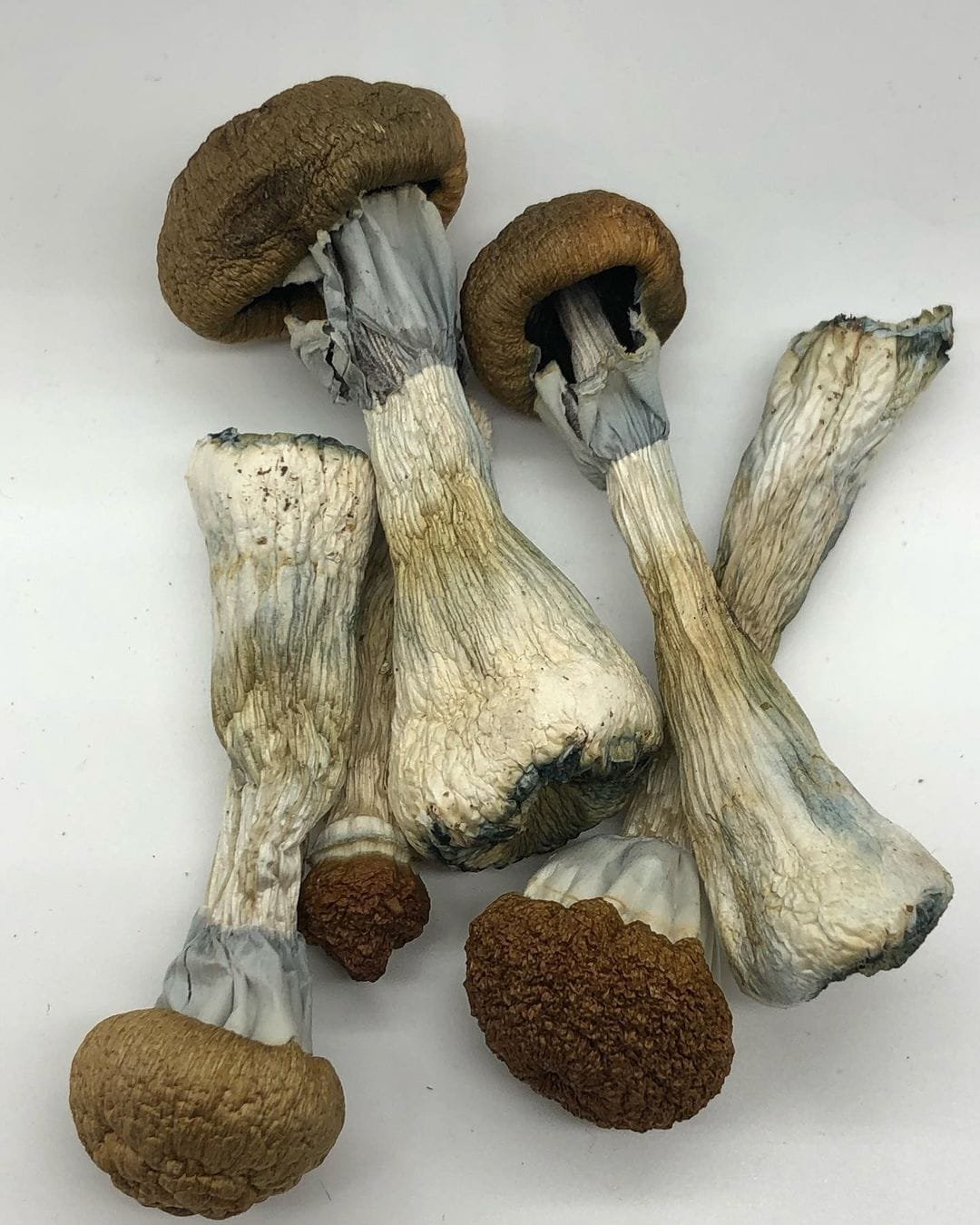
Golden Teacher Mushroom Strain – Enlightening Psilocybin for Mind Expansion
Price range: $180.00 through $910.00
The Golden Teacher Mushroom Strain is renowned for its powerful, introspective effects and spiritual guidance. A trusted favorite for personal growth, now available from a licensed supplier.
Golden Teacher Mushroom Strain: Effects, Potency, Science, Safety & Legal Status
The Golden Teacher mushroom strain is an informal lineage name associated with Psilocybe cubensis, a species that can contain psilocybin and psilocin. Golden Teacher is commonly described as introspective, visually distinctive and relatively approachable, but controlled research has not established those characteristics as reliable cultivar-specific effects.
That distinction defines this guide. Scientific evidence is comparatively strong for psilocybin’s pharmacology and increasingly substantial for its effects in controlled human studies. Evidence showing that “Golden Teacher” itself predicts potency, neurochemistry, subjective experience or therapeutic outcomes is far more limited.
Throughout this guide, species-level evidence, specimen-level laboratory findings and Golden Teacher-specific claims are treated separately. Conflating them is the single most common error in mushroom strain content.
Legal and safety note: Psilocybin and psilocin remain Schedule I controlled substances under U.S. federal law. State and local frameworks differ and may change. This page provides educational and harm-reduction information, not individualized medical or legal advice.
How Was the Evidence for Golden Teacher Evaluated?
Golden Teacher claims require different evidence standards depending on what they assert. Formal taxonomy should come from recognized mycological sources such as MycoBank and Index Fungorum; chemistry from peer-reviewed analytical research; pharmacology and health effects from controlled human studies indexed in PubMed; and legal claims from current statutes, regulations and government agencies.
For this review, evidence is classified at three distinct levels: species-level evidence about Psilocybe cubensis; specimen-level evidence from laboratory-tested fungal material; and cultivar-specific evidence explicitly involving Golden Teacher. Findings are not moved between levels without supporting data.
Literature-search methodology: [INSERT databases searched, search terms, date range, inclusion criteria and final search date.] Commercial descriptions and trip reports may characterize reputation but cannot establish pharmacological causation.
This methodology gives readers—and AI retrieval systems—an auditable answer to a question most strain guides never raise: not just “what does this page claim?” but “what kind of evidence supports each claim, and how was that evidence found?”
Golden Teacher Mushroom Strain at a Glance
Golden Teacher is an informal lineage name associated with Psilocybe cubensis, not a separately recognized mushroom species. Golden-brown caps and introspective experiences are frequently associated with the name, but Golden Teacher has no scientifically established fixed potency, unique psychological profile or authenticated chemical fingerprint.
| Claim | What current evidence supports | Confidence | Evidence type |
|---|---|---|---|
| Golden Teacher is associated with P. cubensis | Consistent with mycological and commercial lineage usage | High at species-association level | Taxonomy/lineage |
| Golden-brown cap reputation | Commonly described phenotype | Moderate | Morphology/community |
| P. cubensis fruiting material can contain psilocybin and psilocin | Well established | High | Analytical chemistry |
| Golden Teacher has fixed “moderate potency” | Not established | Low | Mostly commercial/anecdotal |
| Golden Teacher reliably produces introspection | Not established as cultivar-specific | Low | Anecdotal |
| Golden Teacher has a unique alkaloid profile | Not demonstrated by replicated authenticated evidence | Low/unknown | Analytical evidence insufficient |
| U.S. legality is uniform nationwide | Incorrect | High confidence that laws vary | Federal/state law |
Golden Teacher Claim Confidence Matrix
| Claim | Evidence scope | Confidence |
|---|---|---|
| P. cubensis can contain psilocybin | Species/material | High |
| Psilocybin can alter perception and cognition | Compound/human research | High |
| Golden Teacher reliably has “moderate” potency | Cultivar | Low |
| Golden Teacher uniquely produces introspection | Cultivar | Low |
| A tested Golden Teacher specimen contained a measured compound concentration | Tested specimen only | Depends on assay quality |
| Golden Teacher treats depression or anxiety | Cultivar/clinical | Unsupported by Golden Teacher-specific trials |
The governing rule for this guide: what science establishes about Psilocybe cubensis or psilocybin should not automatically be treated as a unique Golden Teacher characteristic. Research showing that psilocybin affects perception is evidence about psilocybin. An assay measuring a Golden Teacher-labeled mushroom describes the specimen tested. Neither proves that Golden Teacher has a unique potency, psychological profile or therapeutic effect.
What Is Golden Teacher, and Is It Really a Distinct Strain?
Golden Teacher is commonly called a P. cubensis “strain,” but that word carries a looser meaning in mushroom cultivation communities than in formal taxonomy. The more precise description is an informal cultivated lineage or cultivar name—unless specific genetics and provenance have actually been characterized, which for most commercial Golden Teacher material they have not.
Golden Teacher vs Psilocybe cubensis: Species, Cultivar and “Strain”
Psilocybe cubensis is the species. Golden Teacher, Penis Envy and B+ are names used for lineages or phenotypes selected and propagated within that species—not separately recognized taxa.
Formal fungal taxonomy establishes recognized taxa through scientific nomenclature and peer review. Commercial cultivar labels do something different and less rigorous: they help communities distinguish material based on provenance, selection history or recognizable phenotypes. The two systems should not be conflated.
“Psilocybe cubensis Golden Teacher” is not a formally recognized separate species simply because the phrase appears consistently across retail and community websites. MycoBank’s P. cubensis record and Index Fungorum are the appropriate starting points for formal taxonomic questions.
What Is Known About Golden Teacher’s Origin?
The precise historical origin of Golden Teacher is less securely documented than most commercial histories imply. Accounts commonly place its emergence in cultivation communities several decades ago, but those discovery stories should not be repeated as historical fact without contemporaneous records.
A persuasive provenance claim should identify the original collector or breeder, document a specific date and location, provide contemporary records and establish a traceable connection between historical and present-day material. Most Golden Teacher origin stories fail several of those tests.
Until that documentation exists, “origin uncertain” is more accurate than an elaborate but poorly sourced discovery story.
Why Is It Called “Golden Teacher”?
The name is commonly attributed to the mushroom’s golden-toned cap and its longstanding reputation for introspective, “teaching” experiences. The explanation is plausible and widely repeated—but repetition across forums and vendor pages should not be mistaken for documented naming history.
“Teacher” reflects a subjective cultural reputation. It is not evidence that Golden Teacher produces insight more reliably than another P. cubensis lineage.
What Do Golden Teacher Mushrooms Look Like?
Commonly cited Golden Teacher identification features include golden-to-caramel cap coloration and morphology broadly consistent with P. cubensis. Appearance alone cannot authenticate Golden Teacher genetics or safely identify an unknown mushroom—a limitation with genuine safety implications.
Cap, Stem, Gills and Annulus
In mycological terminology, the cap is the pileus and the stem is the stipe. P. cubensis specimens develop gills—the spore-producing hymenium beneath the cap—and may retain an annulus, the ring left by the partial veil as the cap expands.
Golden Teacher descriptions frequently emphasize a yellow-gold to caramel pileus with a paler stipe, but phenotype varies with development stage, genetics and growing conditions. A gold cap does not make a specimen Golden Teacher.
What Do Psilocybe cubensis Spores Look Like?
P. cubensis produces dark purplish-brown spore deposits. Microscopic morphology can contribute to taxonomic analysis when interpreted alongside other morphological characteristics by someone with appropriate mycological training.
[MYCOLOGICAL REFERENCE: insert authoritative P. cubensis microscopic measurements and source.]
A commercial Golden Teacher spore label does not, by itself, establish a uniquely identifiable spore morphology distinct from other P. cubensis material.
See our [spore biology and microscopy guide] for species-level terminology.
Does Blue Bruising Prove a Mushroom Is Golden Teacher?
No. Blue bruising cannot establish Golden Teacher lineage, safely identify an unknown mushroom or provide a quantitative measure of potency.
Research has investigated the enzymatic processes responsible for blue coloration after tissue injury in certain psilocybin-containing fungi. Work by Lenz et al. published in Angewandte Chemie identified the oxidative cascade responsible for this coloration, connecting it to psilocin-related compounds—but not to cultivar identity or alkaloid concentration. The mechanism is scientifically relevant; it is not diagnostically reliable.
Practical takeaway: never treat bluing alone as proof of species identity, edibility, potency or Golden Teacher authenticity.
Visual recommendation: use an expert-verified morphology plate showing pileus, hymenium, stipe, annulus and bruising response. Caption: “Educational morphology only; not a stand-alone field-identification guide.” Alt text example: “Blue discoloration on injured Psilocybe cubensis tissue, illustrating oxidative color change.”
How Potent Is the Golden Teacher Mushroom Strain?
There is no scientifically established universal potency value for the Golden Teacher mushroom strain. Laboratory measurements can characterize the specimens actually tested, but a result from one Golden Teacher sample should not automatically extend to every specimen sold under that informal cultivar name.
Psilocybin, Psilocin, Baeocystin and Related Compounds
Psilocybe cubensis can contain psilocybin, psilocin and related tryptamines. Analytical work by Pellegrini et al. using liquid chromatography-mass spectrometry detected psilocybin, psilocin, baeocystin and norbaeocystin across Psilocybe specimens, with measurable variation across samples.
The crucial question remains quantitative: does Golden Teacher consistently carry a particular concentration or compound ratio? A defensible answer requires replicated chemical testing across appropriately authenticated material—not figures averaged from strain-ranking websites.
Why Can Alkaloid Measurements Differ Between Samples?
Analytical studies can report different concentrations across fungal samples for reasons including biological variation between specimens, genetics, storage conditions, harvest timing and the laboratory method used. Statements such as “Golden Teacher contains exactly X% psilocybin” are therefore misleading unless that figure refers to clearly identified laboratory material tested with a disclosed method.
A single laboratory result can be useful specimen-level evidence. It is not a cultivar-wide average.
Does Golden Teacher Have a Unique Alkaloid Profile?
No unique Golden Teacher alkaloid profile should currently be assumed without replicated analyses of authenticated material. Finding psilocybin, psilocin or minor tryptamines in one Golden Teacher-labeled sample establishes information about that sample—not a permanent chemical fingerprint for the cultivar. This is especially important when evaluating Golden Teacher strain potency claims marketed with apparent numerical precision.
Is an “Entourage Effect” Established for Golden Teacher?
No. Chemical coexistence does not demonstrate pharmacological interaction. An entourage effect would require evidence that other constituents meaningfully modify psilocybin’s effects in humans—a substantially higher evidentiary bar than noting that multiple compounds can be detected in the same specimen.
Baeocystin should not be described as a proven “spiritual” or “entourage” modulator without supporting human evidence. Doing so converts an interesting hypothesis into a settled fact it has not earned.
How Does Psilocybin Affect the Brain?
Psilocybin is converted to pharmacologically active psilocin, which interacts with serotonin receptors—particularly 5-HT2A receptors. Human research connects psychedelics with changes in perception, cognition and large-scale brain-network organization. None of those mechanisms are unique to Golden Teacher.
How Psilocybin Becomes Psilocin
Psilocybin undergoes dephosphorylation to form psilocin, the principal pharmacologically active compound responsible for classic psychedelic effects. The pathway is direct:
Psilocybin → dephosphorylation → psilocin → serotonergic receptor activity.
See our [psilocybin pharmacology guide] for the underlying pharmacokinetics, and the National Institute on Drug Abuse’s psilocybin overview for accessible context.
How Does Psilocin Interact With Serotonin 5-HT2A Receptors?
Psilocin interacts with multiple serotonin receptor subtypes. Its activity at the serotonin 5-HT2A receptor is central to the characteristic subjective effects of classic psychedelics, as established by pharmacological and human experimental research. Nichols (2016), writing in Pharmacological Reviews, provides a detailed account of this mechanism and its relationship to psychedelic phenomenology.
The popular account that psychedelics simply “increase serotonin” is therefore inaccurate. The relevant biology involves specific receptor interactions and downstream changes in neural signaling and network organization—not a serotonin-level switch.
This pharmacology is evidence about psilocin and classic psychedelic mechanisms. It does not establish a Golden Teacher-specific neurological mechanism.
What Happens to Functional Brain Connectivity and the Default Mode Network?
Human neuroimaging studies of psilocybin have reported changes in functional connectivity and large-scale network organization, including findings involving the Default Mode Network—a set of regions associated with internally directed and self-referential cognition.
Carhart-Harris et al. published findings on psilocybin’s effects on functional brain connectivity in PNAS, describing altered network communication patterns. The specific patterns observed depend on the experimental design, imaging method, timing and analysis approach.
The popular phrase “psilocybin turns off the ego network” is too simplistic. Psychedelic states involve complex changes across interacting brain systems, not a single network switch.
These findings concern psilocybin administration under controlled conditions, not Golden Teacher as a distinct cultivar.
What Does “Ego Dissolution” Mean Scientifically?
Ego dissolution is a subjective phenomenon involving an altered or diminished sense of the ordinary boundary between self and environment. Researchers can measure aspects of it through validated self-report instruments, including the Mystical Experience Questionnaire used in several Johns Hopkins studies.
It is not synonymous with enlightenment. An intense alteration in self-experience can be pleasant, revelatory, confusing or deeply distressing—sometimes within a single session. Treating the phenomenon as inherently therapeutic misrepresents both the research and the experience.
What Effects Are Commonly Reported With Golden Teacher?
Golden Teacher strain effects are commonly described as introspective, emotional, visual and philosophically oriented. Those themes characterize the cultivar’s cultural reputation. We did not identify controlled research establishing that Golden Teacher produces them more reliably than other P. cubensis lineages under otherwise equivalent conditions.
Cognitive and Emotional Effects
Golden Teacher trip reports commonly describe altered thought patterns, introspection, emotional intensity, shifts in personal perspective and feelings of connection or meaning. General psilocybin research—including work published in Neuropsychopharmacology and PNAS—establishes that substantial changes in perception, mood and cognition can occur under controlled conditions. It does not establish that Golden Teacher genetics independently create especially reflective or “wise” thinking.
Visual and Sensory Effects
Psilocybin experiences can involve changes in color perception, pattern recognition, visual organization, sensory salience and time perception. These are more accurately described as general psychedelic effects than unique Golden Teacher properties—at least until cultivar-specific evidence changes that picture.
Physical Effects
Acute psilocybin exposure can involve nausea and other physical sensations. Research has also reported physiological effects including changes in pupil diameter and cardiovascular measures under controlled conditions.
The absence of severe toxicity in a screened clinical population should not be generalized into a claim that uncontrolled use is risk-free.
Are Golden Teacher’s “Spiritual” Effects Actually Unique?
No controlled evidence currently establishes Golden Teacher as uniquely spiritual. Psilocybin itself can occasion experiences that research participants characterize as mystical or personally significant—findings documented in studies by Griffiths et al. at Johns Hopkins—but those results concern psilocybin the compound, not any particular cultivar delivering it.
The three-tier framework applies here with particular clarity:
- Established: psilocybin can produce profound alterations in subjective experience.
- Reported: Golden Teacher has a strong introspective, “teacher-like” cultural reputation.
- Unknown: whether Golden Teacher genetics independently increase the probability of spiritual insight compared to another P. cubensis lineage.
What Are Golden Teacher’s Commonly Cited Advantages and Limitations?
Golden Teacher’s appeal is driven largely by its longstanding cultural reputation and recognizable name. Those qualities can be meaningful to people researching P. cubensis lineages, but they should not be confused with scientifically demonstrated benefits.
| Commonly cited appeal | Important limitation |
|---|---|
| Introspective reputation | Not established as a unique cultivar effect |
| Recognizable lineage name | Naming is not formally standardized |
| Extensive community history | Community observations are uncontrolled |
| Familiar golden-cap phenotype | Appearance cannot authenticate lineage |
| Frequently described as approachable | Individual response and chemical exposure remain variable |
| Common microscopy interest | Legal treatment varies by jurisdiction |
For anyone evaluating commercial or community information, this table produces a useful decision rule: favor documentation and accurate claims over superlatives. The stronger a seller’s promise about potency, psychological effects or therapeutic outcomes, the stronger the evidence required to support it.
How Does Golden Teacher Compare With Penis Envy and B+?
Golden Teacher, Penis Envy and B+ are all informal names for P. cubensis lineages. They carry different community reputations and morphological associations, but comparisons should not convert individual laboratory results or trip reports into universal cultivar specifications.
| Cultivar | Species | Morphological reputation | Common experience reputation | Chemical evidence | Evidence for unique subjective effects |
|---|---|---|---|---|---|
| Golden Teacher | P. cubensis | Golden/caramel cap | Introspective, balanced | Sample-specific | Low |
| Penis Envy | P. cubensis | Unusual thick-bodied phenotype | Intense | Some tested specimens may show higher concentrations; source each dataset | Low |
| B+ | P. cubensis | Conventional cubensis morphology | Balanced/easygoing | Sample-specific | Low |
Golden Teacher vs Penis Envy
Golden Teacher vs Penis Envy comparisons frequently claim that Penis Envy is dramatically stronger. Some analytical datasets contain Penis Envy specimens with relatively high measured alkaloid concentrations—but that is different from establishing a fixed potency multiplier between two informal cultivar names. A result from one specimen cannot be projected onto an entire loosely defined lineage.
Morphology offers a more verifiable comparison point, since Penis Envy is associated with a physically distinctive phenotype. Subjective characterizations—”Golden Teacher is spiritual; Penis Envy is visceral”—remain primarily anecdotal.
Golden Teacher vs B+
Golden Teacher and B+ share the same parent species and both carry longstanding community reputations. B+ is often marketed as accessible or balanced; Golden Teacher is commonly described as reflective. Neither adjective translates into a predictable pharmacological outcome for a specific person at a specific dose.
See our [B+ strain evidence profile].
Which Differences Are Scientifically Established?
The strongest evidence differentiating P. cubensis cultivars comes from documented morphology, genetics where available, and chemical measurements of specific authenticated specimens. Evidence that cultivar labels independently determine subjective categories such as “spiritual,” “social” or “visual” is substantially weaker.
Three questions to apply when comparing cultivars: What does the label establish about provenance? What did a laboratory actually measure, using which method? What does independent scientific literature establish independent of that label?
Can a Golden Teacher Dosage Guide Reliably Predict an Experience?
No. A dosage guide based only on mushroom weight cannot reliably predict a person’s experience because whole-mushroom active-compound concentrations vary substantially and individual responses vary further. Controlled clinical research standardizes psilocybin exposure far more precisely than an informal cultivar label can.
Why Isn’t Mushroom Weight the Same as a Psilocybin Dose?
Weight describes how much fungal material is present. It says nothing about the concentration of psilocybin or psilocin in that material. Two same-weight specimens need not contain equivalent amounts of active compounds—and a scale that reads mass accurately still leaves the chemistry unknown.
This is why a strain-specific gram chart creates false precision: it looks like a dose calculation while leaving the most important variable unmeasured.
What Factors Affect Psychedelic Intensity?
Relevant variables include active-compound concentration, individual physiology, psychological state, expectations, physical surroundings, medications and other substances. The cultivar name cannot control any of those factors. Even perfect genetic authentication would therefore not make an individual experience reliably predictable.
Why Do “Beginner,” “Heroic” and “Therapeutic Dose” Labels Need Caution?
“Beginner-friendly” implies a level of predictability that whole-mushroom material cannot deliver. “Heroic dose” is cultural terminology, not a clinical safety category. “Therapeutic” should not be attached to a self-administered amount simply because clinical researchers study psilocybin.
Clinical trials employ defined protocols, systematic screening, standardized psilocybin preparations and structured support. Assigning a gram amount to an informal Golden Teacher label reproduces none of that.
How Long Do Golden Teacher Effects Last?
Golden Teacher does not have a scientifically established cultivar-specific duration. Controlled studies of oral psilocybin generally describe acute effects lasting several hours, but timing varies with the administered compound, dose and individual factors—not with the cultivar name.
What Do Clinical Studies Say About Onset and Duration?
Griffiths et al. (2006), published in Psychopharmacology, documented psilocybin sessions lasting approximately eight hours under controlled conditions, with variation across participants and dose levels. Any specific duration range should be attached to the clinical study from which it was derived rather than presented as a Golden Teacher-specific timeline.
Population averages should never function as a countdown to driving or any other hazardous activity. Individual impairment may not follow the average time course.
Why Do Individual Timelines Differ?
Pharmacokinetic and subjective timelines are both variable. Active-compound concentration and individual physiology shape the pharmacokinetic side; psychological context can alter the subjective experience of time itself. A Golden Teacher trip duration reported by one person is therefore not a reliable schedule for someone else.
What Is an “Afterglow”?
“Afterglow” is an informal term for positive mood, clarity or connectedness that some people report after the primary acute state has resolved. It should not be treated as evidence of a defined biological recovery period, a neuroplasticity window or a therapeutic endpoint—three things it is routinely conflated with.
Visual recommendation: display a clinically sourced approximate psilocybin time course, clearly labeled “not Golden Teacher-specific; individual variation expected.”
What Does Research Say About Golden Teacher Microdosing?
There is no strong evidence that Golden Teacher is uniquely effective for microdosing. Research on psychedelic microdosing remains active and genuinely unsettled, and controlled studies have raised important questions about expectancy effects that complicate the confident claims common in microdosing communities.
What Is Psychedelic Microdosing?
Microdosing generally refers to repeated exposure to a small amount of a psychedelic intended to remain below the threshold for a full psychedelic experience. Popular protocols are widely discussed. Popularity is not evidence that a specific schedule improves creativity, depression, productivity or cognition.
What Have Placebo-Controlled Microdosing Studies Found?
Controlled microdosing studies have produced a more complicated picture than testimonials suggest. Szigeti et al. (2021), published in eLife, conducted a self-blinding placebo-controlled study and found that reported improvements were consistent with expectation effects rather than a distinct pharmacological signal. Other studies have reported subjective changes, but the picture remains unresolved.
The distinction between observational self-reports and randomized blinded evidence matters considerably here—and most widely circulated microdosing claims rely on the former.
See our [microdosing evidence review].
Is Golden Teacher Uniquely Good for Microdosing?
No cultivar-specific evidence establishes Golden Teacher as superior for microdosing. Claims that it uniquely improves creativity, concentration, mood or emotional regulation should be treated as unverified until appropriate comparative research addresses the question directly.
What Are the Risks and Harm-Reduction Considerations?
Psilocybin can cause anxiety, panic, confusion, nausea, impaired judgment and major perceptual changes. Risk depends on the person, the active-compound exposure and the circumstances. Golden Teacher’s cultural reputation for being introspective or approachable does not reduce those risks for the next person.
Psychological and Physical Risks
A psychedelic experience can become frightening or disorienting without warning. Altered perception and judgment create secondary hazards around vehicles, heights, water and other dangerous environments. Johnson et al. (2008), writing in Psychopharmacology, proposed widely cited safety guidelines for psilocybin research administration that address both psychological preparation and situational risk management.
Some psychiatric and medical histories raise additional concerns that a strain review cannot adequately address. Adverse effects observed in carefully screened clinical populations should not be assumed to describe the risk profile of unsupervised use.
What Do “Set and Setting” Mean?
“Set” refers broadly to a person’s psychological state, expectations and intentions. “Setting” refers to the physical and social environment. Clinical psychedelic research pays careful attention to both. A comfortable environment can reduce certain situational risks; it cannot guarantee a positive outcome or eliminate pharmacological risk.
What Is the Role of Sober Support?
A sober, trusted person may reduce situational risk by recognizing emerging hazards, helping someone access medical assistance and preventing escalation when the impaired person becomes confused or distressed. Sober support is not a substitute for medical care when severe symptoms or immediate danger arise.
What Should Someone Do During Severe Distress?
Immediate safety takes priority. Move away from traffic, water, heights and other hazards; do not drive or operate machinery; seek sober assistance; obtain professional medical help when symptoms are severe or safety cannot be maintained.
In the United States, Poison Control provides guidance at 1-800-222-1222. Call 911 for a medical emergency, loss of consciousness, dangerous behavior or any immediate threat to safety.
What About Medications, Psychiatric Conditions and Medical Risk?
Drug interactions involving psychedelics are more complicated than claims like “SSRIs block mushrooms” suggest. Effects depend on the specific medication, duration of treatment, individual physiology and other factors. People should not discontinue prescribed psychiatric medication in an attempt to modify a psychedelic experience—medication changes belong with a qualified prescriber.
See our [psychedelic drug-interaction guide] and consult an appropriate clinician for individualized guidance.
Are Golden Teacher Mushrooms Proven to Treat Depression or Anxiety?
No. Research provides evidence that psilocybin administered under defined clinical conditions may have therapeutic potential for certain conditions. Those results do not establish Golden Teacher mushrooms as an approved or independently proven treatment for depression, anxiety or any other condition.
What Do Clinical Psilocybin Trials Actually Study?
Contemporary trials investigate standardized psilocybin within carefully designed research settings. Participants are screened, the intervention is controlled and measured, outcomes are assessed systematically, and psychological support is typically integrated into the protocol.
Griffiths et al. (2016) published a randomized controlled trial in Psychopharmacology examining psilocybin for existential distress in life-threatening cancer diagnosis, reporting significant reductions in depression and anxiety at specific doses. Davis et al. (2021) published findings on psilocybin for major depressive disorder in JAMA Psychiatry. Both studies used standardized psilocybin under defined protocols with psychological support—not informal fungal cultivars with variable chemistry.
The Johns Hopkins Center for Psychedelic and Consciousness Research provides a curated summary of current clinical research for further reference.
Why Can’t Clinical Psilocybin Results Be Assigned to Golden Teacher?
A trial of standardized psilocybin establishes something about a defined intervention under a specific protocol—not about an informal fungal cultivar with variable chemistry used outside that protocol.
The evidence error to avoid is direct:
Clinical psilocybin trial result ≠ evidence that Golden Teacher mushrooms treat the same condition.
This distinction matters for both accuracy and safety. A promising clinical literature should not be converted into a self-treatment claim that researchers themselves did not test and would not endorse.
When Should Someone Seek Professional Mental-Health Care?
Persistent depression, severe anxiety, mania, psychosis, suicidal thoughts or significant functional deterioration warrant professional attention—regardless of interest in psychedelic research.
In the United States, people experiencing a mental-health or suicidal crisis can call or text 988 to reach the 988 Suicide & Crisis Lifeline. Immediate danger requires emergency services.
What Does Post-Psychedelic “Integration” Mean?
Psychedelic integration generally refers to reflection and support after an experience—making sense of what happened and reconnecting with ordinary life. It is not proof that an experience produced therapeutic change, and there is no universally established Golden Teacher integration protocol.
What Can Integration Claim?
A person can find an experience meaningful without assuming that every interpretation formed during an altered state is objectively accurate. Reflection, normal routines and appropriate follow-up can provide useful context after an intense experience. Where psychological difficulties persist, professional care is more appropriate than relying exclusively on an “integration coach.”
Is There Really a Fixed 72-Hour Neuroplasticity Window?
No. A universal 72-hour human neuroplasticity window is not an established scientific fact.
Psychedelic neuroplasticity is a genuinely active research area. Castrén and Bhattacharya (2019), writing in Trends in Neurosciences, reviewed neuroplasticity mechanisms in the context of psychiatric treatments, providing useful context for distinguishing preclinical from human evidence. Translating those findings into an exact period during which every person can “rewire” their brain overstates what current evidence can support—and that overstatement is common enough to warrant naming directly.
What Does Responsible Follow-Up Look Like?
Follow-up should reflect the person’s actual needs rather than an arbitrary post-experience deadline. Persistent distress, significant mood changes or functional impairment warrant evaluation by a qualified health professional.
What Is Known About Golden Teacher Genetics and Mycology?
“Golden Teacher” is widely used as a P. cubensis lineage or cultivar name, but it is not governed by a formal taxonomic or universally recognized cultivar registry that guarantees every material carrying the label is genetically equivalent. Provenance, phenotype and genetic identity should therefore be treated as separate questions.
Spores, Hyphae, Mycelium and Phenotypes
Spores are reproductive structures in the basidiomycete life cycle. After germination under compatible conditions, fungal hyphae develop; interconnected hyphae form the mycelium involved in nutrient acquisition and fruiting body development. The complete P. cubensis life cycle involves additional biological complexity—including nuclear compatibility stages—beyond this simplified overview.
Phenotype describes observable characteristics arising through interactions between genetics and environment. Two specimens sharing related genetics may therefore display different appearance or behavior depending on growing conditions.
See our [fungal genetics guide] and Index Fungorum’s Psilocybe cubensis record for the underlying biology and taxonomy.
Can Appearance Verify Golden Teacher Genetics?
No. Golden cap coloration, a particular stipe shape or other visible characteristics can appear across P. cubensis material generally. When lineage authentication genuinely matters, documented provenance and appropriately interpreted genetic evidence carry substantially more weight than marketing photographs.
Are Fast Growth and Contamination Resistance Verified Golden Teacher Traits?
Golden Teacher is associated in cultivation communities with favorable growth characteristics, but those claims require controlled comparisons before qualifying as stable, cultivar-specific traits. A proper comparison needs authenticated starting material, standardized growing conditions, sufficient replication and predefined outcome measures—conditions that community reports do not satisfy.
Are Golden Teacher Spores Legal in the United States?
There is no reliable evergreen one-line answer for every U.S. jurisdiction. Federal controlled-substance law, state statutes and local reforms can address different materials and activities differently. Psilocybin-containing fungal tissue, spores, possession, transfer, cultivation and regulated services should be treated as separate legal questions.
Legal information last verified: [ACTUAL DATE.]
Federal source checked: [CONTROLLED SUBSTANCES ACT/DEA SOURCE.]
State sources checked where discussed: [OREGON OFFICIAL SOURCE], [COLORADO OFFICIAL SOURCE.]
What Is the Federal Status of Psilocybin and Psilocin?
Psilocybin and psilocin are listed as Schedule I controlled substances under the Controlled Substances Act, administered by the U.S. Drug Enforcement Administration. Current federal information should be verified through official DEA sources and applicable statutes rather than commercial summaries.
The chemical characteristics of spores do not by themselves establish that possession, transfer or another activity is lawful under every applicable state or local rule.
Why Do Spores and Fruiting Material Raise Different Legal Questions?
Spores and mature fungal material are biologically and chemically distinct, and laws can distinguish among substances, biological materials and specific activities. A statement like “Golden Teacher spores are legal in 47 states” should not be treated as current or comprehensive legal guidance—static state counts become outdated and routinely omit material legal distinctions.
What About Oregon, Colorado and Local Reforms?
Oregon and Colorado have established meaningfully different frameworks. Oregon Health Authority’s Psilocybin Services program established a regulated framework requiring licensed facilitators and structured supervised experiences. Colorado’s Natural Medicine Health Act, administered through the Colorado Department of Revenue’s Natural Medicine Division, created a distinct regulatory structure with different provisions. Local governments elsewhere have adopted varying enforcement or decriminalization policies.
The legal vocabulary matters: “decriminalized” does not mean commercially legal; “regulated access” does not mean unrestricted retail availability; personal-use provisions differ from licensed-service rules. These distinctions have practical consequences.
How Can You Check Current State Law?
Start with official state statutes and agencies. Identify specifically what is being asked about—spores, psilocybin itself, possession, sale, regulated services or another activity. Then verify the effective date. Psychedelic policy is changing quickly enough that an undated legal map has limited practical value.
How Should You Evaluate Golden Teacher Spores or Microscopy Claims?
For lawful microscopy or taxonomy-related material, a credible claim uses accurate species terminology, describes provenance without overstating it, provides appropriate quality information and avoids promising fixed potency or predictable psychological effects. A Golden Teacher spore syringe label alone cannot authenticate every claim about lineage or chemistry.
What Makes a Research-Material Claim Credible?
Useful indicators include transparent species labeling, documented provenance where available, clear legal disclosures, appropriate microscopy terminology and quality-control information relevant to the actual material. Claims should stay within what the material can establish: spores intended for microscopy do not constitute evidence that hypothetical mature fruiting material would carry a particular potency or produce a particular experience.
Can a Seller Prove “Authentic Golden Teacher” From Appearance?
No. Photographs can document visible characteristics; they cannot establish a complete chain of genetic provenance. Claims of authenticity should be evaluated against the actual evidence supplied—not against the confidence of the marketing language describing them.
What Are the Biggest Marketing Red Flags?
Be skeptical of fixed potency guarantees, promised therapeutic outcomes, claims of scientifically proven spiritual effects, “genetic purity” language without supporting documentation and undated legal assurances.
A related red flag is false precision: an exact potency percentage or performance score without an accompanying laboratory report, specimen identity, analytical method and date is not evidence—it is decoration that resembles evidence.
→ Use our [microscopy-material evaluation checklist] and [current legal-reference guide] when assessing research-material claims.
What Are the Most Common Golden Teacher Myths and Mistakes?
The most persistent mistake is treating an informal cultivar reputation as though it were a standardized pharmacological specification.
| Myth | More accurate interpretation | Evidence level |
|---|---|---|
| Golden Teacher always produces spiritual insight | Spiritual/introspective effects are part of its reputation, not a guaranteed cultivar effect | Anecdotal |
| Golden Teacher has fixed potency | Chemical concentration is sample-dependent | Established limitation |
| Golden caps prove Golden Teacher identity | Morphology alone cannot authenticate lineage | High confidence |
| Blue bruising measures potency | Bruising is not a quantitative potency test | High confidence |
| Golden Teacher is “beginner safe” | Individual response and sample potency remain variable | High confidence |
| Microdosing benefits are proven | Controlled evidence is mixed and developing | Preliminary |
| Psilocybin trials prove Golden Teacher treats depression | Clinical psilocybin and Golden Teacher are different interventions | High confidence |
| Decriminalization means legalization | These are legally distinct concepts | High confidence |
| Spore law is identical nationwide | State and local rules can differ substantially | High confidence |
| One assay establishes the cultivar’s chemistry | An assay primarily characterizes the tested specimens | High confidence |
What Are the Best Practices for Evaluating Golden Teacher Information?
The most reliable approach separates cultivar labels, laboratory measurements and scientific literature—because each answers a different question, and conflating them is responsible for most exaggerated Golden Teacher claims.
Use the Label–Laboratory–Literature Framework
Label: What does “Golden Teacher” tell you about claimed provenance?
Laboratory: What did chemical or genetic testing establish about the actual specimen analyzed?
Literature: What has independent research demonstrated beyond that individual specimen?
In practice: a laboratory could measure a high psilocybin concentration in a Golden Teacher-labeled specimen. That supports “this specimen tested high.” It does not support “Golden Teacher is a high-potency strain”—a claim that would require replicated measurements across authenticated material from multiple independent sources.
Check Source Quality and Conflicts of Interest
A useful source hierarchy:
Primary controlled research and official records → systematic scientific reviews → recognized taxonomic databases → documented analytical testing → expert commentary → community reports → commercial marketing.
Lower-ranked sources are not useless; they simply answer different questions with different levels of confidence. The problem is when commercial marketing occupies the top of that hierarchy by default.
Check the Date
Legal claims should carry a recent verification date tied to official sources. Scientific claims should identify the specific paper rather than vaguely invoking “recent research.” For cultivar claims, ask whether the evidence actually concerns Golden Teacher or whether general psilocybin findings have simply been relabeled as strain-specific facts.
Frequently Asked Questions About the Golden Teacher Mushroom Strain
What is the Golden Teacher mushroom strain?
Golden Teacher is an informal cultivated-lineage name associated with Psilocybe cubensis. It is commonly linked to golden-toned caps and an introspective subjective reputation. It is not a separate species, and the cultivar name does not guarantee a particular potency or experience.
Is Golden Teacher a separate species?
No. Golden Teacher is associated with the species Psilocybe cubensis. It functions as an informal lineage or cultivar name in mycology and cultivation communities, not a separately recognized species in formal fungal taxonomy.
Does Golden Teacher contain psilocybin?
Fruiting material associated with P. cubensis can contain psilocybin, but the concentration is not fixed by the Golden Teacher name. A laboratory assay measures the specimens analyzed; it does not establish a universal Golden Teacher psilocybin concentration. The amount in any specific specimen requires direct measurement.
Why is it called Golden Teacher?
The name is commonly attributed to the lineage’s golden-toned cap and its longstanding community reputation for introspective or “teaching” experiences. The explanation is plausible and widely repeated, but the precise historical naming origin should not be presented as documented fact without a reliable contemporary source.
Is Golden Teacher the same as Psilocybe cubensis?
Golden Teacher is not synonymous with the entire species. Psilocybe cubensis is the formally recognized species; Golden Teacher is an informal lineage or cultivar name associated with material within that species—a meaningful distinction for both taxonomy and evidence evaluation.
How strong are Golden Teacher mushrooms?
There is no universal Golden Teacher potency value. Chemical measurements vary among specimens, and laboratory findings from individual samples should not be generalized to everything carrying the Golden Teacher label. Any specific potency figure requires a named specimen, disclosed analytical method and adequate replication.
Is Golden Teacher stronger than Penis Envy?
There is no fixed scientific potency multiplier between Golden Teacher and Penis Envy. Some tested Penis Envy specimens may show relatively high alkaloid concentrations, but individual analytical results do not establish that every Penis Envy specimen is a predetermined amount stronger than every Golden Teacher specimen.
How long can Golden Teacher effects last?
Golden Teacher is expected to follow the multi-hour time course associated with oral psilocybin, but duration varies with active-compound exposure and individual factors. There is no Golden Teacher-specific timeline, and population averages should not be used to determine when driving or other hazardous activities are safe.
Is Golden Teacher good for beginners?
Golden Teacher is frequently marketed as beginner-friendly, but that framing can generate false confidence. A cultivar name does not guarantee potency, emotional response or psychological comfort. “Beginner-friendly” describes a cultural reputation, not a clinical safety classification.
Does Golden Teacher have a unique alkaloid profile?
No replicated, authenticated evidence establishes a universal Golden Teacher alkaloid fingerprint. Individual samples may contain measurable psilocybin, psilocin and related compounds, but findings from one sample should not be generalized across an informally named lineage.
Can Golden Teacher be identified by its golden cap?
No. Golden or caramel cap coloration overlaps with other P. cubensis phenotypes and cannot independently establish Golden Teacher lineage, chemical potency or species identity. Appearance describes a specimen; it does not authenticate it.
Does blue bruising prove potency?
No. Blue bruising is not a quantitative psilocybin test and cannot independently confirm species identity, Golden Teacher authenticity, edibility or safety.
Is Golden Teacher proven to be good for microdosing?
No. Psychedelic microdosing research remains mixed and developing. Placebo-controlled work has identified expectancy as a significant confounder, and no cultivar-specific evidence establishes Golden Teacher as uniquely effective for creativity, mood, productivity or other commonly advertised goals.
Are Golden Teacher spores legal in the United States?
There is no reliable evergreen state-count answer. Federal, state and local rules can treat spores, psilocybin-containing material and specific activities differently. Check current official sources for the applicable jurisdiction rather than assuming a nationwide rule.
How reliable are Golden Teacher trip reports?
Trip reports document genuine individual experiences and reveal recurring themes, but they cannot isolate Golden Teacher genetics as the cause. Potency, expectations, environment, individual biology and other variables are uncontrolled. They are useful for describing cultural reputation; they are weak evidence for cultivar-specific pharmacology.
Is Golden Teacher legal in Oregon or Colorado?
Oregon operates a regulated psilocybin-services framework through the Oregon Health Authority; Colorado has its own Natural Medicine program through the Colorado Department of Revenue. Neither framework constitutes blanket legalization. Check current official program pages for what is specifically permitted, required and prohibited.
Key Takeaways
The Golden Teacher mushroom strain is best understood as an informal lineage associated with Psilocybe cubensis—not a separate species and not a scientifically standardized psychoactive product. Its golden-cap phenotype and introspective reputation are prominent in community descriptions. Fixed potency, unique neurochemistry and reliably “teacher-like” psychological effects are not supported by the current evidence.
Three evidence levels should remain separate:
- Species-level research can establish properties of P. cubensis.
- Laboratory assays can establish properties of the specimens tested.
- Controlled scientific literature can establish broader pharmacological or clinical findings.
None of those should automatically be converted into Golden Teacher-specific claims.
The main conclusions:
- Psilocybe cubensis can contain psilocybin, psilocin and related tryptamines.
- Golden Teacher does not have a scientifically established universal potency value.
- A laboratory measurement should be interpreted as evidence about the specimens actually tested.
- Introspective, spiritual and balanced effects are part of Golden Teacher’s cultural reputation—not proven cultivar-specific pharmacological outcomes.
- Clinical psilocybin findings should not be rebranded as evidence that Golden Teacher treats depression or anxiety.
- Microdosing benefits remain an active research question, not an established Golden Teacher advantage.
- Blue bruising and cap color cannot authenticate the cultivar or quantify potency.
- U.S. federal, state and local psychedelic laws require current, jurisdiction-specific verification.
- Evidence strength and source quality matter more than strain marketing.
For readers evaluating commercial or community information, apply the Label–Laboratory–Literature framework: use labels as provenance claims, laboratory reports as specimen-level evidence and high-quality independent research for broader scientific conclusions.
31 reviews for Golden Teacher Mushroom Strain – Enlightening Psilocybin for Mind Expansion
Add a review
Related products


MAGIC MUSHROOMS


MAGIC MUSHROOMS

MAGIC MUSHROOMS
Blue Meanie Mushrooms – Ultra-Potent Psilocybe Cubensis Strain


MAGIC MUSHROOMS
Psilocybe Baeocystis – Rare Psilocybin Mushroom for Gentle Depth

MAGIC MUSHROOMS
Ronan Sharpe (verified owner) –
Felt deeply connected to the earth.
Jagger Rowland (verified owner) –
Beautiful trip. I felt like I was wrapped in colors and warmth.
Mallory Bright (verified owner) –
The colors and energy were unreal.
Bo St. Clair (verified owner) –
The best blend of mental clarity and sensory wonder.
Isabella Bell (verified owner) –
Everything slowed down, and for once, I didn’t feel rushed or reactive.
Bridget Sweeney (verified owner) –
Each experience brings more peace into my life.
Matthew Thomas (verified owner) –
Product quality was excellent, but what really stood out was the communication and delivery. Felt safe every step of the way.
Amaya Bridges (verified owner) –
Ordering was simple and smooth, and the support I felt during and after my session was something I didn’t expect from a website.
Blaine Kinney (verified owner) –
Shipping was fast and quiet, which I appreciate so much.
Alivia Nash (verified owner) –
Ordering was simple and smooth, and the support I felt during and after my session was something I didn’t expect from a website.
Zachary Baker (verified owner) –
There’s healing, and then there’s supported healing. This was the latter, and I’m so thankful.
Gemma Ramsey (verified owner) –
This was life-shifting, and I’m beyond grateful for how carefully the product was handled.
Sydney Peterson (verified owner) –
From the first click to the last reflection after my session, I felt supported. Customer service responded fast and with care.
Noelle Savage (verified owner) –
This created a perfect space to breathe, think, and just exist — no pressure, no chaos.
Marcus Fleming (verified owner) –
I came out of the experience more honest with myself and more loving toward others.
Macy Durham (verified owner) –
The afterglow lasted for days.
Kassidy Haynes (verified owner) –
Beautiful energy.
Shane Hopkins (verified owner) –
I appreciate how low-key and respectful the process was. It made the emotional journey so much easier to approach.
Dahlia Boone (verified owner) –
Ordering was simple and smooth, and the support I felt during and after my session was something I didn’t expect from a website.
Russell Vaughn (verified owner) –
There’s real wisdom in how this company operates. You can feel it in the care of every step.
Kiara Stanton (verified owner) –
Exactly what I was hoping for—clarity, peace, insight.
Mallory Bright (verified owner) –
No synthetic feeling—just pure nature.
Porter Wynn (verified owner) –
A reliable reset button for the soul.
Stella Hicks (verified owner) –
It’s rare to find a team that combines healing products with customer care like this. I felt safe and valued.
Curtis Potter (verified owner) –
Every step felt respectful, like this wasn’t just about selling something — it was about helping someone reconnect with themselves.
Rodney Little (verified owner) –
I felt more like a person than a customer. That meant more to me than I expected.
Louis Doyle (verified owner) –
It helped me confront something difficult with softness and self-love.
Travis Brooks (verified owner) –
From the discreet box to the powerful clarity during my trip, every part of this journey was handled with intention.
Desmond Cain (verified owner) –
It gave me permission to let go, and what came up was truly eye-opening.
Spencer Wells (verified owner) –
This helped unlock something in me, and the trust I felt toward the provider only deepened the experience.
Alana Lawson (verified owner) –
For the first time in months, I didn’t feel disconnected. I felt real again.