


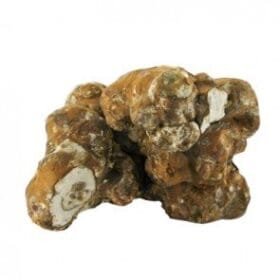
Psilocybe tampanensis – Magic Truffle of Clarity & Insight
Price range: $178.00 through $840.00
Psilocybe tampanensis, also known as the “Philosopher’s Stone,” is a premium magic truffle known for inducing clarity, empathy, and deep inner vision. Licensed & lab-tested.
Psilocybe tampanensis (Philosopher’s Stone): Sclerotia, Identification, Potency, and Science
Psilocybe tampanensis occupies a singular position in psilocybin mycology: formally described by Gastón Guzmán from Florida material collected by Steven H. Pollock in 1977, rarely documented in the wild since, yet now commercially prominent in the Netherlands magic-truffle market—primarily because it produces sclerotia, compact masses of fungal tissue marketed as magic truffles or Philosopher’s Stones.
That commercial prominence has generated a secondary literature dense with claims that deserve direct scrutiny: that sclerotia produce uniquely “clear” or analytical effects distinct from other psilocybin sources, that P. tampanensis carries a fixed potency advantage over Psilocybe cubensis, and that the “Philosopher’s Stone” label reflects something biologically meaningful rather than a marketing convention.
None of these claims is established by strong scientific evidence.
What is established: P. tampanensis produces sclerotia containing psilocybin—a pharmacologically active compound whose effects depend on dose, individual physiology, setting, and expectation as much as on tissue source. The sclerotia are not truffles in any mycological sense. The species is rarely documented in the wild. Its identification requires taxonomic evidence rather than provenance claims or visual inspection.
This guide presents what primary sources establish, where evidence is thin, and where commercial narratives have outrun the science.
Scientific and Legal Disclaimer: This article serves mycological education, taxonomic documentation, and harm-reduction research. It is not a cultivation, harvesting, consumption, or dosing guide. Psilocybin and psilocin remain Schedule I controlled substances under U.S. federal law as of 2026. The Netherlands maintains a distinct legal framework for sclerotia; verify current local statutes through official government sources. Mushroom or sclerotium identification from text, photographs, or online descriptions alone is never sufficient to establish species identity.
Quick Facts: Psilocybe tampanensis at a Glance
| Attribute | Value |
|---|---|
| Common Names | Philosopher’s Stone; Magic Truffle |
| Scientific Name | Psilocybe tampanensis Guzmán [VERIFY: confirm whether authority is Guzmán alone or Guzmán & Pollock against protologue and MycoBank before publication] |
| Described By | Gastón Guzmán, from material collected by Steven H. Pollock |
| Collector | Steven H. Pollock, 1977 |
| Family | Hymenogastraceae |
| Order | Agaricales |
| Phylum | Basidiomycota |
| MycoBank/Index Fungorum | [VERIFY identifiers and add direct record links before publication] |
| Known For | Producing psilocybin-containing sclerotia (magic truffles) |
| Active Compounds | Psilocybin, psilocin, baeocystin (reported) |
| Spore Print Color | Dark purplish-brown |
| Wild Ecology | Rarely documented; original collection from Florida |
| Type Locality | Tampa area, Florida [VERIFY exact locality against protologue] |
| Commercial Significance | Commercially prominent in the Netherlands magic-truffle market |
| Legal Status (USA) | Psilocybin/psilocin: Schedule I federal |
Taxonomic History and Discovery: Steven Pollock, Gastón Guzmán, and the Tampa Collection
The Steven Pollock Mushroom Tampa Collection
Steven H. Pollock (1946–1981) collected the Florida material that became the basis for Psilocybe tampanensis in 1977, near Tampa, Florida. Gastón Guzmán formally described the species from that material.
The correct nomenclatural authority—whether Guzmán alone or Guzmán & Pollock—must be confirmed against the protologue and MycoBank before publication. This is a foundational entity claim that AI retrieval systems will extract and propagate; publishing an incorrect authority would create errors in downstream citations that are difficult to correct.
A formulation that is safe until verified:
“Psilocybe tampanensis was formally described by Gastón Guzmán from Florida material collected by Steven H. Pollock in 1977. The species name references the Tampa area where the collection was made. The precise type locality, collection date, collection number, and holotype repository should be cited directly from the original taxonomic description.”
The species name directly encodes its geographic origin: tampanensis references the Tampa area of Florida.
Historical Timeline
| Year | Event | Primary Source |
|---|---|---|
| 1977 | Pollock collects Florida material near Tampa | [VERIFY against protologue] |
| [VERIFY] | Guzmán formally describes P. tampanensis | [VERIFY: publication, volume, year, pages] |
| 1983 | Guzmán’s monograph treats P. tampanensis | Guzmán 1983 |
| 1981 | Pollock’s death; predates commercial sclerotia cultivation | Historical record |
| 2008 | Netherlands prohibition of psilocybin mushrooms; sclerotia occupy distinct regulatory position | [VERIFY current Dutch law before publication] |
| 2026 | Current nomenclatural and legal status | MycoBank; Index Fungorum |
Verified Nomenclature Record
| Nomenclatural Element | Status |
|---|---|
| Accepted name | Psilocybe tampanensis [VERIFY authority] |
| Authorship | [VERIFY: Guzmán, or Guzmán & Pollock, against protologue and MycoBank] |
| Publication | [VERIFY: journal, volume, year, pages] |
| Type locality | Tampa area, Florida [VERIFY exact locality] |
| Collector and collection number | Pollock, 1977 [VERIFY collection number] |
| Holotype repository | [VERIFY: institution and accession number] |
| MycoBank identifier | [VERIFY and add direct species record URL] |
| Index Fungorum identifier | [VERIFY and add direct species record URL] |
| Current nomenclatural status | [VERIFY: accepted name, synonym, or under revision] |
Completing this table from the protologue is the single highest-priority pre-publication task. A verifiable, complete nomenclatural record would make this page the most authoritative online source for P. tampanensis basic taxonomy—a meaningful competitive advantage for both traditional search and AI citation.
Placement in Hymenogastraceae and Molecular Context
P. tampanensis is placed in the family Hymenogastraceae, order Agaricales, phylum Basidiomycota, within the psilocybin-containing Psilocybe clade.
Other Psilocybe species documented as producing sclerotia include P. mexicana and P. galindoi. The phylogenetic relationships among these taxa—and whether sclerotium production represents a shared ancestral trait or convergent developmental capacity—remains an open research question with direct taxonomic implications.
STATISTICS PLACEHOLDER: number of authenticated ITS accessions for *P. tampanensis* in GenBank/UNITE; loci represented; voucher-linked accession numbers; database access date\]
What Are Sclerotia? The Biology Behind Magic Truffles
Sclerotium Terminology Block
These definitions are precise, scientifically grounded, and designed for knowledge-graph extraction:
- Sclerotium (pl. sclerotia): A compact, hardened mass of fungal mycelium functioning as a vegetative persistence and resource-storage structure. Produces no spores.
- Basidiocarp (mushroom): A reproductive fruiting body of a basidiomycete fungus, bearing spore-producing basidia on gill surfaces.
- True truffle: Common name for certain hypogeous (underground) reproductive fruiting bodies of ascomycete fungi, such as species of Tuber. Anatomically and functionally distinct from sclerotia.
- Magic truffle: A commercial term applied to psilocybin-containing sclerotia. Not a formal mycological category. Does not imply truffle biology.
- Philosopher’s Stone: A commercial name associated with P. tampanensis sclerotia specifically. References alchemical tradition; reflects marketing convention rather than biochemical reality.
Sclerotia Are Not Truffles
The commercial designation “magic truffle” is a misnomer that has achieved near-universal adoption. True truffles, such as species of Tuber, are hypogeous reproductive fruiting bodies of ascomycete fungi—structures that produce and contain spore-bearing tissue.
Psilocybe tampanensis sclerotia share with true truffles only their compact form and subterranean development. They are basidiomycete vegetative structures—not ascomycete fruiting bodies—and contain no spore-producing tissue analogous to Tuber.
The distinction is not pedantic. It has direct identification consequences: a sclerotium cannot be identified to species by visual inspection. Commercially cultivated P. tampanensis sclerotia are produced from a known genetic lineage; wild sclerotia encountered in the field cannot be assumed to belong to any particular species without genetic confirmation.
Sclerotia vs. Fruiting Bodies: Structural Comparison
| Feature | Sclerotia | Fruiting Bodies (Mushrooms) |
|---|---|---|
| Biological role | Vegetative survival and nutrient storage | Spore dispersal and reproduction |
| Structure | Compact hyphal mass; no organized spore-producing tissue | Differentiated cap, gills, stipe; spore-producing basidia |
| External appearance | Hard, irregular, tuber-like | Cap-and-stipe morphology |
| Psilocybin content | Present in P. tampanensis; concentrations variable | Present; also variable |
| Identification basis | Cannot be identified to species visually | Requires full morphological + microscopic + molecular assessment |
| True truffle? | No | No |
Sclerotia as Persistent Structures
Sclerotia are persistent fungal structures associated with survival and resource storage. Their development is controlled by genetic and environmental signals, which can include nutrient status, moisture, and temperature. In P. tampanensis, psilocybin is present in sclerotia as well as in fruiting bodies.
Whether the alkaloids serve a functional role in the sclerotium—as deterrents against mycophagous invertebrates, as developmental regulators, or as incidental biosynthetic products concentrated in high-metabolic-activity tissue—has not been established experimentally for P. tampanensis specifically.
Resolving this question would require controlled experiments comparing sclerotium palatability and invertebrate deterrence across psilocybin-present and psilocybin-absent fungal lines—an experiment that presents obvious legal and methodological challenges but would produce genuinely novel ecological understanding.
Psilocybe tampanensis Identification: Morphological and Microscopic Criteria
Direct Answer: Psilocybe tampanensis identification requires agreement across fruiting-body morphology, microscopic characters, compatible ecology, geographic provenance, and ideally molecular evidence. A sclerotium or fruiting body cannot be identified to species from visual inspection or photographs alone. Commercial provenance claims do not substitute for taxonomic evidence.
Macroscopic Traits of the Fruiting Body
All following characters should be verified against the original taxonomic description before publication\]
Pileus (Cap): Described as small, convex to broadly convex, and hygrophanous—appearing brown to chestnut when moist, fading to paler tan or yellowish-buff as moisture is lost. [VERIFY cap dimensions, margin, and surface characters against protologue]
Lamellae (Gills): Gill attachment adnate to adnexed; gill color pale at early stages, darkening to purplish-brown as spores mature. [VERIFY against protologue]
Stipe (Stem): Slender, pale to whitish, fibrous. [VERIFY dimensions and surface characters against protologue]
Blue bruising: Damage to fruiting-body tissue can produce blue-to-blue-green discoloration, consistent with the enzymatic psilocin-oxidation cascade characterized by Lenz et al. (2020). Cyanescence supports psilocybin-clade membership but is not species-specific. [VERIFY whether cyanescence is explicitly described in the protologue]
Sclerotia: Compact, hard, irregular to subglobose structures formed underground. Brown to yellowish-brown externally; whitish internally. [VERIFY sclerotium description against protologue]
Psilocybe tampanensis Spore Print: Color and Interpretation
Direct Answer: Taxonomic descriptions report a dark purplish-brown spore deposit for P. tampanensis. This color supports identification as a psilocybin-clade Psilocybe but cannot independently distinguish the species from several related taxa with similar deposits. Spore-print color should be assessed on white paper under neutral lighting alongside the complete microscopic and morphological character set.
Microscopic Features
Basidiospores: Published descriptions characterize spores as smooth, thick-walled, and bearing a distinct apical germ pore, consistent with the psilocybin-containing Psilocybe clade. [VERIFY precise spore dimensions against the protologue; do not apply measurements from related species without confirmation]
Cystidia: Cheilocystidia and pleurocystidia contribute diagnostic evidence and should be verified against the original description with specific dimensions cited. [VERIFY and add measurements]
On molecular identification: Molecular sequencing can provide strong evidence when the locus has sufficient discriminatory power and authenticated reference sequences exist. ITS alone does not always resolve closely related fungi; multi-locus approaches strengthen research-grade determinations.
What Is and Is Not Diagnostic
| Character | Diagnostic Status | Interpretive Caveat |
|---|---|---|
| Sclerotium production | Suggestive in context | Multiple Psilocybe form sclerotia; cannot confirm species |
| Hygrophanous brown cap | Supportive | Shared with many Psilocybe; shifts with moisture |
| Dark purplish-brown spore deposit | Strong supportive | Shared by related taxa; assess under neutral light |
| Blue bruising | Supportive | Clade-consistent; not species-specific |
| Spore dimensions + germ pore (microscopy) | Strong confirmatory | Requires calibrated measurement against protologue |
| Cheilocystidia morphology (microscopy) | Confirmatory | Requires species-specific validated reference |
| Florida provenance (wild specimens) | Contextual | Historically associated; requires voucher verification |
| Commercial provenance claim | Not diagnostic | Cultivation lineage ≠ species identification |
| Molecular sequencing (multi-locus) | Strong evidence | Most reliable for wild specimens; quality-dependent |
Psilocybe tampanensis Sclerotia: The “Philosopher’s Stone”
What Is a Philosopher’s Stone?
Direct Answer: “Philosopher’s Stone” is a commercial name associated with psilocybin-containing sclerotia, particularly those produced by P. tampanensis under cultivation. The name is a marketing convention rather than a scientific descriptor. Sclerotia are compact vegetative fungal structures—not truffles, not mushrooms, and not reproductive structures. They contain psilocybin but cannot be identified to species by visual inspection.
The commercial prominence of P. tampanensis sclerotia in the Netherlands reflects a regulatory distinction between psilocybin-containing fruiting bodies (prohibited) and sclerotia (which occupy a different regulatory position). This is a legally constructed distinction rather than a pharmacological one; the psilocybin mechanism is identical regardless of tissue source.
Which Psilocybe Species Produce Sclerotia?
| Species | Sclerotia Documented | Primary Distribution |
|---|---|---|
| Psilocybe tampanensis | Yes | Florida (wild; rarely documented); widely cultivated |
| Psilocybe mexicana | Yes | Mexico, Central America |
| Psilocybe galindoi | Yes | Mexico [VERIFY current taxonomic status] |
The capacity to produce sclerotia is shared across multiple Psilocybe species, reinforcing that sclerotium presence cannot identify a specimen to species level.
Single-Lineage Claims and Commercial Strain Provenance
Claims that all modern P. tampanensis cultivation cultures descend from Steven Pollock’s original 1977 Florida collection circulate widely in the commercial and enthusiast literature. This remains a historical hypothesis rather than a documented fact unless supported by explicit culture provenance records or comparative genomics tracing commercial strains to authenticated type material. Commercial strain names cannot establish clonal ancestry.
Psilocybe tampanensis Potency and Biochemical Profile
Direct Answer: Psilocybe tampanensis contains psilocybin, but no single percentage accurately represents all sclerotia or fruiting bodies. Reliable potency data must specify the tissue analyzed, specimen authentication method, sample size, fresh- or dry-weight basis, and analytical methodology. Comparing fresh sclerotia with dried mushrooms without moisture normalization can produce misleading potency conclusions.
Source-by-Source Chemistry Evidence
STATISTICS PLACEHOLDER: for each available study, provide: author/year, tissue type analyzed (sclerotia vs. fruiting body), n specimens, authentication method, analytical method (HPLC, LC-MS/MS), psilocybin range, psilocin range, baeocystin range, dry/fresh normalization, key limitations. Do not publish averaged figures until individual study values are verified.\]
If no reliable P. tampanensis-specific chemical dataset with authenticated specimens currently exists, explicitly documenting that absence is more authoritative than repeating unverified secondary figures. A resource that accurately represents the limits of available evidence is more credible to both rigorous readers and AI retrieval systems than one that fills gaps with secondary-source percentages.
Any potency figure published for P. tampanensis should satisfy this minimum evidence standard:
- Original study, authors, and year identified and linked
- Tissue type (sclerotia vs. fruiting body) explicitly stated
- Analytical method specified (HPLC or LC-MS/MS preferred)
- Specimen authentication documented
- Dry-mass normalization stated
- Distributional data reported, not a single mean value
Psilocybin Pharmacology
Psilocybin is a phosphorylated tryptamine prodrug that undergoes enzymatic dephosphorylation to psilocin following ingestion. Psilocin acts as an agonist at 5-HT2A serotonin receptors, producing the characteristic psychedelic effects associated with the psilocybin-containing Psilocybe clade, as reviewed by Nichols (2016) in Pharmacological Reviews.
This mechanism is identical regardless of whether psilocybin is derived from sclerotia or fruiting bodies. The pharmacological action does not differ by tissue source.
Psilocybe tampanensis Effects: The “Clarity” and “Analytical” Claim
Magic Truffles Clarity: What the Evidence Shows
Direct Answer: No strong clinical evidence has established a uniquely “clear” or analytical effect specific to P. tampanensis sclerotia. These descriptions originate largely from experiential and commercial accounts. Demonstrating a tissue-specific effect would require chemically standardized doses and controlled studies capable of separating pharmacology from expectations, dose, individual variability, and setting.
The “Philosopher’s Stone” name carries philosophical connotations by design—evoking alchemical transformation and intellectual illumination. These are cultural constructs rather than pharmacological findings.
What Determines the Effects of Psilocybe tampanensis?
The psychedelic effects of any psilocybin source depend primarily on:
- Total psilocybin/psilocin dose ingested
- Individual pharmacokinetics: metabolism, body weight, tolerance, concurrent medications
- Set: mental state, intentions, and expectations
- Setting: physical and social environment
- Preparation: fresh versus dried tissue affects pharmacokinetics through moisture normalization
None of these variables is specific to P. tampanensis or to sclerotia versus fruiting bodies. Effect comparisons between tissue types or species cannot be established from experiential reports alone without controlling for these confounders.
Psilocybe tampanensis vs. Cubensis: A Direct Comparison
Direct Answer: Psilocybe tampanensis and Psilocybe cubensis both produce psilocybin but differ biologically. P. tampanensis is especially known for sclerotia, whereas P. cubensis is primarily known for basidiocarps and dung-associated ecology. No fixed potency ratio between them is scientifically justified without equivalent chemical analysis of authenticated tissue on the same moisture basis.
| Feature | Psilocybe tampanensis | Psilocybe cubensis |
|---|---|---|
| Primary documentation | Florida; rarely documented in wild | Widespread subtropical/tropical |
| Sclerotia production | Yes; commercially significant | Not documented |
| Typical commercial product | Sclerotia | Fruiting bodies |
| Cap morphology | Small; hygrophanous; brown | Convex to umbonate; broader |
| Spore deposit | Dark purplish-brown | Dark purplish-brown |
| Alkaloid profile | Psilocybin, psilocin, baeocystin (reported) | Psilocybin, psilocin; highly variable |
| Wild rarity | Rarely documented | More widely documented |
| Commercial legal context | Sclerotia: distinct regulatory position in Netherlands | Fruiting bodies; regulated globally |
The most consequential scientific caution: potency comparisons between P. tampanensis sclerotia and P. cubensis fruiting bodies conflate tissue type with species. A comparison controlling for tissue type, moisture normalization, and analytical method is the minimum standard for a meaningful claim.
Psilocybe tampanensis Habitat and Wild Distribution
Direct Answer: Psilocybe tampanensis was described from Florida material collected by Steven H. Pollock and remains rarely documented in the wild. Its present distribution should be determined from recent authenticated herbarium specimens, molecular records, and peer-reviewed collections rather than historical locality data alone.
The Florida Origin and Wild Rarity
The 1977 type collection was made near Tampa, Florida. [VERIFY specific habitat description against protologue]
The species has rarely been collected in the wild since its original description. Whether this reflects genuine population scarcity, limited collecting effort in appropriate Florida habitats, identification difficulty requiring microscopy and molecular confirmation, or some combination has not been established by systematic survey.
This distinction matters. A species documented from one or a small number of collections may be genuinely rare, locally abundant but seldom sought, or morphologically cryptic within a complex of similar taxa. “Rarely documented in the wild” is the appropriate characterization; “genuinely rare” requires population-level evidence.
Voucher-Verified Distribution
| Region | Evidence Status | Source |
|---|---|---|
| Tampa area, Florida | Type collection [VERIFY accession and repository] | [VERIFY holotype repository] |
| Other Florida localities | [VERIFY against herbarium evidence] | GBIF; MyCoPortal |
| Outside Florida (wild) | Requires voucher verification | [VERIFY any authenticated records] |
| Cultivated populations | Globally distributed via culture | Not equivalent to wild occurrence |
STATISTICS PLACEHOLDER: Florida preserved specimens count; other verified U.S. specimens; authenticated wild sequences; database access date — link to specific occurrence records, not database homepages\]
Cultivated populations distributed through commercial channels do not constitute wild occurrence records. Any claim about P. tampanensis wild distribution requires authenticated herbarium specimens.
Legality, Regulatory Context, and Research Status
United States
Psilocybin and psilocin are Schedule I controlled substances under the Controlled Substances Act, 21 U.S.C. § 812, as enumerated in 21 C.F.R. § 1308.11. This scheduling applies regardless of whether the source tissue is a fruiting body or a sclerotium.
California, Georgia, and Idaho have historically maintained statutory provisions relevant to spores from psilocybin-producing species. Verify current statutory language through official legislative sources rather than vendor claims.
Local decriminalization measures do not supersede federal scheduling.
Netherlands
Following a 2008 legal change prohibiting psilocybin-containing mushroom fruiting bodies, sclerotia came to occupy a distinct regulatory position in the Netherlands—driving substantial commercial P. tampanensis cultivation. [VERIFY current Dutch law and regulatory basis before publication; legal status has been subject to administrative interpretation]
This regulatory distinction between fruiting bodies and sclerotia is a legally constructed classification rather than a pharmacological one. The psilocybin content and mechanism of action are equivalent between tissue types.
Research Context
Institutional research on P. tampanensis and its sclerotia requires compliance with DEA Schedule I research protocols, institutional biosafety approval, and applicable state regulations. Peer-reviewed pharmacology studies specifically attributing qualitative effects to P. tampanensis sclerotia—as distinct from equivalent psilocybin doses from other sources—do not appear to exist in the current published literature.
Research Priorities for Psilocybe tampanensis
1. Protologue verification and complete nomenclatural record. Confirming the correct taxonomic authority, publication year, volume, pages, type locality, collection number, holotype repository, and stable database identifiers is the pre-publication priority. The unresolved authorship question affects every taxonomic claim downstream.
2. Wild population survey. Systematic survey of appropriate Florida habitats using standardized collecting methods, followed by morphological description and molecular sequencing of collected material, would establish whether P. tampanensis is genuinely scarce or simply rarely sought in its documented range.
3. Standardized sclerotia chemistry. Multi-specimen LC-MS/MS analysis of genetically verified P. tampanensis sclerotia—with explicit tissue-type documentation, dry-mass normalization, and authenticated specimen provenance—would replace current secondary-source potency figures with primary analytical evidence.
4. Comparative sclerotia pharmacology. Controlled studies comparing equivalent psilocybin doses from P. tampanensis sclerotia versus other authenticated sources would test whether tissue type or species source produces measurable differences in pharmacokinetics or subjective effects—the hypothesis underlying “clarity” claims that cannot currently be evaluated from experiential reports.
5. Sclerotia alkaloid function. Experimental investigation of psilocybin’s developmental role in sclerotia—through palatability assays with fungivorous invertebrates, transcriptomic analysis of alkaloid biosynthesis during sclerotization, and comparison with alkaloid-absent fungal species—would provide the first mechanistic data on what psilocybin does within the sclerotium.
Primary Sources and Taxonomic References
- Guzmán, G. [Psilocybe tampanensis original description]. [VERIFY: confirm authority, journal, volume, year, pages, stable URL or DOI — resolve whether Pollock is co-author before publication]
- Guzmán, G. (1983). The Genus Psilocybe. J. Cramer, Vaduz. CAB Abstracts
- Lenz, C., et al. (2020). Injury-triggered blueing reactions of Psilocybe fungi. Angewandte Chemie International Edition, 59(4), 1450–1454. DOI: 10.1002/anie.202000953
- Nichols, D. E. (2016). Psychedelics. Pharmacological Reviews, 68(2), 264–355. DOI: 10.1124/pr.115.011478
- MycoBank record for Psilocybe tampanensis. [VERIFY identifier and add direct species record URL]
- Index Fungorum record for Psilocybe tampanensis. [VERIFY identifier and add direct species record URL]
- Any validated LC-MS/MS alkaloid analysis of *P. tampanensis* sclerotia or fruiting bodies\]. \[IDENTIFY and cite if available; document absence explicitly if not\]
- GBIF occurrence records for verified wild *P. tampanensis* specimens\]. \[IDENTIFY and link with specific record URLs and dataset access date\]
Frequently Asked Questions
What is Psilocybe tampanensis?
Psilocybe tampanensis is a psilocybin-producing fungus described by Gastón Guzmán from Florida material collected by Steven H. Pollock in 1977. It belongs to Hymenogastraceae and is especially known for producing sclerotia—compact fungal structures commercially marketed as magic truffles or Philosopher’s Stones. The species is rarely documented in the wild and is now primarily encountered as commercially cultivated material, particularly in the Netherlands.
What is a Philosopher’s Stone magic truffle?
“Philosopher’s Stone” is a commercial name applied to psilocybin-containing sclerotia, particularly those produced by P. tampanensis under cultivation. Sclerotia are compact vegetative survival structures—not true truffles in any mycological sense, and not reproductive fruiting bodies. They contain psilocybin but cannot be identified to species by visual inspection.
What is the difference between magic truffles and magic mushrooms?
Magic truffles are sclerotia—compact vegetative fungal structures produced for survival and resource storage. Mushrooms are reproductive fruiting bodies producing and dispersing spores. Both may contain psilocybin when produced by a psilocybin-containing species, but they differ in anatomy, developmental biology, and biological function. Neither is a true truffle in the mycological sense.
How potent is Psilocybe tampanensis?
Psilocybe tampanensis contains psilocybin, but no single percentage accurately represents all specimens. Reliable potency data must specify the tissue analyzed (sclerotia vs. fruiting body), specimen authentication, sample size, fresh- or dry-weight basis, and analytical method. Comparing fresh sclerotia with dried mushrooms without moisture normalization produces misleading conclusions.
Is Psilocybe tampanensis stronger than Psilocybe cubensis?
No universal potency relationship between P. tampanensis and P. cubensis has been established. Comparisons frequently contrast P. tampanensis sclerotia with P. cubensis fruiting bodies without equivalent analytical controls. A scientifically meaningful comparison requires authenticated specimens of each, analyzed using the same method and moisture normalization.
What color is a Psilocybe tampanensis spore print?
Taxonomic descriptions report a dark purplish-brown spore deposit for P. tampanensis. This supports identification as a psilocybin-clade Psilocybe but cannot independently distinguish the species from several related taxa with similar deposits. Spore-print color should be assessed under neutral lighting on white paper alongside microscopic and morphological evidence.
Is Psilocybe tampanensis still found in the wild in Florida?
P. tampanensis was described from Florida material collected by Steven H. Pollock in 1977 and remains rarely documented in the wild. Whether this reflects genuine population scarcity or limited collecting effort has not been established by systematic survey. Modern distribution claims should rely on authenticated herbarium specimens, published collections, and molecularly supported records—not historical locality data alone.
Does Psilocybe tampanensis produce uniquely clear or analytical effects?
No strong clinical evidence has established a uniquely “clear” or analytical effect specific to P. tampanensis sclerotia. These characterizations originate primarily from experiential reports and commercial accounts. Demonstrating a tissue-specific effect would require chemically standardized doses and controlled studies capable of separating pharmacology from expectations, dose, individual variability, and setting.
Conclusion: Psilocybe tampanensis and the Distance Between Commerce and Science
Psilocybe tampanensis has traveled an unusual arc: from a single 1977 Florida collection documented by Steven Pollock and described by Gastón Guzmán, to a commercially prominent organism whose sclerotia are cultivated at scale in the Netherlands and consumed across Europe under legal frameworks that treat them differently from psilocybin-containing fruiting bodies.
That trajectory has generated exactly the secondary literature this article has evaluated critically: unverified potency percentages, “clarity” and “insight” claims without controlled pharmacology, and “Philosopher’s Stone” branding that encodes philosophical aspiration rather than biochemical reality.
What the primary sources actually establish is more modest and more interesting: a rarely documented species with the unusual developmental capacity to produce psilocybin-containing sclerotia; a commercial prominence driven by a regulatory distinction between fruiting bodies and sclerotia rather than by pharmacological uniqueness; and a set of open scientific questions—about wild population status, sclerotia alkaloid function, tissue-type pharmacokinetics, and taxonomic authority—that current evidence cannot resolve.
| QUANTITY | OZ, 1/4 POUND, 1/2 POUND, POUND |
|---|
31 reviews for Psilocybe tampanensis – Magic Truffle of Clarity & Insight
Add a review
Related products

MAGIC MUSHROOMS
Psilocybe Azurescens – Ultra-Potent Wild Psilocybin Mushroom


MAGIC MUSHROOMS

MAGIC MUSHROOMS
Psilocybe Baeocystis – Rare Psilocybin Mushroom for Gentle Depth


MAGIC MUSHROOMS

Cassius Neville (verified owner) –
Exactly what I was hoping for—clarity, peace, insight.
Jeremias Gold (verified owner) –
A soul massage.
Alondra Shields (verified owner) –
I saw myself—and I liked what I saw.
Lena McFadden (verified owner) –
The attention to quality shows. I had zero stomach issues.
Emerson Norris (verified owner) –
I expected a good trip, but I didn’t expect emotional healing and a full-circle experience like this.
Holly Ferrell (verified owner) –
Delivery was fast, and the product was in excellent condition.
Juliana Welch (verified owner) –
They don’t just sell — they serve. And that’s why this experience felt so safe.
Clark Sims (verified owner) –
You guys made it feel safe, sacred, and smooth. Thank you.
June Hampton (verified owner) –
Beautiful, delicate, and full of hidden lessons. I’m still unpacking it days later.
Lawson Crane (verified owner) –
I trust the process, because I trust this supplier.
Jared Foster (verified owner) –
I’ve tried different sources in the past, but none gave me this level of emotional depth and trust.
Neil Dennis (verified owner) –
Incredible introspective depth. I could finally hear my intuition clearly.
Porter Wynn (verified owner) –
Absolutely reliable service. The quality surpassed anything I’ve tried locally.
Anika Lockhart (verified owner) –
They came in perfect condition—fresh and ready.
Claire West (verified owner) –
Even before I began, I felt calm knowing how smoothly and privately everything had been handled.
Nehemiah Finnegan (verified owner) –
Zero bad vibes—felt clean and sacred.
Willow Love (verified owner) –
My session brought clarity and calm, and the ordering process gave me the trust I needed to begin.
Chloe Nelson (verified owner) –
From the discreet box to the powerful clarity during my trip, every part of this journey was handled with intention.
Stephanie Thompson (verified owner) –
Everything arrived looking clean and professional, which helped me relax before the experience even began.
Brylee Hensley (verified owner) –
Perfect for beginners. The journey was gentle but deep.
Selah McCollum (verified owner) –
My third eye said thank you.
Raymond Joseph (verified owner) –
I wasn’t just buying something — I was giving myself space to grow, and this site made that feel completely natural.
Jocelyn Spencer (verified owner) –
This was handled like a wellness experience, not just a transaction. I appreciate that more than I can say.
Wayne Pratt (verified owner) –
This is more than just a shop. It’s a trustworthy path into inner work.
Desmond Cain (verified owner) –
It was as if my mind rearranged itself gently — no chaos, just clarity.
Daniel Clark (verified owner) –
I trusted my gut when I placed the order, and I’m glad I did. What I received was exactly what I needed.
Jade Lambert (verified owner) –
When something this powerful is handled with love and care, it becomes more than a product — it becomes a moment.
Dean Cummings (verified owner) –
This isn’t just a product — it’s a safe invitation to come back home to yourself.
Clark Sims (verified owner) –
A deeply emotional journey that was only possible because I knew I was in good hands.
Dylan Flores (verified owner) –
The emotional clarity I gained from this session is hard to put into words. It felt safe, guided, and surprisingly gentle.
Kendall McCoy (verified owner) –
Beautiful, delicate, and full of hidden lessons. I’m still unpacking it days later.