


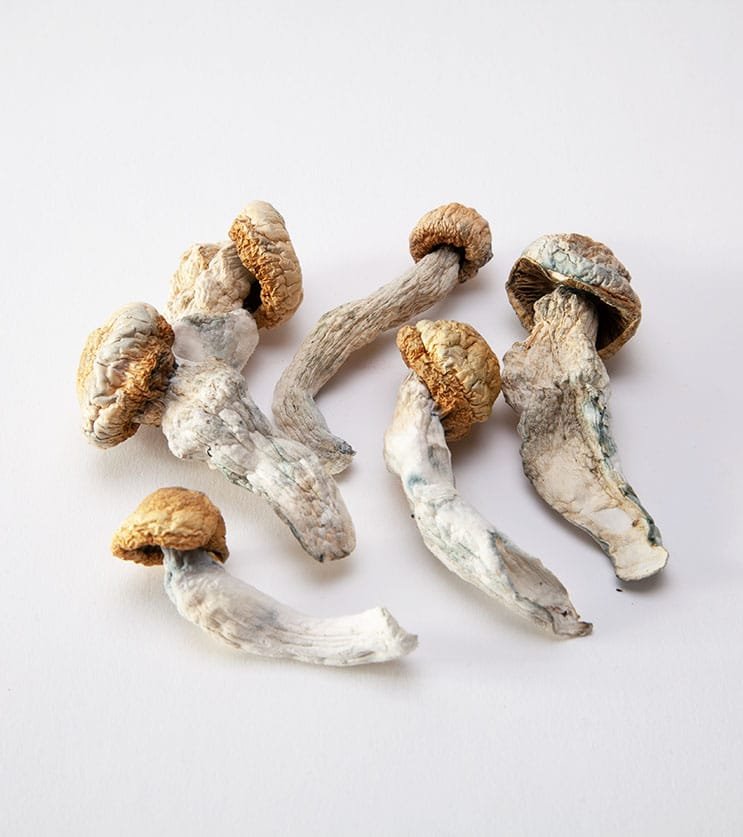
Penis Envy Magic Mushrooms – Potent Psilocybin Strain for Advanced Exploration
Price range: $180.00 through $910.00
Elevate your consciousness with Penis Envy Magic Mushrooms, a legendary high-potency strain known for intense visuals, emotional breakthroughs, and deep introspective journeys.
Penis Envy Magic Mushrooms: Potency, Effects, History, Variants & Safety
Penis Envy magic mushrooms are a distinctive cultivated lineage of Psilocybe cubensis, a psychedelic mushroom species containing psilocybin and psilocin. They are recognized for unusually thick stems, relatively small caps, limited spore production, and a persistent reputation for high potency. That reputation has partial analytical support—but chemistry varies substantially between individual mushrooms and batches, and no laboratory has established a universal potency rule that applies to every PE specimen.
This guide is for adults seeking evidence-based information about mycology, psychedelic pharmacology, harm reduction, and lawful microscopy research. It is educational in nature, not medical or legal advice, and does not provide cultivation or personalized consumption instructions.
Key takeaways:
- Species: Psilocybe cubensis
- Identity: “Penis Envy” is better understood as a cultivated lineage or phenotype than a scientifically standardized strain
- Potency: Some PE-family specimens have produced unusually high analytical results, but no scientifically established multiplier applies to every PE mushroom
- Morphology: Classic descriptions emphasize a dense, thick stipe beneath a relatively small or incompletely expanded pileus
- Variants: Common names include Albino Penis Envy (APE), Melmac/Homestead PE, PE6, Penis Envy Uncut, and various PE-related crosses
- Effects: The active compounds are primarily psilocybin and its metabolite psilocin; science has not established unique psychological effects for PE independent of chemistry, dose, context, and individual factors
- Legality: Psilocybin remains federally controlled in the United States; state and local laws, regulated programs, and rules concerning spores differ considerably
How We Evaluated the Evidence
Not every claim about Penis Envy rests on the same quality of evidence. This guide prioritizes peer-reviewed pharmacology, validated analytical chemistry, current government sources, and contemporaneous historical records. Laboratory competitions and retrospective interviews can provide useful evidence, but their conclusions must remain limited to what the underlying samples or testimony actually establish.
For chemical claims, this guide distinguishes four levels of inference:
- Laboratory measurement → tested specimen
- Representative specimens → sampled batch
- Representative batches → evidence about a lineage
- Replicated representative datasets → stronger population-level inference
Historical claims are separately classified as documented, retrospectively reported, disputed, or unverified. Legal claims are checked against primary government sources and carry a separate review date because statutes and regulations change.
Scientific evidence reviewed: August 2026. Legal sources last verified: August 2026. See the Sources section for jurisdiction-specific notes.
Contents
- What Are Penis Envy Magic Mushrooms?
- How Potent Are Penis Envy Magic Mushrooms?
- Penis Envy vs. Golden Teacher: What’s Different?
- Where Did the Penis Envy Strain Come From?
- What Are the Main Penis Envy Variants and Related Lineages?
- Why Can Psilocybin Mushroom Potency Vary So Much?
- How Does Psilocybin Affect the Brain?
- What Effects Are Associated With Penis Envy Mushrooms?
- What Are the Main Safety Risks and Harm-Reduction Considerations?
- What Are the Most Common Penis Envy Myths and Mistakes?
- What Can Researchers Learn From Penis Envy Spores and Microscopy?
- Are Penis Envy Spores and Psilocybin Legal in the USA?
- Can a Penis Envy Label Be Used to Calculate a Dose?
- What Should You Look for in a Legal Microscopy Spore Supplier?
- Frequently Asked Questions
- Evidence Summary
- Sources, Review and Corrections
What Are Penis Envy Magic Mushrooms?
Penis Envy is a name applied to a cultivated Psilocybe cubensis lineage recognized for unusual fruit-body morphology and a reputation for elevated alkaloid content. It is not a separate species. The commercial name alone cannot authenticate genetics or predict the chemical strength of any individual specimen—two facts that matter enormously when evaluating potency claims.
Penis Envy and Psilocybe cubensis Taxonomy
Penis Envy is not a separate mushroom species. It is a cultivated lineage name within Psilocybe cubensis, which belongs to kingdom Fungi, phylum Basidiomycota, class Agaricomycetes, order Agaricales, family Hymenogastraceae, and genus Psilocybe. Mature fruiting bodies can contain psilocybin, psilocin, and smaller quantities of related tryptamines including baeocystin.
That taxonomic structure matters for both identification and potency research. Names such as Penis Envy and Golden Teacher can communicate phenotype or reported provenance, but they do not carry the taxonomic precision of a species designation and do not guarantee genetic uniformity across collections or sellers.
For research purposes, record four things separately: species identity, claimed lineage, observable phenotype, and measured chemistry. Treating those categories as interchangeable is one of the most consistent sources of inaccurate mushroom comparisons in online discussions.
What Does Penis Envy Look Like?
Classic Penis Envy descriptions center on a dense, often bulbous stipe beneath a comparatively small pileus. Caps tend to remain less expanded at maturity than those of conventional P. cubensis phenotypes—a difference that becomes visually apparent when specimens are placed side by side under consistent conditions.
Limited or inconsistent spore release is another characteristic frequently associated with PE lines. Unusual cap and veil development can make spore collection more difficult than with prolific-sporing varieties. These are descriptive tendencies, not an authentication test. Two specimens matching this description may not share identical genetics.
Is Penis Envy Really a “Strain”?
Not in the precise sense the word implies. “Strain” is entrenched in mushroom communities and remains useful search vocabulary, but lineage, cultivar, isolate, and phenotype communicate meaningfully different biological concepts.
A phenotype describes observable traits. A genotype concerns genetic composition. An isolate generally implies a selected genetic culture. A marketplace name can persist long after the genetics behind it have diverged across sellers, collections, and generations of amateur propagation.
That creates a concrete research problem: two products carrying the same Penis Envy label are not automatically genetically or chemically equivalent.
Can Appearance Authenticate Penis Envy?
No. Appearance can support a tentative phenotype description, but it cannot prove that a specimen belongs to a particular named genetic lineage.
Environmental conditions and genetic drift both shape mushroom morphology. Different P. cubensis lineages can also develop overlapping physical characteristics that make visual identification ambiguous. Reliable provenance requires documentation or appropriate genetic analysis. Chemical potency requires analytical testing.
Appearance should never serve as the sole basis for determining whether an unknown wild mushroom is safe to handle or consume.
How Potent Are Penis Envy Magic Mushrooms?
Penis Envy has a reputation for unusually high potency, and laboratory-tested PE-family specimens provide partial support for that reputation. What the evidence does not support is a fixed potency multiplier—a universal rule stating that every PE mushroom is two or three times stronger than conventional P. cubensis. Batch and specimen variability make such rules unreliable as predictors of what any particular sample contains.
What Can HPLC Psilocybin Testing Actually Tell Us?
High-performance liquid chromatography (HPLC) can separate and quantify compounds such as psilocybin and psilocin in a prepared mushroom sample. Liquid chromatography-mass spectrometry (LC-MS) adds mass-based compound identification or confirmation depending on the method used.
A useful laboratory report identifies the specimen, sample condition, units, analytes measured, analytical method, preparation procedure, and relevant validation or uncertainty information. Results reported on different bases—wet weight versus dry weight, for example—or produced with different analyte panels are not automatically comparable even when headline figures look similar.
The central rule: HPLC psilocybin testing tells researchers what was measured in the analyzed sample. It does not establish an average penis envy psilocybin content for every mushroom sharing a commercial name.
Psilocybin vs. Psilocin and Total Tryptamine Measurements
Psilocybin is dephosphorylated in the body to psilocin, which produces central psychedelic activity primarily through agonist activity at serotonin 5-HT2A receptors. Laboratory reports sometimes combine several compounds under labels such as “total tryptamines”—a figure that becomes misleading when one dataset measures only psilocybin and psilocin while another includes baeocystin, norbaeocystin, or other analytes, or uses a different dry-weight calculation.
Minor tryptamines are scientifically interesting, but claims that specific minor compounds reliably produce particular emotional, visual, or physical effects run well ahead of current human evidence.
How Much Stronger Is Penis Envy Than Golden Teacher?
The defensible answer is: potentially stronger in some specimens, but not by a dependable fixed ratio.
Selected PE-family specimens have demonstrated high alkaloid concentrations in analytical testing and open competitions. That supports describing PE as a lineage of genuine interest in potency research. It does not justify converting isolated high-performing samples into a universal rule that applies to all material sold under that name.
The table below represents the required architecture for a source-audited comparison. Figures should be populated from verified primary analytical sources—laboratory certificates of analysis, peer-reviewed datasets, or directly attributed competition results with full methodology—before this page is indexed. No estimated or extrapolated values appear here.
| Variety / Lineage | Dataset | Specimens Tested | Psilocybin (% dry weight) | Psilocin (% dry weight) | Other Analytes | Method | Key Limitation |
|---|---|---|---|---|---|---|---|
| Golden Teacher | Primary source required before publication | N required | Value required | Value required | List required | HPLC or LC-MS required | Do not infer beyond sampled material |
| Classic PE | Primary source required before publication | N required | Value required | Value required | List required | Method required | Verify provenance before publishing |
| APE | Primary source required before publication | N required | Value required | Value required | List required | Method required | Sample-specific result only |
| PE-related hybrid | Primary source required before publication | N required | Value required | Value required | List required | Method required | Hybrid result does not equal classic PE average |
Why Isn’t “2–3× Stronger” a Dependable Rule?
Because mushroom chemistry is not controlled by a cultivar name.
Relevant variables include genetics, individual fruiting-body variation, developmental stage, growing environment, drying method, storage conditions, sample preparation, and analytical methodology. Degradation over time—particularly of psilocin, which is less chemically stable than psilocybin—adds another layer of uncertainty. Together, these factors produce a crucial distinction:
Specimen result ≠ batch average ≠ cultivar average ≠ species average.
That four-part framework is useful whenever evaluating any psychedelic mushroom potency claim. Each arrow in that chain requires additional representative sampling and replication before the next inference is justified.
What Doesn’t Current Evidence Establish?
Current evidence does not establish a universal Penis Envy potency multiplier, a standardized chemical fingerprint shared by every PE lineage, or a PE-specific psychological effect independent of chemical exposure, individual differences, expectancy, and context.
Competition data can demonstrate that particular specimens achieved particular analytical results. They are less suitable for estimating typical cultivar potency because submitted specimens may not constitute representative samples—entrants select material precisely because they expect strong performance. An exceptional competition result should remain a specimen-level finding unless broader representative evidence supports a broader conclusion.
High-quality potency reporting therefore identifies the specimen, sample provenance, analytical method, analytes measured, date, and original source. Exceptional results should remain attached to the specimen tested, not extrapolated to an entire named lineage.
Penis Envy vs. Golden Teacher: What’s Different?
Penis Envy and Golden Teacher are both cultivated P. cubensis lineages. PE is especially recognized for unusual morphology and has produced notable high-potency analytical samples. Golden Teacher is a widely circulated comparison reference with extensive historical documentation and broad availability in mycological records. Neither name reliably predicts an individual mushroom’s chemistry.
Penis Envy vs. Golden Teacher at a Glance
| Feature | Penis Envy | Golden Teacher |
|---|---|---|
| Species | Psilocybe cubensis | Psilocybe cubensis |
| Common morphology | Dense stipe, comparatively small cap | More conventional P. cubensis cap expansion at maturity |
| Spore release | Often described as reduced or inconsistent | Commonly more prolific |
| Potency evidence | Some unusually high tested specimens in analytical records | Variable specimen-level results |
| Fixed potency multiplier? | Not established by evidence | Not established by evidence |
| Can name predict chemistry? | No | No |
| Best research use | Phenotype and provenance study alongside analytical comparison | Broad comparison reference in historical datasets |
Caption: This table describes commonly reported lineage characteristics, not guaranteed properties of every specimen.
Morphology
Classic PE is generally described as thick-stemmed with smaller, less expansive caps. Golden Teacher specimens more commonly follow conventional P. cubensis morphology, with caps that expand substantially at maturity. Side-by-side photographs make the difference intuitive, but phenotypic overlap occurs in both directions. Environmental conditions can push either variety toward or away from its typical appearance, and photographs are not genetic tests.
Reported and Measured Potency
PE carries the stronger high-potency reputation, and selected analytical results support treating it seriously. The mistake lies in converting “PE has produced high analytical results” into “PE is always exactly X times stronger.” Both lineages exhibit specimen-level chemical variability—the central lesson that applies to every potency comparison in this space.
Genetic and Chemical Variability
Both names describe populations of material maintained and distributed by humans over many years. That history creates opportunities for genetic drift, inadvertent crossing, mislabeled cultures, and marketplace confusion. A meaningful Psilocybe cubensis potency comparison therefore prioritizes laboratory results over labels and requires documented provenance for the material tested.
Research Pros and Cons
For PE: advantages include a distinctive phenotype, substantial historical interest, and extensive community documentation. Drawbacks include uncertain provenance in many commercial collections, inconsistent chemistry between sources, and a marketplace tendency toward exaggerated potency claims.
For Golden Teacher: broad availability in historical datasets and wide recognition make it a useful comparison reference. Familiarity does not make its genetics standardized or its chemistry uniform across decades of amateur distribution.
The better research decision framework: documented provenance → specimen-level observations → appropriate analytical testing → cautious, sample-bounded interpretation.
Where Did the Penis Envy Strain Come From?
The Penis Envy mushroom strain origin involves recurring stories about Terence McKenna, physician and mushroom researcher Steven H. Pollock, and later cultivators. Parts of this history are retrospective and disputed. No single popular account should be presented as definitively established, and the gap between a compelling narrative and a documented provenance chain deserves explicit acknowledgment.
The Terence McKenna Origin Story
One widely circulated narrative traces PE ancestry to P. cubensis material associated with McKenna’s travels in the Colombian and Amazonian regions during the early 1970s. McKenna’s role in modern psychedelic culture is documented across his published books—including Food of the Gods (Bantam Books, 1992) and True Hallucinations (HarperSanFrancisco, 1993)—recorded lectures, and biographical accounts by contemporaries.
What is harder to substantiate from contemporary records is the specific chain connecting an original field collection to today’s commercial PE genetics. That distinction should remain visible in any responsible account rather than being absorbed into folklore.
Steven H. Pollock’s Place in the Story
Steven H. Pollock was a physician and psychoactive-mushroom researcher active during the 1970s who published on Psilocybe species and was a documented figure in early American psychedelic mycology. His work appeared in journals including the Journal of Psychedelic Drugs and he was known to Paul Stamets, who references him in the mycological literature of that period.
Later PE accounts assign Pollock an important role in selecting or circulating unusual P. cubensis material. The historical distinction matters: evidence that Pollock participated in psychoactive-mushroom research during this era does not by itself establish that he created the modern PE lineage in a documented sequence. The sources reviewed for this article do not provide a continuous contemporaneous provenance record linking Pollock’s work to today’s commercial PE genetics. His role should therefore be described as part of the reported PE origin history rather than settled genetic genealogy.
Rich Gee and Later Circulation
Another frequently cited figure is Rich Gee, a cultivator associated with the distribution of PE-related material in the community that grew up around early American psychedelic mycology in the 1970s and 1980s. Retrospective narratives credit him with preserving, selecting, or circulating material associated with the modern PE phenotype.
As elsewhere in this history, provenance requires source criticism. Repetition of the same account across mushroom websites reflects circulation rather than independent corroboration, and recollections offered decades after events carry inherent limitations.
What Did Hamilton Morris’s Investigation Add?
Journalist and pharmacology researcher Hamilton Morris—known for the documentary series Hamilton’s Pharmacopeia—examined the PE origin story and interviewed people connected to its history, bringing scrutiny to inconsistencies in the traditional narrative. That reporting constitutes valuable historical evidence, particularly where it records first-person testimony from directly involved parties.
What it cannot substitute for is contemporary culture records, dated genetic samples, or documented chain-of-custody evidence. It is the most rigorous journalism applied to this question to date, and it appropriately leaves important genealogical questions open rather than forcing a clean resolution onto ambiguous evidence.
Who Created Penis Envy Mushrooms?
No single creator story should currently be presented as settled fact. McKenna, Pollock, and Rich Gee appear in the most influential narratives about PE’s origins and distribution, but the precise genealogy of contemporary Penis Envy material remains uncertain based on sources available at the time of this review.
| Period | Historical Claim | Evidence Type | Classification |
|---|---|---|---|
| Early 1970s | Amazonian or Colombian P. cubensis material associated with McKenna | Published biographical accounts and retrospective community records | Reported; primary-source audit required for genealogical claims |
| Mid-to-late 1970s | Pollock associated with PE selection or origin story | Historical accounts; referenced in mycological literature of the period | Reported; contemporaneous provenance not established in sources reviewed |
| Late 1970s–1980s | Rich Gee associated with preservation or circulation of PE material | Retrospective community accounts | Partially documented; independent corroboration limited |
| 1990s onward | PE becomes a widely distributed named lineage | Commercial spore catalogs and community records | Well established |
Caption: Evidence classifications reflect source quality at the time of this review, not a claim about the complete historical record.
The larger lesson generalizes: a compelling origin story is not the same thing as genetic provenance, and conflating the two produces durable misinformation that proves difficult to correct once it is entrenched in community memory.
What Are the Main Penis Envy Variants and Related Lineages?
Albino Penis Envy, Melmac, PE6, and Penis Envy Uncut are among the best-known names associated with the PE family. Their reported ancestry and phenotypes differ, but marketplace names are not standardized biological classifications and should not be treated as guaranteed genetic or chemical identities.
Albino Penis Envy (APE)
Albino Penis Envy is associated with very pale to white fruit bodies, substantially reduced pigmentation, and PE-like morphology. It is marketed heavily around potency claims. Whether APE is reliably stronger than classic PE cannot be answered from its name or color. Albino Penis Envy potency should be evaluated through actual analytical samples with provenance and methodology reported alongside any figures.
Classic Penis Envy
Classic PE serves as the baseline phenotype against which related names are compared. Common descriptions emphasize dense stipes, relatively small caps, unusual maturation timing, and reduced spore release. It is the reference point from which the broader PE family takes its identity and the name against which other variants are typically contrasted in community discussion.
Melmac / Homestead Penis Envy
Melmac, or Homestead PE, is generally discussed as a legacy PE-related lineage with roots in the same early American cultivation community associated with the broader PE origin story. Its historical relationship to classic PE material is of genuine mycological interest, but it should be described as reported lineage rather than proven genealogy unless genetic or contemporaneous documentation is available.
Penis Envy 6 (PE6)
PE6 is a widely circulated PE-associated name. Published accounts of its parentage and development should be attributed to their original sources rather than treated as formal taxonomy. For researchers, the name alone establishes little about a specific sample’s genetics or chemistry. Record provenance, phenotype, and any available analytical evidence independently rather than inferring them from the label.
Penis Envy Uncut (PEU)
Penis Envy Uncut refers to PE-associated material selected around distinctive cap development—specifically, caps that remain less open at maturity than even typical PE specimens. As elsewhere in the family, appearance is phenotype evidence, not proof of ancestry or chemical identity.
Tidal Wave and PE-Related Crosses
Tidal Wave is commonly described as a cross incorporating PE ancestry and became especially visible when specimens entered and performed strongly in open potency competitions, including the Hyphae Cup. Record-setting specimens make useful case studies in the upper range of P. cubensis chemistry, but a competition record does not establish what a typical Tidal Wave sample contains. When citing a competition result, the specific entrant, year, analytical laboratory, measured compounds, analytical method, and original reported values should all accompany any headline figure. A number without that context is effectively unverifiable.
Penis Envy vs. APE: What’s the Difference?
Penis Envy and Albino Penis Envy are related but not interchangeable labels. The PE vs. APE comparison is among the most commonly searched within the PE family, and the answer requires separating phenotype from chemistry.
| Question | Classic PE | Albino Penis Envy (APE) |
|---|---|---|
| Species | P. cubensis | P. cubensis |
| Typical marketed phenotype | Dense stipe, small cap, conventional pigmentation | Pale to white fruit bodies, reduced pigmentation, PE-associated morphology |
| Genetic uniformity guaranteed? | No | No |
| Potency predictable from name? | No | No |
| Laboratory result applies to | Tested specimen only | Tested specimen only |
| Fixed APE-vs-PE multiplier? | Not established by current evidence | Not established by current evidence |
Caption: Phenotype descriptions reflect commonly marketed characteristics, not invariant properties of every specimen bearing these names.
Variant Nomenclature Matrix
The table below separates what is known from what is claimed for the principal PE-family names. Cells marked “not established” reflect the evidence available at the time of this review, not an assertion that no evidence can exist.
| Marketplace Name | Claimed Lineage | Documented Provenance | Distinct Phenotype | Chemical Evidence Separate From Classic PE |
|---|---|---|---|---|
| Classic Penis Envy | Variously attributed to McKenna and Pollock era | Not continuously documented in sources reviewed | Yes — dense stipe, small cap | Specimen-level analytical records exist; population average not established |
| Albino Penis Envy (APE) | PE-associated | Not continuously documented in sources reviewed | Yes — substantially reduced pigmentation | Specimen-level records exist; population average not established |
| Melmac / Homestead PE | Reported PE legacy lineage | Not independently verified in sources reviewed | Reported as distinct | No standardized comparison dataset identified |
| PE6 | PE-associated; parentage accounts vary by source | Not independently verified in sources reviewed | Marketed as distinct | No standardized comparison dataset identified |
| Penis Envy Uncut (PEU) | PE-associated; selected for cap morphology | Not independently verified in sources reviewed | Reported — less-open cap at maturity | No standardized comparison dataset identified |
| Tidal Wave | PE-associated cross | Not continuously documented | Reported as distinct | High-profile competition specimens; population average not established |
Caption: “Not established” reflects source limitations at time of review. Researchers should update individual cells as verified primary evidence becomes available.
Why Can Psilocybin Mushroom Potency Vary So Much?
Psilocybin mushroom potency varies because chemistry reflects biological variation, growing environment, developmental stage, post-harvest handling, storage, and measurement methodology—not just a strain name. This is why chemical testing of a specific sample carries far more evidentiary weight than a label reading PE, APE, or Golden Teacher.
Genetic Variation
Genes influence fungal metabolism and phenotype. Within material sold under one cultivar name, genetic uniformity cannot be assumed. Years of amateur propagation, inadvertent crossing, and broad market distribution mean that specimens sharing a name may not share meaningful genetic identity. A seller’s label is not a genetic sequence.
Individual Fruiting-Body Variation
Variation between lineages is a different phenomenon from variation among individual fruit bodies within the same batch. Interpreting a laboratory result from a single submitted specimen as representative of an entire cultivar requires a logical leap that the data cannot support. Before publishing a numerical estimate of within-batch potency variation, the underlying study must have used an appropriate sample size, comparable sample preparation, a validated analytical method, and documented provenance for all specimens. Where no such study exists for a given lineage, the honest position is to say so.
Environmental and Developmental Variables
Fungal metabolism responds to biological and environmental conditions, so chemical profiles reflect more than inherited lineage alone. Community explanations claiming that one specific morphological feature—dense stems, for example—diverts biological resources into greater psilocybin synthesis are occasionally repeated online, but they should not be presented as established mechanisms without experimental evidence supporting that specific causal claim.
Storage, Oxidation, and Sample Preparation
Post-harvest handling can change what a laboratory ultimately measures. Psilocin is less chemically stable than psilocybin under typical storage and light-exposure conditions, and the interval between harvest and analysis, along with drying method and packaging, can affect reported values. Research into the stability of psilocybin and psilocin under defined storage conditions has been conducted in pharmaceutical contexts—including work relevant to formulated psilocybin stability published alongside clinical trial protocols—but these findings apply to standardized preparations rather than dried mushroom material, and caution is warranted when extrapolating across sample types.
A rigorous potency database should store sample state, preparation methodology, collection date, and storage conditions alongside the headline result rather than reporting numbers without that context.
How Should Researchers Evaluate a Potency Result?
A chromatogram characterizes the prepared sample analyzed. It does not issue a universal potency certificate for a cultivar name. Before generalizing any result, determine whether the study sampled multiple specimens, multiple batches, and independently sourced material with documented provenance.
Five questions do most of the filtering work:
- What material was actually analyzed, and from where?
- How many specimens or batches were represented?
- Was lineage provenance documented and verifiable?
- Which compounds and analytical methods were used?
- Does the stated conclusion stay within the population actually sampled?
Claims that cannot answer all five questions clearly deserve proportionate skepticism—regardless of how confidently they circulate online or how frequently they are repeated in community discussions.
How Does Psilocybin Affect the Brain?
Psilocybin is dephosphorylated in the body to psilocin, which acts at serotonin receptors and has particularly important activity at the 5-HT2A receptor. Human neuroimaging research has documented changes in brain-network dynamics during psychedelic states, though popular shorthand consistently oversimplifies a complex and still-evolving scientific literature.
How Does Psilocybin Become Psilocin?
Psilocybin is dephosphorylated by alkaline phosphatase and other phosphatases in the gut and liver to produce psilocin, its principal psychoactive metabolite. Psilocin then distributes to the central nervous system, where it acts at several serotonin receptor subtypes. This conversion is well established in the pharmacological literature and provides a more reliable foundation for understanding effects than cultivar-specific folklore.
The foundational reference for this mechanism remains: Passie T, Seifert J, Schneider U, Emrich HM. The pharmacology of psilocybin. Addiction Biology. 2002;7(4):357–364. doi:10.1046/j.1369-1600.2002.00039.x
What Role Does the 5-HT2A Receptor Play?
Psilocin’s agonist activity at serotonin 5-HT2A receptors plays a central role in the characteristic perceptual and cognitive effects of classic serotonergic psychedelics. Psilocin also interacts with 5-HT1A, 5-HT2C, and other serotonin receptor subtypes, so a 5-HT2A-only account should be treated as a useful teaching simplification rather than a complete mechanistic description.
Relevant review: Vollenweider FX, Kometer M. The neurobiology of psychedelic drugs: implications for the treatment of mood disorders. Nature Reviews Neuroscience. 2010;11(9):642–651. doi:10.1038/nrn2884
For more recent receptor-level characterization, see: Madsen MK, Fisher PM, Burmester D, et al. Psychedelic effects of psilocybin correlate with serotonin 2A receptor occupancy and plasma psilocin levels. Neuropsychopharmacology. 2019;44(7):1328–1334. doi:10.1038/s41386-019-0324-9
Brain Networks and the Default Mode Network
Functional imaging work led by Robin Carhart-Harris and colleagues at Imperial College London established that psilocybin measurably alters large-scale patterns of brain connectivity and network organization in human participants. The key early paper is: Carhart-Harris RL, Erritzoe D, Williams T, et al. Neural correlates of the psychedelic state as determined by fMRI studies with psilocybin. Proceedings of the National Academy of Sciences. 2012;109(6):2138–2143. doi:10.1073/pnas.1119598109
“Default mode network suppression” became popular shorthand for those findings, but subsequent network neuroscience tells a more complicated story. Different experimental designs, doses, participant populations, and measurement approaches produce meaningfully different descriptions of connectivity change and network integration. The shorthand should not be presented as a settled mechanistic conclusion.
What Does Research Say About Neuroplasticity?
Preclinical and emerging human research investigates psychedelic-related structural and functional plasticity. BDNF-mediated signaling has been proposed as one relevant pathway, based partly on work in rodent models, but mechanistic findings from preclinical studies should not be converted into blanket claims that PE “increases neuroplasticity” or repairs psychiatric conditions in humans. Clinical outcomes in psilocybin research emerge from carefully structured environments with professional screening and support—conditions that cannot automatically be generalized to unsupervised use.
Does Penis Envy Affect the Brain Differently From Other P. cubensis?
No convincing clinical evidence establishes a PE-specific pharmacological effect once active chemical exposure and individual variables are controlled. Descriptions such as “PE is more visual” or “Golden Teacher is more spiritual” are widespread in psychedelic communities, but they represent cultural shorthand rather than established strain-specific pharmacology. They are of interest as anthropological data; they are weak as scientific claims.
What Effects Are Associated With Penis Envy Mushrooms?
Penis Envy mushroom effects fall within the known effects of psilocybin-containing mushrooms broadly: altered perception, mood, and cognition; changes in visual experience; shifts in time perception and sense of self; and physical effects including nausea and changes in autonomic arousal. Intensity is highly variable and influenced by factors that have little to do with the cultivar name.
Commonly Reported Perceptual and Cognitive Effects
Clinical psilocybin research and observational reports describe intensified colors and patterns, unusual perceptual associations, emotional amplification, changes in time perception, and—at sufficiently high exposures—major disruption of the ordinary sense of self. The clinical literature documenting these effects includes work by Griffiths RR, Richards WA, McCann U, Jesse R. Psilocybin can occasion mystical-type experiences having substantial and sustained personal meaning and spiritual significance. Psychopharmacology. 2006;187(3):268–283. doi:10.1007/s00213-006-0457-5
Not every person experiences every effect, and their character varies substantially between individuals and occasions even at comparable measured doses.
Physical Effects
Possible physical effects include nausea, gastrointestinal discomfort, dizziness, headache, changes in heart rate or blood pressure, tremor, and altered coordination. Describing psychedelics as purely psychological experiences understates legitimate physical considerations, particularly for individuals with cardiovascular or neurological health concerns.
How Long Do Psilocybin Effects Last?
Oral psilocybin generally produces effects lasting approximately four to six hours in clinical settings, with substantial individual variation driven by dose, formulation, individual physiology, and other circumstances. Griffiths and colleagues documented this duration range across multiple controlled studies. There is no scientifically validated duration specific to Penis Envy as distinguished from psilocybin-containing P. cubensis generally—a “PE trip timeline” claiming otherwise is not grounded in cultivar-specific pharmacology.
Is a Penis Envy Experience Uniquely Recognizable?
No validated evidence shows that people can reliably identify PE versus another P. cubensis lineage from subjective effects alone after relevant variables are controlled. That gap makes blinded, chemically standardized comparative research an obvious and currently unmet need. Until such research exists, cultivar-specific experiential claims remain hypotheses rather than established findings.
What Should You Make of Penis Envy Trip Reports?
Trip reports are personal observations, not controlled comparisons. They can identify patterns or questions worth studying. What they cannot do is isolate the effect of cultivar identity from chemical exposure, expectancy, individual biology, environment, concurrent substances, or the reporting tendency that leads unusual experiences to be written up and shared while unremarkable ones are not.
Use this evidence hierarchy when interpreting experiential claims:
- Controlled human research
- Validated analytical chemistry
- Systematic observational research
- Documented case reports
- Individual trip reports
- Unsupported marketing claims
A repeated anecdote can justify further investigation. Repetition alone does not convert it into established pharmacology.
What Are the Main Safety Risks and Harm-Reduction Considerations?
Psilocybin can produce intense and unpredictable psychological effects. Risk depends on the individual, circumstances, concurrent substances or medications, and actual chemical exposure—not on a cultivar name. Anyone experiencing severe confusion, dangerous behavior, loss of consciousness, seizures, breathing problems, chest pain, or another medical emergency needs professional help immediately.
Psychological Risks
Acute fear, panic, paranoia, disorientation, and psychological distress can occur even in people who have used psychedelics before without incident. Psychedelics may pose particular concerns for individuals with personal or family histories of psychotic disorders, bipolar disorder with psychotic features, or other serious psychiatric conditions. Controlled clinical trials screen participants carefully and provide professional supervision throughout. Their safety profiles should not be assumed to apply to unsupervised use, where those protective conditions are absent.
Physical Risks and Medical Emergencies
Many adverse effects are transient, but a medical emergency should not be dismissed as a difficult subjective experience. When in doubt, seek emergency care.
In the United States: call 911 for an emergency.
Poison Control: 1-800-222-1222 or poison.org for poison-related guidance.
America’s Poison Centers operates the US poison control network and can provide guidance on accessing regional services at poisoncenters.org.
Medication and Health-Condition Considerations
Potential drug interactions and health contraindications are clinical questions requiring individual assessment. Psilocybin may interact with serotonergic medications including selective serotonin reuptake inhibitors, monoamine oxidase inhibitors, and lithium—combinations that have raised safety concerns in case reports and clinical screening protocols. People taking prescription medications or managing significant health conditions should discuss risks with a qualified clinician. Never discontinue a prescribed medication in order to use a psychedelic.
Wild Mushroom Identification Creates a Separate Danger
Named P. cubensis cultivar characteristics are not a wild-mushroom identification system. Species such as Galerina marginata contain amatoxins capable of causing fatal liver damage and can grow alongside or be confused with psychoactive species by untrained observers. A photograph, a color-change reaction, a cap shape, or a community forum identification should never be treated as adequate evidence that an unknown wild mushroom is safe to consume. The only reliable approach is formal mycological training combined with examination of multiple morphological features by a qualified identifier.
Why Does Mixing Substances Increase Uncertainty?
Combining psychoactive substances makes psychological and physiological effects less predictable in ways that studies of individual substances cannot capture. Alcohol, stimulants, cannabis, prescription drugs, and other psychoactive compounds should not be assumed to be harmless additions. Online reports of apparently positive combinations are also subject to reporting and selection biases—accounts where combinations produced serious problems are less likely to be published in community forums than accounts where outcomes were positive.
What Can Help During an Acutely Difficult Psychedelic Experience?
Where no medical emergency is present, general harm-reduction principles include maintaining a physically safe and calm environment, providing nonjudgmental sober support, reducing unnecessary stimulation, and preventing activities such as driving or operating machinery. Organizations including MAPS (Multidisciplinary Association for Psychedelic Studies) and the Zendo Project have developed structured psychological support frameworks for acute psychedelic distress that can inform nonprofessional support practices. If symptoms are severe, unusual, or medically concerning, contact emergency or poison-control services rather than waiting.
What Are the Most Common Penis Envy Myths and Mistakes?
Several popular PE claims confuse plausible observations with conclusions the available evidence cannot support. Each entry below states the claim, what the evidence actually shows, and the appropriate conclusion.
“Every Penis Envy Mushroom Is Two or Three Times Stronger”
Claim: PE has a fixed potency multiplier applicable to all specimens.
Evidence: High-potency PE-family specimens appear in analytical records, but chemical variation between samples and datasets is documented and substantial.
Conclusion: Treat a universal multiplier as a marketing heuristic. It is not a scientifically validated conversion factor.
“A Competition Winner Proves the Whole Variety Is That Potent”
Claim: One exceptional specimen defines its cultivar’s typical chemistry.
Evidence: Competitions analyze submitted samples that entrants have often selected because they expect strong results—a clear selection effect that headline figures do not correct for.
Conclusion: Competition data establish what a particular specimen contained. They do not establish a cultivar average.
“You Can Authenticate PE From Appearance”
Claim: A thick stipe and small cap confirm genuine Penis Envy genetics.
Evidence: Morphology reflects both genetics and growing environment. Phenotypic overlap between P. cubensis lineages is real and documented.
Conclusion: Visual traits are descriptive evidence, not proof of genetic identity.
“Trip Reports Prove Strains Have Different Effects”
Claim: Repeated first-person descriptions establish cultivar-specific pharmacology.
Evidence: Expectation, chemical exposure, environment, and individual differences are uncontrolled in trip reports. Reporting bias favors memorable or unusual experiences.
Conclusion: Trip reports can generate hypotheses. They cannot establish causation.
“Natural Means Medically Safe”
Claim: A naturally occurring drug is inherently low risk.
Evidence: Biological origin does not determine psychiatric, toxicological, or drug-interaction risk. Amatoxins, ricin, and many other highly dangerous compounds are naturally derived.
Conclusion: Evaluate a substance through its pharmacology and evidence base, not through the natural-versus-synthetic distinction.
“A Legal Article From Last Year Tells Me Today’s Law”
Claim: A static legal summary remains reliable over time.
Evidence: Psychedelic policy is changing at state and local levels. Decriminalization, legalization, and regulated services carry distinct legal meanings with different practical consequences.
Conclusion: Verify the current primary statute or relevant government agency before relying on any legal summary, including this one.
What Can Researchers Learn From Penis Envy Spores and Microscopy?
Penis Envy spores and fungal structures can be studied as mycological material where lawful. Researchers may examine basidiospores, tissue morphology, and phenotype characteristics, but microscopy cannot establish alkaloid concentration and should not be confused with a chemical assay or genetic provenance test.
What Do Microscopy Researchers Examine?
Microscopic research can document spore dimensions, shape, coloration under defined conditions, and other structural characteristics. Psilocybe cubensis basidiospores are subellipsoid to ellipsoid, thick-walled, and typically measure approximately 11.5–17 × 8–11 micrometers, with a distinct germ pore—characteristics documented in Stamets P. Psilocybin Mushrooms of the World. Ten Speed Press; 1996, and referenced in taxonomic revisions of the genus.
High-quality educational microscopy images require the microscope model, objective and total magnification, mounting or staining method, calibrated scale bar, imaging method, and specimen provenance. Without those metadata, a microscopy image is descriptive at best and misleading at worst.
Why Are PE Spores Unusual?
Classic Penis Envy is commonly described as producing or releasing spores less readily than many conventional P. cubensis phenotypes, with some PE-family material reported to deposit so few spores that collectors work from tissue culture rather than spore prints. This is useful as a lineage-level observation, but it should not be treated as an invariant diagnostic feature. The precise relationship among cap development, reproductive morphology, genotype, and observed spore release requires stronger experimental evidence than community descriptions alone provide. Researchers should document what their specific specimen shows rather than inferring behavior from its commercial name.
What Do Mycelium, Mutation, and Phenotype Mean?
Mycelium is the vegetative fungal network from which fruiting bodies emerge. A mutation is a heritable genetic change in sequence or structure. A phenotype is an observable characteristic produced through interactions between genotype and environment. These terms are related but not interchangeable. Using them as synonyms imports categorical confusion into any discussion of PE morphology or potency that depends on the distinctions.
What Are PE “Blobs”?
“Blob” is informal community terminology for unusually dense, structurally atypical fruiting morphology sometimes reported in PE-associated material, where tissue develops in compact, poorly differentiated masses rather than recognizable stipe-cap structures. It is a phenotype description, not a formal taxonomic category. Proposed mechanisms—including genetic instability in certain cultivated PE lines—have been discussed in the community but require controlled experimental evidence before they can be accepted as established explanations. Researchers should consistently distinguish what has been observed from what has been proposed as a cause.
Is Microscopy Legally the Same as Cultivation?
No. Possession of spores for microscopy research, germination, active cultivation, possession of psilocybin-containing material, and commercial distribution can each trigger different legal provisions depending on jurisdiction. The fact that a product is lawfully obtainable for a particular research purpose does not imply that every subsequent use of that product is equally lawful.
Are Penis Envy Spores and Psilocybin Legal in the USA?
There is no single nationwide answer covering every Penis Envy-related material or activity. Psilocybin and psilocin remain federally controlled substances. Spores that do not themselves contain those compounds can raise different legal questions, but state law may impose additional restrictions, and possession, shipping, germination, commercial activity, regulated services, and local decriminalization are legally distinct issues that require separate analysis.
This section is general educational information, not legal advice. Laws change. Verify the current government source before acting.
What Is the Federal Status of Psilocybin?
Psilocybin and psilocin are listed as Schedule I controlled substances under the federal Controlled Substances Act, 21 U.S.C. § 812. The specific scheduling text appears in 21 CFR § 1308.11, maintained by the Drug Enforcement Administration. The DEA’s current scheduling information is published at dea.gov/drug-information/csa. FDA-authorized clinical research operates under a distinct regulatory framework—specifically Investigational New Drug applications—that does not extend to general possession or commercial sales outside that framework.
Why Can Spores Have a Different Legal Status?
Basidiospores do not contain psilocybin or psilocin in the mature alkaloid concentrations found in fruiting bodies, and they are not explicitly named as scheduled substances in 21 CFR § 1308.11. This distinction has historically allowed spore sales for microscopy research in most US jurisdictions. Federal treatment is only one layer of the analysis, however. Individual states can and do regulate spores or materials capable of producing controlled-substance-containing fungi according to their own statutory frameworks, which can impose restrictions beyond the federal baseline.
Where Are Psilocybin Mushroom Spores Restricted?
Three states have historically maintained statutory provisions that restrict psilocybin-mushroom spores or related materials beyond the federal baseline:
California: California Health and Safety Code § 11054 lists psilocybin and psilocin as Schedule I substances, and California law has been interpreted to extend to spores capable of producing psilocybin-containing fungi in certain contexts. Current statutory text is available through the California Legislative Information portal.
Georgia: Georgia Code § 16-13-25 lists psilocybin as a Schedule I controlled substance, and Georgia’s framework has been cited as restricting spore possession and sale. Current provisions are available through the Georgia General Assembly.
Idaho: Idaho Code § 37-2705 includes psilocybin in Schedule I, and Idaho has historically been cited as restricting spore possession and transfer. Current provisions are available through the Idaho Legislature.
These three states represent the most commonly cited restrictions in discussions of psilocybin mushroom spore legality in the United States, but no jurisdiction-specific legal guidance should be relied upon without checking the current primary statutory text. Laws change, and agency interpretation can affect application.
What Is Different About Oregon?
Oregon voters approved Measure 109 in 2020, which directed the Oregon Health Authority to establish a regulated psilocybin-services system. This created a licensed-service framework—covering psilocybin service centers, facilitators, and manufacturers—rather than authorizing general recreational sales or personal possession outside that framework. The Oregon Health Authority’s Oregon Psilocybin Services program publishes current rules, licensing requirements, and implementation updates at oregon.gov/oha/ph/preventionwellness/pages/psilocybin-services.aspx. Access outside the licensed framework remains subject to Oregon and federal law.
What Is Different About Colorado?
Colorado voters approved Proposition 122 (the Natural Medicine Health Act) in 2022, which created a framework for regulated natural medicine services and established personal-use provisions for certain substances including psilocybin, psilocin, and several other compounds, subject to defined conditions. Implementation has proceeded through the Colorado Department of Regulatory Agencies and related rulemaking. The Colorado Department of Regulatory Agencies publishes current natural medicine program information at dora.colorado.gov. Regulated access, personal-use provisions, local authority to limit commercial activity, and federal law are distinct questions that require current official sources rather than earlier news coverage, which may not reflect the current regulatory state.
Does Local Decriminalization Mean Psilocybin Is Legal?
No—and this distinction carries real legal consequences.
Decriminalization typically means that enforcement is deprioritized or certain penalties are reduced, not that the conduct is affirmatively lawful. Cities including Denver, Colorado; Oakland and Santa Cruz, California; Ann Arbor, Michigan; and several others have adopted decriminalization measures of varying scope. Legalization means the conduct is permitted within defined parameters set by law. A regulated-services framework such as Oregon’s authorizes specific activity through a licensed system with defined participants and conditions. Federal law—specifically Schedule I status under the Controlled Substances Act—continues to apply independently of most state or local reforms. These concepts should not be used interchangeably.
What Legal Questions Should Microscopy Buyers Ask?
Before ordering any microscopy-related material:
- Is possession of this material lawful at the destination under current state and federal law?
- Can the vendor legally ship it to that jurisdiction?
- What use is legally permitted, and does the intended use match that authorization?
- Would germination or another subsequent action change the legal status of the material?
- Is a local reform a deprioritization of enforcement, or actual statutory authorization?
- What does the current primary government source say, and when was it last updated?
Can a Penis Envy Label Be Used to Calculate a Dose?
No. A cultivar label cannot produce a scientifically reliable dose estimate, and this page does not provide one.
The reason is straightforward: psilocybin concentration varies between individual specimens, between batches from the same source, and between sources carrying the same commercial name. “Penis Envy” describes a reported lineage and phenotype, not a standardized pharmaceutical preparation. Even if a tested batch showed a particular measured concentration, that result applies to the tested material—not to a different specimen purchased elsewhere under the same name.
This is why the “2–3× stronger than regular cubensis” framing is not a safe dose-conversion tool. Applying a multiplier derived from exceptional competition specimens to material whose actual concentration is unknown introduces uncertainty in both directions—the material in question could be higher or lower than the reference—and the cultivar name provides no information that resolves that uncertainty.
The clinical psilocybin research that has documented dose-response relationships—including work by Griffiths and colleagues at Johns Hopkins and Carhart-Harris and colleagues at Imperial College London—uses precisely weighed, pharmaceutical-grade psilocybin, not commercial mushroom material identified by a cultivar name. Those dose-response findings cannot be reliably transferred to unanalyzed mushroom material.
Anyone considering psilocybin in a jurisdiction where it is authorized should do so within a framework that includes verified chemical analysis of the specific material, appropriate professional guidance, and the screening and support structures that characterize authorized research or licensed service settings.
What Should You Look for in a Legal Microscopy Spore Supplier?
A reputable microscopy supplier clearly states jurisdictional restrictions, research purpose, specimen or lineage labeling, quality policies, and verifiable contact details. Medical promises, guaranteed potency claims, ambiguous legal language, or any instruction that encourages unlawful use are warning signs that should end the evaluation.
A Five-Point Supplier Evaluation Framework
Before considering any supplier, check five things:
- Jurisdiction: Can the product lawfully be shipped to and possessed at the destination under current state and federal law?
- Documentation: Does the listing provide taxon, named lineage where applicable, lot or batch information, and a date sufficient to establish provenance?
- Quality controls: Are procedures described specifically, or only through undefined marketing terms such as “lab grade” or “premium genetics”?
- Consumer protection: Are replacement, refund, privacy, and contact policies clearly stated and accessible before purchase?
- Marketing integrity: Does the supplier avoid guaranteed potency claims, therapeutic promises, and any encouragement to use its products in ways that violate their intended lawful purpose?
Failing the jurisdiction check should end the evaluation regardless of price, reputation, or product description.
Check Shipping Restrictions First
A responsible seller prevents or clearly addresses orders to jurisdictions where its products are restricted. “For microscopy only” labeling does not override state or federal law, and a supplier who obscures jurisdictional restrictions is transferring legal exposure onto the buyer.
Evaluate Labeling and Provenance
Useful research labeling includes the taxon, named lineage where applicable, lot or batch information, production or collection date, and enough documentation to connect the sample to the vendor’s records. Unlabeled or minimally labeled material provides no usable provenance chain for research purposes.
Look for Meaningful Quality Documentation
“Laboratory grade” and “premium genetics” are marketing terms unless accompanied by a defined standard or supporting evidence. Specific descriptions of quality-control procedures—contamination testing, sterility protocols, storage conditions—are more informative than adjective-heavy promotional language.
Watch for Scientific Red Flags
Any vendor claiming its spores guarantee a precise psilocybin concentration, a specific therapeutic outcome, or a predictable subjective experience should be treated as unreliable. Spores are not a chemical potency certificate, and a seller who implies otherwise is making claims the evidence cannot support.
Frequently Asked Questions
What are Penis Envy magic mushrooms?
Penis Envy is a cultivated lineage or phenotype of Psilocybe cubensis, a species that can contain psilocybin and psilocin. It is recognized for unusual morphology—characteristically dense stems and relatively small caps—and a reputation for high potency that some analytical results partially support.
Is Penis Envy a separate species?
No. Penis Envy is a cultivated lineage name within Psilocybe cubensis, not a formally separate species. The distinction matters because a cultivar name can describe reported ancestry or phenotype without guaranteeing genetic uniformity or chemical potency across different sources and collections.
Are Penis Envy mushrooms stronger than Golden Teacher?
Some tested PE-family samples have shown unusually high alkaloid concentrations, which supports PE’s potency reputation. Available evidence does not establish a fixed PE-to-Golden-Teacher multiplier. Individual mushroom chemistry, provenance, handling, and analytical methodology all influence measured results, and neither name predicts the chemistry of an untested specimen.
Why is Penis Envy considered potent?
Its reputation draws on accumulated user reports and laboratory results from selected specimens over many years. The evidence supports treating potential high potency seriously—it does not prove that every PE sample exceeds every conventional P. cubensis sample. Selection effects in competition datasets mean that exceptional results may not reflect typical material.
Is Albino Penis Envy stronger than classic Penis Envy?
There is insufficient standardized, population-level evidence to assign a reliable universal potency ranking to APE versus classic PE. Individual APE specimens can test very high, but an exceptional test result is not equivalent to the average chemistry of an entire named lineage.
Is Penis Envy the same as Albino Penis Envy?
No. Albino Penis Envy is associated with substantially reduced pigmentation and PE-like morphology, while classic PE generally retains stronger pigmentation. Both names describe material whose provenance and chemistry can differ between collections, and neither label guarantees consistent genetics across sources.
What is the difference between APE and PE?
APE—Albino Penis Envy—is a pale, low-pigmentation lineage associated with PE ancestry. Classic PE generally has conventional P. cubensis pigmentation. Both names encompass material that can differ substantially between sources. Potency comparisons require actual analytical data from documented specimens, not inferences from names or appearance.
Are Penis Envy and Melmac the same?
They are related names in PE history but should not be treated as genetically identical. Melmac or Homestead PE is commonly described as a legacy PE-related lineage. Exact genealogical claims require supporting provenance or genetic evidence before they can be stated as established fact.
What does Penis Envy look like?
Classic PE is commonly described as having a thick, dense stipe and a relatively small cap that expands less at maturity than conventional P. cubensis. These traits describe a phenotype. They cannot conclusively authenticate genetics or predict chemistry.
Can appearance prove a mushroom is Penis Envy?
No. Environmental conditions shape morphology, and different P. cubensis lineages can share overlapping physical characteristics. Appearance cannot establish genetic provenance or predict chemical potency—and it should never be relied upon to determine whether an unknown wild mushroom is safe.
Can a laboratory test prove a mushroom is Penis Envy?
Chemical testing determines which targeted compounds are present and in what concentration. An alkaloid profile alone does not prove that a specimen belongs to the Penis Envy lineage. Lineage authentication requires appropriate provenance records or genetic evidence alongside the chemistry.
Can a Penis Envy label reliably determine potency or dosage?
No. A cultivar label describes reported lineage and phenotype, not a standardized chemical concentration. Chemical variation between specimens and batches means a fixed PE potency or dose conversion cannot be scientifically inferred from the name alone. This page does not provide a dosing formula.
Why do different labs report different total tryptamine values?
Laboratories may use different analytical methods, sample preparations, units, analyte panels, and calculations. One report may combine compounds that another does not measure, or report on a wet-weight versus dry-weight basis. Before comparing headline totals, examine the underlying methodology and individual analytes measured in each report.
Does a record-setting mushroom establish the potency of its whole strain?
No. A record-setting competition specimen establishes what that specimen contained when analyzed by that laboratory using that method on that date. It does not establish a cultivar average, because competition entries are self-selected specimens, not random samples drawn from a lineage’s typical range.
How long do psilocybin effects generally last?
In controlled clinical settings, oral psilocybin typically produces effects lasting approximately four to six hours, with individual variation across doses and participants. No scientifically validated duration is specific to Penis Envy as distinguished from psilocybin-containing P. cubensis generally.
Are psilocybin mushroom spores federally scheduled?
Basidiospores are not psilocybin or psilocin, and they are not explicitly named in Schedule I of the Controlled Substances Act. However, this does not make spore possession or distribution uniformly lawful. State law varies, and intended use affects the legal analysis. Consult current primary government sources for your jurisdiction before acting.
Are Penis Envy spores legal in the United States?
The legal treatment of spores differs from that of psilocybin-containing mushrooms, but state restrictions matter and laws change. California, Georgia, and Idaho have historically imposed relevant restrictions. Check current federal, state, and local rules through official government sources for your specific jurisdiction rather than assuming a static nationwide rule applies.
Does decriminalization mean psilocybin is legal?
No. Decriminalization, legalization, and regulated access are legally distinct concepts with different practical implications. A jurisdiction may deprioritize enforcement without making ordinary possession or sales lawful. Federal Schedule I status applies independently of most state or local reforms.
When was the legal information on this page last checked?
Legal sources were verified in August 2026 for the primary federal and state provisions cited. Because psychedelic policy continues to evolve, always verify the current primary statute or government agency guidance before acting on any legal summary.
Do mushroom “strains” create different kinds of trips?
Science has not established reliable cultivar-specific psychological profiles. Chemistry, total exposure, individual biology, expectations, and environment provide stronger explanations for experiential differences than claims that one P. cubensis lineage is inherently “more visual,” “more spiritual,” or “more euphoric.”
Evidence Summary: What Does the Research Actually Show About Penis Envy Magic Mushrooms?
Penis Envy magic mushrooms are best understood as a distinctive cultivated P. cubensis lineage—not a separate species, not a standardized chemical product, and not a guaranteed potency level. Some PE-family specimens have returned unusually high analytical measurements in competition datasets and laboratory records. Current evidence does not justify a universal potency percentage, a fixed multiplier, or a PE-specific psychological profile that is independent of chemical exposure, individual biology, and context.
What we know with reasonable confidence: Psilocybin is dephosphorylated to psychoactive psilocin; psilocin’s agonist activity at 5-HT2A receptors plays a central role in psychedelic effects; mushroom chemistry can vary substantially between specimens sharing the same name; morphology cannot prove lineage or predict potency; and an exceptional laboratory result cannot automatically establish a cultivar average.
What remains genuinely uncertain: PE’s historical genealogy contains documented gaps in the sources reviewed; commercial labels do not guarantee identical genetics across sources; representative population-level chemistry datasets for named P. cubensis lineages remain limited; and US psychedelic law continues to evolve at the state and local level.
When evaluating a new claim, four questions do most of the work: What is the original source? What exactly was measured or documented? How representative is the underlying evidence? Has the conclusion been independently replicated with documented provenance?
For researchers conducting lawful mycological work, that evidence-first discipline is more dependable than strain folklore, potency marketing, or origin mythology.
Sources, Review and Corrections
Peer-Reviewed and Primary Scientific References
Passie T, Seifert J, Schneider U, Emrich HM. The pharmacology of psilocybin. Addiction Biology. 2002;7(4):357–364. doi:10.1046/j.1369-1600.2002.00039.x
Vollenweider FX, Kometer M. The neurobiology of psychedelic drugs: implications for the treatment of mood disorders. Nature Reviews Neuroscience. 2010;11(9):642–651. doi:10.1038/nrn2884
Carhart-Harris RL, Erritzoe D, Williams T, et al. Neural correlates of the psychedelic state as determined by fMRI studies with psilocybin. Proceedings of the National Academy of Sciences. 2012;109(6):2138–2143. doi:10.1073/pnas.1119598109
Griffiths RR, Richards WA, McCann U, Jesse R. Psilocybin can occasion mystical-type experiences having substantial and sustained personal meaning and spiritual significance. Psychopharmacology. 2006;187(3):268–283. doi:10.1007/s00213-006-0457-5
Madsen MK, Fisher PM, Burmester D, et al. Psychedelic effects of psilocybin correlate with serotonin 2A receptor occupancy and plasma psilocin levels. Neuropsychopharmacology. 2019;44(7):1328–1334. doi:10.1038/s41386-019-0324-9
Tylš F, Páleníček T, Horáček J. Psilocybin—summary of knowledge and new perspectives. European Neuropsychopharmacology. 2014;24(3):342–356. doi:10.1016/j.euroneuro.2013.12.006
Stamets P. Psilocybin Mushrooms of the World: An Identification Guide. Ten Speed Press; 1996.
McKenna T. Food of the Gods: The Search for the Original Tree of Knowledge. Bantam Books; 1992.
McKenna T. True Hallucinations: Being an Account of the Author’s Extraordinary Adventures in the Devil’s Paradise. HarperSanFrancisco; 1993.
Regulatory and Government Sources
Drug Enforcement Administration. Controlled Substances Act scheduling information. dea.gov/drug-information/csa. Verified August 2026.
Electronic Code of Federal Regulations. 21 CFR § 1308.11 — Schedule I controlled substances. ecfr.gov/current/title-21/chapter-II/part-1308/section-1308.11. Verified August 2026.
Oregon Health Authority. Oregon Psilocybin Services program. oregon.gov/oha/ph/preventionwellness/pages/psilocybin-services.aspx. Verified August 2026.
Colorado Department of Regulatory Agencies. Natural medicine program information. dora.colorado.gov. Verified August 2026.
California Legislative Information. Health and Safety Code § 11054. leginfo.legislature.ca.gov. Verified August 2026.
Georgia General Assembly. Georgia Code § 16-13-25. legis.ga.gov. Verified August 2026.
Idaho Legislature. Idaho Code § 37-2705. legislature.idaho.gov. Verified August 2026.
America’s Poison Centers. poisoncenters.org. Verified August 2026.
31 reviews for Penis Envy Magic Mushrooms – Potent Psilocybin Strain for Advanced Exploration
Add a review
Related products

MAGIC MUSHROOMS


MAGIC MUSHROOMS

MAGIC MUSHROOMS


MAGIC MUSHROOMS


Sylvia Gant (verified owner) –
No trip anxiety. Just warmth and insight.
Heidi Nixon (verified owner) –
Really helped ease my anxiety.
Journee Blevins (verified owner) –
Always fresh, always consistent.
Zariyah Thatcher (verified owner) –
Perfect every time.
Desmond Cain (verified owner) –
I finally found a supplier that doesn’t just deliver on quality but treats the whole process with deep respect.
Sierra McKenzie (verified owner) –
Great for solo or group journeys.
Quentin Ball (verified owner) –
My journey was quiet, deep, and incredibly healing. The ordering experience matched that same energy.
Elisa Penn (verified owner) –
Truly elevated my consciousness.
Quinton Gentry (verified owner) –
Shipping was fast, unmarked, and secure. Very professional.
Allison Long (verified owner) –
No drama, no noise — just peace, insight, and quality. That’s what this experience gave me.
Elena Blake (verified owner) –
I’ve never had such a deeply emotional experience from something so simple. The quality here is unmatched.
Reagan Beck (verified owner) –
It felt more like a sacred exchange than a transaction — the kind of experience you don’t forget.
Rowan Steele (verified owner) –
Nothing about this felt rushed or commercial. It felt like a gentle invitation inward.
Warren McDaniel (verified owner) –
Every part of this process felt like a whisper of reassurance. I was never alone in this.
Austin Sanchez (verified owner) –
It was as if my mind rearranged itself gently — no chaos, just clarity.
Cason Lockett (verified owner) –
Great for solo or group journeys.
Benson Dudley (verified owner) –
I’ve tried many sources, but this one truly feels professional and cared for.
Kaiser Lind (verified owner) –
The visuals were beautiful, but the heart opening was the best part.
Journee Blevins (verified owner) –
Every time I take these, I feel lighter and more grounded.
Adam Murphy (verified owner) –
The level of care in the delivery set the tone for the entire experience. It felt ceremonial.
Wesley Brady (verified owner) –
Discreet packaging, fast arrival, and a product that helped me finally exhale.
June Hampton (verified owner) –
You can tell this is run by professionals. Every part of the order felt thoughtful, respectful, and reliable.
Alyssa Morris (verified owner) –
This created a perfect space to breathe, think, and just exist — no pressure, no chaos.
Tony Briggs (verified owner) –
You can tell the people behind this take their role seriously. That gave me peace from the moment I hit ‘buy’.
Oscar Stone (verified owner) –
The level of care in the delivery set the tone for the entire experience. It felt ceremonial.
Autumn Watson (verified owner) –
This created a perfect space to breathe, think, and just exist — no pressure, no chaos.
Valerie Barrett (verified owner) –
My session brought clarity and calm, and the ordering process gave me the trust I needed to begin.
Benjamin Campbell (verified owner) –
It’s like the packaging itself said: “You’re safe. Begin when you’re ready.” And I did.
Abigail Turner (verified owner) –
I wasn’t just buying something — I was giving myself space to grow, and this site made that feel completely natural.
Naomi Warren (verified owner) –
My experience was profound, but what stood out most was how the product was handled with such integrity.
Tessa Doyle (verified owner) –
It made me appreciate silence in a way I never had before.